When to Update W4 in 2026 Expert Guide to Tax Changes
Knowing when to update your W-4 is essential to prevent owing a massive tax bill or giving the IRS an interest-free loan. You should submit a new Form W-4 whenever major life events or financial changes alter your tax liability.
You need to update your W-4 form whenever your personal or financial situation changes, particularly when those changes impact your total tax liability, household income, or dependency status. Waiting until tax season in 2026 to address your withholding often leads to an unexpected tax bill or an unnecessarily large interest-free loan given to the IRS.
Submitting a revised Form W-4 to your employer ensures your paychecks accurately reflect your true tax burden. This guide breaks down the exact triggers that require an update and how to adjust your withholdings properly.
Key Takeaways
- Update your W-4 immediately after major life milestones like marriage, divorce, or having a child.
- Significant changes in household income or taking on a second job require a withholding adjustment.
- Use the IRS Tax Withholding Estimator to calculate your exact numbers before submitting.
- Failing to update your W-4 can lead to unexpected tax bills and IRS penalties.
- You can submit a new W-4 to your employer at any point during the year.
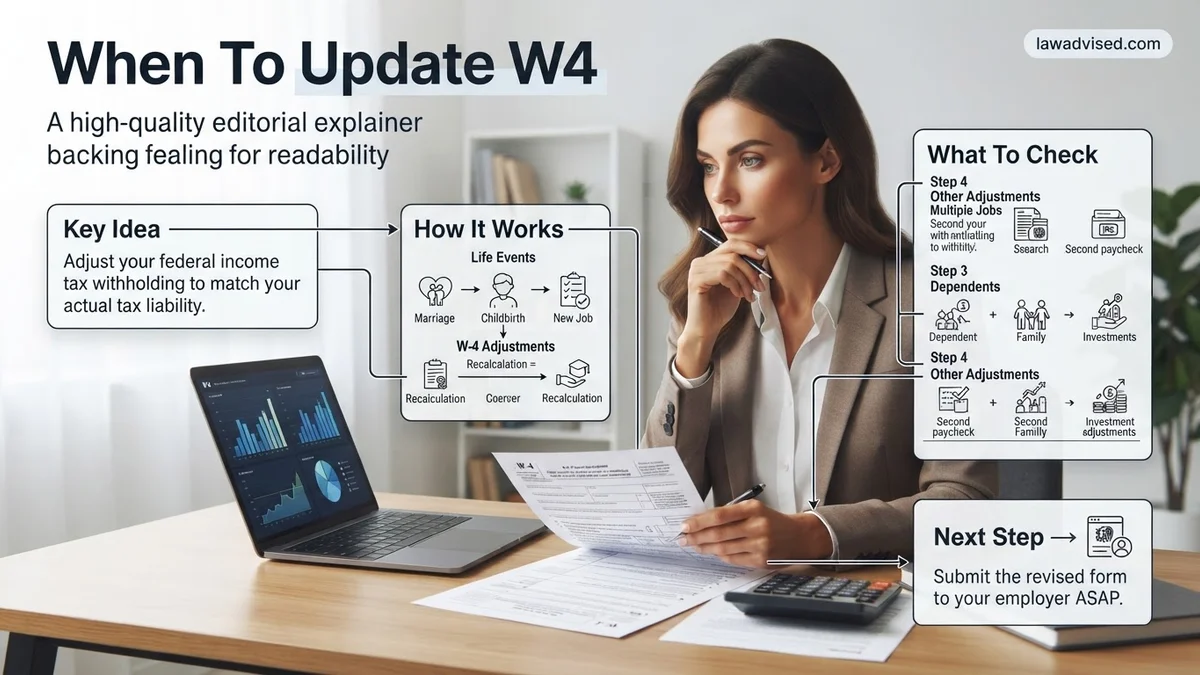
What Causes W-4 Withholding Errors and Tax Surprises
Tax surprises usually happen because the IRS system relies on the snapshot of information you provided when you were hired or when you last updated your form. Life moves fast, and your tax data quickly becomes outdated.
Major Life Events That Shift Tax Brackets
Your household composition dictates standard deductions and tax credits. Missing an update during a major milestone alters your tax math instantly.
- Getting married or divorced: Combining two incomes or moving from filing jointly to single dramatically alters your tax bracket and standard deduction.
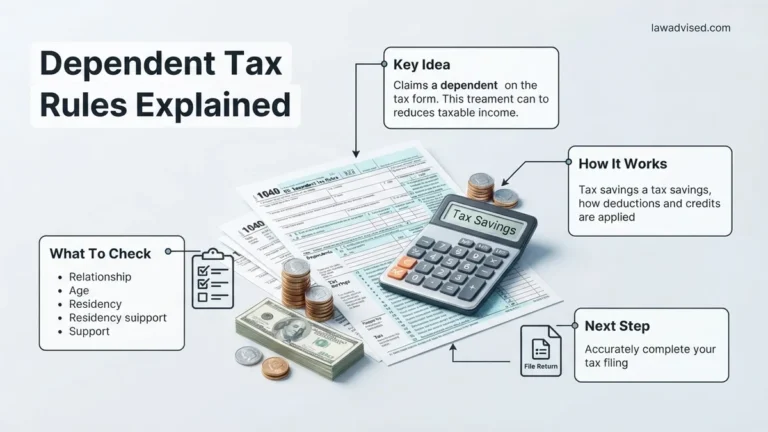
- Having a child or adopting: Welcoming a dependent in 2026 qualifies you for the Child Tax Credit, which immediately reduces your tax liability dollar-for-dollar.
- Gaining or losing dependents: Supporting aging parents or no longer claiming a college graduate alters your eligible credits.
Income and Employment Shifts
Changes in how you earn money create the biggest withholding errors.
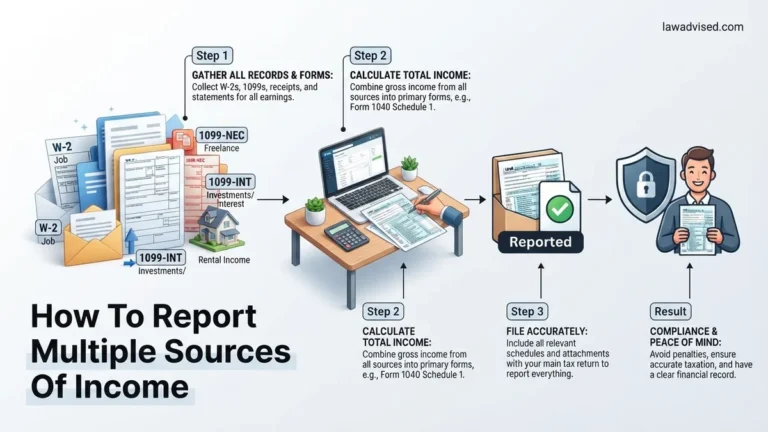
- Taking on a side hustle: Freelance or gig work does not have taxes withheld automatically, meaning your primary job is under-withholding for your total household income.
- Spousal employment changes: If your spouse starts or stops working, your dual-income household status changes.
- Receiving a massive raise or bonus: Earning significantly more can push you into a higher marginal tax bracket, causing your current flat-rate withholdings to fall short.
Master Your W-4 With 6 Simple Steps
Navigating tax withholding can feel overwhelming, but keeping your Form W-4 up to date ensures you never face a surprise tax bill or give the government an interest-free loan. This comprehensive guide walks you through the exact moments you should update your W-4, helping you optimize your take-home pay throughout the year. By following these practical steps, you will learn how to evaluate your life changes, calculate your adjustments accurately, and submit your updated form with confidence.
Step 1: Evaluate Significant Marital Status Changes
What you need: Your current paycheck stub, a copy of your previous W-4, and your marriage certificate or divorce decree if applicable.
Instructions: Whenever you legally get married, get divorced, or experience the death of a spouse, your tax filing status shifts dramatically from single to married filing jointly, married filing separately, or head of household. Because tax brackets and standard deductions vary wildly based on filing status, you must submit a new W-4 within 10 days of the life event. If you and your spouse both work, failing to update your withholding often results in under-withholding because the standard tables assume only one income per household, leading to a massive tax bill in April.
Pro Tip: Use the Tax Withholding Estimator on the IRS website to model dual-income scenarios before guessing your withholding selections.
Step 2: Add or Remove Dependents for Tax Credits
What you need: Social Security numbers for any new dependents, records of expected childcare expenses, and your current W-4 form.
Instructions: Having a baby, adopting a child, or gaining a dependent relative changes your eligibility for the Child Tax Credit and the Credit for Other Dependents. Conversely, if a child ages out of eligibility or is no longer claimed by you, your available credits decrease. Review Step 3 of the modern W-4 form. Enter the total number of qualifying children under age 17 multiplied by $2,000, and other dependents multiplied by $500, to reduce your overall tax withholding proportionally and boost your monthly cash flow.
Pro Tip: Do not count dependents on your W-4 if someone else has the legal right to claim them in the current tax year under a custody agreement.
Step 3: Account for Multiple Jobs or Working Spouses
What you need: Recent pay stubs from all active jobs held by you and your spouse, plus the IRS Multiple Jobs Worksheet.
Instructions: If you work a second job, a side hustle as a W-2 employee, or if your spouse also works, your combined income might push you into a higher tax bracket than what is calculated on a single withholding form. Navigate to Step 2 of the W-4 and use the online estimator, the checkbox method (if there are only two total jobs in the household), or the explicit worksheet to balance your withholdings. This crucial step prevents the common pitfall where neither employer withholds enough tax because each assumes they are your only source of income.
Pro Tip: The checkbox method is quick, but the online estimator is significantly more accurate if your household income streams are vastly different in size.
Step 4: Report Non-Wage Income and Deductions
What you need: Estimates of annual dividend income, interest, retirement account distributions, side business profits, and anticipated itemized deductions like mortgage interest or charitable donations.
Instructions: If you earn money that does not have taxes automatically withheld—such as freelance income, capital gains, or rental property revenue—you risk facing underpayment penalties. Complete Step 4(a) of the W-4 to add extra annual income, which forces your employer to withhold a bit more per pay period. Alternatively, if you plan to itemize deductions rather than take the standard deduction, use Step 4(b) to claim deductions that will lower your overall withholding, ensuring you keep more money in your paycheck now.
Pro Tip: Be conservative with your non-wage income estimates; it is always safer to slightly over-withhold than to owe quarterly penalties to the IRS.
Step 5: Request an Explicit Additional Dollar Withholding Amount
What you need: Your annual tax calculation goals, previous year’s tax return, and a calculator.
Instructions: Sometimes you want ultimate control over your tax situation without altering multiple worksheets or changing your filing status. Step 4(c) of the W-4 allows you to write in an exact flat dollar amount that your employer will deduct from your paycheck every single pay period. This is extremely useful if you realized mid-year that you are under-withheld, or if you simply prefer receiving a guaranteed tax refund every year and want to force yourself to save money automatically.
Pro Tip: Divide your target extra withholding amount by your total remaining pay periods in the year to input the exact per-paycheck deduction needed.
Step 6: Submit and Verify Your Updated W-4 with Payroll
What you need: Access to your company’s HR or payroll portal (such as ADP, Workday, or Gusto), or a physical paper Form W-4 signed and dated.
Instructions: Once you have filled out all relevant sections of the new W-4, submit it to your employer’s human resources or payroll department. Most companies utilize an online employee self-service portal where changes take effect within one to two pay cycles. After submission, carefully examine your very next pay stub. Verify that the federal income tax withholding line reflects your changes and matches your mathematical expectations based on your newly calculated withholding selections.
Pro Tip: Keep a digital or physical copy of every submitted W-4 for your personal financial records and tax history tracking.
✅ Final Checklist
- Verified your current filing status matches your legal tax situation
- Calculated accurate dependent credits using the latest IRS limits
- Addressed multiple household income streams to avoid under-withholding
- Included adjustments for side income, investments, or itemized deductions
- Confirmed the changes appear correctly on your subsequent pay stub
Important Notes:
- Avoid claiming “Exempt” from federal income withholding unless you had zero tax liability last year and expect zero tax liability this year.
- Seek help from a Certified Public Accountant (CPA) or financial advisor if you have complex investments, foreign assets, or erratic self-employment income.
- Updating your W-4 takes approximately 15 to 30 minutes, is entirely free of cost, and can be done as many times throughout the year as your life circumstances change.
How to Calculate Your Correct Withholding and Update Your W-4
Guessing your withholding numbers is a fast track to owing money. You need a data-driven approach to figure out what adjustments your paycheck actually requires for 2026.
Using the IRS Tax Estimator
The most accurate way to determine your correct withholding is by leveraging digital tools rather than manual math.
- Gather your documents: Pull your most recent pay stubs for everyone in your household and your previous year’s tax return.
- Run the IRS Tax Estimator: Input your projected 2026 earnings, deductions, and credits into the official online tool on IRS.gov.
- Review the final recommendation: The tool tells you precisely what to enter on Step 2, Step 3, and Step 4 of the modern W-4 form.
Submitting the Update to Your Employer
Once you have your numbers, the administrative process is straightforward.
- Access your HR portal: Most companies use platforms like Workday, ADP, or Gusto where you can update your W-4 digitally in minutes.
- Understand the steps: Fill out Step 2 if you have multiple jobs, Step 3 for dependents, and Step 4 for other income, deductions, or extra withholding.
- Time your submission: Submit your change early in the month so HR can process it before the next payroll cycle hits.
Step-by-Step Guide to Submitting Your New W-4 to Your Employer
Submitting your updated Form W-4 accurately ensures your employer applies the correct withholding changes for the 2026 tax year. Follow this structured process to complete and deliver your form without delays.
1. Access the Current 2026 Form
Download the official Form W-4 directly from the IRS website or obtain a physical copy from your human resources department. Ensure you are using the modern design version, which eliminated traditional withholding allowances in favor of specific dollar amounts and step-by-step checkboxes.
2. Complete the Five Required Steps
Fill out Step 1 for personal information and filing status, and complete Step 5 with your signature and date. If applicable, carefully fill out Step 2 for multiple jobs, Step 3 for dependents, and Step 4 for other adjustments like investments or extra withholding. Use the IRS Tax Withholding Estimator online to calculate precise numbers before writing them down.
3. Submit Through Your Employer Portal
Log into your company’s payroll or human resources software, such as ADP, Workday, or Gusto. Navigate to the tax withholding section and enter your updated 2026 figures digitally. Alternatively, submit a signed paper form directly to your payroll department.
What If Your Tax Withholding Still Does Not Match Your Liability?
Even after submitting a revised Form W-4, your paystub deductions might not align perfectly with your actual year-end tax liability. Financial experts and tax advisors recommend taking specific troubleshooting steps if your withholding remains inaccurate:
- Review your next one to two paystubs: Payroll systems typically require a processing window of 14 to 30 days, or one to two pay cycles, to implement withholding updates.
- Perform a mid-year checkup: Re-run the IRS Tax Withholding Estimator in July 2026 to verify that your year-to-date withholding matches your actual earnings trajectory.
- Add an explicit dollar buffer: If you consistently owe money at tax time, utilize Step 4(c) on the W-4 to request an additional fixed dollar amount withheld from every single paycheck.
- Consult a licensed tax professional: If your financial situation involves complex investments, self-employment income, or multiple streams of revenue, schedule a consultation with a Certified Public Accountant (CPA) or Enrolled Agent (EA). Professional tax planning services typically cost between $200 and $600 depending on complexity.
Conclusion
Managing your tax withholding prevents unexpected bills or overpayment of your hard-earned money to the federal government. Updating your Form W-4 promptly following life changes ensures your take-home pay remains optimized throughout the 2026 tax year. According to verified research and tax experts, proactive withholding adjustments significantly reduce tax-season stress and improve personal cash flow. Your immediate next step is to log into your employer’s payroll portal today and review your current withholding elections against your projected 2026 financial situation.
❓ Frequently Asked Questions
How do life changes like having a baby impact my W-4?
Having a child qualifies you for the Child Tax Credit, which reduces your overall tax liability. Updating your W-4 allows your employer to withhold less money from each paycheck so you see that savings immediately rather than waiting for a refund.
What if my spouse and I both work? How should we handle our W-4s?
Dual-income households have a higher risk of under-withholding because tax brackets widen for married couples filing jointly. You should use Step 2 of the W-4 form or the IRS online estimator to account for both incomes accurately.
Is it better to get a big tax refund or owe money?
Neither extreme is ideal. Getting a massive tax refund means you let the government hold your hard-earned money interest-free all year, while owing money can result in unexpected financial strain and potential underpayment penalties.
How long does it take for a W-4 change to take effect?
Generally, employers will apply your new W-4 withholding within one to two pay periods, depending on their payroll processing schedule and internal HR deadlines.
Do I need to file a new W-4 every single year?
No, if your income, marital status, and dependents remain completely stable, your W-4 does not need to be refiled annually. It remains in effect until you submit a new one.
What information do I need to complete a new W-4 form?
You will need your most recent pay stubs, information about other sources of income, details on deductions you plan to claim, and the Social Security numbers for any dependents.

Ismail Hossain is the founder of Law Advised. He is an Divorce, Separation, marriage lawyer. Follow him.