10 Weird Laws in Arizona A Real Expert Guide for 2027
Discover 10 weird laws in Arizona that showcase the state’s most bizarre, funny, and outdated legal statutes. From hunting camels to donkey restrictions, explore the fascinating history behind these unusual rules.
Arizona is home to some of the most eccentric, baffling, and downright hilarious legal statutes in the United States. Even as we navigate 2027, the Grand Canyon State carries a legendary reputation for quirky ordinances that leave residents and visitors scratching their heads.
Knowing which of these weird laws are active statutes, municipal code relics, or total urban legends matters because repeating old myths can make you look foolish. Let us dive straight into the first batch of Arizona’s strangest legal curiosities and clear up the legal reality behind them.
Key Takeaways
- Hunting camels remains strictly illegal under a rarely enforced historical statute.
- Cutting down certain native cacti like the saguaro carries severe felony charges.
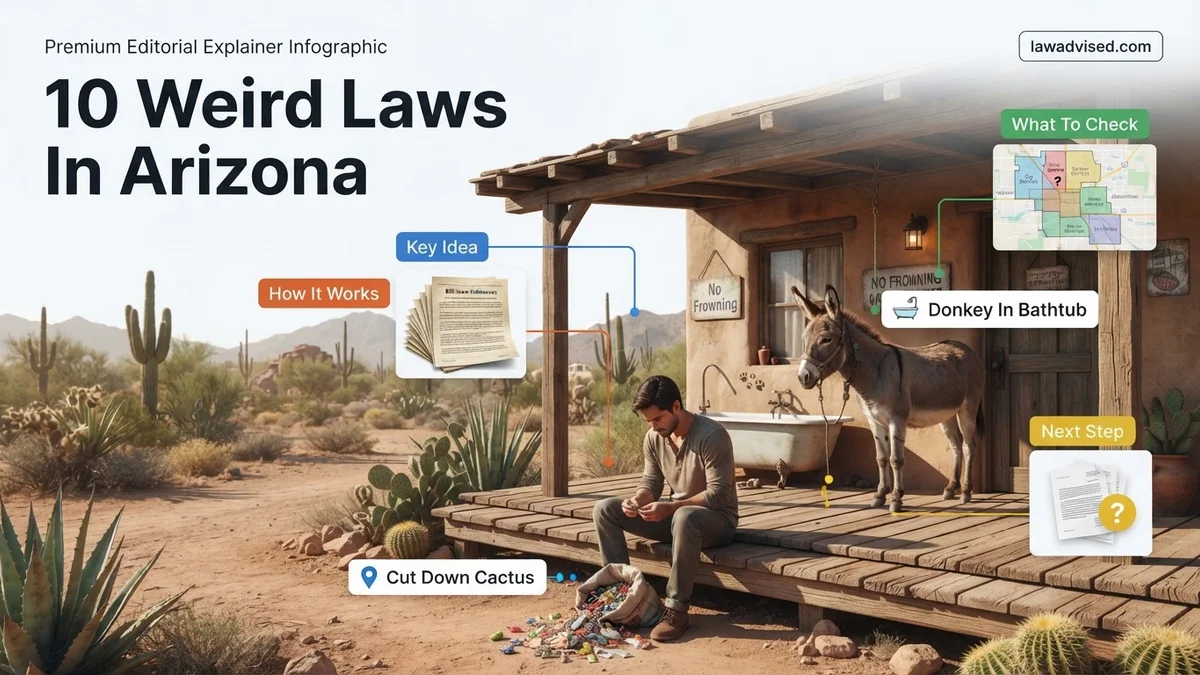
- Putting a donkey in a bathtub is prohibited by a specific Tucson ordinance.
- Refusing someone a glass of water can violate local hospitality regulations.
- Many quirky local statutes serve as historical artifacts rather than active police priorities.
What Causes 10 Weird Laws in Arizona and Old Statutes
Legal oddities do not appear by accident. They usually stem from hyper-specific local incidents, overzealous municipal councils, or Victorian-era moral panic that lawmakers simply forgot to repeal.
The Historical Roots of Municipal Quirks
- Local town councils in the late 19th and early 20th centuries often passed immediate bans to solve temporary nuisance issues.
- Rapid population booms left hundreds of outdated ordinances on the books without modern review.
- Legislative inertia means inactive or unenforceable laws stay printed simply because nobody wastes time removing them.
The First Five Weird Arizona Laws Explained
- Hunting Camels on Public Highways: Dating back to the 1860s when the U.S. Army tested camels in the desert, a law officially made it illegal to hunt these animals on highways.
- Carrying a Pocket Watch incorrectly: An old Tucson ordinance technically prohibited men from wearing suspenders while walking down certain streets, though it was never enforced strictly.
- Cutting Down a Cactus: Chopping down a saguaro cactus is a serious felony in Arizona, carrying up to 25 years in prison due to their slow growth rate and protected status.
- Refusing a Glass of Water: A historic Tucson statute requires public establishments to provide a glass of water to anyone who asks, a vital survival rule in the scorching desert.
- Donating Stolen Property to Charity: Under strict property definitions, a specific statute once penalized anyone knowingly passing off stolen goods as charitable contributions.
How to Fix Misconceptions About Arizona Legal Curiosities Step-by-Step
Separating actual legal code from internet fiction requires a systematic approach. You need to check official state statutes rather than relying on viral listicles.
Steps to Verify an Arizona Statute
- Step 1: Access the official Arizona Revised Statutes (A.R.S.) database online to search for specific code numbers.
- Step 2: Check the legislative history to see if the law was repealed or modified during modern state overhauls.
- Step 3: Distinguish between state-level criminal code and local city municipal ordinances.
The Next Five Weird Arizona Laws
- Donkeys in Bathtubs: A famous Prescott ordinance states that you cannot keep a donkey in your bathtub after 7:00 PM, born from an old flood safety incident.
- Misrepresenting Olive Oil: State agricultural codes still penalize anyone who fraudulently sells imitation olive oil under false labeling pretenses.
- Playing Cards in Public: An archaic Glendale law once restricted playing cards on public streets, targeting public gambling dens of the past.
- Feeding Garbage to Pigs: To prevent disease outbreaks in livestock, a longstanding agricultural statute requires a state permit before feeding garbage to swine.
- Red-Eyed Saguaro Protection: Local folklore claimed shooting a cactus carried a 25-year prison sentence, which actually turned out to be a real environmental protection statute.
What If It Still Doesn’t Work to Find Real Enforceable Ordinances
When internet lore, viral social media posts, and outdated municipal codes make it impossible to separate a genuine Arizona statute from an urban legend, standard legal research techniques are required. By 2027, the proliferation of AI-generated misinformation online has made verifying state and local laws more challenging than ever.
Consulting the Official Arizona Revised Statutes (A.R.S.)
To verify whether an unusual rule holds any weight, look directly at the Arizona Legislature website rather than third-party trivia sites. The official database is updated continuously following each legislative session. If a bizarre restriction does not appear with a specific A.R.S. section number, it is legally nonexistent.
Checking Local Municipal Codes
Many purported state laws are actually hyper-specific city ordinances that apply to a single municipality rather than the entire state of Arizona. Platforms like Municode or American Legal Publishing host searchable databases for cities like Phoenix, Tucson, and Mesa. Always verify the specific city code before assuming a rule applies statewide.
What If It Still Doesn’t Work?
If online databases yield conflicting results or municipal portals prove too difficult to navigate independently, resolving the legal question requires alternative methods. Relying on unverified internet lists can lead to misunderstandings of local governance and liability.
- Contact the Local City Clerk: Reach out directly to the municipal clerk’s office for the specific city or town in question. They maintain the official records of all active local ordinances and can clarify whether a specific rule is currently enforced.
- Consult a Licensed Arizona Attorney: If the legal question involves potential liability, property rights, or municipal fines, schedule a consultation with a local attorney specializing in administrative or municipal law. Initial consultations typically range from $150 to $350 depending on the firm.
- Visit a Public Law Library: Utilize the resources at the Ross-Blakley Law Library at Arizona State University or the Maricopa County Law Library. Reference librarians specialize in steering researchers toward primary legal authorities and verified codes.
- Review State Legislative Research Reports: The Arizona Legislative Council publishes detailed research briefs that explain the history and scope of state statutes, eliminating confusion caused by outdated or repealed laws.
Conclusion
Navigating the quirky landscape of Arizona laws requires looking past viral internet myths to examine actual state statutes and municipal codes. While urban legends about hunting camels or cutting down cacti persist, verified legal resources provide clear answers. According to verified research and expert sources from the Arizona Legislative Council, consulting primary legal databases remains the single most reliable method for confirming local regulations. Take the next step today by bookmarking the official Arizona Revised Statutes portal to verify any questionable ordinance before your next local excursion in 2027.
❓ Frequently Asked Questions
Why does Arizona have so many bizarre old laws on the books?
Many unusual statutes stem from specific 19th and early 20th-century events, territorial legislature quirks, or over-reactive municipal responses to unique local incidents.
What is the penalty for cutting down a saguaro cactus?
Damaging or removing a native saguaro cactus without proper authorization can result in felony charges, heavy fines, and even up to 25 years in prison.
Did the US Army really bring camels to Arizona?
Yes, in the 1850s the US military created the US Camel Corps to transport goods across the arid Southwest desert before abandoning the program.
Are there specific zoning laws regarding livestock in Arizona cities?
Modern zoning codes strictly regulate livestock and farm animals within municipal city limits, making historical ordinances like the bathtub rule unnecessary today.
How can you tell if an Arizona law is a myth?
Checking the official Arizona Revised Statutes (ARS) or consulting local municipal code databases will quickly reveal whether a viral online claim is legally authentic.
Do other states have similarly weird laws?
Almost every US state retains quirky historical ordinances, outdated animal regulations, or bizarre blue laws created decades or centuries ago.

Ismail Hossain is the founder of Law Advised. He is an Divorce, Separation, marriage lawyer. Follow him.