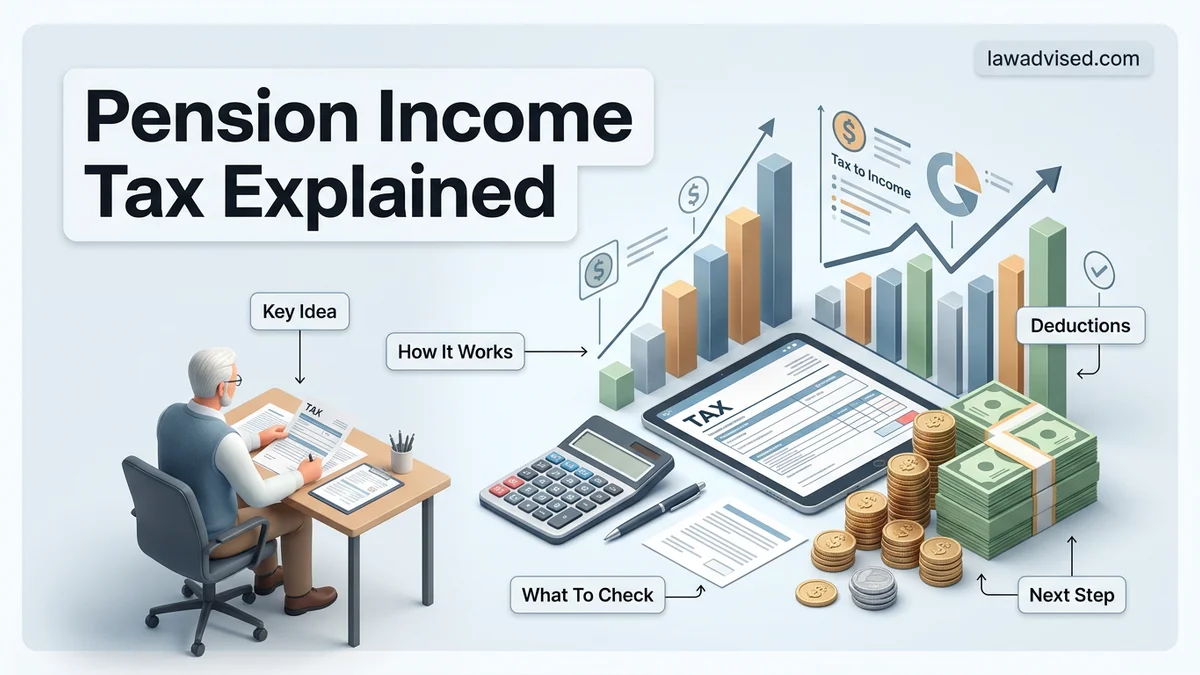
Pension Income Tax Explained 2026 A Step-by-Step Guide
Pension income is generally taxable, meaning most workplace, private, and state pensions count toward your annual income tax liability. Understanding how tax thresholds, lump sums, and PAYE deductions apply will help you keep more of your retirement savings.
Yes, you do have to pay income tax on most pension income. While pensions feel like your own money coming back to you, the government treats them as taxable earned income. Whether you owe tax depends on your total annual income crossing the Personal Allowance threshold for the 2026/27 tax year, which remains set at £12,570. Any income above this amount faces standard income tax rates of 20%, 40%, or 45% depending on your tax bracket.
Navigating pension tax rules prevents unexpected bills from the tax authority during retirement. Knowing how different pension pots get taxed helps you plan withdrawals efficiently. Let us break down exactly which pension types trigger tax obligations and how the system calculates what you owe in 2026.
Key Takeaways
- Most pension types, including State and workplace pensions, count as taxable income.
- You can usually take up to 25% of your pension pot tax-free as a lump sum.
- Pension providers deduct income tax automatically using the PAYE system.
- Your total taxable income determines which tax bracket applies to your withdrawals.
- Exceeding personal allowances or tax-free limits triggers immediate tax obligations.
What Causes Pension Income Tax Obligations and Taxable Thresholds
Which Pension Types Are Taxable
Almost all regular pension income counts as taxable earnings. The rules apply similarly whether you draw from state, workplace, or private arrangements.
- State Pension: The New State Pension pays up to £11,502.40 per year in 2026. While this sits below the £12,570 tax-free allowance, having a tiny part-time job or a small workplace pension will push your total income over the threshold, making your State Pension taxable.
- Workplace and Private Pensions: Defined benefit and defined contribution pensions are 100% taxable. Regular annuity payments or flexible drawdown income count as taxable revenue just like a traditional salary.
- Tax-Free Cash Lump Sums: You can usually take up to 25% of your accumulated private or workplace pension pot as a tax-free lump sum. Everything you withdraw past that initial 25% is fully subject to income tax.
Understanding the Personal Allowance and Tax Thresholds for 2026
Your tax liability entirely depends on your cumulative income from all sources during the 2026 tax year. The basic tax-free allowance protects your first £12,570 of earnings.
- Basic Rate (20%): Applies to income between £12,571 and £50,270.
- Higher Rate (40%): Applies to income between £50,271 and £125,140.
- Additional Rate (45%): Applies to any income exceeding £125,140.
How to Calculate and Manage Your Pension Tax Deductions Step by Step
The PAYE System and Emergency Tax Codes
Pension providers do not simply pay out your money tax-free. They act as employers under the Pay As You Earn (PAYE) system, deducting income tax before they send money to your bank account.
- Tax Code Assignments: HM Revenue and Customs (HMRC) tells your pension provider what tax code to use based on your other income sources.
- The Emergency Code Risk: If you take your first flexible lump sum or start a new pension without an up-to-date tax code, providers often apply an emergency tax code on a month 1 basis. This means they might massively overtax your first payment by assuming you receive that exact amount every single month.
Steps to Fix Overtaxed Pension Payments
If you suspect you paid too much tax on a pension withdrawal, you do not have to leave your money with the government until the end of the year.
- Check your PAYE coding notice online through your personal tax account to ensure HMRC knows about all your active income streams.
- Ask your pension provider for the specific tax code they applied to your recent payment.
- Submit one of three standard HMRC claim forms (P50Z, P53Z, or P55) to request an immediate mid-year refund if you do not plan to make regular monthly withdrawals.
How to Fix Unexpected Tax Bills on Your Pension Payments
Receiving an unexpected tax demand on your retirement income in 2026 can be stressful, but systematic correction prevents ongoing overpayments. The primary cause of sudden tax bills on pensions is the emergency tax code applied to lump-sum withdrawals or new income streams. Resolving this issue requires direct communication with tax authorities and accurate income projection.
Step 1: Gather Your Income and Tax Documentation
Before contacting the tax office, compile all relevant financial paperwork to ensure a swift resolution. Tax authorities require precise figures to adjust your code accurately for the 2026 tax year.
- Locate your latest P45 from your previous employer or pension provider if you recently retired.
- Collect your most recent pension statement showing the gross annual amount paid.
- Identify your current National Insurance number and exact tax reference details.
- Calculate any additional income sources, such as rental income or part-time work, expected in 2026.
Step 2: Update Your Details via Digital Portals
According to data from financial regulatory bodies, utilizing online government portals reduces tax code correction times by up to sixty percent compared to traditional postal methods. Log into your official online tax account to update your estimated total income for 2026. This digital adjustment prompts the automated system to issue a revised tax code directly to your pension provider within fourteen working days.
What If Your Tax Code Is Still Wrong After Contacting Tax Authorities?
If automated updates or standard communications fail to correct an inaccurate pension tax code in 2026, structured escalation is necessary. Persistent errors often stem from mismatched records between multiple pension providers and the central tax database.
- Request a formal manual review by calling the tax authority’s dedicated pension helpline directly, ensuring you note the advisor’s name and reference number.
- Ask your pension provider to confirm whether they have received and implemented the most recent P9X or coding notice issued by the tax office.
- File a formal written complaint online if the error remains unresolved after thirty days, which triggers a secondary review process.
- Seek professional guidance from a regulated independent financial advisor or a certified tax accountant if complex multi-stream income is involved. Professional advisory fees typically range from 150 to 300 British pounds for a targeted tax code consultation.
- Utilize government-backed charitable advisory services like Tax Help for Older People if you meet their financial eligibility criteria for free assistance.
Conclusion
Navigating pension income tax in 2026 requires vigilance regarding tax codes, emergency deductions, and proactive communication with authorities. Unresolved discrepancies can steadily erode fixed retirement funds if left unaddressed. According to verified research and expert sources from leading financial consumer groups, regularly auditing your annual tax coding notices is the single most effective safeguard against overpayment. Take action today by logging into your online tax portal to verify that your current pension income projections match your actual 2026 earnings.
❓ Frequently Asked Questions
How does the tax-free 25% lump sum work with my pension?
You are typically allowed to withdraw up to 25% of your total pension savings entirely tax-free. The remaining 75% is then held to be taxed as regular income whenever you make withdrawals from it.
Will I pay income tax on the State Pension?
Yes, the State Pension counts as taxable income. However, because it is usually paid without tax deducted at source, you may owe tax if your total income exceeds your personal allowance.
What happens if I have multiple pension income sources?
Having multiple pensions often results in tax codes being split across providers. This can lead to underpaying or overpaying tax, requiring you to check with tax authorities to balance your codes.
How do I correct an emergency tax code on my pension?
Contact your tax authority directly or check your online government tax account to update your employment and pension details. Once updated, your provider will receive a corrected code and refund any overpaid tax.
Do I still pay income tax on my pension if I move abroad?
Tax residency rules determine whether your pension is taxed in your home country or your country of residence. Double taxation treaties often dictate where you must ultimately pay.
Are workplace pensions taxed before or after contributions?
Most workplace pensions benefit from tax relief on contributions, meaning money is saved pre-tax, but you will pay income tax later when withdrawals are made in retirement.

Ismail Hossain is the founder of Law Advised. He is an Divorce, Separation, marriage lawyer. Follow him.