Student Loan Interest Deduction Explained 2026 Expert Guide
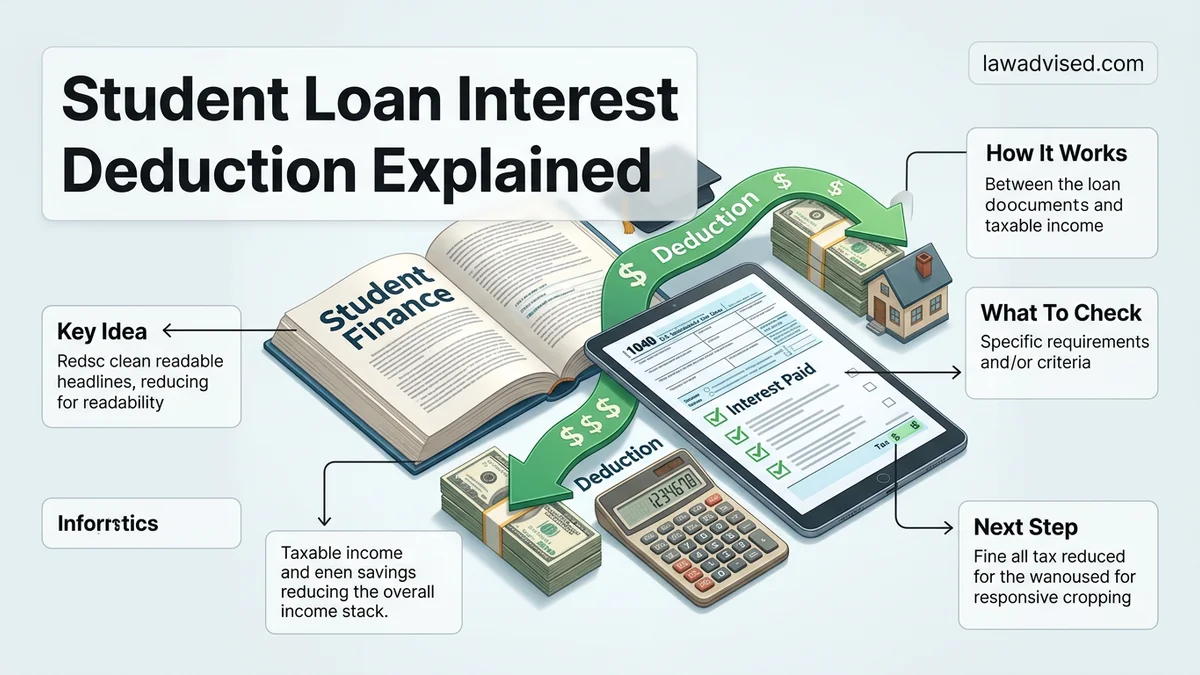
The student loan interest deduction allows eligible taxpayers to reduce their taxable income by up to $2,500 per year. Because it is an above-the-line deduction, you can claim this tax savings even if you do not itemize deductions. Your eligibility depends directly on your modified adjusted gross income (MAGI) and loan status.
You can deduct up to $2,500 of the interest you paid on eligible student loans each year directly from your taxable income. This is an above-the-line deduction, meaning you do not need to itemize your deductions to claim it. The tax code allows you to lower your adjusted gross income directly, which ultimately reduces the total income tax you owe for the 2026 tax year.
Navigating tax deductions can feel frustrating when income limits and loan criteria change. Understanding the exact rules for qualifying, knowing which loans count, and mastering the claim process ensures you do not leave money on the table when you file your taxes.
Key Takeaways
- Deduct up to $2,500 of actual student loan interest paid each tax year.
- It is an above-the-line deduction, meaning itemizing is not required.
- Both federal and private student loans qualify if used for eligible education expenses.
- Income phase-outs apply based on your modified adjusted gross income (MAGI).
- You must be the legally obligated borrower to claim the deduction.
What Causes Student Loan Interest Deduction Eligibility Rules to Change
Tax regulations update periodically to reflect inflation adjustments and shifting economic policies. For the 2026 tax year, the IRS modifies the phase-out ranges to account for inflation, which directly impacts whether higher-earning graduates qualify for the deduction. Keeping track of these changing thresholds ensures you accurately assess your eligibility before filing.
Modified Adjusted Gross Income Phase-Out Limits
Your ability to claim the student loan interest deduction depends heavily on your modified adjusted gross income (MAGI). The IRS sets strict income boundaries that gradually reduce and eventually eliminate your deduction:
- Single Filers: The phase-out range for 2026 begins at a MAGI of $80,000, with a complete disqualification once your income reaches $95,000.
- Married Filing Jointly: Couples filing jointly face a phase-out range starting at $165,000, phasing out entirely at a MAGI of $195,000.
- Married Filing Separately: You cannot claim this deduction if you use the married filing separately status, regardless of your income level.
Eligible Loans and Borrower Requirements
Not every debt qualifies for this tax break, and the rules regarding who actually paid the interest are strict. To meet the baseline eligibility requirements for your 2026 return, your situation must check specific boxes:
- Qualified Loans: Both federal and private student loans qualify as long as the money was used solely for qualified higher education expenses, such as tuition, room, board, and required fees.
- Legally Obligated Borrower: You must be the person legally required to pay the interest. If your parents pay your loans, neither you nor they may be able to claim the deduction unless specific conditions are met.
- Dependent Status: You cannot claim the deduction if someone else claims you as a dependent on their 2026 tax return.
How to Fix Your Tax Return and Claim the Student Loan Interest Deduction
Claiming the student loan interest deduction correctly requires gathering specific documentation and reporting the amount accurately on your tax forms. If you missed this deduction in a previous year, you can typically amend your tax return to recover those funds.
Locating Form 1098-E and Gathering Data
Your loan servicer will issue tax document Form 1098-E if you paid more than $600 in student loan interest during the calendar year. This form details the exact amount of eligible interest you paid.
- Check Online Portals: Log into your loan servicer account by late January 2027 to download your Form 1098-E electronically.
- Calculate Under $600 Payments: If you paid less than $600, your servicer may not send a form. You must log in and calculate your total interest paid using your annual statements.
- Verify Qualified Expenses: Ensure the loan proceeds funded an eligible student enrolled at least half-time in a degree program at an eligible institution.
Filing Your Return and Amending Past Mistakes
To claim your deduction for the 2026 tax year, you must report the calculated interest figure on IRS Form 1040. The process is straightforward when using standard tax software.
- Reporting on Form 1040: Enter the qualifying interest amount (up to the $2,500 maximum limit) on the designated line for adjustments to income.
- Amending Prior Returns: If you realized you qualified for the student loan interest deduction in a previous open tax year but forgot to claim it, file IRS Form 1040-X to amend that specific return.
- Statute of Limitations: You generally have three years from the original filing deadline to claim a refund by amending a past tax return.
Step-by-Step Guide to Gathering Your Form 1098-E
Claiming the student loan interest deduction requires specific documentation from your loan servicer. Form 1098-E outlines the exact interest paid during the tax year. Financial experts recommend organizing these documents early to avoid filing delays in 2026.
Locating Your Tax Documents Online
Most major loan servicers automatically generate electronic tax forms by late January. Borrowers must access their online portals to download these documents.
- Log into your specific federal or private student loan servicer account.
- Navigate to the documents, tax statements, or billing history tab.
- Locate Form 1098-E for the corresponding tax year and download the PDF file.
Consolidating Multiple Servicers
Borrowers with multiple loans often receive separate tax forms from different providers. Financial advisors note that individuals must aggregate the interest paid across all eligible accounts. Total the amounts listed in Box 1 of each Form 1098-E received. Enter this combined sum onto your tax software or IRS Form 1040 to maximize your total allowable above-the-line deduction.
What If It Still Doesn’t Work and Your Income Exceeds the Limit
High-earning tax filers often discover that their modified adjusted gross income exceeds the statutory limits for the student loan interest deduction. When standard tax relief methods fail due to income phase-outs, alternative financial strategies can help optimize your tax liability for 2026.
- Contribute to Pre-Tax Accounts: Lower your modified adjusted gross income by increasing contributions to a traditional 401(k), 403(b), or health savings account. This reduction may bring your income back below the deduction threshold.
- File Status Optimization: Review whether filing separately or jointly yields a better outcome, keeping in mind that married filing separately status completely disqualifies taxpayers from claiming this specific deduction.
- Explore Employer Assistance Programs: Utilize employer-provided student loan repayment assistance programs, which allow companies to pay up to tax-free amounts toward eligible loans under current tax provisions.
- Consult a Certified Public Accountant: Hire a licensed tax professional to evaluate complex income scenarios and multi-year tax planning strategies. Professional tax preparation services typically range from $300 to $800 depending on complexity.
Conclusion
Navigating the student loan interest deduction requires careful attention to income thresholds, eligible loan types, and accurate document reporting. According to verified research and expert financial sources, utilizing Form 1098-E correctly can yield significant annual tax savings for eligible borrowers. Your immediate actionable next step is to log into your loan servicer portal today to download your most recent tax documents and verify your total interest paid.
❓ Frequently Asked Questions
How does the student loan interest deduction affect my overall tax liability?
The deduction directly lowers your modified adjusted gross income, which reduces the total amount of income subject to federal income taxes. The actual dollar amount saved depends on your specific tax bracket.
What types of loans are eligible for the student loan interest deduction?
Both federal and private student loans qualify, provided the money was used exclusively for qualified higher education expenses like tuition, fees, room, and board at an eligible institution.
What are the modified adjusted gross income (MAGI) phase-out limits?
The deduction begins to phase out at specific income thresholds set by the IRS, which are adjusted annually for inflation. If your MAGI exceeds the upper limit, you cannot claim any deduction for that tax year.
Can I claim the deduction if someone else pays my student loans?
If you are legally obligated to repay the loan, you are treated as having received the payments and made them yourself, allowing you to claim the deduction even if a relative made the actual payment.
What happens if I paid less than $2,500 in student loan interest?
You can only deduct the exact amount of interest you actually paid during the tax year, up to the $2,500 maximum cap.
How do I report the student loan interest deduction on my tax return?
You report the deduction on Schedule 1 of Form 1040 using the figures provided on your Form 1098-E, without needing to itemize your deductions.

Ismail Hossain is the founder of Law Advised. He is an Divorce, Separation, marriage lawyer. Follow him.