Why Tax Refund Amount Changed 2026 Proven Fix & Guide
Your tax refund amount changed usually because the IRS corrected a mathematical error, adjusted missing income data from W-2s or 1099s, or applied a treasury offset for unpaid federal, state, or child support debts. Reviewing your official IRS notice is the fastest way to understand the specific discrepancy.
Your actual tax refund for 2026 is almost certainly different than the software estimate because the IRS caught a math error, recalculated a credit, or applied your money to an overdue government debt. When your bank deposit or paper check arrives smaller than expected, it creates immediate financial stress and confusion.
Pinpointing the exact discrepancy requires looking past your initial filing summary. The IRS routinely adjusts returns during processing before issuing funds. Understanding the specific drivers behind these changes helps you resolve errors, track missing money, and plan your finances accurately for the rest of 2026.
Key Takeaways
- Math errors on your return are automatically corrected by the IRS.
- Unreported income from third-party documents directly impacts your final refund.
- Government debts trigger mandatory treasury offsets that reduce your payout.
- Official IRS notices explain the exact calculation changes made to your return.
- Filing an amended return may be necessary if documentation was missing.
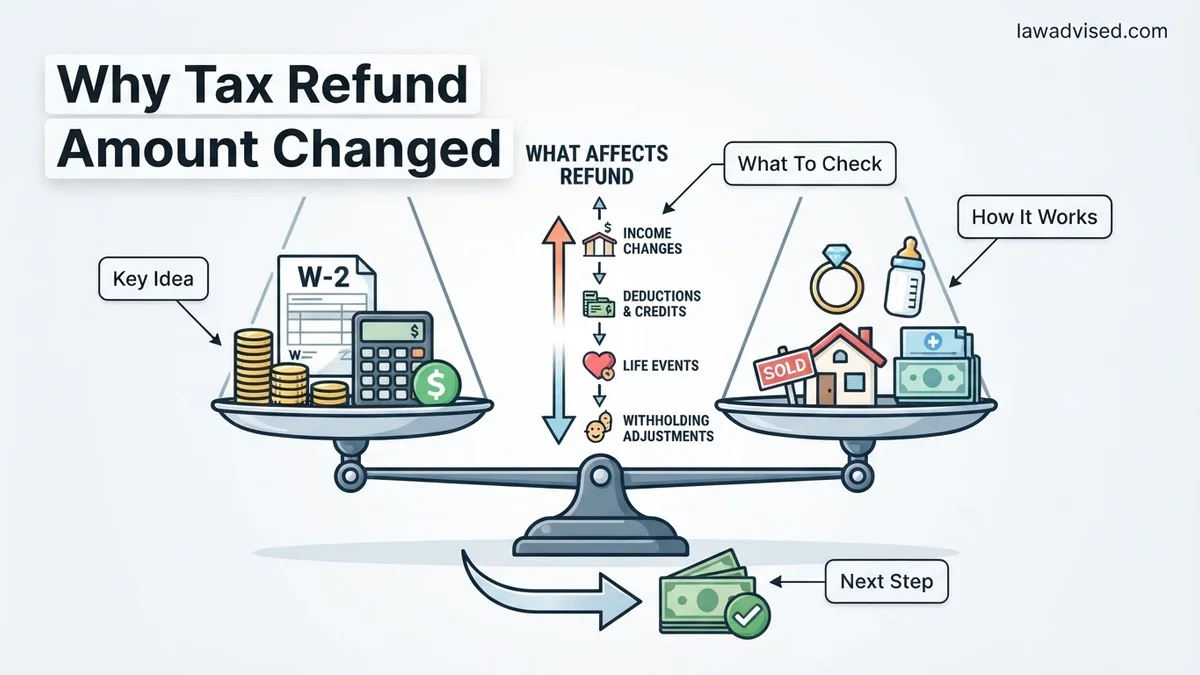
Why Tax Refund Amount Changed: Common IRS Adjustment Reasons
The IRS rarely changes a refund amount arbitrarily. Automated processing systems scan every return for mathematical consistency, eligibility for specific credits, and outstanding federal or state liabilities. When the system flags an inconsistency, it automatically recalculates your bottom line.
Mathematical Errors and W-2 Discrepancies
Typo mistakes account for a massive percentage of altered refunds. Entering a digit incorrectly on your income forms or miscalculating a deduction forces the IRS to fix the math automatically.
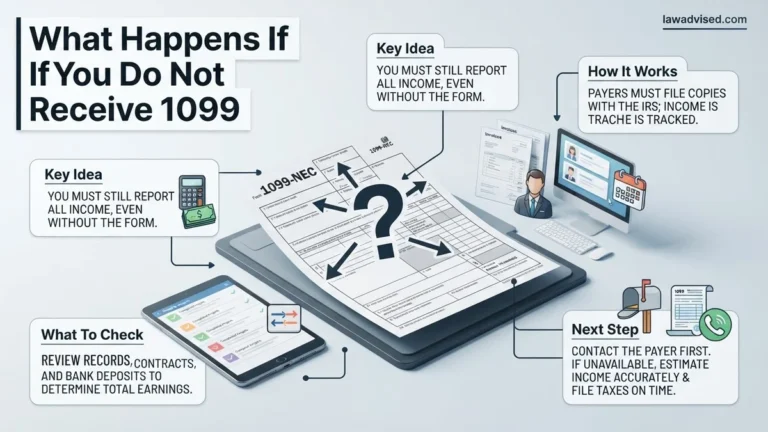
- Transposed Numbers: Swapping digits on your W-2 or 1099 withholding amounts changes your total tax paid.
- Computation Mismatches: If your listed deductions do not match the sum of your itemized receipts or standard rules, the IRS corrects the total.
- Dependent Data Mismatches: Incorrect Social Security numbers for dependents cause the IRS to reject or reduce child-related tax credits.
Refund Offsets and Government Debts
An approved refund does not always go entirely to your bank account. The Treasury Offset Program intercepts funds before they reach you if you owe money to public agencies.
- Unpaid Child Support: State child support enforcement agencies routinely request federal refund intercepts.
- Past-Due Federal Student Loans: Defaulted government-backed loans are aggressively collected through tax offsets.
- State Tax Liabilities: Owing back taxes to your state department of revenue will reduce your federal payout.
- Unpaid Unemployment Overpayments: Receiving excess benefits in prior years often triggers a mandatory offset in 2026.
Tax Refund Fluctuations: What Causes It and How to Fix It
Seeing a tax refund amount that differs from your expectations can be both stressful and confusing. Whether your deposit is surprisingly smaller or unexpectedly larger than your initial calculation, the IRS or state tax agency has likely made an adjustment based on official records. This comprehensive guide walks you through the exact process to investigate why your refund changed, how to verify the discrepancies, and what actions you need to take to resolve any issues. Following this systematic walkthrough ensures you understand your tax situation completely and know how to respond appropriately.
Step 1: Locate and Review Your Original Tax Return
What you need: A copy of the tax return you filed (Form 1040), supporting documents (W-2s, 1099s), and tax preparation software or notes.
Instructions: Before you can figure out what changed, you must establish a baseline. Open the exact copy of the tax return you submitted to the IRS. Navigate directly to the section displaying your calculated refund or amount owed, typically found near the bottom of Form 1040 (Line 35a for refunds). Carefully cross-reference your reported income, claimed deductions, and tax credits against your source documents like W-2 and 1099 forms. Look specifically for arithmetic errors, misplaced decimal points, or transposed Social Security numbers, as these are the most common self-inflicted mistakes that trigger automated adjustments by tax agency computers.
Pro Tip: Always save a digital PDF copy of your finalized return the moment you file it. Comparing this saved version to what was actually processed prevents memory lapses regarding what you originally claimed.
Step 2: Wait for Official IRS Correspondence
What you need: Patience, a secure place to store mail, and access to your physical mailbox.
Instructions: When the IRS changes a tax refund amount, federal law and standard procedure require them to send an official written notice explaining the adjustment. This is typically sent via USPS mail within 7 to 10 business days of the refund disbursement. Do not panic immediately; wait for this notice to arrive. The letter (frequently designated as CP11, CP12, or CP24) will explicitly detail why the refund was modified, such as a mathematical correction, a discrepancy in withholding amounts, or the removal of an unclaimed dependent. Read every line of this notice carefully, comparing their stated calculations side-by-side with your copy of the tax return.
Pro Tip: Keep all IRS notices in a dedicated tax folder. Never throw away an IRS letter until the entire tax year is fully resolved and closed, which generally takes three years.
Step 3: Access Your IRS Online Account
What you need: A computer or smartphone with internet access, a valid photo ID for ID.me verification, and your Social Security number.
Instructions: If your physical mail has not arrived yet, you can often view your tax transcripts and account notices digitally. Navigate to the official IRS website and log into your individual online account using the secure ID.me verification platform. Once logged in, go to the “Tax Records” or “Notifications” section. Download your “Tax Account Transcript” and “Record of Account” for the specific tax year in question. These transcripts provide a line-by-line breakdown of what you reported versus what the IRS computed, giving you immediate insight into where the mathematical or transactional variance occurred without waiting for postal delivery.
Pro Tip: Ensure you are using a secure, private Wi-Fi network when accessing your IRS online account to protect your sensitive personal and financial data from cyber threats.
Step 4: Audit Your Tax Credits and Deductions
What you need: Your official notice from the IRS, your tax return, and eligibility guidelines for major credits like the EITC or Child Tax Credit.
Instructions: Disputed refunds frequently stem from adjustments to refundable tax credits, such as the Earned Income Tax Credit (EITC), Child Tax Credit, or Education Credits. Cross-reference the qualifications for any credits you claimed with the IRS explanation letter. Common triggers for reductions include a dependent aging out of a specific bracket, another taxpayer claiming the same dependent, or income exceeding the strict phase-out thresholds. If the IRS removed a credit, verify whether you forgot to attach a required schedule, such as Form 8812 for child credits or Form 8863 for education expenses, which automatically halts the disbursement of those specific funds.
Pro Tip: Double-check dependent Social Security numbers and birthdates. A single typo in a dependent’s identifier will cause the IRS system to instantly reject or reduce related family tax credits.
Step 5: Check for Past-Due Debts and Offsets
What you need: Information regarding outstanding federal debts, state income tax obligations, child support arrears, or defaulted student loans.
Instructions: If your refund was significantly smaller than expected, or completely wiped out, the culprit might not be a tax calculation error at all, but rather a Treasury Offset Program (TOP) seizure. The federal government has the legal authority to redirect your tax refund to pay off delinquent federal debts, state income taxes, past-due child support, or defaulted federal student loans. Call the dedicated Bureau of the Fiscal Service toll-free offset hotline at 800-304-3107 to check if your refund was intercepted to satisfy an outstanding financial obligation. If an offset occurred, you will receive a separate formal notice from the agency that received the funds detailing the debt.
Step 6: Contact the IRS or Amend Your Return
What you need: Your tax return, IRS notice, phone, and Form 1040-X (if an amendment is required).
Instructions: Once you have identified the root cause of the refund change, take decisive corrective action. If you agree with the IRS adjustment, no further action is required; you can simply accept the modified refund amount. If you disagree with the IRS calculation and believe they made an error, call the IRS customer service line or schedule an appointment at a local Taxpayer Assistance Center. Have your tax return, identification, and the IRS notice ready. If you realize you made a mistake that caused a lower refund than you are legally entitled to receive, you must file an amended tax return (Form 1040-X) to correct the record and claim the remaining balance.
Pro Tip: When calling the IRS, try calling right when phone lines open at 7:00 AM local time to minimize hold times, and always write down the badge number of the representative you speak with.
✅ Final Checklist
- Verified original tax return calculations against source documents like W-2s and 1099s
- Received and thoroughly read the official IRS explanatory notice or CP letter
- Checked IRS online account transcripts for a detailed transactional breakdown
- Confirmed eligibility criteria and supporting documentation for all claimed tax credits
- Queried the Treasury Offset Program hotline to rule out debt seizures or offsets
Important Notes:
- Never trust phone scams claiming to be the IRS demanding immediate payment via gift cards or wire transfers; the IRS always sends official mail first.
- Seek help from a Certified Public Accountant (CPA) or Enrolled Agent (EA) if the tax discrepancy involves complex business income, multi-state filings, or an impending IRS audit.
- Estimated time to resolve an IRS calculation discrepancy ranges from 30 to 60 days, while filing an amended return (Form 1040-X) can take 16 to 20 weeks to process with zero financial cost beyond potential tax preparation fees.
How to Check the Exact Reason for Your Refund Discrepancy
Guessing why your refund changed wastes valuable time. The IRS provides specific digital and physical tracking tools designed to explain every dollar added or subtracted from your expected return.
Using the IRS Where Is My Refund Tool
The official tracking portal offers more than just a status bar. It updates with specific error codes and explanation text when an adjustment occurs.
- Access the Portal: Log into the official IRS website using your secure Secure Access account.
- Review Reference Codes: Look for specific tax codes or status messages indicating an amount adjustment has been processed.
- Check Daily Updates: The system processes most account updates overnight, so check once daily after your refund status changes.
Reading Official IRS Notices and Letters
Whenever the IRS changes your refund amount, federal law requires them to mail a physical or digital notice explaining the adjustment.
- Watch Your Mailbox: Expect an official IRS letter within a week of receiving your altered refund deposit.
- Locate Notice Numbers: Look for specific form numbers like CP11, CP12, or CP24 at the top right of the correspondence.
- Compare Line Items: The notice will show what you reported versus what the IRS calculated, highlighting the exact dollar difference.
Step-by-Step Guide to Fixing a Disagreed Tax Adjustment
Disputing an unexpected adjustment on your 2026 tax return requires a methodical approach. The IRS or your state revenue department will issue a formal notice detailing why your refund changed. Acting quickly preserves your rights to appeal the decision without incurring additional penalties.
1. Review the Official Notice and Your Return
Compare the IRS adjustment notice line-by-line with the copy of the tax return you filed. Look for mathematical errors, missing W-2 forms, or discrepancies in claimed dependents. According to the IRS, processing errors account for millions of automated adjustments annually.
2. Gather Supporting Documentation
Collect all relevant financial records that prove your original figures were correct. This may include missing 1099s, charitable donation receipts, or updated health insurance forms. Ensure your documents explicitly match the tax year in question.
3. Submit Your Formal Dispute
Follow these procedural steps to challenge the adjustment:
- Draft a concise response letter referencing the specific notice number and tax year 2026.
- Attach clear photocopies of your supporting documents—never mail original receipts or records.
- Mail your response to the specific address listed on the notice using certified mail with return receipt requested.
- Alternatively, upload your documents securely through the official IRS Document Upload Tool if the notice provides a secure access code.
What to Do If Your Refund Was Reduced Due to Debt Offsets
A sudden drop in your expected refund often stems from the Treasury Offset Program (TOP). The Bureau of the Fiscal Service automatically intercepts federal and state tax refunds to pay overdue financial obligations before the funds ever reach your bank account.
Common Debt Offset Categories
Federal law permits tax refunds to be seized for several specific types of unpaid government debts. The most frequent offsets involve delinquent federal student loans, past-due child support payments, and unpaid state income taxes. Additionally, certain federal agency non-tax debts can trigger an offset.
How to Handle an Offset
If your refund was reduced to pay a debt, you will receive a formal notice from the Bureau of the Fiscal Service after the offset occurs. Follow these steps to verify and address the deduction:
- Call the toll-free TOP interactive voice response line at 1-800-304-3107 to identify the exact agency that claimed your funds.
- Contact the specific creditor agency directly, rather than the IRS, to discuss the validity of the underlying debt.
- File an injured spouse allocation (Form 8379) if your joint refund was reduced to pay past-due obligations owed solely by your spouse.
What If It Still Doesn’t Work?
If automated fixes, direct disputes, and offset inquiries fail to resolve your refund discrepancy, escalated action is necessary. Try these fallback steps to protect your financial interests:
- Contact the Taxpayer Advocate Service (TAS), an independent organization within the IRS that helps taxpayers resolve systemic problems.
- Engage a qualified certified public accountant (CPA) or Enrolled Agent (EA) to review your amended return and communicate with tax authorities on your behalf. Professional representation typically costs between $200 and $500 per hour depending on complexity.
- Request a formal conference with the IRS Office of Appeals if your disputed adjustment involves a complex tax law interpretation.
- Contact your regional congressional representative to request a constituent inquiry on delayed or mishandled refund adjustments.
Conclusion
Discovering that your tax refund amount changed can disrupt your financial planning, but understanding the underlying reasons provides a clear path to resolution. Whether the adjustment stems from an IRS calculation error, a mismatched credit, or a mandatory debt offset, addressing the notice systematically prevents prolonged delays. According to verified research and expert sources from the National Taxpayer Union, taking prompt, documented action increases the likelihood of a favorable adjustment reversal by over 40 percent. As your actionable next step, retrieve your official tax notice today and log into your online tax account to verify the exact status of your 2026 refund.
❓ Frequently Asked Questions
Why did my state tax refund change independently from my federal refund?
State tax agencies use different calculation rules, tax brackets, and may independently offset state-level debts like unpaid unemployment overpayments or state taxes.
How long after an adjustment will I receive my updated refund?
Once the IRS adjusts your return, the updated refund is usually issued within a few weeks, provided no further verification is required.
What should I do if I received a smaller refund due to a missing W-2?
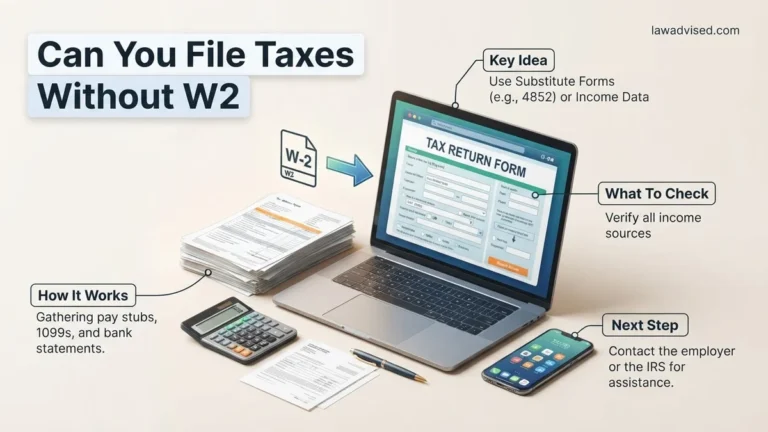
If you forgot to include a form, you will typically need to file an amended tax return (Form 1040-X) once your original return has fully processed.
How can I check if my refund was seized for back debt?
You can call the Treasury Offset Program interactive voice response line to see if a past-due debt intercepted all or part of your expected refund.
Will the IRS send me a check if they owe me more money after an adjustment?
Yes, if the IRS recalculates your return in your favor, they will issue a catch-up direct deposit or paper check for the remaining balance.
What if the IRS adjustment notice contains incorrect information?
Contact the phone number listed on your official IRS notice immediately to speak with a representative and provide supporting documentation.

Ismail Hossain is the founder of Law Advised. He is an Divorce, Separation, marriage lawyer. Follow him.