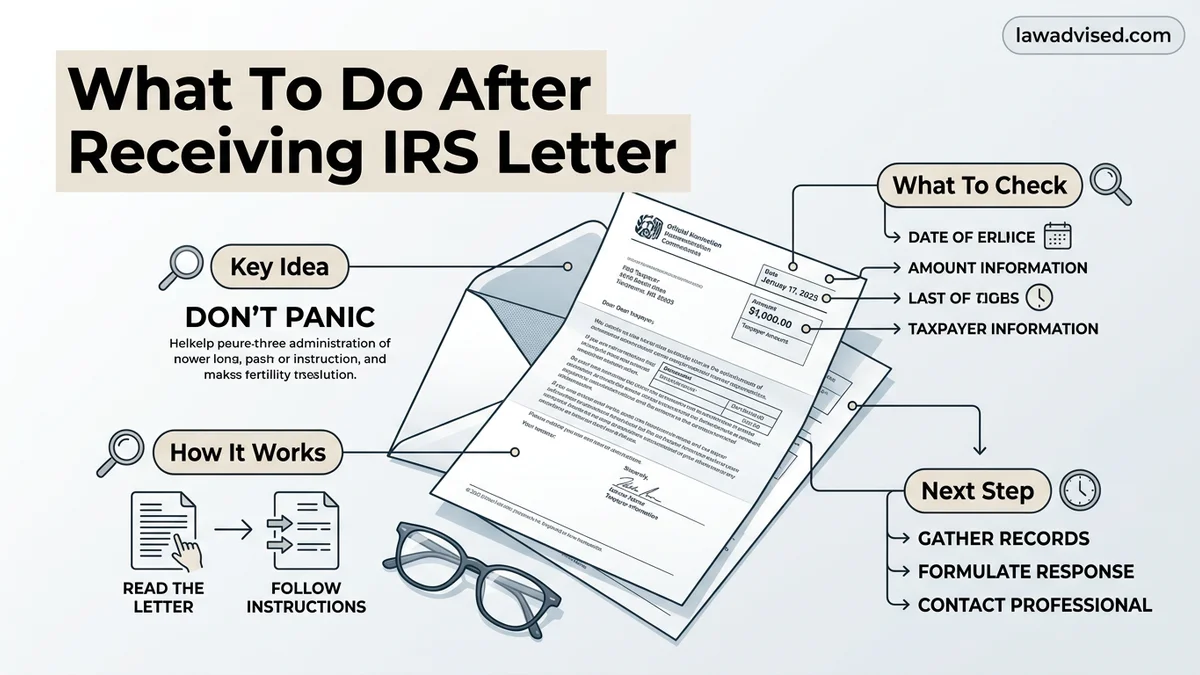
What to Do After Receiving IRS Letter Step-by-Step 2026
Getting a notice from the tax agency can be stressful, but taking immediate, calm action is the best way to handle it. You must review the specific notice number, check the listed deadlines, and determine whether you agree or disagree with the changes.
Receiving an official envelope from the Internal Revenue Service in 2026 can trigger instant anxiety, but the absolute first thing you must do is open it, read it completely, and check the specific notice number and response deadline. Most IRS letters are simply computer-generated notifications about math errors, missing information, or balance adjustments rather than full-scale audit threats.
Taking immediate, methodical action prevents penalties from compounding and stops collection actions before they escalate. Ignoring the notice is the single biggest mistake you can make, as the IRS will not simply forget about the discrepancy or go away on its own.
Key Takeaways
- Never ignore an IRS letter, as delays lead to added penalties and interest.
- Locate the notice number (usually starts with CP or LTR) in the corner.
- Verify the letter is legitimate to protect against aggressive tax scams.
- Gather supporting tax documents before making any phone calls or writing replies.
- Respond by the specific deadline printed on the notice to protect your rights.
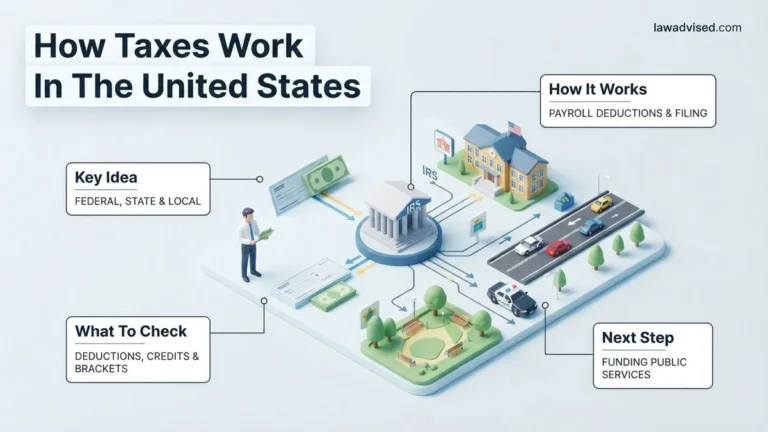
What Causes IRS Letters and Notices to Be Sent
Automated Matching Errors and Discrepancies
The vast majority of IRS notices in 2026 stem from automated processing systems that cross-reference your tax return with documents submitted by third parties. If your Form 1040 does not match the data reported on your W-2s, 1099s, or mortgage interest statements, the system automatically flags your account.
- Failing to report freelance or gig economy income from a 1099-NEC.
- Mismatched Social Security numbers or misspelled names on dependents.
- Discrepancies between estimated quarterly tax payments and reported totals.
Balance Adjustments and Refund Changes
Sometimes the IRS corrects mathematical errors on your return before processing it fully. This often results in a notice explaining that your expected refund was reduced or that you owe a specific balance plus newly calculated interest.
- Simple addition or subtraction errors on your tax schedules.
- Claiming tax credits for which the automated system found insufficient documentation.
- Late filing or late payment penalties automatically assessed by the computer system.
How to Fix It Step-by-Step After Opening the Letter
Step 1: Locate the Notice Number and Deadline
Look at the top right-hand corner of the first page to find the specific notice or letter number, usually formatted as CP followed by numbers or a simple letter designation like Letter 12C. This number tells you exactly why the IRS is contacting you and dictates your next move.
- Note the exact response deadline printed on the notice, which is typically 30 or 60 days from the issuance date.
- Pull your copy of the 2025 or 2026 tax return you filed, along with all supporting W-2s, 1099s, and receipt records.
- Verify whether the IRS is proposing a change to your return or simply informing you of an administrative adjustment.
Step 2: Decide Whether to Agree or Disagree
Once you understand the notice, compare the IRS claims against your own financial records to determine if their findings are accurate. Your subsequent path depends entirely on whether you accept or contest their position.
- If you agree: Follow the payment instructions if you owe money, or sign any required consent forms and return them promptly.
- If you disagree: Gather proof, write a formal explanation letter, and mail or fax your response by the stated deadline using the address provided on the notice.
- Call the customer service number listed on the notice if the instructions are unclear or if you need more time to gather documents.
Step-by-Step Actions If You Disagree with the IRS Notice
Receiving an IRS notice does not mean you automatically owe money. According to the National Taxpayer Advocate, millions of notices issued annually contain mathematical discrepancies or missing employer reporting that can be successfully contested. If your records conflict with the IRS letter, follow a precise protocol to dispute the findings.
1. Gather Supporting Documentation
Compile exact records that back up your original tax return. Do not send original documents to the IRS; always retain originals and mail or upload clear copies. Relevant items include canceled checks, bank statements, official receipts, and corrected W-2 or 1099 forms from your employer or client.
2. Draft a Formal Written Explanation
Write a concise, factual letter explaining why you disagree with the adjustment. Reference the specific notice number, tax year, and line items in question. Attach your supporting documentation behind your written statement to create a clear audit trail for the IRS agent reviewing your case.
3. Respond by the Statutory Deadline
Mail your dispute packet to the specific address listed on the IRS notice, typically found in the upper-right corner. Keep a certified mail receipt with tracking to prove timely delivery. Missing the 30-day window printed on notices like a Statutory Notice of Deficiency forfeits your right to Tax Court without paying first.
What If It Still Doesn’t Work and You Need Professional Help
If direct communication stalls, the IRS rejects your written dispute, or the financial stakes are exceptionally high, standard self-resolution may fail. Navigating complex tax liabilities in 2026 requires specialized support when basic correspondence breaks down.
- Request IRS Supervisor Review: Call the primary IRS customer service line and politely ask to speak with a collection or examination supervisor to escalate a stalled disagreement.
- Contact the Taxpayer Advocate Service (TAS): Utilize this independent organization within the IRS to help taxpayers suffering from systemic delays or severe economic hardship.
- Hire a Qualified Tax Professional: Engage a Certified Public Accountant (CPA), Enrolled Agent (EA), or tax attorney. According to industry data, professional representation for complex audits typically costs between $1,500 and $5,000 depending on the complexity of the case.
- Explore Low Income Taxpayer Clinics (LITCs): If your income falls below certain federal poverty thresholds, free or nominal-fee legal assistance is available through accredited university clinics and legal aid organizations.
Conclusion
Finding an IRS notice in your mailbox can trigger immediate anxiety, but swift and methodical action prevents minor discrepancies from escalating into costly levies or liens. By verifying the notice details, gathering your source documents, and responding within statutory deadlines, you protect your financial standing. According to verified research and expert sources from tax administration authorities, proactive taxpayer communication resolves the vast majority of automated notices without formal penalties. Take your first action today: locate the notice date, calculate your 30-day window, and organize your supporting paperwork immediately.
❓ Frequently Asked Questions
Where can I find the notice number on an IRS letter?
The notice or letter number is typically located in the top right-hand corner of the first page (for example, Notice CP2000 or Letter 525). This number tells you exactly what the IRS is inquiring about.
Can I pay an IRS balance due online instead of mailing a check?
Yes, you can securely pay any balance due directly through the official IRS website using a bank account, debit card, or credit card. Always reference your specific notice number when making online payments.
What should I do if I cannot afford to pay the amount owed?
You can request a short-term payment extension, set up an online installment agreement, or apply for an Offer in Compromise if you truly cannot pay the full liability.
How long does it take for the IRS to process my written response?
Processing times vary depending on the type of notice, but it generally takes between 30 to 60 days for the IRS to review mailed correspondence and update your account status.
Do I need a CPA or tax attorney for a standard IRS notice?
For basic mathematical corrections or missing information notices, you can usually handle the response yourself. However, for complex audits or large disputed tax assessments, hiring a professional is recommended.
Will the IRS ever contact me initially by phone or email?
No, the IRS initiates contact regarding unpaid taxes or audits strictly through official postal mail delivered by the United States Postal Service. Any unexpected phone calls, emails, or texts are scams.

Ismail Hossain is the founder of Law Advised. He is an Divorce, Separation, marriage lawyer. Follow him.