New Smog Laws in California 2027 Expert Step-by-Step Guide
The new smog laws in California introduce rigorous software and ECU tracking designed to instantly flag unauthorized engine tunes and modifications during standard inspections. Drivers must ensure their vehicle’s electronic control units run factory-certified software to avoid automatic test failures. Understanding these updated OBD-II scanning protocols is essential for vehicle registration compliance.
California’s Bureau of Automotive Repair has officially expanded its Enhanced Fleet Modernization Program and OBD-II testing protocols for 2027. If your vehicle runs aftermarket engine software, an ECU tune, or altered emission monitors, your car will now face an automated fail during a standard smog check. The days of simply clearing a check engine light right before your inspection are completely over.
These stricter regulations target software manipulation, VIN mismatches in the powertrain control module, and incomplete readiness monitors. Understanding these 2027 updates saves you from costly diagnostic fees, failed state certificates, and mandatory referrals to State Referee stations.
Key Takeaways
- Unauthorized ECU tunes and software modifications will trigger an immediate smog test failure.
- Vehicles older than 30 model years continue to remain exempt under the rolling exemption rule.
- Smog check stations now utilize advanced BAR-OIS equipment to directly query factory calibration IDs.
- Restoring a modified vehicle to stock ECU software is required before a retest.
- Remote roadside emissions monitoring units target gross emitters with high-accuracy sensor arrays.
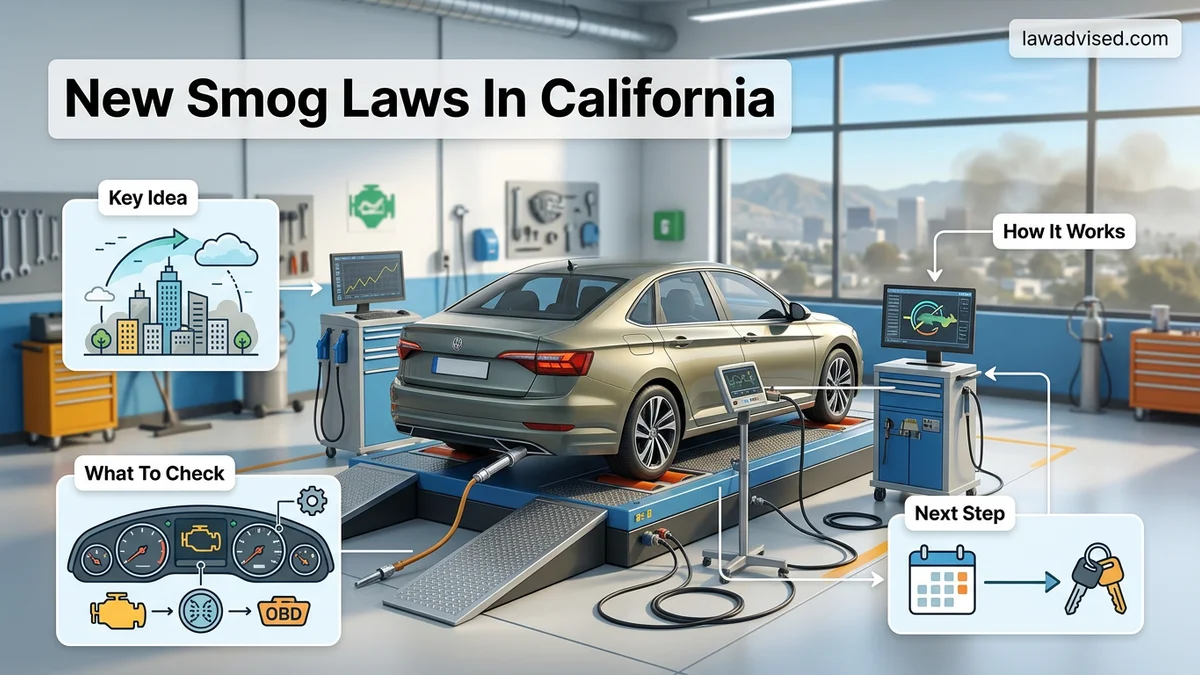
What Causes New Smog Laws in California to Flag Modified Vehicles
ECU Calibration Verification and CVN Matching
Modern Smog Inspection Machines automatically cross-reference your vehicle’s Calibration Verification Number (CVN) and Calibration ID (Cal ID) against a massive database provided by original equipment manufacturers. If your vehicle runs a performance flash, a stage 1 or stage 2 tune, or an altered torque-limiter table, the checksum values will not match factory parameters.
- The testing equipment flags the discrepancy immediately as a non-approved calibration.
- Even if your tailpipe emissions are completely clean, a modified CVN results in an automatic tamper failure.
- Re-flashing back to stock is the only native way to clear this specific algorithmic flag.
OBD-II Monitor Readiness and Software Patches
California smog inspectors no longer rely solely on physical tailpipe probes for most vehicles built after 2000. Instead, the state inspector plugs directly into your data link connector to read internal computer self-tests.
- Using software patches or secondary O2 sensor disable codes triggers a red flag in the state database.
- If your readiness monitors show “not supported” when they should be supported based on factory specs, the system blocks the test.
- Tuners who disable EVAP systems or catalytic converter efficiency checks via software will fail instantly under 2027 parameters.
How to Fix OBD-II Software Mismatches and ECU Tune Issues
Restoring Factory ROM Images Before Testing
If you modified your car’s computer for track use or better fuel economy, you must return the powertrain control module to pure factory specifications before visiting a test center. Dealerships and specialized tuning shops can flash your VIN with the latest official OEM software update.
- Always confirm that your specific ECU part number matches the manufacturer database entry for your exact trim level.
- Drive your car through a complete generic drive cycle to set all internal readiness monitors after flashing.
- Avoid quick-reset tools that wipe all diagnostic trouble codes minutes before the test, as this automatically resets readiness monitors to incomplete.
Navigating State Referee Referrals for Hardware Changes
Vehicles flagged for suspected tampering are locked out of standard test-only and test-and-repair stations. You must book an appointment with a Bureau of Automotive Repair Referee center to clear the status.
- The referee will inspect your vehicle using deep-level diagnostic tools to check physical emissions equipment and software authenticity.
- If you installed aftermarket parts, ensure you have California Air Resources Board Executive Order (CARB EO) numbers clearly stamped on replacement components like cold air intakes or exhaust headers.
- Unapproved aftermarket hardware paired with altered software requires you to purchase and install OEM-certified components to pass re-inspection.
Step-by-Step Guide to Preparing Your Car for Modern Smog Tests
Preparing a vehicle for California’s strict 2027 smog inspection protocols requires more than just clearing dashboard warning lights. According to the California Air Resources Board (CARB), modern OBD-II continuous monitors must run successfully to pass the electronic scan. Motorists can follow a structured compliance process to ensure their vehicle meets the updated 2027 standards on the first attempt.
Step 1: Complete the Official CARB Drive Cycle
- Ensure your fuel tank is between one-quarter and three-quarters full, as extreme fuel levels prevent evaporative monitor self-testing.
- Start a cold engine and let it idle for exactly three minutes with the rear defroster and air conditioning turned on.
- Accelerate smoothly up to 55 miles per hour, maintaining a steady speed without cruise control for five continuous minutes.
- Decelerate safely down to 20 miles per hour without touching the brake pedal if traffic permits.
- Drive in stop-and-go city traffic for at least ten minutes, incorporating multiple acceleration and deceleration phases.
Step 2: Verification and Final Inspection
- Connect an advanced OBD-II scanner capable of reading enhanced manufacturer readiness monitors.
- Verify that all mandatory emission monitors, including catalyst, oxygen sensor, and evaporative system, display a “Ready” status.
- Inspect the physical exhaust system for aftermarket modifications that lack a verified CARB Executive Order (EO) number.
- Check the gas cap seal for dry cracking or degradation, replacing it with an OEM-certified component if necessary.
What If It Still Doesn’t Work After Flashing Factory Software?
If a vehicle fails the emissions inspection or fails to set monitors even after flashing authorized factory software, deeper mechanical intervention is required. According to Bureau of Automotive Repair (BAR) technical data, persistent readiness failures often stem from degraded hardware rather than software anomalies. Drivers facing this persistent compliance hurdle should execute the following fallback steps:
- Inspect downstream and upstream oxygen sensors for sluggish response times, as aging sensors prevent the powertrain control module from completing closed-loop fuel monitoring.
- Test the catalytic converter efficiency using an infrared pyrometer to measure temperature differentials between the inlet and outlet pipes.
- Check the secondary air injection system for carbon buildup or restricted air pump functionality, a frequent failure point in high-mileage vehicles.
- Consult a BAR-certified Gold Shield smog repair station for professional diagnostic testing using an oscilloscope and smoke machine.
- Budget for estimated professional repair costs ranging from $300 to $1,500 depending on whether catalytic replacement or deep electrical harness repair is required.
Conclusion
Navigating California’s stringent 2027 smog regulations demands vigilance regarding software compliance, pristine hardware health, and precise drive cycle execution. Addressing aftermarket modifications early prevents costly compliance rejections at the testing station. According to verified research and expert sources from the California Air Resources Board, proactive vehicle maintenance remains the most reliable method for passing enhanced electronic inspections. Schedule your pre-inspection diagnostic check today to secure your vehicle’s registration compliance for 2027.
❓ Frequently Asked Questions
What specific changes were introduced with the new smog laws in California?
The latest updates heavily target electronic emissions controls by integrating direct ECU software verification, making it impossible to pass testing with hidden aftermarket performance tunes even if tailpipe emissions are clean.
How does the Bureau of Automotive Repair check for ECU tampering?
During the standard OBD-II test, the inspection machine automatically compares your car’s Calibration Identification (CALID) and Calibration Verification Number (CVN) against CARB’s database of certified software.
Are diesel vehicles subject to the same strict electronic testing rules?
Yes, diesel vehicles model year 1998 and newer with a Gross Vehicle Weight Rating under 14,000 pounds must undergo the same OBD-II scan and software verification checks during their biennial inspections.
What should I do if my used car purchase has an unauthorized aftermarket tune?
You will need to take the vehicle to a dealership or certified performance shop capable of flashing the original equipment manufacturer (OEM) stock software back onto the powertrain control module.
Does clearing diagnostic trouble codes right before a test work under the new rules?
No, clearing codes resets your vehicle’s internal readiness monitors. Smog machines will detect incomplete monitors and automatically reject the test until all drive cycles are properly completed.
How can I verify if my aftermarket intake or exhaust is legal?
Check the component for a visible CARB EO label or look up the part number directly on the official California Air Resources Board aftermarket parts database before scheduling your test.

Ismail Hossain is the founder of Law Advised. He is an Divorce, Separation, marriage lawyer. Follow him.