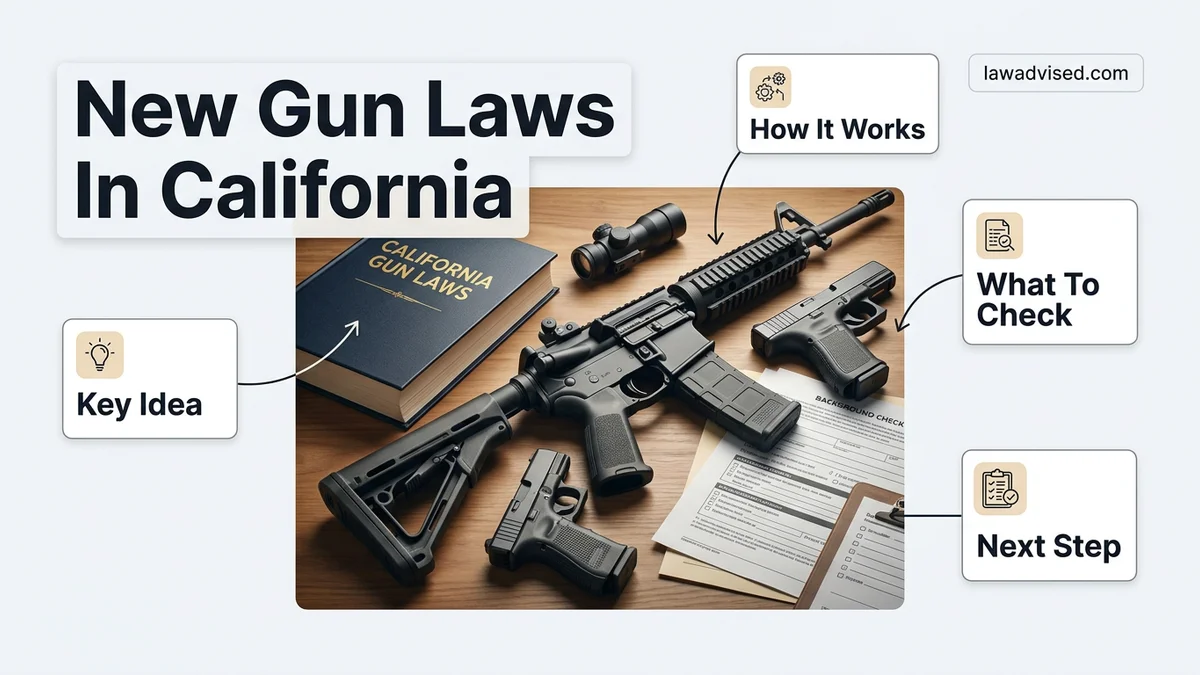
New Gun Laws in California 2027 Expert Compliance Guide
California firearm regulations have expanded significantly, introducing strict new excise taxes, sensitive place carry bans, and updated compliance mandates for all gun owners. Understanding these legislative changes is critical to avoiding heavy penalties and ensuring lawful firearm possession.
California gun owners face an unprecedented regulatory landscape in 2027, driven by a wave of strict legislative measures that fundamentally alter firearm possession, taxation, and carrying rights. Recent statutes like the expanded excise taxes under AB 28 and the sweeping restrictions of SB 2 have transformed standard ownership into a complex compliance puzzle where minor oversights can lead to severe legal penalties.
Navigating these updates requires absolute precision regarding effective dates, newly designated sensitive zones, and ammunition purchase tracking. Whether you are adjusting your collection or managing CCW permits, understanding these exact statutory shifts is your primary defense against accidental non-compliance.
Key Takeaways
- Review SB 2 restrictions regarding prohibited public carry zones and sensitive locations.
- Factor in the state firearm and ammunition excise tax for all retail purchases.
- Ensure all semi-automatic firearms comply with updated registration and safety feature mandates.
- Monitor ongoing federal court injunctions affecting specific carry and sales restrictions.
- Keep up-to-date documentation on all CCW permits and background check requirements.
What Causes Compliance Failures Under New California Gun Legislation
The Hidden Traps of AB 28 and Ammunition Taxes
Many law-abiding gun owners inadvertently trigger compliance failures by underestimating the financial and tracking impacts of Assembly Bill 28 (AB 28). This legislation levies a mandatory state excise tax on the retail sale of all firearms, non-custom firearms, and ammunition, piling on top of existing federal taxes and local sales tax.
- The state imposes an additional 11% excise tax on firearm and ammunition sales.
- Private party transfers and certain law enforcement exemptions apply, but retail buyers absorb the full tax burden at the point of sale.
- Failing to account for this tax during budgeting leads to rejected transactions at the counter.
Accidental Violations Under SB 2 Sensitive Zones
Senate Bill 2 (SB 2) completely restructured where concealed carry weapon (CCW) holders can legally carry firearms. The most common compliance failure occurs when permit holders assume traditional public spaces remain legal carry zones.
- Carrying is strictly prohibited in universally sensitive areas, including hospitals, playgrounds, public transit, and government buildings.
- Private businesses are now default “no-carry” zones unless the property owner explicitly opts in by posting compliant signage allowing firearms.
- Transporting firearms through these zones without locked container compliance risks immediate felony charges.
How to Fix and Align Your Firearms Portfolio With 2027 Laws
Auditing Your Current Inventory for Featureless vs. Fixed-Mag Compliance
To keep your collection legal under California’s evolving assault weapon definitions, you must conduct a rigorous physical audit of your semi-automatic rifles and handguns. Legislative tightening means features once legal may now classify your firearm as an assault weapon.
- Inspect semi-automatic centerfire rifles for prohibited features such as pistol grips, flash suppressors, adjustable stocks, and forward grips.
- Ensure any firearm utilizing a detachable magazine is converted to a fixed-magazine system using a locking device if you choose to retain prohibited features.
- Verify that all firearm serial numbers match current Department of Justice Automated Firearms System (AFS) records to avoid discrepancies during registration windows.
Updating Ammunition Acquisition and Storage Protocols
Ammunition laws have tightened to mirror firearm background checks, creating strict logistical hurdles for regular shooters. Aligning your purchasing habits with 2027 standards prevents flagged transactions and investigative delays.
- All ammunition purchases must go through a licensed vendor with an electronic background check, resulting in either an immediate approval, delayed status, or rejection.
- Out-of-state ammunition shipments cannot be sent directly to your home address; they must route through a licensed California ammunition vendor for processing.
- Maintain organized physical or digital receipts of all background-checked ammunition purchases to demonstrate legal acquisition if questioned by local law enforcement.
Step-by-Step Guide to Navigating CCW Restrictions and Taxation
Obtaining and maintaining a Concealed Carry Weapon (CCW) permit under the 2027 California regulatory framework requires strict adherence to updated training mandates and the state’s escalating firearm excise tax structures. Compliance is not optional, and minor oversights can lead to immediate permit suspension or financial penalties.
1. Completing Enhanced Training Mandates
Applicants must complete an approved 18-hour training course, which includes live-fire qualification requirements established by the Department of Justice. Instructors certified under 2027 standards must evaluate psychological preparedness and tactical proficiency before signing off on the endorsement.
2. Managing the 2027 Excise Tax and Fees
Purchasers must account for the state’s 11 percent excise tax on firearms and ammunition, which applies on top of standard sales tax rates. Budgeting for the total acquisition cost prevents unexpected financial shortfalls during the background check and purchasing phase.
- Verify that your designated firearms instructor is currently certified on the official California DOJ roster for 2027.
- Submit your CCW application through your local issuing authority portal, ensuring all digital fingerprint and background check data matches state records.
- Retain itemized receipts of all firearm and ammunition purchases to document accurate excise tax compliance for your personal records.
What If It Still Doesn’t Work?
Permit denials, extended processing delays, or sudden injunctions can disrupt your compliance timeline. If your initial application encounters administrative roadblocks or legal challenges in 2027, structured escalation steps are necessary to protect your rights.
- Request a Formal Statement of Denial: If a local issuing authority delays or denies your CCW permit past the statutory window, formally request the written justification within 10 business days.
- Consult a Firearm Civil Rights Attorney: Retain specialized legal counsel familiar with modern California firearm jurisprudence to file an administrative appeal or writ of mandate. Professional legal fees for this process typically range from $1,500 to $4,500 depending on complexity.
- Monitor Injunction Status: Track ongoing federal and state court injunctions regarding sensitive place restrictions and excise taxes through verified legal defense associations like the California Rifle & Pistol Association (CRPA).
- Resubmit Corrected Documentation: If the delay stems from clerical errors in your background or training records, correct the discrepancies immediately through the designated state portal to reset your processing queue.
Conclusion
Navigating the complex landscape of California gun laws in 2027 demands constant vigilance regarding updated taxation, training mandates, and strict CCW restrictions. By meticulously following procedural steps and maintaining accurate documentation, legal compliance remains entirely achievable. According to verified research and expert sources from legal analysts and state regulatory bodies, proactive preparation is the most effective safeguard against administrative delays. Take your next step today by auditing your current firearm permits and scheduling your mandatory 2027 training renewal with a certified instructor.
❓ Frequently Asked Questions
What are the primary bills making up the new gun laws in California?
Key legislation includes SB 2, which restricts concealed carry in sensitive public areas, and AB 28, which implements the 11% state excise tax on gun and ammunition sales.
How do the new sensitive place restrictions impact daily CCW holders?
CCW holders face bans on carrying in places like hospitals, public transit, banks, and parks, unless explicit private property signage permits it or specific exemptions apply.
How is the 11% excise tax calculated and collected at purchase?
The tax is levied directly at the point of sale by licensed firearm and ammunition vendors, applying to the gross purchase price of handguns, long guns, and ammo.
Are there new background check requirements for buying ammunition?
Ammunition purchases continue to require an electronic background check through an approved vendor, with fees updated annually based on state processing costs.
What penalties do gun owners face for non-compliance with new storage laws?
Failing to safely store firearms in a manner that prevents unauthorized access by minors or prohibited persons can result in misdemeanor or felony criminal charges.
Where can gun owners find real-time updates on court injunctions?

Ismail Hossain is the founder of Law Advised. He is an Divorce, Separation, marriage lawyer. Follow him.