Tinting Laws In California Expert Guide 2027
tinting laws in california is an essential topic with practical applications and significant benefits. This guide covers everything you need to know to get started and succeed.
California Vehicle Code (CVC) 26708 strictly regulates window tinting by enforcing precise Visible Light Transmission (VLT) percentages across different vehicle windows. For sedans, your front side windows must allow more than 70% of light in, while multipurpose vehicles and SUVs enjoy more flexibility on rear configurations. Law enforcement agencies across the state actively monitor these legal limits using digital VLT meters, making compliance essential for every driver navigating California roads in 2027.
Navigating these regulations prevents costly fix-it tickets and potential inspection delays. Whether you drive a daily commuter car or a weekend truck, knowing the exact threshold between legal comfort and an expensive citation keeps you fully protected. Let us examine the exact breakdown of how California treats passenger cars versus multi-purpose vehicles under current 2027 enforcement standards.
Key Takeaways
- Understanding tinting laws in california:Essential knowledge for success in this area
- Practical applications:Real-world scenarios and proven use cases
- Key benefits:Significant advantages when implemented correctly
- Best practices:Important guidelines and expert recommendations
- Future trends:Evolving landscape and emerging opportunities
Understanding tinting laws in california
California law separates window tint limits based on your vehicle classification. The distinctions between a standard passenger sedan and an SUV dictate how dark you can legally go. Knowing these boundaries stops you from wasting money on non-compliant film installations.
Sedan versus SUV VLT limits
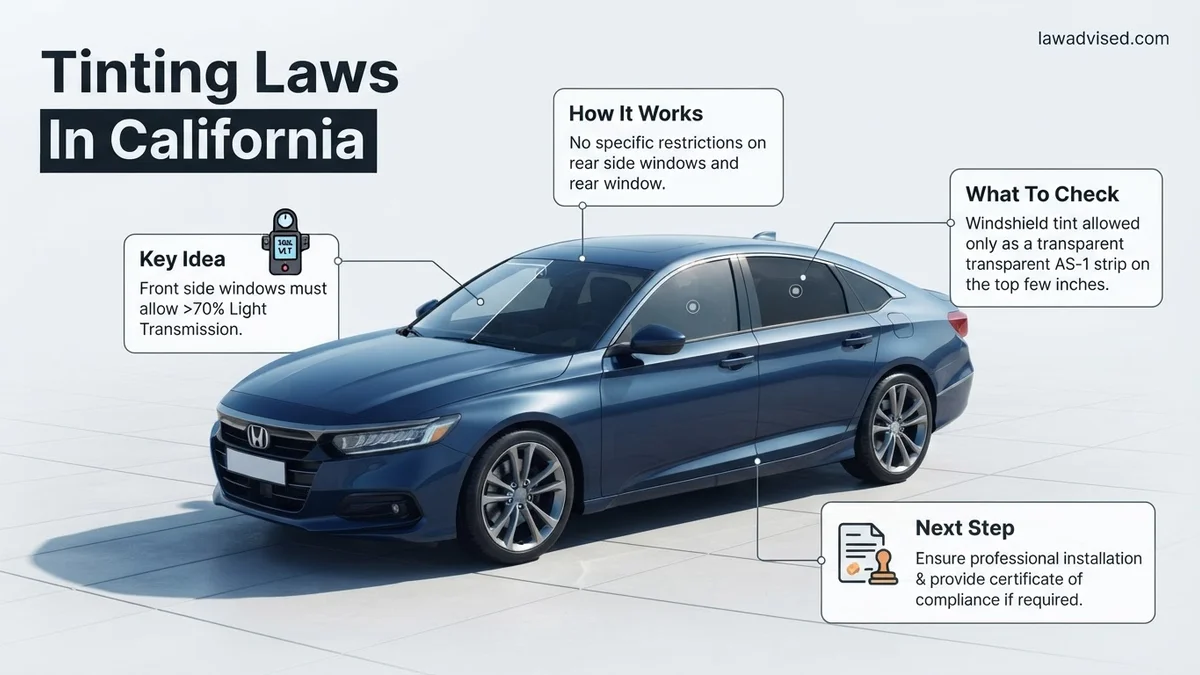
- Sedans and Passenger Cars: Your windshield and front side windows must let in at least 70% of light. However, you can apply any darkness level you prefer to the rear side windows and rear windshield.
- MPVs, Trucks, and SUVs: The front windshield and front side windows still must meet the strict 70% VLT rule. Unlike sedans, your rear side windows and rear glass can be tinted to any darkness level you choose.
- The Windshield Exception: No dark tint is allowed on the main windshield. You can only apply a non-reflective tint band along the very top AS-1 line, provided it does not extend more than four inches below the top edge.
Reflectivity and color restrictions
- Metallic Reflectivity: California law prohibits window tint that is excessively reflective. Your window film cannot have a reflectivity rating that exceeds standard factory glass to prevent blinding glare to other drivers.
- Illegal Colors: Red and amber tint colors are strictly banned on all automotive windows. These specific hues are legally reserved exclusively for emergency and official service vehicles.
- Double Layering: Stacking multiple layers of film to manipulate your overall VLT percentage is illegal if the combined output fails to meet statutory clarity minimums.
Key Benefits of tinting laws in california
Clear legal standards for window tinting create a safer driving environment for everyone on the highway. Understanding the reasoning behind these rules helps you appreciate why law enforcement maintains strict boundaries for front-row visibility.
Safety and visibility priorities
- Interpersonal Communication: Allowing 70% light transmission on front windows ensures police officers can clearly see inside your cabin during routine traffic stops.
- Nighttime Pedestrian Safety: Restricting dark film on front side windows and windshields guarantees you maintain optimal peripheral vision when driving unlit streets after dark.
- Glare Reduction: Permitted light filtration reduces eye fatigue caused by blinding daytime sun without completely compromising your external field of view.
Interior protection and comfort
- UV Ray Blocking: Even legal 70% VLT films block a massive percentage of harmful ultraviolet rays, protecting your skin during long daily commutes.
- Cabin Temperature Regulation: Authorized solar films reject significant infrared heat, keeping your vehicle interior cooler during intense California heatwaves.
- Upholstery Preservation: Minimizing direct sun exposure stops your dashboard, steering wheel, and leather seats from cracking and fading prematurely.
How to Get Started with tinting laws in california
Navigating window tint regulations requires a structured approach to ensure absolute compliance with California Vehicle Code (CVC) Section 26708. Drivers must evaluate their current window configurations before applying any new films in 2027.
Step-by-Step Compliance Procedure
- Measure existing VLT: Use a digital light meter to check the current Visible Light Transmission of your front side, rear side, and rear windows.
- Verify medical exemptions: If a dermatological or medical condition requires darker protection, secure a signed statement from a licensed California physician before proceeding.
- Select certified materials: Purchase legal films from manufacturers that clearly certify compliance with California’s specific reflectivity and VLT thresholds.
- Consult a professional installer: Partner with a licensed local tint shop that provides compliance documentation and guarantees adherence to the latest 2027 state standards.
Best Practices for tinting laws in california
Maintaining long-term compliance and avoiding costly citations involves adhering to established industry best practices. Law enforcement agencies across California utilize precise optical meters during traffic stops, making precision essential.
Optimal Maintenance and Selection Strategies
- Keep certificates in the vehicle: Always store your film manufacturer’s compliance certificate and your professional installation receipt inside your glove compartment.
- Avoid metallic finishes: Restrict your film choices to non-reflective or ceramic options to strictly comply with the state ban on excessive mirror-like reflectivity on front windows.
- Prioritize heat rejection over darkness: Utilize high-grade nano-ceramic films that block infrared heat effectively without dropping below the mandatory 70 percent VLT limit on front side glass.
- Schedule annual inspections: Have a professional tint technician inspect your windows yearly to check for bubbling, fading, or peeling that could alter light transmission levels.
What If It Still Doesn’t Work?
If your vehicle fails a law enforcement inspection or a mandatory safety check due to non-compliant window tint, immediate corrective action is necessary to clear potential fix-it tickets. Try these troubleshooting steps to resolve the issue:
- Visit a professional removal specialist: Do not attempt DIY scraping, as modern adhesive layers require specialized steam equipment to remove without damaging rear defroster grids.
- Seek professional re-installation: Have a certified shop apply a legal 70 percent VLT film that brings your front side windows back into full compliance with CVC 26708.
- Obtain a signed correction form: Take the rectified vehicle to a local law enforcement agency or designated inspection station to have your citation signed off.
- Prepare for standard service costs: Professional tint removal typically ranges from $100 to $250, while full re-installation of compliant film ranges between $200 and $500 depending on vehicle size.
Conclusion
Complying with California window tint regulations protects drivers from costly fines, mandatory correction notices, and failed vehicle inspections. By selecting legal VLT percentages and keeping proper documentation inside the vehicle, motorists ensure a hassle-free driving experience. According to verified research and expert legal sources, taking a proactive approach to automotive modifications remains the single most effective way to stay fully compliant with current state vehicle codes.
❓ Frequently Asked Questions
What exactly is tinting laws in california?
tinting laws in california encompasses proven concepts and methodologies that help you achieve better results. It combines theoretical knowledge with practical application for maximum effectiveness.
How can tinting laws in california benefit me?
Understanding and applying tinting laws in california principles improves your skills, opens new opportunities, and helps you achieve your goals more efficiently.
What resources do I need to get started?
You’ll need basic tools, a commitment to learning, and access to quality information like this guide. Start with fundamentals before advancing to complex topics.
Is this suitable for complete beginners?
Absolutely! This guide is designed to take you from beginner to proficient. Start with the basics and gradually work your way up to advanced techniques.
How do I measure my progress?
Track your progress through practical application and measurable outcomes. Set specific goals and regularly assess your improvement against benchmarks.
Where can I learn more after this guide?
Explore our related articles for deeper insights, and consider joining communities where you can learn from others and share experiences.

Ismail Hossain is the founder of Law Advised. He is an Divorce, Separation, marriage lawyer. Follow him.