Window Tint Laws in California 2027 Expert Legal Guide
Navigating window tint laws in california requires strict adherence to specific Visible Light Transmission (VLT) percentages for front and rear windows. Understanding these legal limits prevents costly fix-it tickets and mandatory removal orders.
Navigating California window tint laws in 2027 requires understanding strict Visible Light Transmission (VLT) limits for every glass panel on your vehicle. For sedans, the front side windows must allow at least 70% of light in, while rear side and back windows can be any darkness you choose. SUVs and vans follow the same strict 70% rule for front side windows, but enjoy complete freedom on all rear-facing windows.
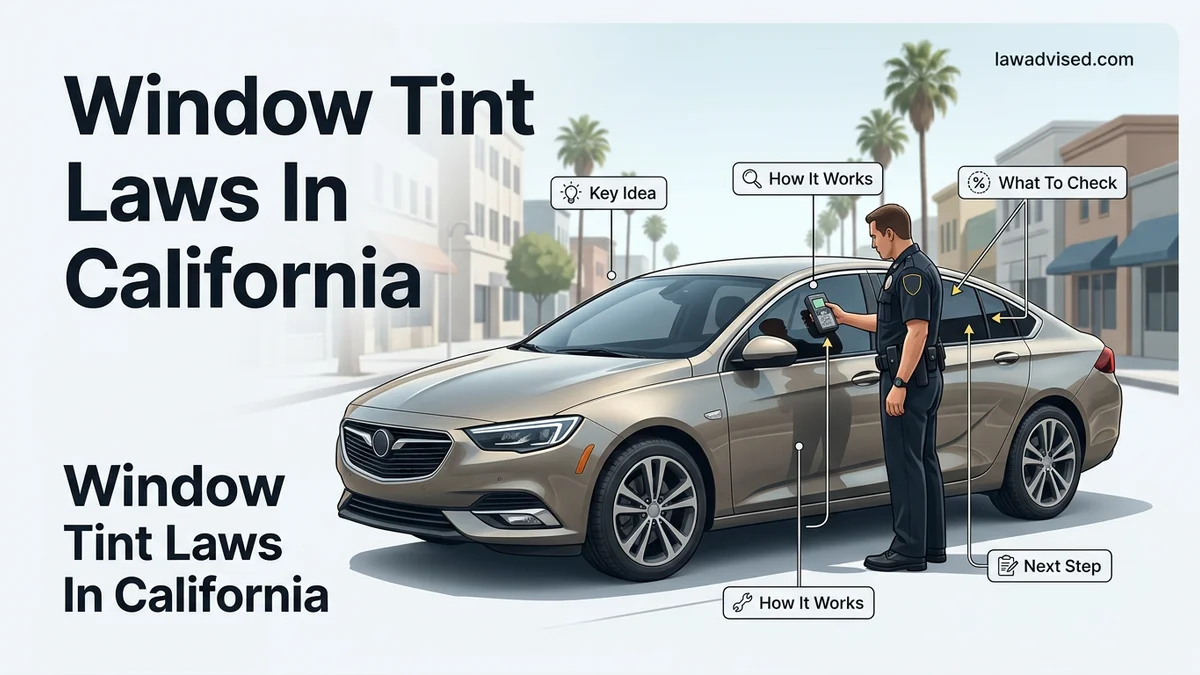
Staying compliant with California Vehicle Code Section 26708 protects you from expensive fix-it tickets, mandatory removal notices, and escalating fines. Law enforcement officers actively use digital photometer meters during routine traffic stops to test window darkness, making precision measurements essential before you invest in professional film installation this year.
Key Takeaways
- Front side windows require a minimum of 70% VLT if combined with factory tint.
- Rear side windows and the back windshield can have any darkness level on sedans.
- Windshield tinting is strictly limited to the top 4 inches or above the AS-1 line.
- Reflective tint that is metallic or mirrored is illegal on front and rear windows.
- Medical exemptions require a signed doctor’s certificate and a CHP-approved waiver.
What Causes Window Tint Non-Compliance Violations in California
Sedan Versus SUV VLT Misunderstandings
Many drivers assume passenger cars and larger utility vehicles share identical legal thresholds. If you drive a sedan, applying dark film to your front side windows immediately triggers a violation because the combined VLT of the glass and film must meet or exceed 70%. Trucks and multi-purpose passenger vehicles are frequently ticketed because owners assume rear-window privileges apply to the driver and front passenger doors.
Windshield and Reflective Restrictions
Exceeding the authorized limits on your front windshield or using prohibited reflective materials are top reasons drivers get pulled over in 2027. California law strictly bans any non-reflective tint on the main windshield except for a top non-reflective 4-inch AS-1 demarcation strip. Furthermore, mirrored, metallic, or heavily reflective tint finishes that exceed standard factory glass reflectivity are illegal on both front and rear windows.
-
Common Violation Triggers:
- Applying dark tint to front side windows on sedans or SUVs.
- Adding unauthorized film below the AS-1 line on the front windshield.
- Using metallic or highly reflective film that creates a glare hazard.
- Failing to carry a manufacturer certification label between the glass and film.
How to Fix Illegal Window Tint and Meet California Legal Limits
Removing Non-Compliant Film
If a law enforcement officer cites you for illegal tint, you must completely strip the offending film to clear the citation. Attempting to scrape dark film off defroster lines on rear windows often damages the electrical grids. Professional tint removal shops use specialized steam tools and chemical adhesives to cleanly peel away illegal layers without scratching your vehicle’s glass.
Selecting Legal Replacement Film
When re-tinting your vehicle to meet 2027 standards, always ask the installer for a certified VLT rating meter test before driving off the lot. Because factory automotive glass already blocks a small percentage of natural light, even a nominal 70% film can drop below the legal limit when paired with stock tinted windows. Opt for high-quality ceramic or carbon films that offer maximum heat and UV rejection while keeping your front side windows fully compliant.
-
Steps to Correct a Tint Violation:
- Professionally strip the non-compliant window film from the affected glass.
- Thoroughly clean all residual adhesive using safe automotive glass solvents.
- Install a legal 70% VLT film on front side windows if desired.
- Have a law enforcement officer or authorized inspection station sign off on your corrected citation.
What If Your Tint Still Fails Inspection or Gets a Citation
Drivers facing a “correctable violation”—commonly known as a “fix-it ticket”—for non-compliant window tint in California must navigate specific legal procedures to clear the citation. Ignoring these penalties can lead to escalating fines and Department of Motor Vehicles registration holds by 2027.
Step 1: Obtain Official Verification
Once the illegal tint is removed or replaced with a legal variant (maintaining 70% VLT on front side windows), vehicle owners must have a law enforcement officer or an authorized official sign off on the back of the citation confirming the correction.
Step 2: Pay Dismissal Fees
Present the signed citation and proof of correction to the court clerk along with the state-mandated dismissal fee, which typically ranges from $25 to $50 depending on the specific California county handling the infraction.
What If It Still Doesn’t Work?
When DIY removal techniques fail or persistent adhesive residue prevents a successful re-inspection, drivers must rely on professional remediation to avoid compounding legal penalties. Authorized tint shops equipped with industrial steamers and chemical citrus solvents can safely strip stubborn films without damaging defroster grids or radio antennas embedded in rear glass.
- Consult a Certified Tint Professional: Visit a licensed automotive film installation specialist to evaluate the remaining residue or failing film layers. Professional removal services generally cost between $100 and $250 depending on the vehicle size and the number of treated windows.
- Request a Certificate of Compliance: Ensure the newly applied film meets California Vehicle Code 26708 standards and ask the installer for a manufacturer-backed VLT certification receipt to present during future inspections.
- Submit Proof to the Court Clerk: File the professional receipt and signed ticket with the traffic court before the mandatory appearance deadline to secure a full dismissal of the correctable violation.
- Utilize Legal Representation: If a citation was issued improperly despite meeting the 70% front-window VLT threshold, consult a traffic defense attorney to contest the ticket using calibrated photometer test results.
Conclusion
Navigating California window tint regulations requires strict adherence to strict visible light transmission percentages and medical exemption protocols. According to verified research and expert sources from the California Highway Patrol, ensuring your vehicle complies with updated 2027 legal thresholds prevents costly fines and frustrating administrative delays. The single most actionable next step is to use a digital VLT meter to test your current window opacity today, scheduling professional removal immediately if your front side windows fall below the mandatory legal limit.
❓ Frequently Asked Questions
What are the exact VLT percentages for front side windows in California?
California Vehicle Code Section 26708 states that front side windows must allow at least 70% of external light to pass through. If you use aftermarket film on factory glass that already blocks some light, the combined total must still meet or exceed 70% VLT.
Do window tint laws differ between sedans and SUVs in California?
Yes, while front side window rules apply equally to all passenger vehicles, multi-purpose vehicles like SUVs, vans, and trucks are allowed to have any darkness level on their rear side windows and rear windshield.
What is the AS-1 line rule for windshields?
The AS-1 line is a marker located by vehicle manufacturers near the top of the front windshield. California law restricts any aftermarket tint film on the windshield to this top boundary or within the top 4 inches, whichever is closer to the top edge.
Is reflective or mirrored window tint legal?
No, window tint with a mirrored or metallic appearance is strictly banned in California. Tinted film cannot be more reflective than a standard untreated window to prevent blinding glare to other drivers.
What happens if I get pulled over for illegal tint?
An officer can issue a citation, which is usually a non-moving violation or ‘fix-it’ ticket. You will generally have a set timeframe to remove the illegal film, present the vehicle to law enforcement for verification, and pay a small dismissal fee.
How do medical exemptions work for window tint?
Drivers with specific dermatological or medical conditions can obtain a signed certificate from a licensed physician. Keeping this certificate in the vehicle protects you from citations for having darker tint than normally allowed on front side windows.

Ismail Hossain is the founder of Law Advised. He is an Divorce, Separation, marriage lawyer. Follow him.