Marriage Separation Laws in Texas: Essential Facts You Must Know
If you’re facing challenges in your marriage and wondering about your options, understanding marriage separation laws in Texas is crucial. Knowing your rights and what the law allows can protect you and your family during this difficult time.
This article breaks down the key points you need to know, so you can make informed decisions without feeling overwhelmed. Keep reading to find out how Texas law affects your separation and what steps you should take next.
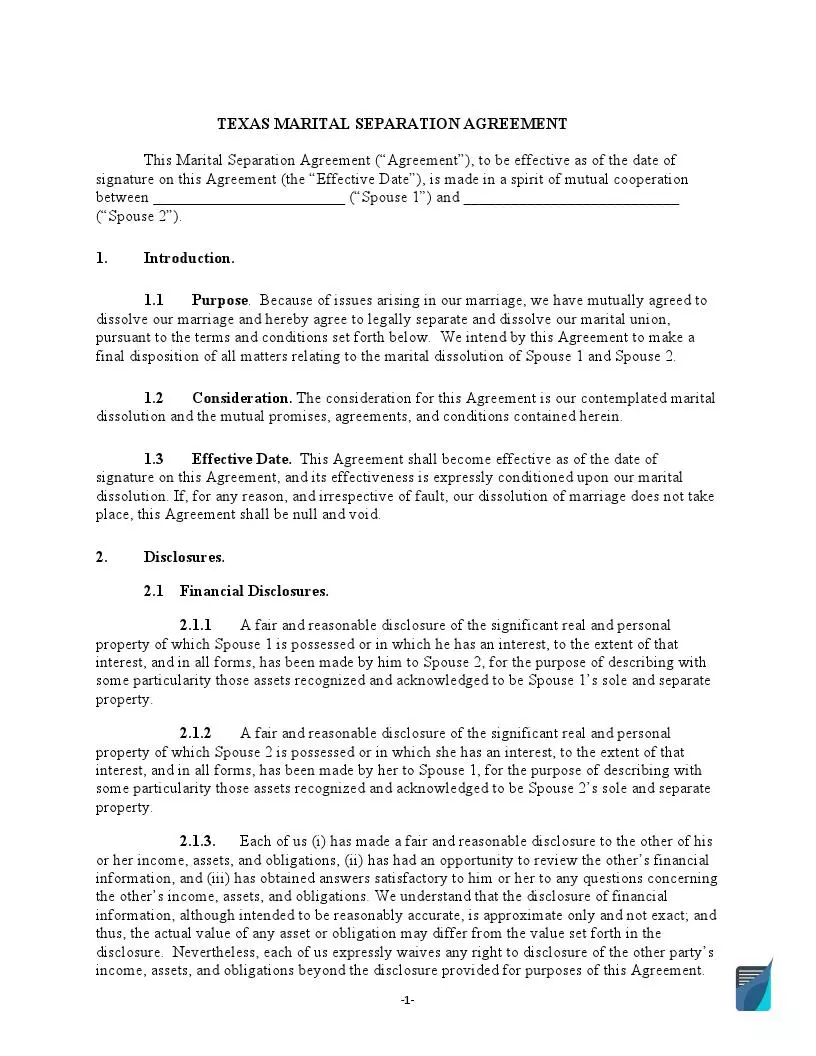
Credit: formspal.com
Legal Grounds For Separation
Understanding the legal grounds for separation in Texas helps couples know their rights. The state allows separation under specific rules. These rules set the path for how couples can live apart legally. Knowing these grounds ensures a clear process during difficult times.
Legal separation differs from divorce but involves formal steps. Texas law recognizes reasons for separation to protect both parties. The law divides these grounds into two main categories. Each has different requirements and effects on the separation process.
No-fault Vs Fault-based Separation
Texas allows no-fault separation. Couples do not need to prove wrongdoing. They only state the marriage has become unworkable. This option is simpler and less stressful.
Fault-based separation requires proving one spouse caused the marriage to break. Grounds include cruelty, adultery, or abandonment. This type may affect property division and support.
Choosing between no-fault or fault-based affects the legal steps. No-fault is quicker and less costly. Fault-based might be necessary if abuse or neglect occurred.
Residency Requirements
Texas law sets residency rules for separation. At least one spouse must live in Texas. The required period is six months before filing.
This rule ensures Texas courts have authority. It helps avoid conflicts with laws from other states. Couples must meet this rule to start the legal separation process.
Meeting residency requirements protects both parties during separation. It makes the legal process smoother. Couples should confirm they meet this before filing.
Separation Agreements
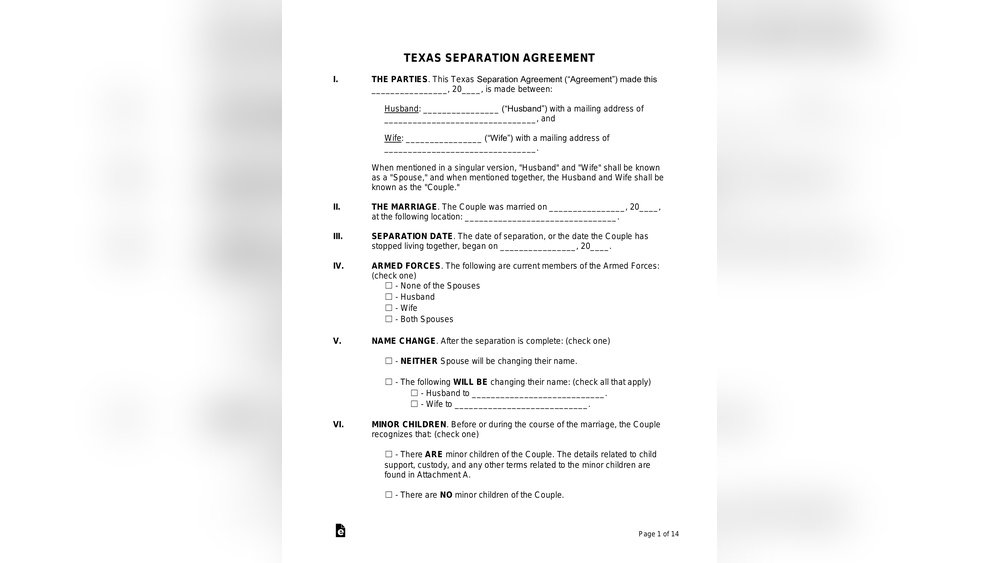
Separation agreements are important legal documents in Texas. They help couples divide their rights and duties during separation. These agreements set clear terms about money, property, and children. They reduce conflicts and make the separation smoother.
Key Components
Separation agreements must cover several key areas. Property division is a major part. Couples decide who keeps what assets and debts. Another section covers spousal support or alimony. The agreement states if and how much support will be paid.
Child custody and visitation rights are also included. The agreement clarifies who the children will live with. It also sets a schedule for visits. Child support payments and healthcare responsibilities are detailed too. These parts protect the best interests of the children.
Enforceability And Modifications
Texas courts usually enforce separation agreements if both parties signed them. The agreement must be fair and voluntary. Courts check that no one was forced or tricked. If terms are clear and legal, the agreement stands.
Changing a separation agreement later is possible but not easy. Both parties must agree to the changes. If one party wants to change terms, they must ask the court. The court reviews the request and decides based on fairness and current situations.
Impact On Property And Finances
Dividing property and managing finances can be difficult during a marriage separation. Texas law has clear rules about how property and money are handled. Understanding these rules helps protect your rights. It also reduces stress during this challenging time.
Property and financial matters often cause many questions. These focus on what belongs to whom and who pays what after separation. The law tries to make this process fair for both parties.
Community Property Rules
Texas follows community property laws. This means most property acquired during marriage belongs to both spouses. It does not matter who earned the money or whose name is on the title.
Separate property includes things owned before marriage or gifts and inheritances. These usually stay with the original owner after separation.
During separation, community property must be divided fairly. Courts try to split assets equally but consider many factors. These include debts, income, and contributions to the marriage.
Spousal Support Considerations
Spousal support, or alimony, may be ordered in some cases. The court looks at each spouse’s financial needs and ability to pay.
Support helps the lower-earning spouse maintain a stable life after separation. It is not automatic and must be proven necessary.
The court decides the amount and length of support based on many factors. These include marriage length, health, and job skills.

Credit: www.tops-products.com
Custody And Child Support
Custody and child support are key issues in Texas marriage separation cases. The law aims to protect children’s best interests. Courts focus on fair decisions about who cares for the children and how support is provided. Understanding these rules helps parents prepare for legal steps ahead.
Determining Custody Arrangements
Texas courts decide custody based on the child’s well-being. The law uses terms like “conservatorship” instead of custody. Joint managing conservatorship means both parents share rights and duties. Sole managing conservatorship gives one parent most decision power.
Court looks at factors like each parent’s ability to care for the child. Stability, safety, and the child’s wishes matter too. The goal is a stable and loving environment for the child.
Calculating Child Support
Child support depends on the paying parent’s income. Texas uses guidelines to calculate fair support amounts. The law sets a percentage of the income based on the number of children. This money covers food, housing, education, and health needs.
Support payments continue until the child turns 18 or graduates high school. Courts may adjust support if income or needs change. Clear rules help parents understand their financial duties.
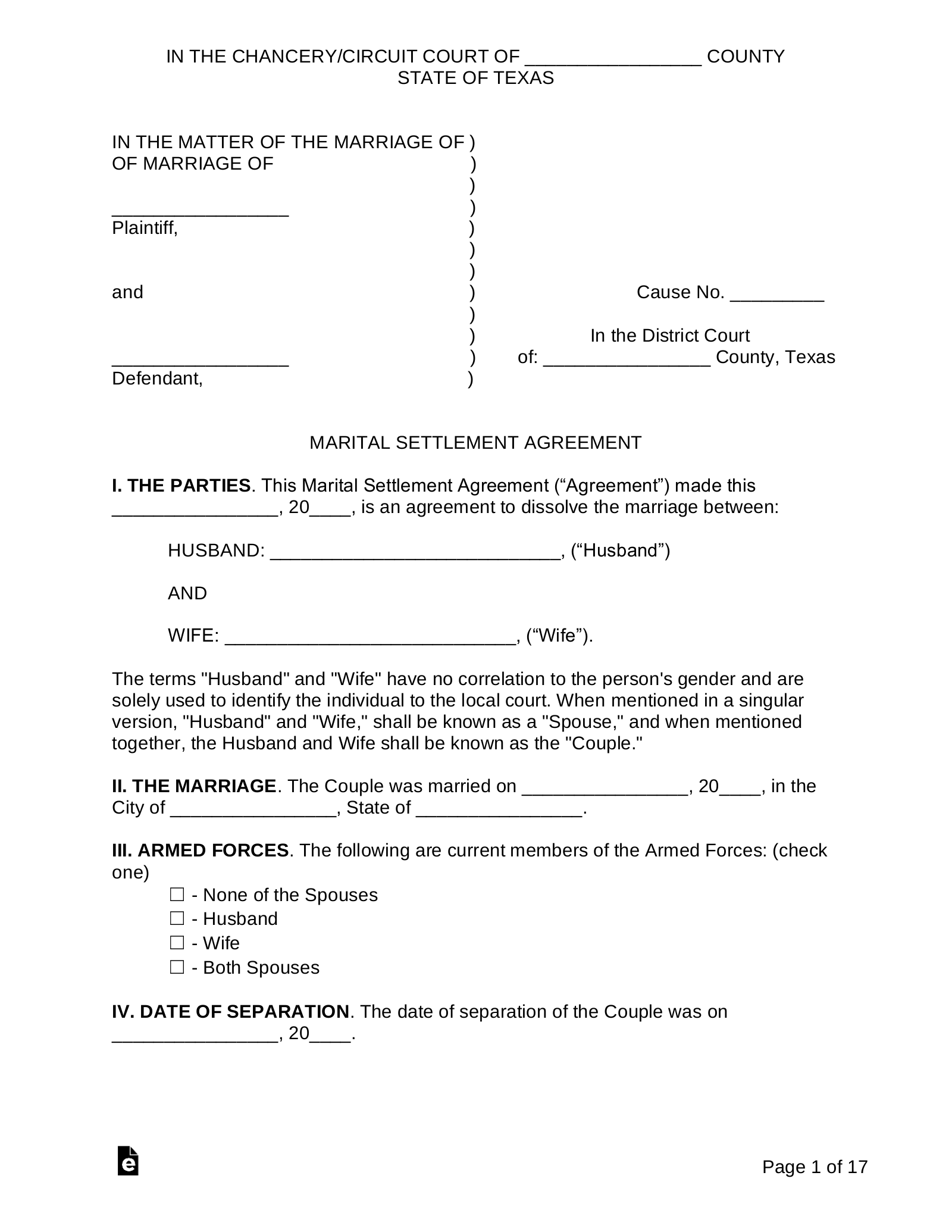
Credit: eforms.com
Frequently Asked Questions
What Is Legal Separation In Texas?
Legal separation is not recognized in Texas. Couples can live apart but remain married until divorce.
How Does Texas Handle Property During Separation?
Texas follows community property laws. All property acquired during marriage is split equally upon divorce.
Can Separated Couples In Texas Get Child Support?
Yes, separated parents must provide child support. Texas courts ensure children’s financial needs are met.
How Long Does Texas Require Separation Before Divorce?
Texas does not require a separation period. Divorce can be filed anytime after meeting residency rules.
Conclusion
Texas marriage separation laws can feel confusing at first. Knowing your rights helps you make smart choices. Separation affects property, children, and support matters. Speak with a lawyer to get clear advice. Taking steps early can ease the process later.
Keep communication open and stay informed about the laws. This way, you protect yourself and your family. Understanding the rules brings peace of mind. Stay calm and take one step at a time.

Ismail Hossain is the founder of Law Advised. He is an Divorce, Separation, marriage lawyer. Follow him.