Booster Seat Laws in California The Best 2027 Guide
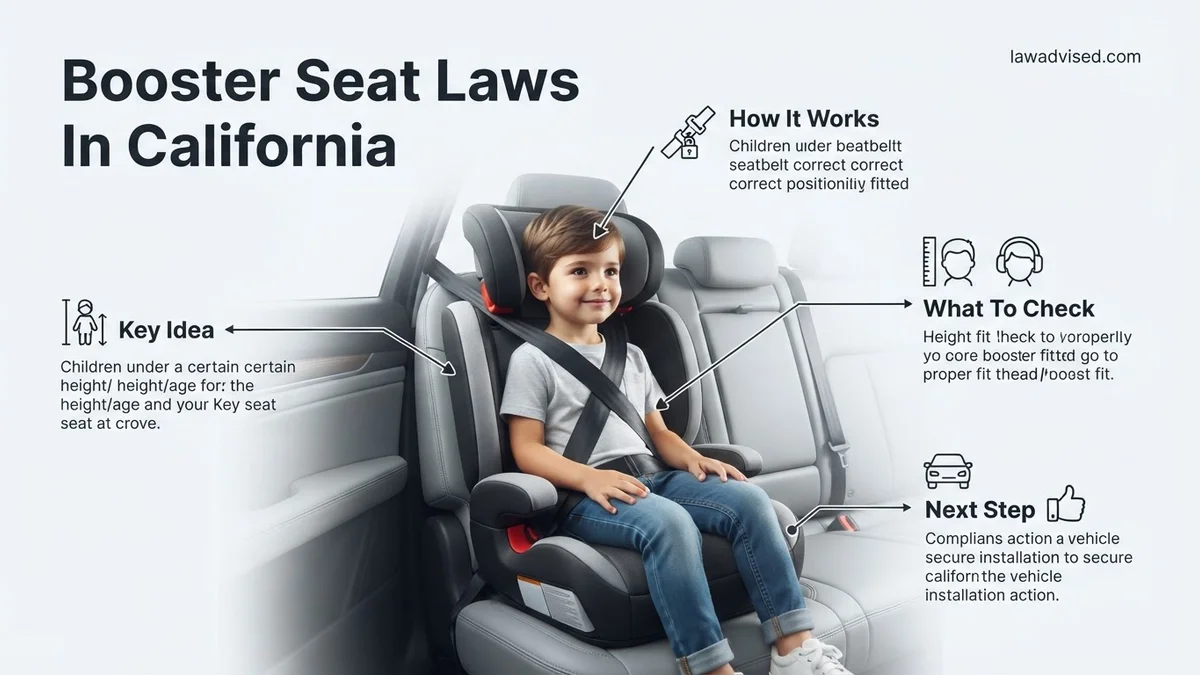
Under California law, children under 8 years old must be secured in a car seat or booster seat in the back seat. Furthermore, children must remain in a booster seat until they reach 4 feet 9 inches in height or are 8 years old.
Navigating California car seat regulations in 2027 requires strict adherence to two defining rules: children must remain in a rear-facing or forward-facing car seat or booster until their eighth birthday, and they cannot transition to a standard adult seatbelt until they reach 4 feet 9 inches in height. Under California law, specifically Assembly Bill 53, age and height work together as mandatory thresholds, meaning passing just one milestone is not enough to legally graduate your child to a regular seatbelt.
Staying fully compliant protects your child from severe crash injuries and shields you from costly traffic citations. Law enforcement officers actively enforce these passenger safety mandates across California highways and local streets, making it essential to understand the exact legal thresholds. Whether you are driving a local school carpool or embarking on a cross-state road trip, knowing these exact specifications ensures your family stays safe and legally protected.
Key Takeaways
- Children under 8 must ride in the back seat using a car or booster seat.
- The height threshold for booster seats is 4 feet 9 inches.
- Rear-facing car seats are strongly recommended until age 2.
- Violating child restraint laws results in hefty fines and court fees.
- Exemptions apply only for medical reasons or vehicles lacking back seats.
What Causes Non-Compliance with California Booster Seat Laws
Misinterpreting the Age and Height Rules
Many parents assume that once a child turns eight years old, they are automatically cleared to use a standard seatbelt. However, California law demands that a child meet both the age minimum and the height requirement of 4 feet 9 inches. If your eight-year-old child stands only 4 feet 6 inches tall, they are still legally required to sit in a booster seat. Relying solely on age is one of the most common reasons drivers receive expensive non-compliance tickets.
Incorrect Back Seat Placement
Another frequent violation involves where children are seated inside the vehicle. California law mandates that children under the age of 8 must be secured in a car seat or booster seat in the back seat of the vehicle. Placing a young child in the front passenger seat violates state law unless specific, narrow exemptions apply, such as a vehicle lacking a rear seat entirely.
- Assuming age 8 is the only magic number for graduation.
- Ignoring the mandatory 4 feet 9 inches height cutoff.
- Allowing children under 8 to ride in the front passenger seat.
- Failing to secure the booster seat with a proper lap and shoulder belt.
How to Fix Your Child’s Car Seat Setup to Meet California Standards
Measuring Your Child Accurately
To ensure your current setup satisfies California standards in 2027, you need precise measurements. Use a rigid tape measure against a flat wall to check your child’s exact height without shoes. If they measure under 57 inches (4 feet 9 inches), keep them in their designated booster seat, even if they have already celebrated their eighth birthday. Check the manufacturer labels on your equipment to verify that your child still falls within the weight and height maximums for that specific model.
Upgrading to High-Back or Backless Boosters
If your child has outgrown their five-point harness car seat but has not yet reached the 4-foot-9-inch height requirement, you must transition them to a belt-positioning booster seat. California law requires these boosters to be used with both a lap and a shoulder belt to properly guide the vehicle’s safety belt across the child’s collarbone and low across the hips.
- Measure your child’s height against a wall every six months.
- Verify that the vehicle shoulder belt crosses the center of your child’s chest, not their neck.
- Ensure the lap belt rests snugly across the upper thighs, never across the soft abdomen.
- Check that your booster seat model complies with current federal safety standards.
Step-by-Step Guide to Transitioning from Car Seats to Boosters
Moving a child from a harness car seat to a booster seat is a major milestone regulated strictly by California safety mandates in 2027. Parents must approach this transition methodically to ensure maximum protection. According to the National Highway Traffic Safety Administration (NHTSA), rushing this process compromises spinal and abdominal safety during a collision.
Assessing Readiness and Limits
Before making any changes, verify that your child has officially outgrown their current forward-facing harnessed car seat. Check the maximum height and weight limits printed directly on the manufacturer label. Most harnessed seats accommodate children up to 65 pounds, but height is often the limiting factor. Do not transition a child simply based on age or peer pressure.
Executing the Transition
- Verify that your child is at least four years old and meets the minimum height and weight specifications of the chosen high-back booster seat, typically starting at 40 pounds.
- Install the booster seat in the back seat of your vehicle. Secure it with the vehicle seat belt or LATCH system if the specific booster model permits lower anchors.
- Place your child in the booster and route the vehicle lap and shoulder belt across them. Ensure the lap belt rests low across the upper thighs, not the soft abdomen.
- Adjust the shoulder belt so it crosses the center of your child’s chest and collarbone, resting snugly against the shoulder without cutting into the neck.
- Check the 5-step fit test established by safety experts: confirm the child sits all the way back against the vehicle seat, knees bend comfortably at the edge, belt positions correctly, and the child stays seated properly for the entire ride.
What If It Still Doesn’t Work?
Sometimes a booster seat does not fit a specific vehicle geometry or a child refuses to sit correctly. If standard adjustments fail, consider these targeted troubleshooting steps:
- Switch from a backless booster to a high-back booster model. High-back options provide superior belt positioning guides for children who slump or shift their shoulders during travel.
- Move the booster seat to a different seating position in the rear. Center seating positions sometimes offer better geometry, provided a proper lap-and-shoulder belt is present.
- Consult a certified Child Passenger Safety Technician (CPST). Local fire stations, hospitals, and Safe Kids coalitions offer free or low-cost inspections. Professional fittings typically range from free to $40 depending on the local agency.
- Extend the use of a high-weight harnessed car seat if your child is under eight years old but struggles to maintain correct posture in a standard belt-positioning booster.
Conclusion
Navigating California booster seat laws in 2027 requires strict adherence to state height and weight mandates to protect young passengers from severe injury. The primary fix involves matching your child’s exact physical measurements to an approved high-back or backless booster while ensuring proper vehicle belt alignment. According to verified research and expert sources from the CDC and NHTSA, keeping children in the correct restraint system reduces fatal injury risk by up to 82 percent compared to seat belts alone. Your actionable next step today is to measure your child’s current height and weight, and cross-reference those numbers against your current car seat labels.
❓ Frequently Asked Questions
What are the exact legal requirements for booster seats in California?
California law mandates that children under 8 years of age or under 4 feet 9 inches in height must be secured in a federally approved car seat or booster seat in the back seat of a vehicle.
When can a child legally switch to a forward-facing car seat?
While California law sets the minimum age for rear-facing seats at age 2, safety experts strongly recommend keeping children rear-facing until they exceed the maximum height and weight limits of their specific convertible seat.
What happens if I get pulled over and my child is not in a booster seat?
Law enforcement can issue a fine of over $400 for a first offense, and points may be added to your driving record, which can impact your auto insurance rates.
Are there any exemptions to California’s booster seat laws?
Exemptions are very rare and typically apply only to medical conditions certified by a physician or to vehicles that were not originally manufactured with rear seats, such as certain pickup trucks.
How do I know if a booster seat fits my child correctly?
The lap belt must lie snugly across the upper thighs, not the soft stomach, and the shoulder belt should cross the center of the chest and shoulder without cutting into the child’s neck.
Do out-of-state visitors have to follow California booster seat laws?
Yes, anyone driving a vehicle within California must comply with state traffic laws regarding child passenger safety restraints, regardless of where their license or vehicle is registered.

Ismail Hossain is the founder of Law Advised. He is an Divorce, Separation, marriage lawyer. Follow him.