Subleasing Laws in California 2027 Expert Legal Guide
Navigating subleasing laws in California requires understanding that tenants generally cannot sublease without explicit landlord permission. Landlords may legally deny requests under specific lease terms, and the original master tenant remains fully liable for rent and property damage.
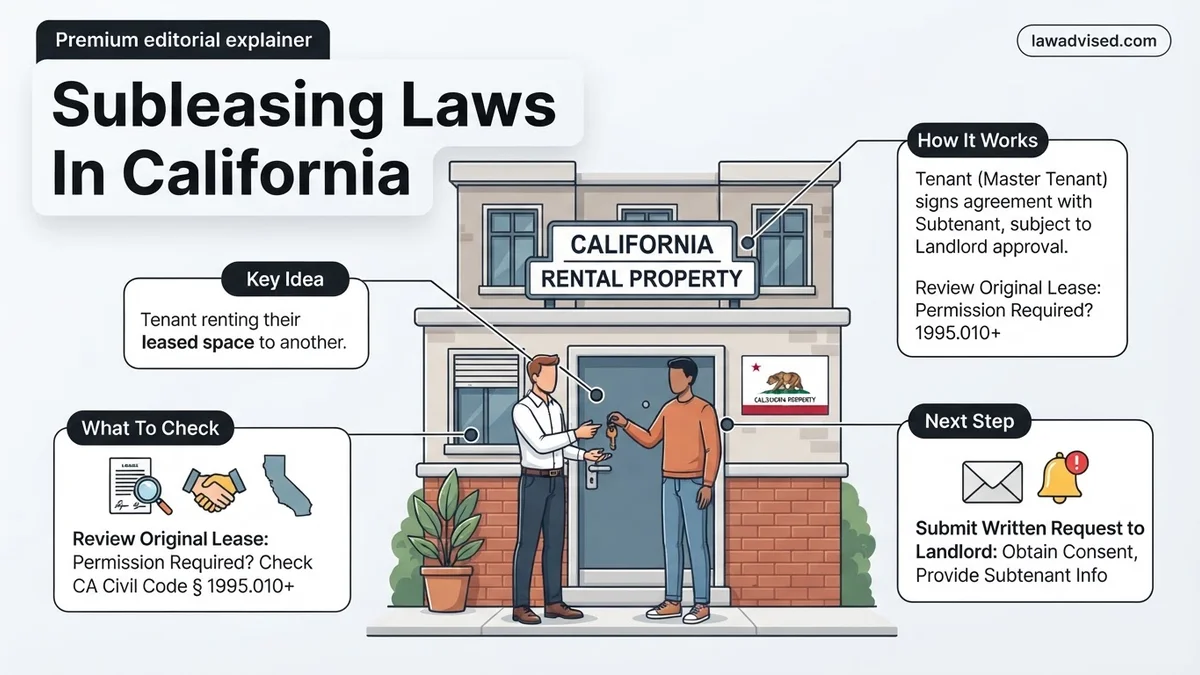
California law establishes that tenants generally have the right to sublease their rental unit, provided their lease does not explicitly prohibit it or require landlord consent. If your lease is silent on the matter, state law permits you to bring in a subtenant, but proceeding without checking your contract can trigger an immediate breach of contract notice.
Navigating sublease regulations in 2027 requires a firm grasp of California Civil Code, landlord withholding rules, and your enduring liability as the master tenant. Protecting your housing stability depends on securing proper written authorization before any money changes hands or a subtenant moves in.
Key Takeaways
- Tenants must obtain written landlord consent before subleasing unless the lease explicitly permits it.
- Master tenants remain legally and financially responsible to the landlord for the subtenant’s actions.
- Rent-stabilized units in California strictly limit how much a master tenant can charge a subtenant.
- Subleasing without permission constitutes a serious lease violation that can trigger eviction proceedings.
- Security deposits collected from subtenants are governed strictly by California Civil Code.
What Causes Illegal Subleasing and Tenant Disputes in California
Most legal battles in California rental housing stem from misunderstandings about lease terms, unauthorized occupants, and landlords refusing reasonable sublease requests. When a primary tenant hands over keys without formal clearance, the situation quickly escalates toward eviction proceedings.
Unapproved Occupants vs. Formal Subleases
Landlords frequently issue three-day notices to cure or quit when they discover unapproved long-term guests or unauthorized roommates. A formal sublease transfers temporary possession of part or all of the property to a third party, creating distinct legal relationships.
- Lease Violations: Moving a partner or friend in permanently without landlord approval violates standard California lease clauses against unauthorized occupants.
- Master Tenant Risk: If you charge the subtenant more rent than your total master lease amount, you may inadvertently violate California rent control laws or illegal profit-making statutes.
- Eviction Exposure: An illegal sublease puts both you and the subtenant at risk of a summary eviction lawsuit under California Code of Civil Procedure Section 1161.
Unreasonable Denials and Landlord Discretion
Under California legal precedent, if your lease states you can sublease with the landlord’s consent, the landlord cannot withhold that consent unreasonably. However, landlords routinely reject subtenants based on specific criteria.
- Failed Credit Checks: A landlord can legally deny a subtenant who fails standard background or credit verification screenings.
- Income Requirements: Rejecting an applicant who does not meet the standard gross income multiplier (typically 2.5x to 3x the rent) is considered reasonable.
- Arbitrary Refusals: Denying a sublease purely out of bias or without a commercially reasonable justification violates California good faith and fair dealing doctrines.
How to Request and Secure a Legally Compliant Sublease Agreement
Securing a legal sublease in 2027 requires strict adherence to notification protocols outlined in your lease agreement and California statute. Skipping these administrative steps strips away your legal protections and hands your landlord grounds for termination.
Submitting a Formal Written Request
You must initiate the sublease process by providing your landlord with written notice well in advance of the planned move-in date. Verbal requests hold zero weight in a California housing court.
- Certified Delivery: Send your sublease request via certified mail with return receipt requested to create an undeniable paper trail.
- Required Details: Include the proposed subtenant’s full legal name, current employment verification, credit history, and references.
- Statutory Timelines: Give your landlord a reasonable window—typically 14 to 30 days—to review the application and respond in writing.
Structuring the Sublease Contract and Liability
Once the landlord grants approval, you need a bulletproof sublease agreement that mirrors your primary lease terms. Crucially, remember that subleasing does not remove your personal responsibility to the property owner.
- Primary Liability: You remain 100 percent liable for unpaid rent and property damage caused by your subtenant under California law.
- Assignment vs. Sublease: Ensure the contract is structured as a sublease, meaning the subtenant answers to you and must vacate when your lease ends, rather than an assignment which transfers all rights permanently.
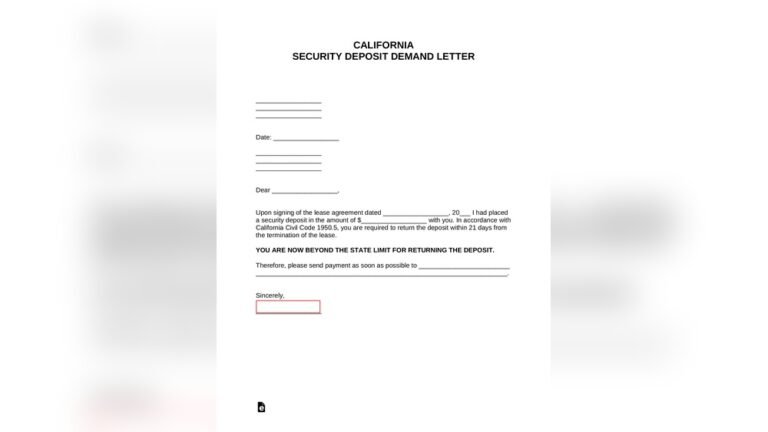
- Security Deposit Handling: Hold the subtenant’s security deposit in compliance with California Civil Code Section 1950.5, returning it within 21 days of their departure.
What If Your Landlord Unreasonably Denies Your Sublease Request
California Civil Code Section 1651 and standard lease provisions dictate that landlords cannot withhold consent to sublease unreasonably. Legal experts emphasize that an unreasonable denial occurs when a landlord rejects a qualified, financially stable subtenant without a valid business or legal justification.
Recognizing Unlawful Denials
Landlords often cite invalid reasons for rejection. According to California housing authorities, a denial is generally considered legally unreasonable if it relies on discriminatory factors, arbitrary personal preferences, or a desire to simply re-rent the unit at a higher market rate for 2027. Valid reasons for denial include poor credit history, documented history of property damage, or verified insufficient income.
Steps to Challenge a Denial
When a landlord unlawfully blocks your sublease, tenants must follow a precise protocol to protect their rights:
- Request the landlord’s denial rationale in writing, citing the specific lease clause or objective qualification standard they used.
- Provide supplemental documentation for the proposed subtenant, such as credit bureau reports, employment verification letters, and positive rental references.
- Send a formal demand letter via certified mail referencing California tenant protection statutes and demanding written reconsideration within a strict 7-day window.
- Escalate the matter to local tenant-landlord mediation boards if the landlord maintains an unreasonable refusal.
How to Manage Liability and Security Deposits With a Subtenant
Master tenants face significant financial and legal exposure when bringing in a subtenant. Under California law, the original tenant remains fully responsible to the landlord for all lease obligations, including timely rent payments and property maintenance, regardless of who occupies the premises in 2027.
Drafting a Sublease Agreement
Legal professionals strongly recommend executing a comprehensive, written sublease agreement that mirrors the primary lease terms. This document must explicitly state the subtenant’s obligation to abide by all building rules, quiet hours, and occupancy limits. Clear contractual terms prevent misunderstandings and provide the evidentiary backing required if legal intervention becomes necessary.
Handling Security Deposits Securely
Security deposit management is heavily regulated across California municipalities. Master tenants must adhere to strict handling procedures:
- Collect a security deposit that complies with state statutory caps, which limit residential security deposits to a maximum of one month’s rent for unfurnished properties.
- Deposit the subtenant’s funds into a separate, designated bank account rather than commingling them with personal operating funds.
- Conduct a joint move-in inspection with the subtenant, documenting pre-existing wear and tear with dated photographs and a signed checklist.
- Return the deposit within the statutory 21-day window following the end of the sublease term, itemizing any lawful deductions for property damage beyond normal wear and tear.
What If It Still Doesn’t Work?
If informal negotiations stall and your landlord refuses to cooperate with a lawful sublease arrangement, specific escalation steps remain available:
- Consult a local tenant rights attorney or legal aid organization to review your primary lease agreement and assess potential damages for bad-faith withholding of consent. Initial consultations typically range from $150 to $350.
- File a formal complaint with your local city rent stabilization board or housing department, particularly if your municipality enforces strict tenant protection ordinances.
- Serve a formal notice of intent to vacate based on constructive eviction if the landlord’s unreasonable actions make continued compliance impossible, though this carries higher legal risk.
- Pursue mediation services through community dispute resolution centers, which generally cost between $50 and $200 per session and resolve disputes faster than litigation.
Conclusion
Navigating subleasing laws in California requires strict adherence to statutory guidelines, clear contractual documentation, and open communication with your property manager. By securing explicit written consent and properly managing subtenant liability, you protect your financial standing. According to verified research and expert legal sources, taking a proactive, legally informed approach prevents costly disputes and ensures a smooth temporary relocation. Your next actionable step is to review your master lease agreement today to identify any specific notice periods or pre-approval requirements mandated by your landlord.
❓ Frequently Asked Questions
What are the exact legal requirements for getting landlord approval to sublease in California?
Tenants must submit a written request detailing the subtenant’s identity, financial background, and proposed move-in dates. Landlords typically have a designated window outlined in the lease to review and respond to this request.
Can my landlord evict me for subleasing on Airbnb or short-term rental sites?
Yes, unauthorized short-term rentals are treated as illegal subletting in most California jurisdictions. Many cities also have strict municipal laws prohibiting short-term rentals without specific permits.
Am I still responsible for unpaid rent if my subtenant stops paying?
As the master tenant, you remain fully liable to the landlord for the entire rent amount and any property damage caused by the subtenant, regardless of their payment failures.
What recourse do I have if my landlord ignores my written request to sublease?
Under California law, if the lease is completely silent on subleasing, you generally have the right to sublease. However, if the lease requires consent, an ignored request does not automatically grant approval.
How do rent control laws affect master tenants charging rent to subtenants?
Cities with rent stabilization ordinances, such as Los Angeles and San Francisco, forbid master tenants from making a profit off subtenants. The total collected rent cannot exceed the master lease amount.
How should a security deposit collected from a subtenant be handled?
The master tenant must handle the subtenant’s security deposit in compliance with California Civil Code Section 1950.5, returning it within 21 days of move-out minus lawful deductions for damages.

Ismail Hossain is the founder of Law Advised. He is an Divorce, Separation, marriage lawyer. Follow him.