Exotic Pet Laws in California 2027 A Step-by-Step Guide
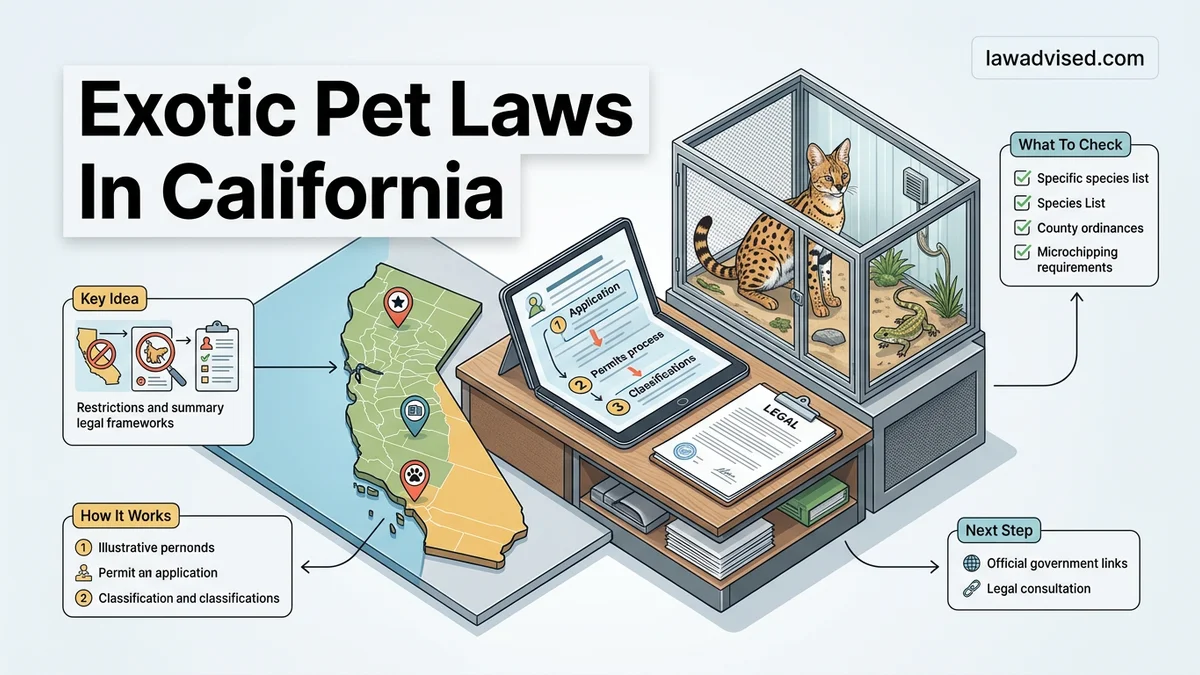
Navigating exotic pet laws in California requires understanding strict state regulations enforced by the Department of Fish and Wildlife. Illegal ownership can result in severe legal penalties and confiscation of the animal. This guide breaks down permitted species, permit requirements, and local bans.
California enforces some of the strictest exotic pet laws in the United States, driven by the California Department of Fish and Wildlife (CDFW). If you want to keep a non-traditional animal as a pet in 2027, you must navigate a complex framework of absolute bans, strict permit requirements, and heavy penalties for violations.
Understanding these regulations protects you from severe legal consequences and prevents the state from confiscating and euthanizing illegal animals. This guide breaks down exactly what you can legally own, what remains strictly prohibited, and how to secure the necessary paperwork.
Key Takeaways
- California completely bans non-native cats, primates, and bears as pets.
- Ferrets, hedgehogs, and sugar gliders are strictly illegal to own in the state.
- The California Department of Fish and Wildlife regulates all exotic animal permits.
- Local city and county ordinances can be much stricter than state laws.
- Violating exotic pet laws can lead to heavy fines and animal confiscation.
What Causes Strict Exotic Pet Restrictions in California
California restricts exotic pets primarily to protect local ecosystems, native wildlife, and public safety. Escaped or released exotic animals can easily survive in California’s diverse climates. This creates invasive populations that threaten native species and agriculture.
Environmental and Ecological Protection
- Invasive species prevention: Animals like red-eared slider turtles and certain snakes disrupt local food webs.
- Agricultural damage: Non-native herbivores can devastate local crops if populations establish in the wild.
- Native species safety: Released exotics often outcompete endangered native wildlife for resources.
Public Safety and Animal Welfare
Public safety remains a massive driver behind the state code. Large predators and venomous species pose an immediate physical threat to your neighborhood. Furthermore, many exotic species have complex behavioral and nutritional needs that residential homes cannot safely accommodate. The state legislature updates these statutes regularly to close loopholes regarding hybrid animals and newly imported species.
How to Determine If an Animal Is Legal to Own in California
Classifying an animal under California law requires checking the CDFW restricted species list. The state generally categorizes animals into three distinct groups: completely prohibited, conditionally legal with permits, and exempt species requiring no special permits.
The Prohibited List
Most large carnivores, primates, and venomous reptiles are entirely illegal for private citizens to own. You cannot acquire a permit for these animals as a pet under any circumstances. Prohibited categories include:
- Non-human primates: Chimpanzees, monkeys, lemurs, and baboons.
- Non-native wild cats: Tigers, lions, leopards, jaguars, and ocelots.
- Bears and canids: All wolves, foxes, and bear species.
- Dangerous reptiles: All venomous snakes, all crocodilians, and constrictors exceeding specific length thresholds.
Conditionally Legal and Exempt Species
Some animals are legal only if you obtain specific permits for exhibition, education, or rehabilitation, which are rarely granted to ordinary pet owners. However, a small subset of exotic pets remains completely exempt from permits. This exempt list includes certain domestic-hybrid cats like Savannah cats (F4 generation or later), certain domesticated rodents, and specific caged bird species. Always verify the exact generational requirements for hybrid animals before bringing one into your home.
Step-by-Step Guide to Applying for CDFW Permits
Securing a restricted species permit from the California Department of Fish and Wildlife (CDFW) requires strict adherence to administrative protocols. Navigating this bureaucratic pipeline in 2027 demands precision, as incomplete applications face immediate rejection without application fee refunds.
1. Verify Species Classification and Eligibility
Before submitting any paperwork, consult the current California Code of Regulations Title 14 to verify if your desired species is eligible for a restricted species permit. According to CDFW guidelines, permits are heavily restricted to educational facilities, scientific researchers, and qualified zoological exhibitors rather than private hobbyists.
2. Prepare Facility and Housing Specifications
Applicants must submit architectural blueprints and engineering diagrams detailing the proposed enclosure. According to structural standards enforced by animal control and wildlife officers, enclosures must feature secondary containment barriers, escape-proof locks, and climate control systems capable of withstanding local environmental extremes.
3. Submit the Formal Application and Fees
Complete the CDFW Restricted Species Permit application form and submit it alongside the non-refundable processing fee, which currently ranges from $250 to $500 depending on the specific animal category. Include proof of professional experience, veterinary care contracts, and emergency recapture protocols.
4. Undergo Mandatory Facility Inspection
Once the administrative review concludes, state wildlife officers will schedule an on-site inspection of your facility. Inspectors evaluate structural integrity, security measures, and public safety buffers. Passing this inspection is the final prerequisite before the commission votes on permit issuance.
What If Your Exotic Pet Is Banned by Local Ordinances
State-level approval does not guarantee the right to house an exotic animal, as California municipalities frequently enforce stricter regulations than the state. If your city or county bans your specific species, navigating the legislative hurdle requires strategic intervention and alternative planning.
1. Review Local Municipal Codes
Examine your specific city and county municipal codes regarding prohibited animals. Local ordinances often override state allowances, meaning an animal legal under a CDFW permit can still be outlawed by a city council or county board of supervisors.
2. Apply for Local Variance or Conditional Use Permits
Some municipalities offer an appeal process or a conditional use permit for exceptional circumstances. Prepare a formal presentation for local zoning boards demonstrating that your housing facility exceeds baseline safety requirements and poses no risk to public welfare.
3. Consult Specialized Legal Counsel
If your variance is denied, consult an attorney specializing in California animal law or administrative appeals. Legal representation becomes crucial when challenging arbitrary municipal bans or navigating administrative hearings.
What If It Still Doesn’t Work?
If local ordinances and state permit denials prevent you from legally housing your exotic pet in California, immediate contingency measures must be enacted. Ignoring these regulations risks severe misdemeanor charges, animal confiscation, and heavy financial penalties.
- Surrender the Animal to an Accredited Sanctuary: Contact a legally certified wildlife sanctuary or rescue organization in California authorized to accept restricted species.
- Relocate the Pet Out of State: Transport the animal to a state where ownership of the species is legal and properly permitted, ensuring compliance with interstate transit laws.
- Retain Professional Relocation Services: Hire licensed exotic animal transport specialists to handle the interstate transition safely and legally. Estimated costs for professional relocation range from $1,500 to $4,000 depending on distance and species requirements.
- Seek Regulatory Guidance: Consult directly with CDFW regional offices to coordinate a peaceful, voluntary surrender and avoid criminal prosecution for illegal possession.
Conclusion
Navigating exotic pet laws in California requires strict compliance with stringent state permits and restrictive municipal ordinances. Failing to meet these legal thresholds risks steep fines and the confiscation of your animal. According to verified research and expert sources from wildlife regulatory agencies, proactive adherence to housing specifications and legal channels is the only viable path for authorized keepers. Your immediate next step is to review current California Code of Regulations Title 14 to verify the legal classification of your specific animal.
❓ Frequently Asked Questions
What happens if you are caught with an illegal exotic pet in California?
Law enforcement or animal control can immediately confiscate the animal, and owners can face misdemeanor charges, heavy fines, and potential jail time depending on the severity of the violation.
Are certain exotic reptiles legal to keep without a permit?
Certain non-venomous reptiles and amphibians are legal to keep as pets without a permit, provided they are not native California species or restricted invasive species like specific turtle or snake varieties.
How do I get a permit for a restricted exotic animal in California?
You must apply through the California Department of Fish and Wildlife, demonstrating proper housing, public safety measures, and specific educational or exhibitor credentials, as personal pet permits for restricted species are rarely granted.
Are servals or other hybrid cats legal in California?
No, non-native wild cat species and their immediate hybrid offspring, such as Savannah cats (F1 through F4 generations), are strictly illegal to own as pets in the state.
Why does California have such strict exotic pet laws?
California enforces strict laws to protect public safety, prevent the establishment of invasive species that could harm native ecosystems, and ensure the humane treatment of animals unsuited for domestic life.
Can I bring my exotic pet with me if I move to California?
If your pet is on California’s banned species list, such as a ferret or hedgehog, you cannot legally bring it into the state, even if it was legal to own in your previous state of residence.

Ismail Hossain is the founder of Law Advised. He is an Divorce, Separation, marriage lawyer. Follow him.