Gun Storage Laws in California 2027 Expert Compliance Guide
Gun storage laws in California require firearms to be secured with DOJ-approved locking devices or stored in a secure gun safe to prevent unauthorized access. Failing to comply with these mandates, especially when minors or prohibited persons are present, can result in severe criminal penalties, including misdemeanor or felony charges.
California law requires you to store all firearms securely using either a California Department of Justice-approved locking device or a DOJ-certified gun safe. If a minor or any prohibited person gains unauthorized access to an unsecured firearm in your home, you face severe criminal liabilities and felony charges under current 2027 state statutes.
Navigating these regulations is essential for every firearm owner in the state. Meeting these mandatory standards protects your family, prevents tragic accidents, and keeps you entirely compliant with strict state penal codes.
Key Takeaways
- Store all firearms unloaded in a DOJ-approved lockbox or gun safe.
- California mandates strict locking requirements when minors reside or visit.
- Non-compliance can lead to heavy fines and misdemeanor or felony charges.
- Certified gun safes must meet Department of Justice safety standards.
- Immediate self-defense exceptions apply only under specific, active threat scenarios.
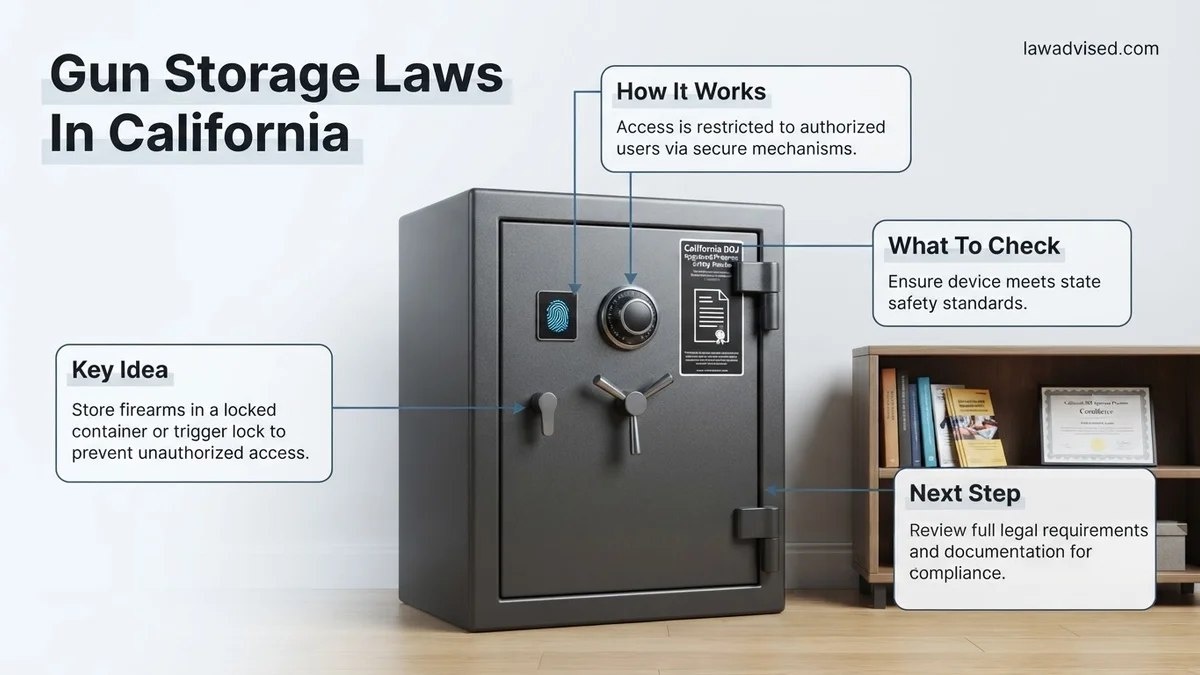
What Causes Violations of Gun Storage Laws in California
Leaving Firearms Unlocked Around Minors
The most common violation happens when you leave a loaded or unloaded firearm outside of immediate control in a place where a minor under 18 can access it. Under California Penal Code, if a minor accesses that unsecured weapon and causes injury or death, you face devastating legal consequences.
- Storing a handgun on a nightstand without a trigger lock or lockbox.
- Leaving long guns leaning in a closet corner within reach of teenagers.
- Failing to secure firearms when children or unauthorized visitors are visiting your home.
Using Non-Certified Storage Equipment
Many gun owners mistakenly assume any padlock or flimsy metal cabinet satisfies state mandates. California maintains a strict roster of approved safety devices. If your storage method fails to meet Department of Justice testing standards, you are legally non-compliant, even if the gun is technically inside your home.
- Using generic padlocks that are not on the DOJ approved roster.
- Relying on glass-front display cabinets that can be easily breached.
- Storing firearms in uncertified plastic cases secured with simple luggage locks.
How to Fix Gun Storage Compliance and Meet DOJ Standards
Upgrading to DOJ-Approved Safes and Lockboxes
Achieving absolute compliance in 2027 requires investing in hardware explicitly recognized by the state. You need to ensure your primary storage container holds a UL rating for residential security containers or appears directly on the California DOJ Roster of Firearm Safety Devices.
- Purchase a safe bearing a Residential Security Container (RSC) rating from Underwriters Laboratories.
- Verify that cable locks or trigger locks bear official DOJ certification stamps.
- Bolt your heavy safes to the floor or wall to prevent easy removal during a burglary.
Implementing Proper Storage Protocols for Loaded and Unloaded Firearms
Understanding how the law treats loaded versus unloaded firearms prevents costly mistakes. While California generally requires handguns to be unloaded and locked when stored in public or vehicles, residential rules focus heavily on preventing access by prohibited persons and minors.
- Keep home defense firearms secured in biometric or rapid-access DOJ-approved lockboxes by your bed.
- Ensure all range and hunting firearms remain unloaded and locked inside your safe when not actively in use.
- Maintain control of all keys and combination codes to prevent household members from bypassing your security measures.
Step-by-Step Guide to Implementing Safe Storage Practices
Achieving total compliance with California firearm storage mandates requires a structured approach. Integrating certified hardware into your home defense and daily routines protects both your family and your legal standing in 2027.
Step 1: Audit Your Current Inventory and Locations
Begin by cataloging every firearm in your household. Determine which guns require immediate locking mechanisms versus those stored permanently in heavy containers. According to safety experts, separating defensive firearms from ammunition during non-use hours significantly reduces unauthorized access risks.
Step 2: Procure DOJ-Approved Hardware
Purchase containers or locking devices listed directly on the official California Department of Justice Roster of Firearm Safety Devices. Verify that standalone trigger locks, cable locks, or portable lockboxes bear the explicit approval seal. Non-certified aftermarket locks fail to meet state statutory requirements.
Step 3: Establish a Daily Compliance Routine
Formulate a strict daily protocol for securing your firearms whenever they are not under your immediate physical control. Whether utilizing biometric quick-access safes or traditional mechanical combinations, ensure every household member understands the rules. Consistent adherence eliminates accidental exposure and keeps your storage setup fully compliant.
What If It Still Doesn’t Work and You Face Legal Penalties
If your compliance setup fails due to hardware malfunction, or if you are facing unexpected legal scrutiny following an incident, immediate corrective action is mandatory. Resolving storage deficiencies quickly mitigates ongoing liability under 2027 state statutes.
- Immediately upgrade defective hardware: Replace broken locking mechanisms or malfunctioning electronic keypads with fresh DOJ-approved equipment. Estimated costs for certified replacement lockboxes range from $150 to $400, while high-end residential safes range between $800 and $2,500.
- Document your compliance efforts: Keep purchase receipts, installation records, and manufacturer serial numbers in a secure file to demonstrate proactive safety measures.
- Consult a qualified firearms defense attorney: Seek specialized legal counsel immediately if local law enforcement investigates a storage violation or issues a citation. Legal representation fees for firearm-related misdemeanors typically range from $2,500 to $7,500 depending on court complexity.
- Schedule a domestic security audit: Hire a certified professional locksmith or home security specialist to evaluate your entire storage setup and eliminate structural vulnerabilities.
Conclusion
Navigating California gun storage laws in 2027 demands strict adherence to state-approved locking devices and vigilant daily habits. Failing to secure firearms properly exposes gun owners to severe criminal charges, hefty financial penalties, and heightened domestic risks. According to verified research and expert legal sources, proactive compliance through certified hardware and rigorous routine audits remains the single most effective defense. Take action today by auditing your current storage equipment and upgrading to fully certified DOJ-compliant solutions.
❓ Frequently Asked Questions
What specific standards must a California gun safe meet?
A legal gun safe in California must be Department of Justice (DOJ) approved. This means it must withstand forced entry attempts for a specified duration and be constructed of heavy-duty steel with a secure locking mechanism.
What happens if a child accesses an improperly stored firearm?
If a minor gains access to an unsecured firearm and causes injury or death, the firearm owner faces severe criminal liability, including felony charges, significant fines, and potential imprisonment.
Are there exceptions for carrying or storing firearms in a vehicle?
Vehicular transport in California requires handguns to be unloaded and locked in a secure container, such as the trunk or a dedicated lockbox, distinct from the glove compartment or console.
How do California storage laws apply to roommates or visitors?
If a prohibited person (such as someone with a felony conviction or certain restraining orders) lives in or visits the home, all firearms must be secured so they have zero access.
What constitutes a DOJ-approved safety device?
A DOJ-approved safety device includes cable locks, trigger locks, and lockboxes that have been tested and certified by the California Department of Justice to prevent unauthorized operation.
Can I use my firearm for immediate self-defense without violating storage laws?
Yes, California law allows individuals to keep a firearm accessible for immediate self-defense when they are present and awake, provided no prohibited persons or unsupervised minors can access it.

Ismail Hossain is the founder of Law Advised. He is an Divorce, Separation, marriage lawyer. Follow him.