Personal Income Tax Explained Step-by-Step Guide for 2026
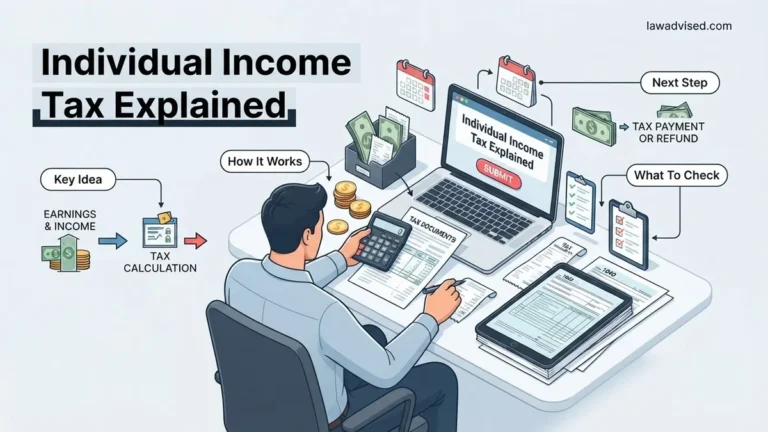
Personal income tax is a mandatory government levy on money you earn from jobs, investments, and other sources. Tax brackets and deductions determine how much you actually owe versus what gets withheld from your paycheck. Understanding this process ensures you avoid penalties and keep more of your take-home pay.
Personal income tax is a mandatory percentage of your earnings that you pay to the government to fund public services, infrastructure, and social programs. It works through a progressive system, meaning you pay higher tax rates only on the portion of your income that crosses specific financial thresholds, rather than paying that higher rate on your total earnings.
Getting a firm grip on this process ensures you never pay a dollar more than you legally owe. As we navigate through the 2026 tax year, knowing how your paycheck translates into a final tax bill gives you total control over your financial planning.
Key Takeaways
- Personal income tax is a progressive system taxing different portions of your income at varying rates.
- Your taxable income is your gross income minus allowable deductions like the standard deduction.
- Employers use your W-4 form to calculate how much income tax to withhold from each paycheck.
- W-2 employees have taxes withheld automatically, while 1099 contractors must pay quarterly estimates.
- Filing your annual tax return determines if you receive a refund or owe additional money.
What Causes Confusion With Personal Income Tax Calculations
The Myth of the Single Tax Bracket
Many taxpayers mistakenly believe that moving into a higher tax bracket means every single dollar they earn gets taxed at that higher rate. This is one of the most common and costly misconceptions in personal finance. In reality, the U.S. tax system uses marginal tax brackets. Your income is sliced into chunks, and each chunk is taxed at its own specific rate. For example, if a portion of your 2026 income falls into the 12 percent bracket, only the dollars within that specific range are taxed at 12 percent, even if your total income pushes you into a higher bracket.
Gross Income Versus Taxable Income
Another major point of confusion is mixing up what you earn with what the government actually taxes. Your gross income includes every dollar of wages, tips, and investment gains you collect over the year. However, you never pay tax on your gross income. You pay tax on your taxable income, which is the final number you get after subtracting adjustments and deductions. Knowing the exact difference between these two numbers is the key to decoding your tax documents and lowering your annual liability.
Step-by-Step Guide to Calculating Your Taxable Income and Liability
Step 1: Determine Your Adjusted Gross Income (AGI)
Your tax calculation always begins with your total earnings. You take your gross income from all sources and subtract specific above-the-line deductions, which are officially known as adjustments to income. These adjustments include eligible student loan interest payments, contributions to a traditional IRA, and self-employment health insurance deductions. The resulting number is your Adjusted Gross Income, or AGI. Your AGI sets the baseline for determining your eligibility for various tax credits and other deductions.
Step 2: Apply Deductions to Find Final Taxable Income
Once you have your AGI, you must subtract either the standard deduction or your total itemized deductions. For the 2026 tax year, taking the standard deduction is the simplest route for the vast majority of taxpayers. Subtracting this standard amount from your AGI leaves you with your final taxable income. This is the exact dollar amount that the government runs through the marginal tax brackets to calculate your base tax liability before any tax credits are applied.
- Start with total gross wages and earnings for the year.
- Subtract above-the-line deductions to arrive at your AGI.
- Subtract the standard deduction to find your final taxable income.
- Apply the 2026 marginal tax brackets to determine your preliminary tax owed.
How to Fix Incorrect Withholdings and Optimize Your Take-Home Pay
If your paycheck does not match your financial goals for 2026, you can adjust your withholdings easily. Optimizing your take-home pay prevents unexpected tax bills and keeps your money working for you throughout the year.
Step 1: Review Your Current Paystub
Examine your latest earnings statement to check federal and state income tax deductions. According to the Bureau of Labor Statistics, millions of workers experience minor withholding errors annually simply due to outdated Form W-4 selections.
Step 2: Use the IRS Tax Withholding Estimator
Navigate to the official IRS online estimator tool to calculate precise adjustments. Gather your most recent paystubs and last year’s tax return before starting this process. The tool analyzes your exact household income and deductions for the 2026 tax year.
Step 3: Submit a New Form W-4
- Download or request the updated Form W-4 from your employer’s human resources department.
- Complete Steps 1 through 4 carefully, accounting for multiple jobs or working spouses if applicable.
- Submit the completed form to your payroll department to update your future withholdings.
What If You Owe Money or Still Do Not Understand Your Tax Return
Faced with an unexpected tax bill or complex return calculations, navigating the system independently becomes overwhelming. According to the National Taxpayer Advocate, proactive intervention prevents severe financial penalties and mounting interest charges.
What If It Still Doesn’t Work?
- Re-verify all Social Security numbers, income figures, and employer identification numbers across your tax documents.
- Utilize IRS Free File options if your adjusted gross income falls below the annual federally mandated threshold for 2026.
- Consult a certified public accountant or an enrolled agent for personalized guidance on complex multi-state or self-employed returns. Professional tax preparation fees typically range from $220 to $500 depending on complexity.
- Contact the IRS direct taxpayer assistance line or schedule an appointment at a local Taxpayer Assistance Center for direct government support.
Conclusion
Mastering personal income tax management protects your hard-earned income and eliminates end-of-year financial anxiety. By understanding tax brackets, maximizing deductions, and adjusting your withholdings proactively, you take full control of your financial health. According to verified research and expert financial sources, individuals who review their tax strategies quarterly retain significantly more capital than those who wait until April. Take your actionable next step today by logging into your employer portal to review your current W-4 withholding status.
❓ Frequently Asked Questions
How is personal income tax actually calculated from my paycheck?
Your employer calculates withholding based on your gross earnings and the details you provided on your W-4 form. When you file your annual return, your total tax liability is calculated against these withholdings to settle the balance.
Do I have to file a tax return if I made very little money?
Whether you are required to file depends on your filing status, age, and gross income level. However, even if you earned below the filing threshold, filing is often necessary to claim refundable credits or get back withheld taxes.
What happens if I miss the federal tax filing deadline?
Filing late without requesting an extension triggers a failure-to-file penalty, which is typically much higher than the failure-to-pay penalty. If you owe money, file as soon as possible and contact the IRS to set up a payment plan.
Are state and local income taxes different from federal taxes?
Yes, federal income tax goes to the national government, while state and local taxes are levied by specific state and municipal governments. Not all states collect a personal income tax.
What is the difference between a tax deduction and a tax credit?
A tax deduction reduces the amount of your income subject to tax, lowering your overall tax bill based on your tax bracket. A tax credit provides a dollar-for-dollar reduction of your actual tax liability.
How do I know if I should take the standard deduction or itemize?
You should choose whichever option results in the lowest taxable income. Most taxpayers choose the standard deduction because it is simpler and provides a higher reduction than their total itemized expenses.

Ismail Hossain is the founder of Law Advised. He is an Divorce, Separation, marriage lawyer. Follow him.