Do Unemployed People Need to File Taxes in ? 2026
Whether you need to file a tax return depends entirely on your total gross income, not your employment status. Even with zero job income, receiving unemployment benefits or having taxes withheld means you might still need—or want—to file.
If you are currently unemployed and had zero job income during the year, you generally do not need to file a federal income tax return, provided your total income falls below the IRS minimum thresholds. Being jobless for part or all of the year does not automatically mean you are exempt from filing, but the legal requirement depends entirely on how much money you actually received, not on whether you held a traditional job.
For the 2026 tax season, the rules hinge strictly on your gross income from all sources combined. Understanding these thresholds prevents you from wasting time on unnecessary paperwork, while ensuring you do not accidentally miss a filing requirement that could trigger penalties or delay valuable refunds you might still be owed.
Key Takeaways
- Filing requirements are based strictly on IRS gross income thresholds, not employment status.
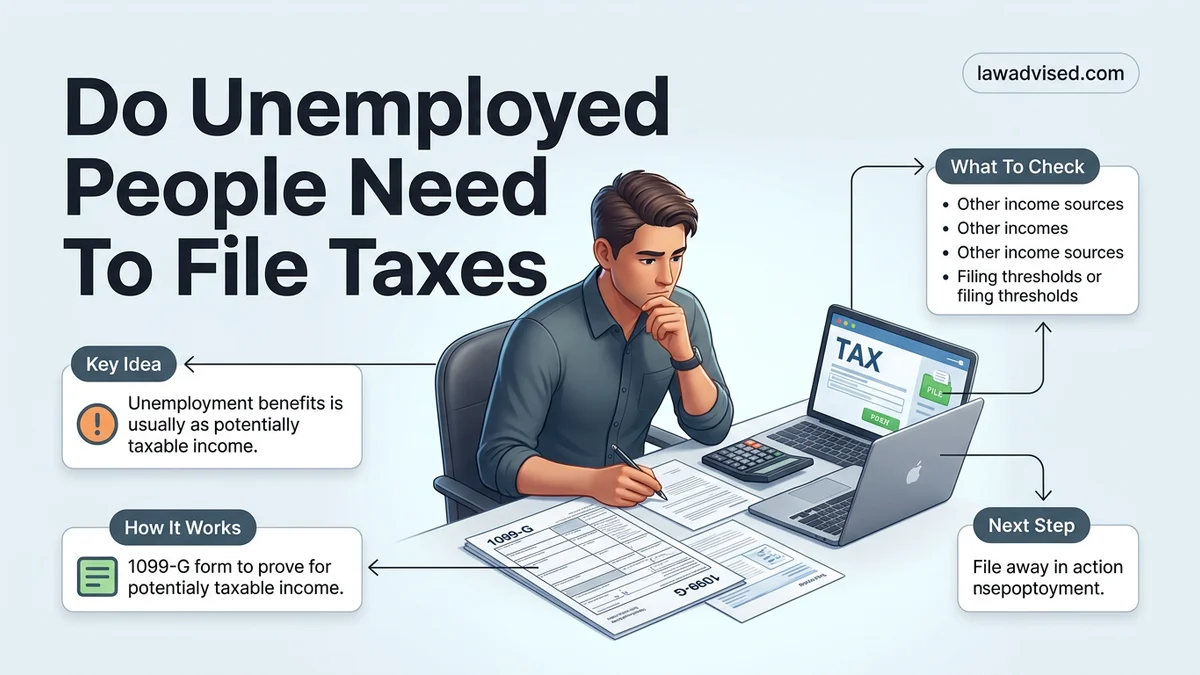
- Unemployment benefits (Form 1099-G) count as taxable income and must be reported.
- You may want to file voluntarily to claim refunds on any taxes previously withheld.
- Low-income filing can unlock valuable tax credits like the Earned Income Tax Credit.
- State tax rules often mirror federal guidelines regarding zero-income filing requirements.
What Causes Confusion About Filing Taxes While Unemployed
The Myth of Employment Status Versus Income
Many people assume that having a W-2 job is the only trigger for filing taxes, which creates widespread confusion during periods of joblessness. The IRS does not care whether your income came from a corporate salary, freelance gigs, investment dividends, or state benefits; it cares only about the dollar amount. If your total gross income for 2026 stays below the standard deduction limit for your filing status, the federal government does not require you to submit a return. However, confusion often arises because third parties or state agencies might still issue tax documents, making taxpayers feel legally compelled to file when they actually sit below the threshold.
Overlooking Non-Job Income Sources
Another major source of confusion is forgetting that money can flow into your household even when you do not have a traditional employer. You might receive severance pay, a withdrawal from a retirement account, or interest from a high-yield savings account while looking for work. These revenue streams still count toward your total gross income calculation. If you only look at your lack of a paycheck and ignore these other streams, you risk miscalculating your IRS obligations. Always audit every dollar that entered your accounts during the 2026 tax year before deciding to skip the filing process entirely.
How to Determine If Your Income Exceeds the IRS Filing Threshold
Standard Deduction Limits for 2026
Your obligation to file a tax return while unemployed depends on comparing your gross income against the IRS standard deduction thresholds. For the 2026 tax year, if your total gross income is less than your specific filing status limit, you are legally off the hook for filing a federal return. Review these baseline thresholds:
- Single filers: Generally exempt if gross income is under the standard deduction limit of approximately $15,000 for 2026.
- Married Filing Jointly: Generally exempt if combined gross income is under roughly $30,000.
- Head of Household: Generally exempt if gross income is under roughly $22,500.
Calculating Your Gross Income Correctly
To figure out if you cross the 2026 IRS filing threshold, you must add up all taxable income received before any adjustments or deductions. Do not include welfare benefits or Supplemental Security Income, but do count taxable items like retirement distributions, capital gains, or taxable state benefits. If your grand total sits below the standard deduction for your filing status, you do not have to file. If you earned even one dollar over that limit, the law requires you to submit a return, even if every penny of that income came from non-traditional sources rather than a standard W-2 job.
Step-by-Step Guide to Filing Your Return When Jobless
Filing taxes while unemployed requires a structured approach to ensure you do not miss out on potential refunds or state benefits. According to the IRS, gathering your documentation before you begin the filing process significantly reduces errors and accelerates processing times for the 2026 tax season.
1. Gather All Income Documents
Collect every tax form issued to you during the calendar year. This includes Form 1099-G for any state unemployment benefits received, W-2 forms from employers you worked for prior to losing your job, and Form 1099-INT if you earned interest from bank accounts. Having these documents ready ensures your reported income matches official records.
2. Select a Free Filing Software
Choose an IRS Free File partner or a reputable commercial software provider that offers zero-cost options for low-income filers. In 2026, the IRS Direct File program is available in participating states, allowing eligible taxpayers to file their federal returns directly through a government-run portal at no cost.
3. Input Data and Check for Credits
Enter your income data carefully into the software. Navigate through the deductions and credits sections to determine if you qualify for state-specific property tax credits, the Earned Income Tax Credit based on partial-year earnings, or health insurance premium tax credits.
4. Review and Submit
Review the completed return for accuracy regarding your Social Security number, banking details for direct deposit, and reported income. Submit the return electronically and save the electronic confirmation receipt for your permanent records.
What If It Still Doesn’t Work?
If your attempts to file independently result in rejected returns, system errors, or confusion regarding complex unemployment taxation rules, specific fallback steps can resolve the issue without excessive financial strain.
- Verify Rejection Codes: Cross-reference any error codes provided by your tax software with the IRS official troubleshooting database to correct mismatched identification numbers or income figures.
- Utilize Volunteer Income Tax Assistance (VITA): Locate a local VITA site sponsored by the IRS, which offers free tax preparation assistance to individuals earning $64,000 or less, persons with disabilities, and limited-English-speaking taxpayers.
- Contact the IRS Direct File Support: Reach out to official government help desks or utilize the interactive tax assistant tool on the IRS website for technical guidance specific to the 2026 filing season.
- Hire a Certified Public Accountant (CPA): If your financial situation involves complex severance packages or multi-state employment, consult a licensed tax professional. Professional fees for basic individual returns typically range from $200 to $450 depending on regional market rates.
Conclusion
Filing taxes while unemployed depends heavily on your total gross income, withholding status, and eligibility for specific refundable credits. Neglecting to file when required can result in delayed refunds or unnecessary penalties, while filing proactively often unlocks valuable financial relief. According to verified research and expert sources from the IRS and national consumer advocacy groups, utilizing free electronic filing options is the safest and most efficient method to handle a jobless tax return. Your actionable next step for the 2026 tax season is to log into the official IRS portal to review your wage and income transcript today.
❓ Frequently Asked Questions
What happens if I don’t file taxes when I am unemployed?
If your income is strictly below the IRS filing requirement threshold and you owe no tax, there is no penalty for failing to file. However, you forfeit any potential refunds owed to you.
Do I need to file state taxes if I live in a state without an income tax?
If your state does not levy a personal income tax, you obviously do not need to file a state tax return, though you may still have federal filing obligations.
Can I claim stimulus or tax credits with zero job income?
Some credits require earned income (like wages), while others may be accessible depending on specific IRS rules for the tax year. Check current guidelines for non-wage credit eligibility.
How do I get my Form 1099-G if I received unemployment benefits?
Your state’s labor or unemployment department typically provides Form 1099-G online through your state portal or mails it to you by late January.
What if taxes were withheld from my unemployment checks?
If federal or state income taxes were withheld from your benefits, filing a tax return is the only way to claim that money back as a refund.
Does receiving severance pay affect my filing requirement?
Yes, severance pay is treated as taxable wages. It counts toward your total gross income, which determines whether you cross the IRS mandatory filing threshold.

Ismail Hossain is the founder of Law Advised. He is an Divorce, Separation, marriage lawyer. Follow him.