Why Do Americans Pay Income Tax The Real Guide for 2026
Americans are legally required to pay federal income tax to fund the operations, defense, and public services of the United States government. Established permanently by the 16th Amendment in 1913, these tax revenues support everything from national defense to Social Security and infrastructure.
Americans pay income tax primarily to fund the constitutional operations of the federal government, ranging from national defense to infrastructure maintenance. Without this mandatory revenue collection, federal agencies, public safety programs, and national entitlements could not function.
As you navigate your finances in 2026, understanding this system helps you see exactly why a portion of your paycheck disappears every pay period. It shifts your perspective from viewing taxes as a random penalty to recognizing them as the financial backbone of public infrastructure.
Key Takeaways
- The 16th Amendment granted Congress the legal authority to collect income taxes without apportionment.
- Federal income taxes primarily fund national defense, healthcare, and social safety net programs.
- Failure to pay income taxes leads to severe IRS penalties, asset seizure, and potential imprisonment.
- Tax compliance is viewed as a legal obligation and civic duty that funds collective public infrastructure.
- Federal income tax is distinct from state and local taxes, which fund local services like public schools.

What Causes the Legal Requirement to Pay Income Tax
The Sixteenth Amendment and Constitutional Authority
The federal government does not collect income tax on a whim. The legal obligation stems directly from the 16th Amendment, ratified in 1913. Before this amendment, the government funded itself mostly through tariffs on imported goods and excise taxes, which heavily burdened lower-income households. The 16th Amendment gave Congress the legal power to lay and collect taxes on incomes from whatever source derived, without apportionment among the several states. This single legal shift created the modern income tax system.
The Legal Obligation Under Federal Law
Once the amendment passed, Congress enacted the Internal Revenue Code. Under current 2026 federal law, if your gross income exceeds specific statutory thresholds, you have a legal obligation to file a return and pay tax. The Internal Revenue Service enforces this mandate. Refusing to pay does not stem from a gray area in the law; the courts have consistently ruled for over a century that the federal government possesses the undisputed constitutional authority to levy individual income taxes.
How to Trace Where Your Federal Tax Dollars Go
The Major Buckets of Federal Spending
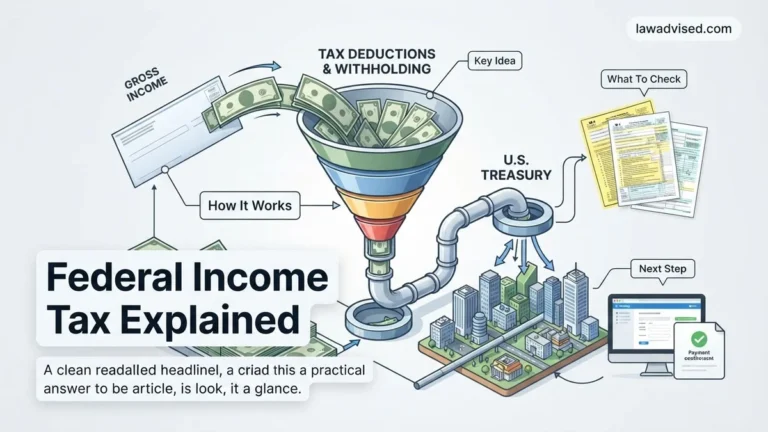
When you look at the federal budget, your tax dollars do not sit in a vault. They immediately fund mandatory and discretionary programs. The largest chunk of your tax money goes toward entitlement programs like Social Security and Medicare, which support retirees and disabled citizens. National defense consistently commands the largest share of discretionary spending, funding active-duty military personnel, equipment, and global operations.
A Practical Breakdown of Your Tax Contribution
To visualize where your money goes, imagine every dollar you pay in federal income tax is split into specific public sectors:
- Mandatory Spending: Roughly 50 to 60 percent goes to Social Security, Medicare, and Medicaid.
- National Defense: Approximately 15 percent funds the Department of Defense and homeland security measures.
- Interest on National Debt: A growing share, often exceeding 10 percent, services the interest accumulated on U.S. Treasury debt.
- Domestic Discretionary: The remainder funds federal education programs, scientific research, transportation infrastructure, and national parks.
Step-by-Step Guide to Federal Tax Compliance and IRS Rules
Navigating the United States federal tax system requires strict adherence to Internal Revenue Service (IRS) guidelines. Understanding compliance ensures that your tax dollars are reported accurately while avoiding costly audits.
Filing Your Annual Return
Meeting federal obligations starts with a structured filing process. Following the correct sequence protects taxpayers from compliance flags.
- Gather all official income documents, including W-2s, 1099s, and investment statements by late January 2026.
- Determine your correct filing status—such as single, married filing jointly, or head of household—as mandated by the IRS.
- Choose an IRS-authorized electronic filing method or software to submit Form 1040 securely before the April 15, 2026 deadline.
- Review your calculated tax liability and submit any remaining payments electronically via IRS Direct Pay to prevent late penalties.
Understanding Tax Brackets and Withholdings
Federal income tax operates on a progressive bracket system. According to the Tax Foundation, marginal rates for 2026 range from 10% to 37% depending on taxable income thresholds. Regularly updating your Form W-4 with your employer ensures your paycheck withholdings align with your actual annual liability, preventing unexpected bills.
What If It Still Doesn’t Work? Handling Tax Disputes and Penalties
If your tax filing encounters complications, errors, or unexpected IRS penalty notices for the 2026 tax year, immediate corrective action is required. Ignoring correspondence from the agency typically escalates financial penalties.
Implement these fallback steps if standard resolution methods fail:
- Review the specific IRS notice or audit letter carefully to identify the exact discrepancy, tax year, and deadline for response.
- Utilize the IRS Online Account portal to check your balance, view processing statuses, or submit electronic document uploads.
- Request a penalty abatement if you experienced reasonable cause, such as a natural disaster, serious illness, or verifiable institutional error.
- Consult a certified public accountant (CPA), enrolled agent, or tax attorney for complex audits or unresolvable disputes. Professional fees typically range from $150 to $400 per hour depending on the complexity of your case.
Conclusion
Paying federal income tax remains a legal requirement that funds essential public infrastructure, national defense, and social programs. Compliance safeguards you from severe financial penalties and legal liabilities. According to verified research and expert sources from the Congressional Budget Office, maintaining accurate records and filing electronically are the most effective ways to manage your tax obligations smoothly. Your actionable next step for 2026 is to log into your IRS online portal today to verify your withholding status and upcoming filing deadlines.
❓ Frequently Asked Questions
Why do Americans have to pay income tax when other taxes exist?
Income tax provides the bulk of discretionary and mandatory federal funding compared to property or sales taxes, which primarily support local and state governments. The federal government relies on income tax to sustain nationwide operations and entitlement programs.
Are income taxes technically optional as some groups claim?
No, federal income taxes are legally mandatory under the Internal Revenue Code and the 16th Amendment. Courts consistently reject legal arguments claiming that income taxes are voluntary or unconstitutional.
How does the IRS determine how much income tax a person owes?
Tax liability is determined by a progressive tax bracket system, where individuals pay varying percentages of tax depending on their taxable income thresholds and filing status.
What is the difference between mandatory and discretionary federal spending?
Mandatory spending is required by existing laws for programs like Social Security and Medicare, while discretionary spending is annually approved by Congress for items like defense and education.
Can citizens choose how their federal tax money is spent?
No, taxpayers cannot direct their funds to specific government programs. The federal budget is allocated by Congress through the legislative appropriations process.
What are the consequences of making a mistake on a tax return?
Minor mathematical errors usually result in a notice and an adjusted bill or refund from the IRS, while fraudulent or negligent underreporting can trigger audits and severe penalties.

Ismail Hossain is the founder of Law Advised. He is an Divorce, Separation, marriage lawyer. Follow him.