Who Can Claim Standard Deduction 2026 Expert Guide
Most U.S. taxpayers automatically qualify to claim the standard deduction to lower their taxable income. However, specific restrictions apply to dependents, nonresident aliens, and certain married individuals filing separate returns.
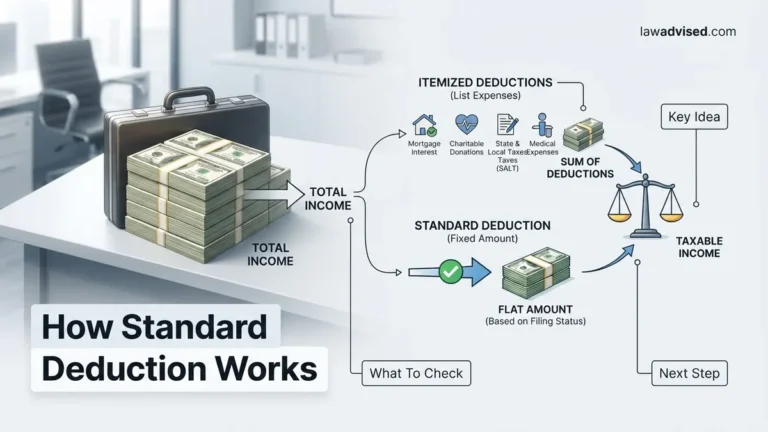
The vast majority of U.S. taxpayers are fully eligible to claim the standard deduction on their 2026 federal income tax returns, reducing their taxable income without needing to track individual expenses. If you earn income and are not explicitly barred by specific IRS rules, you can take this deduction.
Knowing your eligibility prevents costly filing mistakes and clarifies your tax strategy for the 2026 tax year. Whether you are single, married, or heading a household, understanding the baseline rules ensures you claim the tax break you deserve right out of the gate.
Key Takeaways
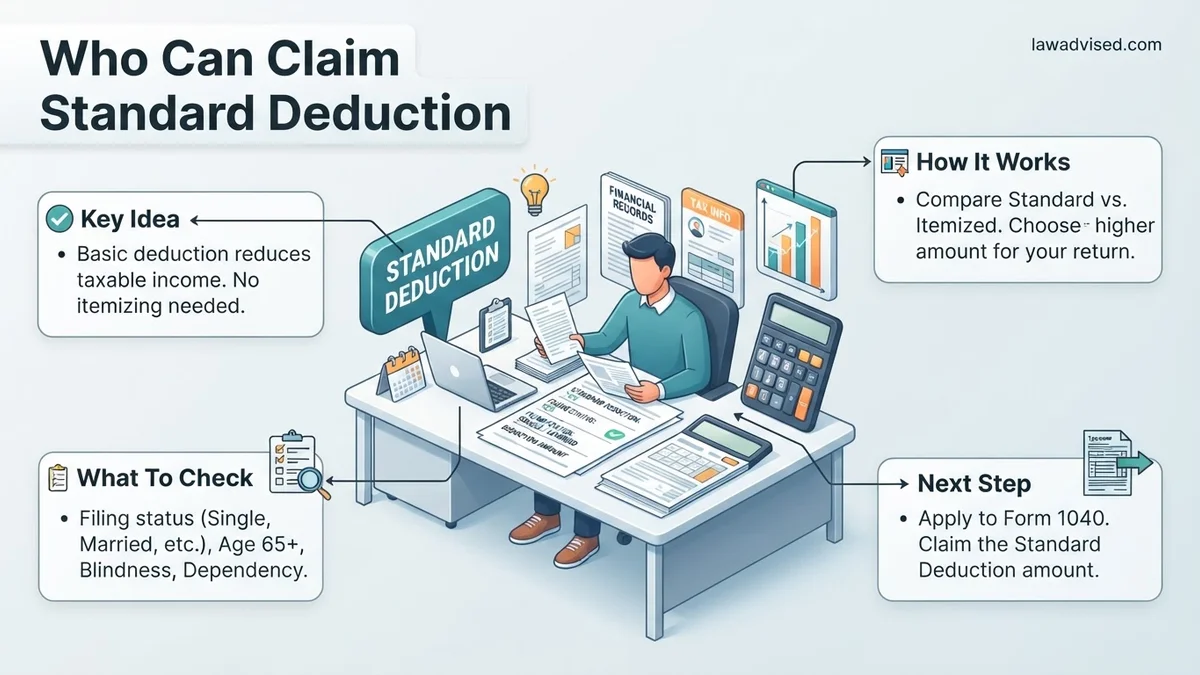
- Most U.S. taxpayers are automatically eligible to claim the standard deduction.
- Dependents claimed on another person’s tax return face strict deduction limits.
- Married taxpayers filing separately cannot claim it if their spouse itemizes.
- Nonresident aliens and dual-status aliens are generally barred from taking it.
- Taxpayers age 65 or older or blind receive an additional standard deduction.
Who Qualifies for the Standard Deduction
Default Eligibility by Filing Status
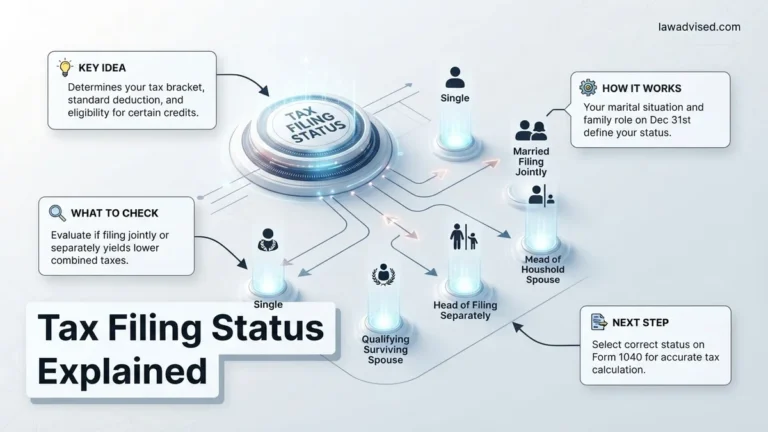
Almost every individual taxpayer qualifies for the standard deduction by default. Your eligibility is tied directly to your IRS filing status for the 2026 tax year. As long as you file a tax return and do not fall into a restricted category, you automatically qualify.
- Single filers: Anyone filing as single with earned or unearned income.
- Married filing jointly: Couples combining their income on a single return.
- Head of household: Unmarried individuals who pay more than half the cost of keeping up a home for a qualifying dependent.
- Qualifying surviving spouse: Widows or widowers meeting specific dependent and timeline criteria.
Special Groups and Additional Amounts
Certain groups receive automatic qualification alongside specialized boosts to their standard deduction amount. If you meet age or vision criteria in 2026, your eligibility remains intact while your deduction increases.
- Senior citizens: Taxpayers aged 65 or older by the end of 2026 qualify for an additional standard deduction amount.
- Visually impaired taxpayers: Individuals legally blind at the end of the tax year receive the same additional bump.
- Nonresident aliens: Limited eligibility applies depending on specific visa types and residency tests, though many are restricted entirely.
Who Cannot Claim the Standard Deduction
Dependents and the Kiddie Tax Rule
The primary exception to standard deduction eligibility involves taxpayers who can be claimed as a dependent on someone else’s 2026 tax return. If your parents or another person claim you, your ability to take a full standard deduction is restricted.
- Dependent status: You cannot claim the standard personal standard deduction freely if another taxpayer claims you.
- Earned vs. unearned income limits: Dependents usually have a capped standard deduction limited to their earned income plus a small statutory amount, or a set minimum floor, whichever is greater.
- Practical example: A college student claimed as a dependent earning $5,000 from a part-time job will have a restricted standard deduction tied to that specific earnings formula rather than the full single filer amount.
Married Filing Separately Restrictions
Filing status carries strict rules when spouses choose to file separate returns for 2026. The IRS prevents one spouse from taking a standard deduction if the other spouse itemizes their deductions.
- The itemization link: If your spouse itemizes deductions on their separate 2026 return, your standard deduction is automatically reduced to zero.
- Nonresident alien spouses: Marrying a nonresident alien and filing separately can also trigger specific state and federal limitations.
- Practical example: If your spouse itemizes $15,000 in deductions on a Married Filing Separately return, you cannot claim the standard deduction, forcing you to itemize as well even if your deductions are zero.
How to Fix Standard Deduction Eligibility Errors
Filing errors regarding standard deduction eligibility often trigger IRS processing delays or automated tax notices. Resolving these discrepancies quickly prevents potential interest charges and ensures your 2026 tax refund is issued without interruption. According to IRS compliance guidelines, taxpayers who mistakenly claim the standard deduction when they are actually required to itemize—or vice versa—must take immediate corrective action.
Step-by-Step Amendment Procedure
If you discover an error on your tax return regarding your standard deduction, follow these exact steps to correct the record:
- Wait until the IRS officially processes your original 2026 tax return and you receive your initial refund or balance notice.
- Obtain Form 1040-X, Amended U.S. Individual Income Tax Return, and ensure you are using the 2026 tax year version.
- Recalculate your taxable income by substituting the correct standard deduction amount for your verified filing status.
- Attach any supporting schedules, such as Schedule A if you are switching from the standard deduction to itemizing.
- Mail the completed Form 1040-X to the appropriate IRS processing center or submit the correction electronically through an authorized tax software provider.
What If Your Filing Status Changes
Your filing status on the last day of the 2026 tax year determines your eligibility and the exact dollar amount of your standard deduction. Significant life events during the year directly impact your standard deduction calculation. Tax experts emphasize that life changes require careful tracking to avoid claiming an incorrect deduction tier.
Common Life Events Affecting Status
Several major milestones alter your standard deduction eligibility throughout the tax cycle:
- Marriage or divorce finalized on or before December 31, 2026, which shifts you between single, married filing jointly, or head of household statuses.
- The death of a spouse, which may temporarily allow you to retain the qualifying widow or widower standard deduction rate for subsequent tax years.
- A qualifying dependent child or relative moving into or out of your household, directly influencing head of household qualification.
- Turning age 65 or experiencing permanent blindness before the end of 2026, which automatically triggers an additional standard deduction increment.
What If It Still Doesn’t Work?
If your attempts to correct a standard deduction error are rejected by the IRS or automated software continues to flag your return, advanced troubleshooting is required. Tax regulations in 2026 can be complex, particularly for mixed-status families or complex dependent claims. Consider these fallback steps when standard fixes fail:
- Review your IRS notice carefully to identify the specific numeric error code or discrepancy cited by tax examiners.
- Consult an Enrolled Agent (EA) or Certified Public Accountant (CPA) who specializes in individual federal taxation. Professional fees for resolving an amended return generally range from $300 to $850 depending on complexity.
- Contact the IRS dedicated taxpayer assistance line or schedule an appointment at your local Taxpayer Assistance Center for direct guidance.
- Utilize the IRS Free File interactive tax assistant tools to verify your dependency and deduction eligibility rules one more time.
Conclusion
Navigating who can claim the standard deduction in 2026 requires strict adherence to IRS guidelines regarding dependency, filing status, and age or blindness criteria. Correcting eligibility errors promptly prevents costly tax delays and ensures full compliance with federal law. According to verified research and expert tax sources, reviewing your exact qualifications before filing remains the single most effective way to protect your financial interests. Your immediate next step is to double-check your 2026 filing status against current IRS thresholds before submitting your return.
❓ Frequently Asked Questions
Who is automatically eligible to claim the standard deduction?
The vast majority of individual U.S. taxpayers who file a Form 1040 are eligible to claim the standard deduction to reduce their overall taxable income. Your filing status—such as single, married filing jointly, or head of household—determines the exact dollar amount you receive.
What are the rules for dependents claiming a standard deduction?
If you can be claimed as a dependent on someone else’s tax return, your standard deduction is limited. For the tax year, it is generally restricted to the greater of a set minimum amount or your earned income plus a specific statutory margin, up to the regular maximum limit.
Why would a married person filing separately be disqualified?
If you file as married filing separately and your spouse chooses to itemize their deductions, you are automatically disqualified from taking the standard deduction. Your standard deduction amount drops to zero, meaning you must also itemize your deductions.
Can nonresident aliens claim the standard deduction?
As a general rule, nonresident aliens and dual-status aliens are not permitted to claim the standard deduction. However, exceptions exist for certain nonresident aliens who are married to U.S. citizens or residents and elect to be treated as U.S. residents for tax purposes.
How do age and blindness affect the standard deduction?
Taxpayers who are age 65 or older, or who are legally blind by the end of the tax year, are entitled to claim an additional standard deduction. This increases the total deduction amount, lowering your taxable income even further.
What happens if someone files a short-year tax return?
Individuals who file a tax return for a period of less than 12 months due to a change in their annual accounting period may be restricted from claiming the standard deduction. In many short-year return scenarios, the standard deduction must be prorated or is entirely disallowed.

Ismail Hossain is the founder of Law Advised. He is an Divorce, Separation, marriage lawyer. Follow him.