Unreimbursed Employee Expenses Explained A 2026 Guide
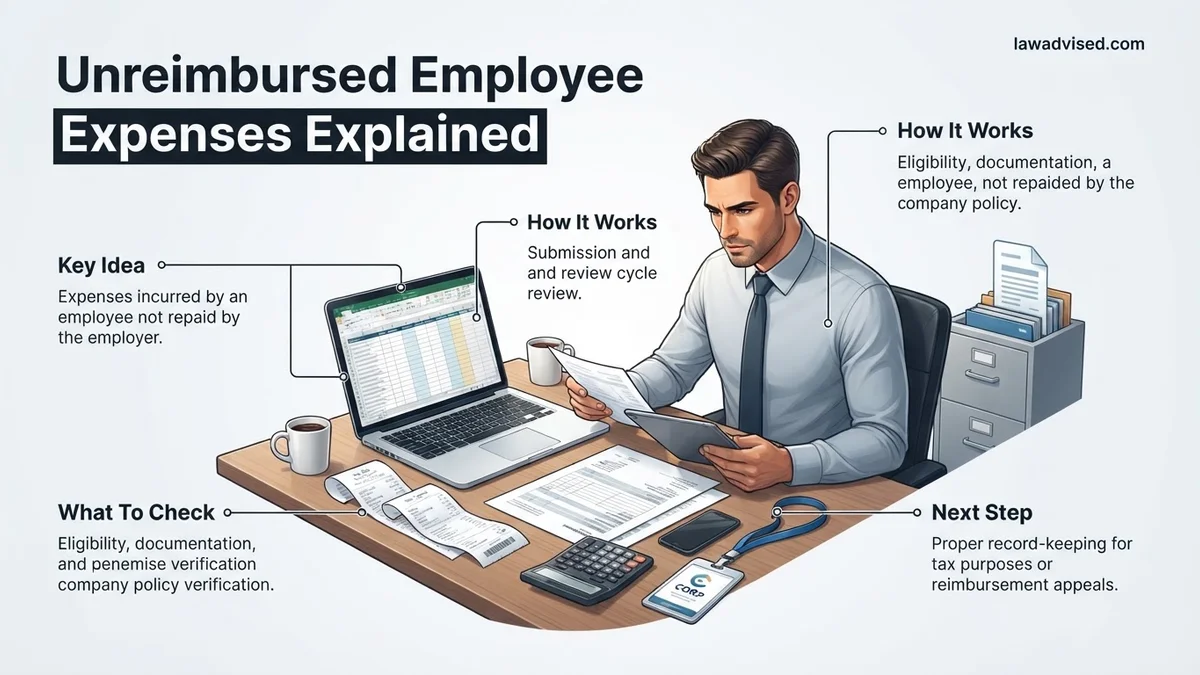
Most W-2 employees can no longer deduct unreimbursed work expenses on their federal taxes due to rules under the Tax Cuts and Jobs Act. However, specific statutory exceptions and certain state tax laws still allow targeted deductions for qualifying workers. This guide breaks down what you need to know for the 2026 tax year.
As a W-2 employee, you cannot deduct standard unreimbursed work expenses on your federal tax return for the 2026 tax year. The Tax Cuts and Jobs Act temporarily suspended these miscellaneous itemized deductions, and that suspension remains fully active today.
This rule catches many workers off guard who routinely pay out-of-pocket for home offices, travel, tools, or professional development. Knowing the current rules prevents costly filing mistakes and helps you understand how to navigate employer reimbursement policies instead.
Key Takeaways
- W-2 employees cannot deduct federal unreimbursed work expenses through 2025.
- The suspension does not apply to self-employed individuals or Schedule C contractors.
- Specific worker categories like Armed Forces reservists retain statutory exceptions.
- Several state tax codes still allow deductions that federal rules block.
- Employers are not legally required to reimburse employee business expenses in most states.
What Causes the Suspension of Unreimbursed Employee Expenses
The Impact of the Tax Cuts and Jobs Act
Back before 2018, W-2 employees could deduct job-related expenses that exceeded two percent of their adjusted gross income. The Tax Cuts and Jobs Act completely eliminated those miscellaneous itemized deductions through December 31, 2025. Because Congress has not reinstated this provision, the suspension continues to govern tax filings for 2026. If your employer requires you to buy software, uniforms, or equipment without paying you back, you absorb that cost entirely on your own.
W-2 Employees Versus 1099 Contractors
The IRS draws a strict line between traditional employees and independent contractors regarding expense write-offs.
- W-2 Workers: Subject to the current suspension and cannot deduct ordinary business costs on Schedule A.
- 1099 Contractors: Classified as self-employed businesses and retain the full right to deduct ordinary and necessary expenses on Schedule C.
- The Practical Takeaway: Your tax classification dictates whether your work-related outlays offer any financial relief at tax time.
How to Verify If You Qualify for Statutory Exceptions
Narrow Exemptions for Specific Occupations
While the general W-2 deduction is suspended, Congress carved out specific statutory exemptions for distinct worker categories. If you fall into one of these specialized groups, you can still claim unreimbursed employee expenses on Form 2106.
- Armed Forces Reservists: Can deduct unreimbursed travel expenses when performing reserve duties more than 100 miles from home.
- Qualified Performing Artists: Eligible if they performed services for at least two employers, earned less than a specific statutory income limit, and had allowable business expenses exceeding ten percent of gross performing arts income.
- Fee-Based State or Local Government Officials: Allowed to deduct job expenses incurred while working on a fee basis.
- Employees with Impairment-Related Work Expenses: Individuals with physical or mental disabilities can deduct related work expenses that are necessary for employment.
Actionable Steps for Your 2026 Taxes
Before filing your 2026 tax return, review your job category to see if you meet the strict criteria for these statutory exceptions. If you do not qualify under these narrow rules, stop tracking miscellaneous job costs for tax reduction purposes. Instead, work directly with your human resources department to establish an accountable plan. An accountable plan allows your employer to reimburse your business expenses tax-free, which is currently the only reliable way to recover those costs.
How to Check State Tax Deductions for Work Expenses
While federal tax code changes under the Tax Cuts and Jobs Act eliminated miscellaneous itemized deductions for W-2 employees through 2025, the 2026 tax landscape varies significantly at the state level. Several U.S. states decoupled from federal rules, allowing taxpayers to deduct unreimbursed employee business expenses on state returns.
Step-by-Step State Verification Process
- Consult your state Department of Revenue website: Navigate to the official state tax agency portal for the 2026 tax year guidelines.
- Review itemized deduction schedules: Look for state-specific schedules, such as California’s Schedule CA or New York’s Form IT-196, which may retain employee business expense deductions.
- Check statutory employment criteria: Verify whether your specific profession qualifies under state rules, as some states limit deductions to specific occupations like performing artists or state-licensed professionals.
According to state tax policy analysts, approximately ten states still permit some form of unreimbursed employee expense deductions for the 2026 tax cycle. Failing to check state-specific provisions could mean leaving hundreds or thousands of state tax dollars unclaimed.
What If Your Employer Refuses to Reimburse Job Costs
Navigating employer pushback regarding mandatory work expenses requires understanding federal and state labor laws. If your company refuses to cover necessary tools, equipment, or travel required for your position, specific procedural steps can protect your financial interests.
Actionable Escalation Steps
- Review your employment contract and company handbook: Verify if expense reimbursement policies are explicitly stated, as some states legally mandate reimbursement for required tools or remote work utilities.
- Submit a formal written request: Document all out-of-pocket expenses via email or an official expense platform, attaching itemized receipts and specifying the business necessity.
- File a state labor board complaint: If your employer operates in a jurisdiction with mandatory reimbursement laws (such as California, Illinois, or Massachusetts) and refuses to pay, file a wage claim with your state department of labor.
- Consult a labor and employment attorney: Seek professional legal counsel if the unreimbursed costs threaten your financial stability or violate local wage laws. Professional consultations typically range from $200 to $400 per hour depending on geographic location and case complexity.
What If It Still Doesn’t Work?
If direct negotiations fail and state laws do not provide a mechanism for recovering mandatory job costs, alternative financial strategies are necessary. Consider these fallback steps to mitigate the impact of unreimbursed expenses:
- Request a compensation review: Schedule a formal meeting with human resources or management to petition for a salary adjustment or technology stipend that accounts for ongoing out-of-pocket work costs.
- Adjust your tax withholding: Consult a certified public accountant to optimize your W-4 withholdings, ensuring your take-home pay accurately reflects your net financial reality after job-related overhead.
- Engage a tax professional: Hire a licensed CPA or Enrolled Agent for the 2026 tax season to ensure absolute compliance across federal, state, and local tax codes. Professional tax preparation fees generally cost between $300 and $700 for complex individual returns.
- Evaluate alternative employment: Assess whether the total compensation package of your current role justifies absorbing persistent, unreimbursed operational expenses compared to market alternatives.
Conclusion
Absorbing unreimbursed employee expenses strains personal finances and complicates tax season compliance. By systematically verifying state-level deductions, documenting out-of-pocket costs, and engaging management or labor boards when necessary, workers can protect their income. According to verified research and labor economics experts, proactive expense tracking and clear communication remain the most effective defenses against unexpected job-related overhead. Make your next actionable step a thorough review of your state’s 2026 tax guidelines regarding employee business deductions.
❓ Frequently Asked Questions
Why did the IRS eliminate unreimbursed employee business expenses?
The Tax Cuts and Jobs Act (TCJA) of 2017 suspended miscellaneous itemized deductions subject to the 2% adjusted gross income floor from 2018 through 2025 in exchange for a doubled standard deduction.
What qualifies someone as a qualified performing artist?
To qualify, you must perform services in the performing arts for at least two employers during the tax year, earn more than $200 from at least two of them, and have allowable business expenses exceeding 10% of gross income from the arts.
Are employers required by law to reimburse out-of-pocket work expenses?
Federal law does not universally require expense reimbursement, though certain state laws mandate that employers cover necessary business-related costs incurred by employees.
How should I handle work expenses if my employer does not reimburse them?
Since federal deductions are unavailable for standard W-2 workers, you can negotiate an accountable plan with your employer for tax-free reimbursements or ask for a salary adjustment.
What is an accountable plan versus a non-accountable plan?
An accountable plan requires employees to substantiate business expenses with receipts and return excess amounts, making the reimbursements tax-free. Non-accountable plans add reimbursements directly to taxable wages.
Will unreimbursed employee expense deductions return after 2025?
The suspension of miscellaneous itemized deductions is currently set to expire after December 31, 2025, unless Congress passes new legislation to extend or make the tax provisions permanent.

Ismail Hossain is the founder of Law Advised. He is an Divorce, Separation, marriage lawyer. Follow him.