Federal Tax Rates by Income 2026 Expert Brackets Guide
Navigating federal tax rates by income requires knowing your exact filing status and taxable bracket thresholds. This guide breaks down marginal tax brackets and standard deductions so you can calculate your exact tax liability for 2026.
Navigating the federal income tax system for 2026 requires knowing your exact marginal tax rate and filing status to avoid overpaying the IRS. Your total taxable income determines which bracket you fall into, directly shaping your take-home pay and end-of-year refund or liability.
Understanding these brackets helps you implement strategic tax planning before the year closes. Whether you file as single, married filing jointly, or head of household, knowing your exact thresholds empowers you to protect your hard-earned income.
Key Takeaways
- Identify your correct filing status to determine your specific income tax bracket.
- The U.S. uses a progressive tax system, meaning only income in higher brackets is taxed at higher rates.
- Subtract your standard deduction from gross income to find your taxable income.
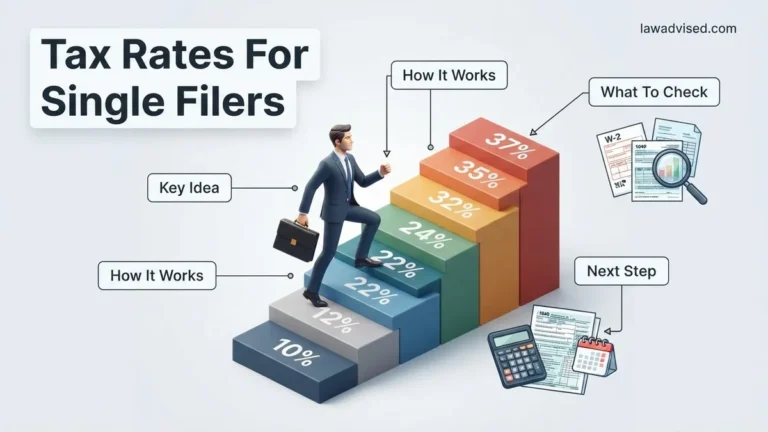
- Marginal tax rates range from 10% to 37% for individual earners in 2026.
- Plan your deductions carefully throughout the year to reduce your overall tax burden.
What Causes High Federal Tax Bills Based on Income Brackets
Crossing Into Higher Marginal Rate Thresholds
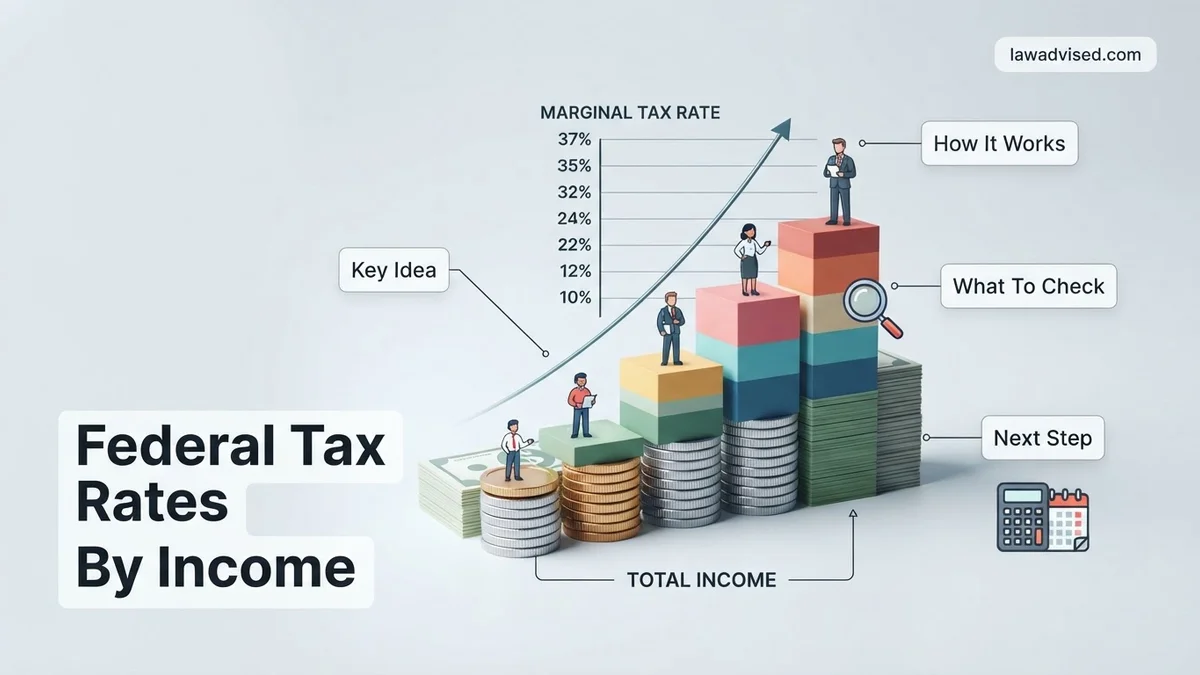
The United States uses a progressive federal income tax system. This means your entire income is not taxed at a single rate. Instead, your income is taxed in chunks, or slices, known as brackets. Many taxpayers mistakenly believe that moving into a higher bracket means every dollar they earn gets taxed at that higher rate. In reality, only the income earned above that specific threshold is taxed at the higher rate.
- Your first dollars earned are taxed at the lowest marginal rate of 10 percent.
- As your earnings increase, subsequent portions of your income face higher rates, such as 12 percent, 22 percent, 24 percent, and beyond.
- Entering a new bracket only applies the higher rate to the dollars falling inside that specific tier.
The Impact of Filing Status on Your Bracket
Your filing status dictates the width of your tax brackets. Single filers reach higher tax brackets much faster than married couples filing jointly. If you experience a major life change such as marriage, divorce, or having a child, your bracket shifts immediately. Failing to account for these changes can result in unexpected tax bills because your withholdings no longer match your actual 2026 federal tax liability.
- Single filers face steeper jumps at lower income levels.
- Married filing jointly couples enjoy wider income bands before hitting higher marginal rates.
- Head of household status provides an intermediate tier of protection for single parents and sole providers.
How to Fix Your Tax Calculation by Applying the 2026 Federal Tax Rates Step-by-Step
Calculating Your Taxable Income Correctly
To accurately apply the 2026 federal tax rates, you must start with your gross income and subtract your deductions. For the 2026 tax year, taking the standard deduction reduces your adjusted gross income before you ever apply a tax bracket. If your itemized deductions exceed the standard deduction, use those instead to lower your taxable baseline.
- Start with your total expected annual earnings and subtract pre-tax retirement contributions.
- Subtract the applicable 2026 standard deduction based on your filing status.
- The remaining number is your final taxable income used for bracket calculation.
Applying the Marginal Rates to Your Income Slices
Once you have your final taxable income, you apply the IRS tax brackets sequentially. For example, if you are a single filer with a taxable income of 60,000 dollars in 2026, you do not pay a flat percentage on the whole amount. You pay the 10 percent rate on the first bracket limit, the 12 percent rate on the next slice, and the 22 percent rate only on the money falling into that final bracket.
- Calculate the exact tax owed for each individual bracket slice separately.
- Add the tax amounts from each slice together to find your total federal income tax before credits.
- Subtract any valuable tax credits, like the child tax credit, to determine your final liability.
What If Your Income Crosses a Tax Bracket Threshold During the Year
Many taxpayers worry that earning a raise will push their entire income into a higher bracket, resulting in a smaller take-home pay. Fortunately, the United States uses a marginal tax system for 2026. This means crossing a threshold only taxes the dollars that fall within that specific bracket at the higher rate.
Understanding Marginal Impact
When your income crosses a boundary, your prior earnings remain taxed at their original lower rates. Financial experts emphasize that turning down a raise or additional hours to avoid a higher bracket is mathematically counterproductive. You will always keep a portion of every extra dollar earned.
Tracking Progressive Shifts
- Calculate your projected gross income for the 2026 tax year using current pay stubs.
- Subtract standard or itemized deductions to determine your estimated taxable income.
- Identify which specific 2026 tax bracket your final dollar of income will touch.
- Adjust your paycheck withholdings using the IRS Tax Withholding Estimator if you crossed into a significantly higher bracket.
How to Maximize Standard Deductions and Lower Your Taxable Income
Lowering your adjusted gross income can drop your top earnings out of a higher bracket altogether. For the 2026 tax year, utilizing above-the-line deductions and the standard deduction remains the most efficient strategy for average earners.
Strategic Reduction Methods
- Max out contributions to traditional workplace retirement plans like a 401(k) or 403(b), which directly reduces your taxable income.
- Contribute to a Health Savings Account (HSA) if you are enrolled in a high-deductible health plan, securing a triple tax advantage.
- Review your eligibility for above-the-line deductions, including student loan interest and educator expenses.
- Time your charitable contributions or medical expenses to see if itemizing exceeds the 2026 standard deduction threshold.
What If Your Tax Calculation Still Seems Confusing?
Navigating complex multi-bracket calculations or unexpected life events can sometimes lead to uncertainty regarding your final tax liability. If standard estimators and software yield conflicting results, consider these troubleshooting steps:
- Re-verify all inputs on your Form W-2 and 1099 statements to ensure zero data-entry errors.
- Consult an Enrolled Agent (EA) or Certified Public Accountant (CPA) to model various end-of-year scenarios. Professional tax preparation fees typically range from $220 to $500 depending on complexity.
- Contact the IRS direct taxpayer assistance line or utilize a local Volunteer Income Tax Assistance (VITA) clinic if you meet income qualification limits.
- Review your quarterly estimated tax payments if you are self-employed to prevent underpayment penalties.
Conclusion
Navigating federal tax brackets for 2026 requires understanding that progressive rates only apply to income falling within specific thresholds. By maximizing pre-tax deductions and tracking your earnings, you can effectively manage your overall tax burden. According to verified research and expert financial sources, proactive mid-year tax planning prevents unexpected liabilities and optimizes take-home pay. Your actionable next step is to run your projected numbers through the official IRS withholding calculator today.
❓ Frequently Asked Questions
How do I determine which federal tax bracket I fall into?
To find your tax bracket, calculate your taxable income by subtracting your standard or itemized deductions from your total gross income, then match that number against the IRS tax tables for your specific filing status.
Does entering a higher tax bracket mean all my income is taxed at that higher rate?
No. Under the U.S. marginal tax system, only the portion of your income that falls within the higher bracket is taxed at that higher rate, while your lower income remains taxed at the lower rates.
What are the standard deduction amounts for the 2026 tax year?
Standard deduction amounts vary by filing status—such as Single, Married Filing Jointly, and Head of Household—and are adjusted upward annually by the IRS to offset inflation impacts.
Should I take the standard deduction or itemize my deductions?
You should choose whichever option results in a higher deduction amount, which directly lowers your taxable income and reduces your overall federal tax liability.
How do capital gains tax rates differ from ordinary income tax rates?
Capital gains from selling assets held for over a year are typically taxed at lower preferential rates of 0%, 15%, or 20% compared to ordinary wage income brackets.
What steps can I take to lower my taxable income before the year ends?
You can lower your taxable income by contributing to pre-tax retirement accounts like a 401(k) or traditional IRA, utilizing health savings accounts (HSAs), and capturing available tax credits.

Ismail Hossain is the founder of Law Advised. He is an Divorce, Separation, marriage lawyer. Follow him.