Child Tax Credit Age Limit 2026 Real Rules & Guide
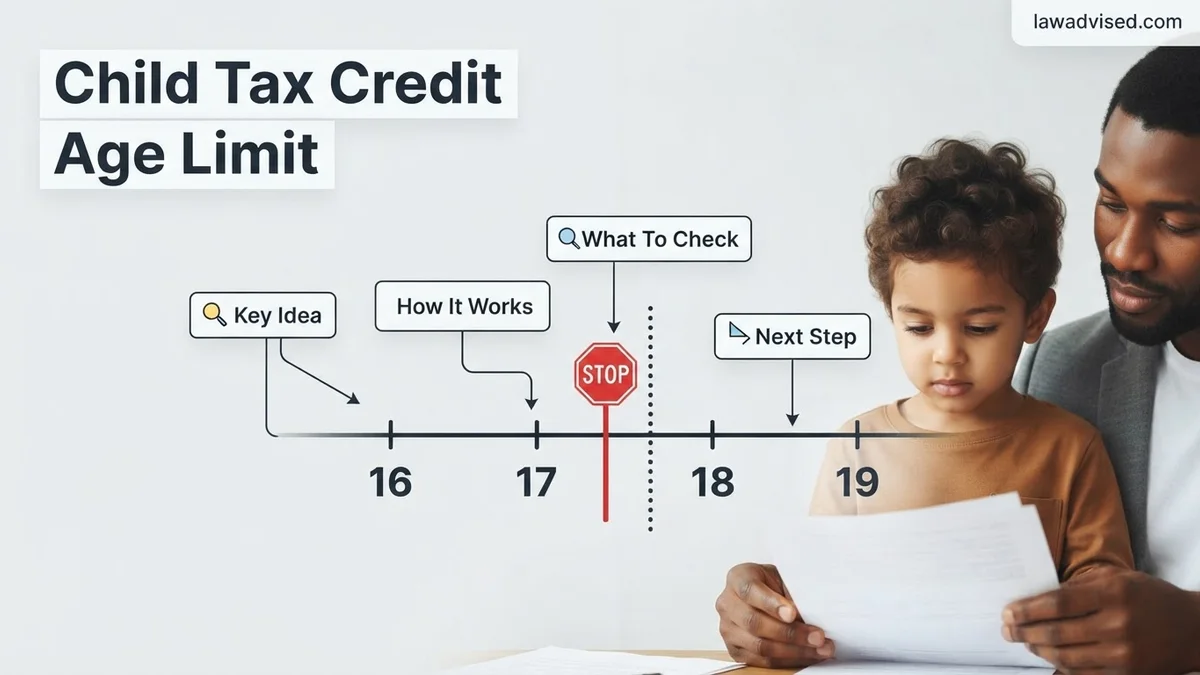
The child tax credit age limit strictly requires that a qualifying dependent must be under age 17 at the end of the tax year. If your child turns 17 before December 31, they no longer qualify for the standard Child Tax Credit but may be eligible for alternative credits.
For the 2026 tax year, the maximum age a child can be to qualify for the federal Child Tax Credit is under the age of 17 at the end of the calendar year. If your child turns 17 on or before December 31, 2026, they officially age out of the primary Child Tax Credit.
Navigating these rules correctly prevents costly filing delays and unexpected tax bills. Knowing the exact cutoff date ensures you claim the right dependents and maximize your family’s refund without triggering IRS audits.
Key Takeaways
- A child must be under age 17 at the end of the tax year to qualify.
- Children who turn 17 during the tax year fail the CTC age test.
- The Credit for Other Dependents covers dependents aged 17 and older.
- Qualifying dependents must also possess a valid Social Security Number.
- Residency rules require the child to live with you for over half the year.
What Causes Child Tax Credit Disqualification Based on Age Rules
The Strict Under-17 Birthday Cutoff
The IRS uses a hard calendar deadline to determine your dependent’s age eligibility. To qualify for the 2026 Child Tax Credit, your dependent must not turn 17 before January 1, 2027.
- Born on or after January 1, 2010: Your child qualifies for the CTC for the 2026 tax year, assuming all other criteria are met.
- Born on or before December 31, 2009: Your child turns 17 during 2026 and is disqualified from the primary CTC.
For example, if your teenager celebrates their 17th birthday on December 15, 2026, they do not qualify for the standard Child Tax Credit on your 2026 return. However, they might still qualify for the non-refundable $500 Credit for Other Dependents (ODC).
Overlapping Rules: Relationship and Residency Pitfalls
Age is only the first hurdle. Failing the residency or relationship tests will instantly disqualify an otherwise age-eligible child.
- Residency requirement: The child must live with you for more than half of the 2026 tax year. Temporary absences for school, vacation, or medical treatment generally count as time living at home.
- Relationship test: The dependent must be your son, daughter, stepchild, eligible foster child, brother, sister, stepbrother, stepsister, or a descendant of any of these individuals.
- Support rule: The child cannot have provided more than half of their own financial support during the 2026 calendar year.
How to Verify Child Tax Credit Age Limits Step-by-Step
Step 1: Check Social Security Number Deadlines
Age and relationship mean nothing without the correct paperwork. To claim the Child Tax Credit for the 2026 tax year, your child must possess a valid Social Security Number (SSN) issued on or before the due date of your 2026 tax return, including extensions.
- An Individual Taxpayer Identification Number (ITIN) will not work for the Child Tax Credit.
- If your child receives an SSN after the tax filing deadline, you generally cannot amend your return to claim the credit for 2026.
Step 2: Audit Birthdates Against the 2026 Calendar
Do not guess your child’s age based on how old they feel or what grade they are in. Pull out official birth certificates and verify the exact year.
- Locate your dependent’s birth certificate or official school records.
- Confirm the birth year falls within the 2010 to 2026 range for the 2026 tax season.
- Flag any children turning 18 or 17 in 2026 to evaluate them for alternative credits instead.
How to Claim the Credit for Other Dependents If Your Child Is 17
When your child turns 17, they officially age out of the primary federal Child Tax Credit for the 2026 tax year. However, according to Internal Revenue Service guidelines, families can pivot seamlessly to the non-refundable Credit for Other Dependents (ODC). This secondary provision helps bridge the financial gap during late adolescence and high school.
Qualifying Criteria for the ODC
Unlike the primary child tax credit, the ODC has no upper age limit as long as the dependent meets specific relationship and support tests. To successfully claim the ODC for your 17-year-old child in 2026, ensure they meet the following baseline requirements:
- The dependent must be claimed properly on your 2026 federal income tax return.
- They must lack a valid Social Security Number that is valid for employment in the United States, though an ITIN is generally acceptable if all other rules apply.
- They must fall under the qualifying relationship definitions, which include biological children, stepchildren, foster children, or legally adopted descendants.
- You must provide more than fifty percent of the dependent’s total financial support for the calendar year 2026.
Financial Impact and Maximum Value
Families must adjust their financial expectations when shifting to this alternative category. Tax experts note that the maximum credit value drops from the standard child amount down to a flat $500 per eligible individual. Furthermore, because the ODC is non-refundable, it can only reduce your tax liability down to zero and will not generate a direct cash refund check.
What If It Still Doesn’t Work?
Navigating changing dependent age limits occasionally triggers automated IRS processing delays or notice letters. If your 2026 claim for either credit gets rejected or flagged, systematic troubleshooting can resolve the discrepancy without permanent loss of funds.
Actionable Resolution Steps
- Review your Form 1040 to verify that the dependent’s date of birth and Social Security Number were entered without typographical errors.
- Check your adjusted gross income against the current 2026 phase-out thresholds to ensure your household earnings did not exceed the statutory limits.
- Respond immediately to any IRS Letter 12C requesting verification of residency or financial support by mailing requested school transcripts or medical records within 30 days.
- Consult a certified public accountant or enrolled agent if the error stems from complex custody agreements or divorced parent filing rules. Professional tax representation for complex dependent audits typically ranges from $300 to $800 depending on regional market rates.
Conclusion
Managing the child tax credit age limit in 2026 requires careful tracking of your dependent’s exact birthdate and proactive transition to alternative credits like the ODC when they turn 17. According to verified research and expert tax sources, timely filing adjustments prevent costly processing delays and secure every available dollar of family tax relief. Review your current withholding selections today to align your financial strategy with updated federal guidelines.
❓ Frequently Asked Questions
What exact birthdate cutoff applies to the 2026 Child Tax Credit age limit?
To qualify for the 2026 Child Tax Credit, your child must have been born on or after January 1, 2010. Anyone born on or before December 31, 2009, will turn 17 or older in 2026 and will not qualify for the standard CTC.
Can I claim the Child Tax Credit for a college student who is 18?
No, the Child Tax Credit has a strict age limit under 17. However, you may be eligible to claim them under the Credit for Other Dependents or claim education credits depending on their student status and financial independence.
What is the difference between the Child Tax Credit and the Credit for Other Dependents?
The Child Tax Credit provides a larger financial benefit for children under 17 with valid SSNs. The Credit for Other Dependents offers a non-refundable credit of up to $500 for dependents who are 17 and older or lack a qualifying child SSN.
Does adoption affect the child tax credit age limit rules?
Adopted children are subject to the same under-17 age limit as biological children. The crucial factor is their official age at the end of the tax year, regardless of when the adoption was finalized during that year.
What happens if my dependent turns 17 midway through the tax year?
If your child turns 17 at any point during the tax year—even on December 30—they fail the age test for the Child Tax Credit. You should evaluate them for the Credit for Other Dependents instead.
Are there income limits in addition to the age limit for the Child Tax Credit?
Yes, the Child Tax Credit phases out for higher-income taxpayers. The exact phaseout thresholds depend on your filing status, though the age limit rule must be satisfied first before income thresholds are applied.

Ismail Hossain is the founder of Law Advised. He is an Divorce, Separation, marriage lawyer. Follow him.