Self Employed Income Tax Explained A Step-by-Step 2026
Navigating self employed income tax requires managing both regular income tax and the self-employment tax for Social Security and Medicare. This guide breaks down net earnings calculations, strategic write-offs, and quarterly payment schedules to help you avoid penalties in 2026.
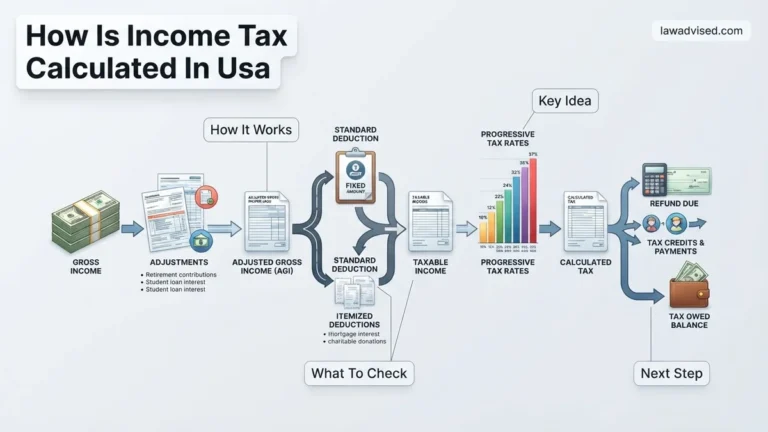
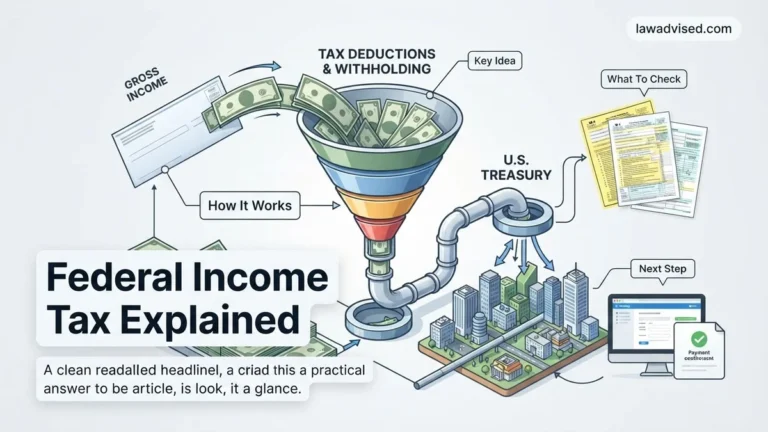
When you work for yourself, you stop paying standard payroll taxes through a W-2 and instead carry the full weight of federal, state, and local obligations on your own. The core of self-employed income tax in 2026 comes down to two separate buckets: federal income tax based on your tax bracket, and the self-employment tax, which covers Social Security and Medicare. Because no employer is withholding these funds throughout the year, you must calculate and pay them yourself.
Managing this system effectively prevents massive year-end tax bills and costly underpayment penalties. Understanding how these calculations work lets you legally slash your taxable liability through business deductions and keep more of your hard-earned revenue.
Key Takeaways
- Self-employed individuals pay a 15.3% SECA tax covering Social Security and Medicare.
- Deducting half of your self-employment tax lowers your adjusted gross income.
- Track and deduct all ordinary business expenses to lower your net taxable income.
- Pay quarterly estimated taxes to the IRS to avoid late-payment penalties.
- Keep strict records of business mileage, home office use, and software subscriptions.
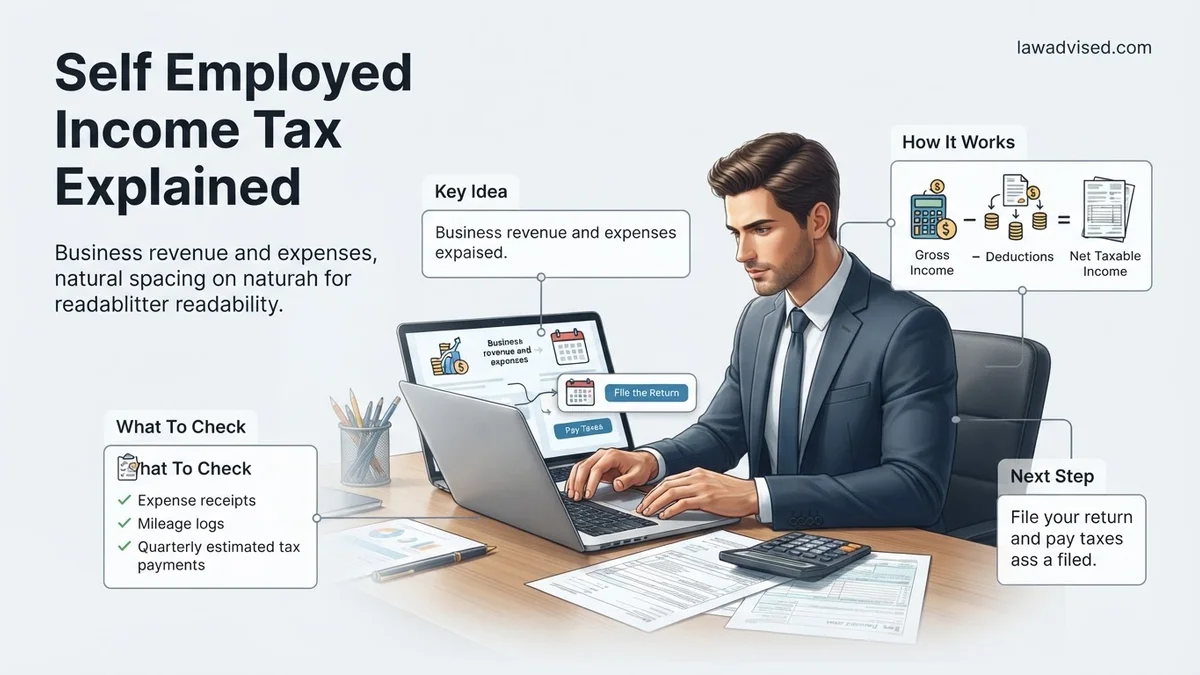
What Causes High Self-Employed Tax Bills and Confusion
The Dual Role of Employer and Employee
As a traditional employee, your company pays half of your FICA taxes, matching the 6.2% for Social Security and 1.45% for Medicare that comes out of your paycheck. When you are self-employed, you wear both hats. You must pay the entire 15.3% self-employment tax rate on your net earnings up to the 2026 Social Security wage base limit. This dual burden catches many new freelancers and contractors completely off guard.
Federal Income Tax Stacked on Top
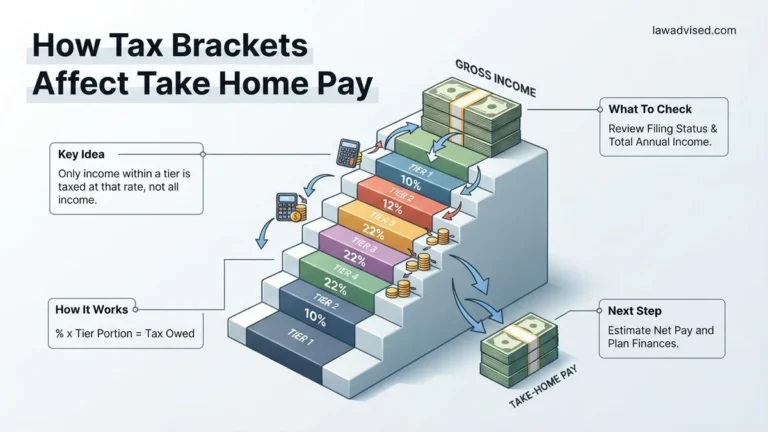
Beyond the flat 15.3% self-employment tax, you still owe regular federal income tax. This is calculated using your total taxable income minus standard deductions and your half-of-self-employment-tax deduction. If you grossed one hundred thousand dollars, you face both the 15.3% self-employment tax and your marginal income tax bracket rate. Without proper planning, total taxes can easily consume 25 to 40 percent of your gross revenue.
Self-Employed Income Tax Made Easy: Your Essential Action Plan
Navigating taxes as a freelancer, independent contractor, or small business owner can feel overwhelming, but mastering the process saves you money and prevents costly penalties. This comprehensive guide walks you through the exact framework needed to calculate, file, and pay your self-employed income taxes accurately and on time.
Step 1: Determine Your Tax Filing Status and Obligations
What you need: Your Social Security Number (SSN) or Employer Identification Number (EIN), plus records of your business structure (sole proprietorship, LLC, partnership).
Instructions: Before calculating a single dollar, you must understand your classification. If you operate as a sole proprietor or single-member LLC, your business income flows directly onto your personal tax return using Schedule C. You are also subject to self-employment tax, which covers your contributions to Social Security and Medicare. Review your estimated annual gross revenue to determine if your net earnings cross the $400 threshold, which legally mandates filing a self-employed tax return.
Pro Tip: Register for an EIN even if you are a sole proprietor; it protects your personal SSN from identity theft when working with multiple clients.
Step 2: Establish a Dedicated Business Bank Account
What you need: Your business formation documents, EIN, initial deposit, and an appointment with a bank or online financial institution.
Instructions: Mixing personal and business finances is the number one trap self-employed individuals fall into. Open a separate checking account explicitly for all incoming client payments and business-related expenses. Deposit 100% of your gross earnings into this account, and use it to pay for software, equipment, and marketing. This creates an indisputable paper trail that makes tax preparation drastically faster and protects you during an audit.
Pro Tip: Never pay for business expenses out of your personal pocket without immediate reimbursement from your business account.
Step 3: Track and Categorize Every Business Expense
What you need: Accounting software (like QuickBooks or FreshBooks), a dedicated receipt scanner app, or an organized digital folder system.
Instructions: Every legitimate business expense reduces your taxable income dollar-for-dollar. Systematically record costs such as home office utilities, internet, professional subscriptions, travel, and equipment depreciation. Review your transactions weekly to categorize them correctly according to IRS Schedule C line items, such as advertising, legal fees, or supplies. Keeping contemporaneous records is a strict legal requirement for claiming deductions.
Pro Tip: Download all digital receipts immediately. Thermal receipt paper fades within months, rendering them useless for IRS verification.
Step 4: Calculate Your Net Profit and Loss
What you need: Your categorized income statements and total deductible expense summaries for the year.
Instructions: To find your net profit—the figure you will actually be taxed on—subtract your total allowable business expenses from your gross business income. For example, if you earned $80,000 in freelance writing fees and spent $15,000 on software, hardware, and home office deductions, your net profit is $65,000. This calculation forms the basis of both your income tax and your self-employment tax obligations.
Pro Tip: Double-check that personal expenses like groceries or non-business clothing are entirely excluded from your deductions.
Step 5: Compute Your Self-Employment Tax (Schedule SE)
What you need: Your net profit figure from Step 4 and IRS Form Schedule SE.
Instructions: Traditional employees split payroll taxes (FICA) 50/50 with their employers. As a self-employed worker, you must pay both halves, totaling 15.3% on your net earnings up to the annual Social Security wage base limit. Calculate this by multiplying your net earnings by 92.35%, then applying the 15.3% rate. Fortunately, the IRS allows you to deduct half of your self-employment tax as an adjustment to income on your Form 1040.
Pro Tip: Remember that self-employment tax is in addition to your standard federal and state income taxes.
Step 6: Calculate and Pay Quarterly Estimated Taxes
What you need: IRS Form 1040-ES, estimated income projections, and previous year tax returns.
Instructions: The United States operates on a pay-as-you-go tax system. If you expect to owe more than $1,000 in taxes for the year, you must make quarterly estimated tax payments using IRS Form 1040-ES. The standard due dates typically fall on April 15, June 15, September 15, and January 15 of the following year. Failing to make these payments or underpaying will trigger quarterly underpayment penalties and interest charges.
Pro Tip: Set aside 25% to 30% of every client payment into a separate tax-savings account the moment you get paid so quarterly bills never catch you off guard.
Step 7: File Your Annual Tax Return
What you need: Form 1040, Schedule C, Schedule SE, Form 8995 (for QBI deduction), and all 1099-NEC forms received from clients.
Instructions: Compile all your financial data and file your annual tax return by the standard April deadline. Ensure that every 1099-NEC you received matches the income reported on your Schedule C, as discrepancies frequently trigger automated IRS matching notices. Claim any eligible credits, such as the Qualified Business Income (QBI) deduction, which allows eligible self-employed individuals to deduct up to 20% of their business income right off the top.
Pro Tip: File electronically using reputable tax software or IRS Free File to catch math errors and ensure faster processing.
✅ Final Checklist
- Verified that all 1099-NEC forms match your reported gross income
- Deducted half of your self-employment tax on your Form 1040
- Made all four quarterly estimated tax payments on or before their deadlines
- Organized and backed up all digital receipts and expense logs for a minimum of 3 years
- Confirmed your Qualified Business Income (QBI) deduction was correctly calculated
Important Notes:
- Tax laws change frequently; always cross-reference deduction limits with current IRS guidelines.
- Seek help from a Certified Public Accountant (CPA) or Enrolled Agent (EA) if your business structure changes or you face complex multi-state tax issues.
- Budget 3 to 5 hours monthly for bookkeeping and expect to spend 5 to 10 hours during tax season; hiring professional help costs between $300 and $1,500 annually depending on complexity.
How to Calculate Your Net Earnings and Claim Business Deductions
Starting with Gross Receipts and Subtracting Expenses
Your self-employment tax is not calculated on your gross revenue. It applies strictly to your net self-employment earnings, which is your gross income minus ordinary and necessary business expenses. If you operate a consulting business from a dedicated home office, buy software subscriptions, or purchase equipment, every dollar spent lowers your taxable baseline.
- Track every business-related receipt using digital accounting software.
- Separate personal and business bank accounts to maintain clean records for 2026.
- Only deduct expenses that are common and helpful to your specific trade.
The Math Behind Net Earnings
To find your net earnings for tax purposes, take your total business revenue and subtract your total write-offs. The IRS requires you to multiply this net figure by 92.35% before applying the 15.3% self-employment tax rate. This adjustment mimics the half-tax deduction that traditional employers get to take.
- Calculate gross revenue: $120,000
- Subtract valid business deductions: $20,000
- Determine net profit: $100,000
- Multiply by 92.35% to find taxable self-employment earnings: $92,350
- Apply the 15.3% self-employment tax rate to that final figure.
Step-by-Step Instructions to Pay Your Quarterly Estimated Taxes
Navigating self-employed income tax in 2026 requires strict adherence to federal payment schedules. Missing an Internal Revenue Service deadline triggers failure-to-pay penalties and compounding interest.
Filing Your Payments on Time
- Calculate your projected annual adjusted gross income, self-employment tax, and deductions for the 2026 tax year.
- Divide your total estimated tax liability by four to determine your individual quarterly installment amount.
- Access the official IRS Direct Pay portal online or set up an Electronic Federal Tax Payment System account to execute secure transfers.
- Submit your Q1 payment by April 15, Q2 by June 15, Q3 by September 15, and your final Q4 payment by January 15, 2027.
- Retain digital receipts and confirmation numbers for every transaction to reconcile payments accurately during annual filing.
What If Your Income Fluctuates and Standard Quarterly Payments Do Not Fit
Freelancers and independent contractors frequently experience volatile revenue streams throughout the fiscal year. Standard equal quarterly payments can lead to severe cash flow shortages during slow business months or overpayments during unexpected windfalls.
Utilizing the Annualized Income Installment Method
- Calculate your actual net earnings for each specific period before the quarterly deadline arrives.
- Complete IRS Form 2210, Schedule AI, to calculate fluctuating tax liability based on real-time seasonal income spikes or dips.
- Adjust your subsequent quarterly payments downward to match lower earnings periods without incurring underpayment penalties.
- Consult a certified public accountant to ensure proper documentation protects your business from unexpected year-end IRS audits.
What If It Still Doesn’t Work?
If complex calculations or unexpected revenue shifts still leave your tax strategy unresolved, immediate intervention is necessary. Utilize these fallback steps to mitigate financial penalties:
- File for an IRS short-term payment plan or an installment agreement if you cannot cover your current tax obligation.
- Consult a licensed Enrolled Agent or Certified Public Accountant specializing in freelance taxation; professional consultations typically cost between $250 and $600.
- Utilize professional-grade tax software explicitly designed for self-employed individuals to run automated error diagnostics on your calculations.
- Contact the IRS taxpayer assistance line directly to request a first-time penalty abatement if you have a clean compliance history.
Conclusion
Mastering self-employed income tax requires proactive quarterly planning, accurate expense tracking, and strategic responses to fluctuating revenue. Establishing a reliable digital payment routine protects your business from unexpected federal penalties and severe cash flow disruptions. According to verified research and tax experts, maintaining a dedicated business savings account specifically for tax obligations remains the single most effective strategy for financial stability. Your immediate next step is to open a separate high-yield business savings account and automatically transfer 30 percent of every incoming client payment directly into it.
❓ Frequently Asked Questions
How does self-employment tax differ from standard income tax?
Standard income tax applies to your overall taxable income at progressive bracket rates. Self-employment tax is a flat 15.3% levied specifically on your net self-employment earnings to fund Social Security and Medicare.
What constitutes a deductible business expense?
A deductible business expense is any cost that is both ordinary (common in your trade) and necessary (helpful for your business). Examples include software, advertising, professional fees, and home office space.
What are the exact quarterly tax payment deadlines?
Quarterly estimated tax payments are typically due on April 15, June 15, September 15, and January 15 of the following year. If a deadline falls on a weekend or holiday, the due date shifts to the next business day.
What happens if I miss a quarterly estimated tax payment?
Missing a quarterly deadline or underpaying your estimated tax can result in IRS penalties and interest charges when you file your annual tax return.
How do I calculate my net self-employment earnings?
You calculate net earnings by taking your total gross business receipts and subtracting all allowable business deductions and expenses on Schedule C.
Do I need an accountant to handle self-employed taxes?
While software and DIY platforms make filing straightforward for simple businesses, an accountant can help optimize deductions, manage complex multi-state income, and plan for future growth.

Ismail Hossain is the founder of Law Advised. He is an Divorce, Separation, marriage lawyer. Follow him.