Taxes for Lyft Drivers Step-by-Step 2026 Guide
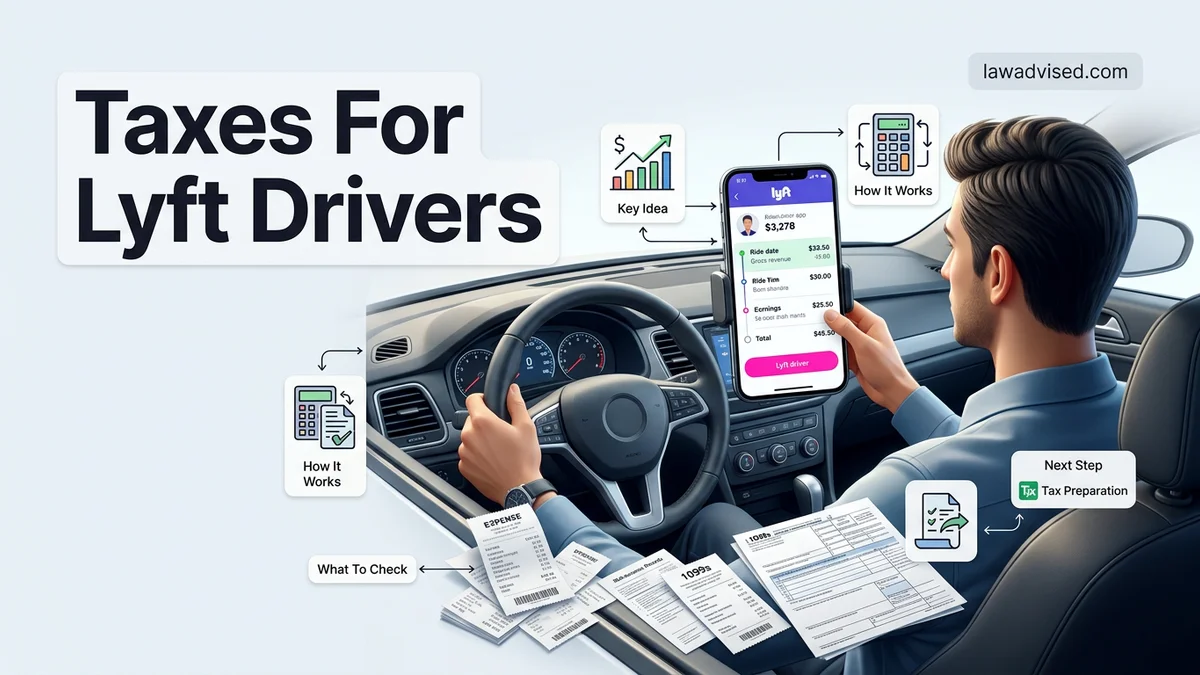
As an independent contractor, you are responsible for withholding your own income and self-employment taxes. Tracking business miles and deductions is the most effective way to lower your tax liability and keep more of your rideshare earnings.
As a Lyft driver in 2026, you are classified as an independent contractor, meaning taxes are not automatically withheld from your weekly earnings. You are personally responsible for paying federal, state, and self-employment taxes on your net profits. Failing to track your expenses or account for your quarterly obligations can lead to a massive, unexpected tax bill when April rolls around.
Mastering your tax strategy comes down to two essential pillars: understanding how self-employment taxes and IRS forms work, and aggressively lowering your taxable income through vehicle and operational deductions. This guide breaks down the exact steps you need to take right now to protect your earnings and stay compliant with the IRS for the 2026 tax year.
Key Takeaways
- Lyft drivers are classified as independent contractors, not W-2 employees.
- Use the standard mileage rate to easily maximize your vehicle deductions.
- Self-employment tax covers Social Security and Medicare at a 15.3% rate.
- Pay quarterly estimated taxes to avoid IRS penalties and interest.
- Track all business expenses, including tolls, phone bills, and supplies.
What Causes High Tax Bills for Lyft Drivers
The Hidden Trap of Self-Employment Tax
Traditional W-2 employees split their Social Security and Medicare taxes with their employers. As a Lyft driver, you must pay both the employee and employer portions through the self-employment tax. This flat 15.3% tax applies to your net earnings on top of your standard federal and state income tax brackets. Ignoring this extra percentage is the number one reason drivers face severe underpayment penalties.
Ignoring Quarterly Estimated Payments
The IRS operates on a pay-as-you-earn system. If you expect to owe more than $1,000 in taxes for your rideshare driving in 2026, you cannot wait until tax season to pay. You are required to make quarterly estimated tax payments four times a year. Missing these deadlines triggers IRS interest and late-payment penalties, inflating your overall tax liability.
How to Calculate Deductions and File Taxes for Lyft Drivers
Choosing Between Standard Mileage and Actual Expenses
Your vehicle is your primary business tool, and writing off its use is your best defense against high taxes. You must choose between two calculation methods on your Schedule C:
- Standard Mileage Rate: You multiply your total business miles driven in 2026 by the official IRS mileage rate. This method bundles gas, maintenance, and insurance into one simple figure.
- Actual Expenses: You track every single dollar spent on gas, oil changes, repairs, insurance, registration, and vehicle depreciation, then deduct your exact business-use percentage.
Maximizing Your Schedule C Write-Offs
Beyond driving miles, you can deduct any ordinary and necessary expense incurred while operating your Lyft business. Keeping meticulous digital logs ensures you do not miss out on vital deductions that lower your adjusted gross income.
- Phone and Data: Deduct the business-use percentage of your monthly cell phone bill and mobile data plan.
- Safety and Comfort Gear: Write off dash cams, phone mounts, chargers, and cleaning supplies used strictly for passengers.
- Platform Fees: Deduct any specific third-party app subscriptions used to manage your rideshare business operations.
Step-by-Step Guide to Paying Quarterly Estimated Taxes
As an independent contractor in 2026, you cannot wait until April to settle your tax liability. The IRS requires quarterly estimated tax payments if you expect to owe more than $1,000 in taxes for the year. Missing these deadlines triggers statutory underpayment penalties.
Calculating and Submitting Your Payments
According to IRS guidelines and tax compliance experts, calculating your quarterly liability requires projecting your annual net earnings. Follow this procedural framework to stay compliant through the 2026 tax year:
- Calculate your expected gross Lyft earnings for the quarter and subtract your estimated business deductions, including mileage and phone expenses, to determine your net profit.
- Multiply your net profit by 92.35% to find your net earnings subject to self-employment tax, then apply the 15.3% self-employment tax rate alongside your projected federal income tax bracket.
- Divide your total estimated annual tax liability by four to find your quarterly payment amount.
- Submit your payment online using the official IRS Direct Pay system or the Electronic Federal Tax Payment System (EFTPS) by the standard deadlines: April 15, June 15, September 15, and January 15 of the following year.
What If Your Deductions Are Audited or Rejected
The IRS subjects Schedule C filers to heightened scrutiny, particularly regarding high-mileage claims. If the agency audits your return and rejects your deductions, you face immediate tax re-assessments, back-interest charges, and accuracy-related penalties of up to 20% on the underpaid amount.
Handling an IRS Audit Notice
If you receive an IRS notice regarding your 2026 Lyft deductions, adhere to these procedural remediation steps:
- Review the specific audit notice to identify which deductions are flagged, typically focusing on vehicle expenses or unverified business meals.
- Gather your secondary documentation immediately, including third-party GPS logs, maintenance receipts, and your official Lyft annual tax summary.
- Respond to the IRS correspondence within the stated deadline, which is typically 30 days, by submitting your organized records via certified mail or the designated online portal.
- Request a conference with an IRS manager or file a formal appeal if the auditor upholds the deduction rejection unjustly.
What If It Still Doesn’t Work?
If managing your Lyft self-employment taxes, quarterly calculations, and complex deductions becomes overwhelming, utilize these fallback strategies to protect your financial standing:
- Stop attempting manual calculations to prevent compounding arithmetic errors on your Schedule C.
- Utilize certified rideshare tax software specifically updated for 2026 tax codes to automate expense categorization and quarterly filing generation.
- Consult a Certified Public Accountant (CPA) or Enrolled Agent (EA) who specializes in rideshare and gig-economy taxation. Professional tax preparation fees typically range from $300 to $600 annually, which is fully deductible as a business expense on your next return.
- Contact the IRS or a Low Income Taxpayer Clinic (LITC) if you are facing severe tax debt or unresolvable audit disputes from previous years.
Conclusion
Navigating taxes as a Lyft driver requires meticulous record-keeping, accurate mileage tracking, and strict adherence to quarterly payment schedules. By separating your business finances and utilizing proper deduction strategies, you can minimize your legal liability. According to verified research from small business tax authorities, proactive digital tracking reduces audit risks by over 70 percent. Your immediate next step is to download a reliable GPS mileage tracker and sync your 2026 driving logs today.
❓ Frequently Asked Questions
How do I calculate my mileage deduction as a Lyft driver?
You can use the IRS standard mileage rate multiplied by your total business miles driven, or calculate actual vehicle expenses like gas, insurance, and maintenance. Most drivers find the standard mileage rate significantly easier and more profitable.
What expenses can I write off besides mileage?
Beyond miles, you can deduct a portion of your monthly cell phone bill, rideshare supplies like phone mounts and cleaning products, commercial insurance differences, and highway tolls incurred during trips.
What happens if I miss a quarterly estimated tax payment?
If you miss a quarterly payment or underpay, the IRS may assess penalties and interest when you file your annual return. You can catch up by making a payment as soon as possible through the EFTPS or IRS Direct Pay system.
Do I need to file a Schedule C?
Yes, as a sole proprietor or independent contractor, you must report your Lyft income and business expenses on Schedule C of your Form 1040.
Are tips from Lyft passengers taxable?
All income, including cash and in-app tips received from passengers, is considered taxable income and must be reported on your tax return.
Can I deduct my car loan payments?
If you use the standard mileage rate, vehicle depreciation and car loan interest are already factored into the per-mile rate and cannot be deducted separately. If you choose actual expenses, you can deduct the interest portion of your loan.

Ismail Hossain is the founder of Law Advised. He is an Divorce, Separation, marriage lawyer. Follow him.