Taxes for Delivery Drivers 2026 Step-by-Step Guide
Navigating taxes for delivery drivers requires understanding independent contractor obligations, tracking vehicle write-offs, and paying quarterly self-employment taxes. Without proper tracking, drivers risk overpaying thousands to the IRS. This expert guide breaks down exact deductions and filing steps for 2026.
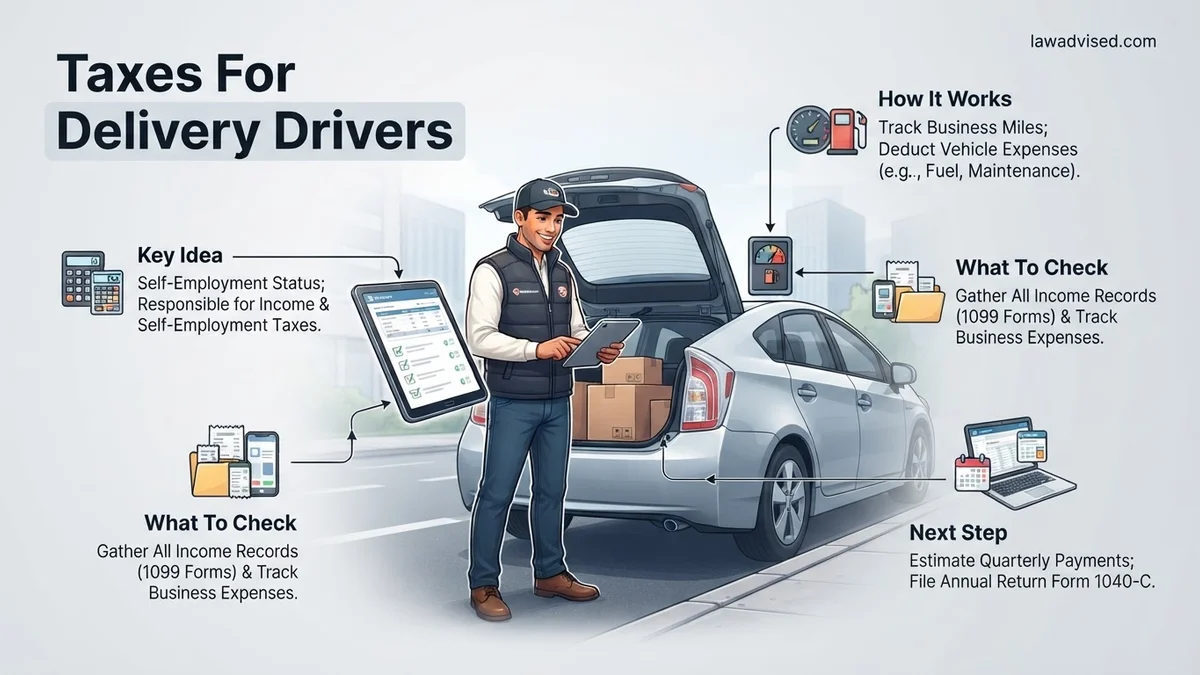
As an independent delivery driver working for apps like DoorDash, UberEats, or Amazon Flex, you are legally classified as an independent contractor, meaning taxes are not automatically withheld from your earnings. To file your 2026 taxes correctly, you must report your gross gig income on Schedule C, deduct legitimate business expenses—with vehicle mileage being your biggest saver—and pay a 15.3% self-employment tax alongside your federal and state income taxes.
Mastering this process prevents you from overpaying the IRS and protects you from surprise tax bills or quarterly penalties. Because you foot the bill for your own gas, vehicle maintenance, and phone data, taking advantage of every single write-off is the only way to lower your taxable income.
Key Takeaways
- Track every business mile using a reliable digital mileage tracking app.
- Choose between the standard mileage rate or actual vehicle expenses.
- Pay quarterly estimated taxes to avoid heavy IRS penalties and interest.
- Deduct a percentage of your monthly cell phone and data plan.
- Save all receipts for delivery gear like hot bags and car mounts.
What Causes High Tax Bills for Independent Delivery Drivers
The Self-Employment Tax Trap
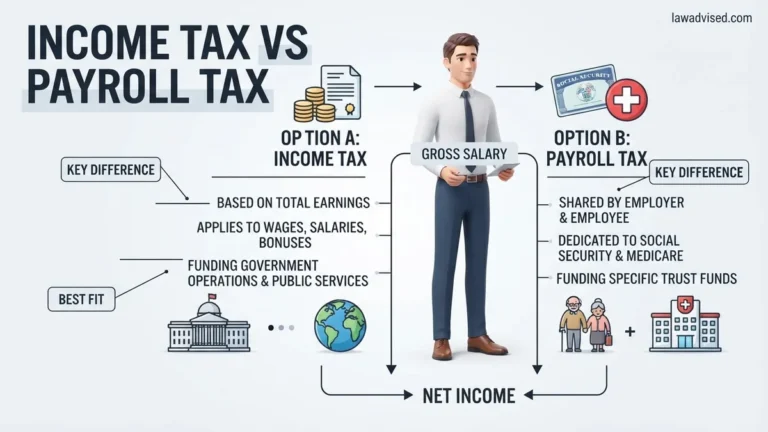
Traditional W-2 employees split their payroll taxes with their employer, but as a gig driver, you pay both halves through the self-employment tax. This 15.3% tax covers Social Security (12.4%) and Medicare (2.9%) on your net earnings. Many new drivers forget this exists and get blindsided come tax season because federal income tax is separate from this 15.3% levy.
Missing Out on Quarterly Estimated Payments
The IRS operates on a pay-as-you-go system. If you expect to owe more than $1,000 in taxes for 2026, you cannot wait until April 2027 to pay the full amount. You must make quarterly estimated tax payments using IRS Form 1040-ES.
- Q1 payment due: April 15, 2026
- Q2 payment due: June 15, 2026
- Q3 payment due: September 15, 2026
- Q4 payment due: January 15, 2027
Missing these deadlines triggers underpayment penalties and interest charges that inflate your overall tax burden.
How to Calculate Your Delivery Driver Mileage and Expense Write-Offs
The Standard Mileage Rate vs. Actual Expenses
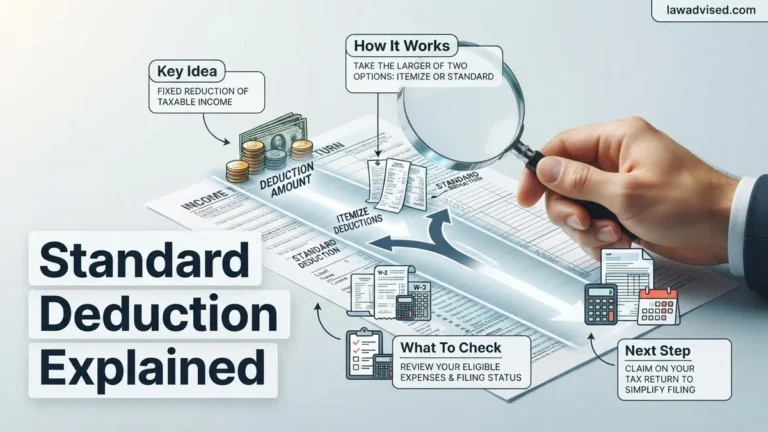
Your vehicle is your primary business tool, and your driving costs make up your largest deduction. You have two choices for calculating this deduction for 2026:
- Standard Mileage Rate: You multiply your total business miles driven by the IRS standard mileage rate. This rate covers gas, wear and tear, maintenance, and insurance all in one simple calculation.
- Actual Expenses: You track every single dollar spent on gas, oil changes, tires, repairs, insurance, registration, and vehicle depreciation, then multiply those totals by the exact percentage of miles driven for delivery work versus personal use.
Which Method Saves You More Money?
For most food and package delivery drivers, the Standard Mileage Rate delivers a higher deduction with a fraction of the administrative headache. For example, if you drive 20,000 miles in 2026 strictly for deliveries, a standard mileage deduction yields a massive write-off without you needing to save every single oil change receipt.
Keep in mind that if you choose the actual expense method in your first year of driving a new vehicle, you lock yourself into complex rules for future years. To use the mileage method legally, you must maintain a contemporaneous mileage log showing the date, starting location, destination, business purpose, and total miles for every delivery trip.
Step-by-Step Guide to Filing Quarterly Estimated and Self-Employment Taxes
Filing taxes as a 1099 delivery driver requires breaking the process down into manageable procedural milestones. According to tax compliance guidelines from the IRS, independent contractors must handle both self-employment tax and federal income tax through a structured routine.
Step 1: Calculate Your Net Earnings
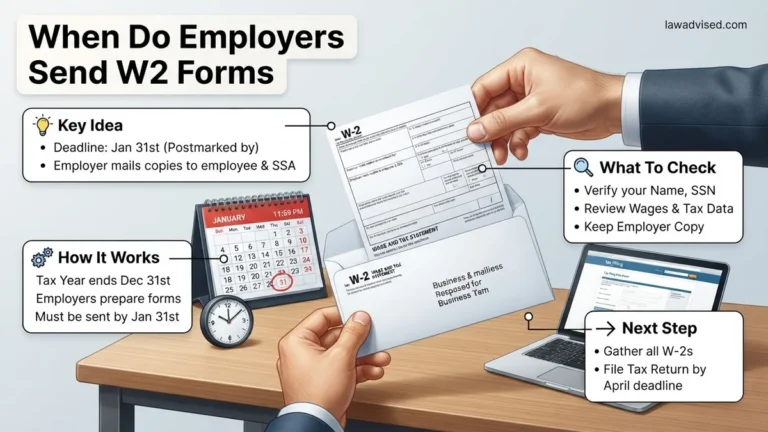
Begin by compiling all Form 1099-NEC documents from platforms like DoorDash, UberEats, and Amazon Flex. Subtract your total verified business expenses—such as mileage deductions, insulated delivery bags, and phone bills—from your gross platform earnings to determine your net self-employment income.
Step 2: Determine Self-Employment Tax Obligations
Use IRS Schedule SE to calculate your self-employment tax for 2026. This covers Social Security and Medicare at a combined rate of 15.3 percent on net earnings up to the annual statutory wage base limit. Note that you can deduct half of your self-employment tax liability as an adjustment to income on your Form 1040.
Step 3: Submit Quarterly Estimated Payments
If you expect to owe more than $1,000 in federal taxes for 2026, you must make quarterly estimated payments using IRS Form 1040-ES. The standard deadlines fall on April 15, June 15, September 15, and January 15 of the following year. Pay these electronically through the official IRS Direct Pay system to avoid late-payment penalties.
What If Your Write-Offs Are Rejected or You Missed Quarterly Payments
Driver audits and missed deadlines create immediate financial stress, but structured remediation steps can minimize IRS penalties. If your mileage logs are challenged or quarterly payments were skipped, proactive resolution is essential.
Fallback Steps for Tax Compliance Issues
- Reconstruct Your Mileage Log: If initial records are rejected, pull historical GPS data, routine delivery history within app dashboards, and digital receipts to substantiate your business travel.
- Calculate Underpayment Penalties: Determine your exact shortfall using IRS Form 2210 to understand what penalty fees apply for missing 2026 quarterly thresholds.
- Set Up an IRS Payment Plan: If you cannot pay your lump-sum tax liability by the April deadline, apply online for an IRS installment agreement to structure monthly payments.
- Consult a Licensed Tax Professional: Hire a Certified Public Accountant (CPA) or Enrolled Agent (EA) specializing in gig economy finances. According to industry data, professional tax preparation for independent drivers typically ranges from $250 to $600 depending on audit complexity.
Conclusion
Navigating taxes as a delivery driver in 2026 requires strict adherence to mileage tracking, accurate expense logging, and disciplined quarterly filings to avoid costly IRS penalties. By treating gig work like a formal small business and separating operational funds immediately, drivers can protect their profit margins. According to verified research and expert financial sources, utilizing digital bookkeeping software reduces tax season errors by over 40 percent. Your immediate next step is to download a dedicated mileage tracking app to log every business mile accurately starting today.
❓ Frequently Asked Questions
What equipment and supplies can delivery drivers write off on their taxes?
Delivery drivers can deduct any necessary tools used strictly for business purposes. This includes insulated food delivery bags, portable phone chargers, dashboard mounts, safety gear, and emergency roadside assistance plans.
How do I prove my business mileage to the IRS if I get audited?
The IRS requires a contemporaneous log showing the date, starting and ending locations, total mileage, and business purpose of every trip. Using an automated mileage tracking app provides compliant digital records for audits.
What happens if I miss a quarterly estimated tax payment deadline?
Missing a quarterly deadline can result in IRS underpayment penalties and interest charges. You should calculate the missed payment, pay it as soon as possible, and consider filing form 2210 if penalties apply.
Do I need to file a state tax return in addition to federal taxes?
Yes, if your state has a personal income tax and your net self-employment earnings exceed the state’s minimum filing threshold, you must file a state tax return alongside your federal 1040 and Schedule C.
Can I write off parking fees and tolls incurred while delivering?
Yes, parking fees and tolls paid directly while actively working a delivery route are 100% deductible business expenses separate from your standard mileage rate calculation.
Should I form an LLC for my delivery driving gig work?
Most casual gig delivery drivers do not need an LLC since a sole proprietorship using Schedule C offers the same basic tax deductions. An LLC provides liability protection but rarely changes your income tax obligations.

Ismail Hossain is the founder of Law Advised. He is an Divorce, Separation, marriage lawyer. Follow him.