Education Expenses Tax Rules Step-by-Step 2026 Guide
Navigating education expenses tax rules requires identifying which IRS credits and deductions you qualify for based on your income and enrollment status. This guide breaks down the American Opportunity Tax Credit, Lifetime Learning Credit, and student loan interest deductions to help you save money.
Navigating the IRS tax rules for education expenses in 2026 comes down to choosing between the American Opportunity Tax Credit (AOTC) and the Lifetime Learning Credit (LLC), while accurately tracking qualified tuition and related expenses. If you paid for college, graduate school, or professional development courses this year, federal tax law offers substantial relief, but strict income phase-outs and qualification criteria determine your exact savings.
Maximizing your tax benefit requires matching your specific educational expenses to the correct credit or deduction without violating overlapping benefit prohibitions. Missing these nuances means leaving hundreds or thousands of dollars on the table, while misclassifying expenses can trigger an IRS audit.
Key Takeaways
- The American Opportunity Tax Credit offers up to $2,500 per eligible student for the first four years of higher education.
- The Lifetime Learning Credit provides up to $2,000 per tax return for undergraduate, graduate, and professional degree courses.
- You can deduct up to $2,500 in student loan interest annually without itemizing your deductions.
- Modified Adjusted Gross Income (MAGI) phase-outs apply to nearly all major education tax benefits.
- Keep all Form 1098-T statements, tuition receipts, and textbook purchase records to substantiate your claims.

What Causes Tax Qualification Errors with Education Expenses
Mixing Up Qualified Tuition and Room and Board
The biggest mistake taxpayers make is assuming every college-related bill qualifies for tax credits. The IRS maintains a strict definition of qualified education expenses (QEE). For the AOTC and LLC, qualified expenses generally include tuition and fees required for enrollment.
You cannot include room and board, insurance, student fees (unless required as a condition of enrollment), or transportation, even if the university bills you for them directly. Failing to strip these non-qualified costs from your Form 1098-T calculations leads to inflated credits and subsequent IRS notices.
Violating the Double Benefit Prohibition
You cannot use the exact same tax-free educational assistance to claim a credit. If you pay for tuition using tax-free scholarship money, Pell Grants, or employer-provided educational assistance, those dollars must be subtracted from your total expenses.
- Tax-Free Grants: Reduce your eligible out-of-pocket expenses dollar-for-dollar.
- Taxable Scholarships: If reported as income, you may use those expenses for credits.
- 529 Plans: Distributions from 529 savings plans cannot be double-dipped against the AOTC or LLC.
How to Fix Your Filing Strategy for Maximum Education Tax Credits
Choosing Between the AOTC and the LLC
Your filing strategy must prioritize the credit that yields the highest return for your specific education level. You cannot claim both credits for the same student in the same tax year, so choosing correctly is vital for your 2026 return.
- American Opportunity Tax Credit: Worth up to $2,500 per eligible student for the first four years of higher education. It is 40% refundable (up to $1,000), making it the superior choice if you qualify.
- Lifetime Learning Credit: Worth up to $2,000 per tax return with no limit on the number of years you can claim it. It applies to undergraduate, graduate, and professional degree courses, but is strictly non-refundable.
Navigating 2026 Income Phase-Outs
Your ability to claim these credits depends heavily on your Modified Adjusted Gross Income (MAGI). For the 2026 tax year, the AOTC phases out for single filers with a MAGI between $80,000 and $90,000 ($160,000 to $180,000 for joint filers). The LLC phases out at slightly different thresholds.
If your income sits right on the borderline, consider strategic retirement contributions to lower your MAGI and salvage your education tax credits. Always cross-reference your Form 1098-T issued by the institution with your actual out-of-pocket payment records before submitting your final tax return.
Step-by-Step Guide to Claiming Deductions for Qualified Tuition and Fees
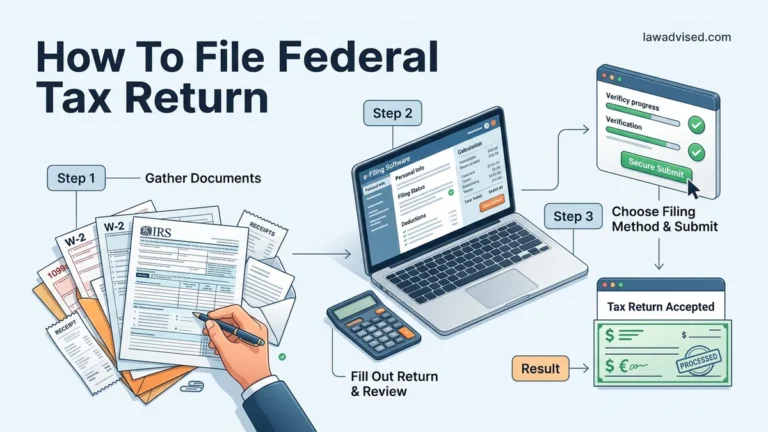
Navigating the paperwork to claim your education tax benefits for the 2026 tax year requires strict adherence to IRS procedures. Missing a single form can delay your refund by weeks.
Step 1: Gather Your Form 1098-T
Your eligible educational institution will issue Form 1098-T by January 31, 2026. This document reports the tuition payments and related expenses you paid during the calendar year. Review box 1 to ensure the reported payments match your financial records.
Step 2: Calculate Adjusted Qualified Expenses
Subtract any tax-free educational assistance, such as Pell Grants, employer-provided educational assistance, or scholarships, from your total out-of-pocket expenses. According to IRS guidelines, you cannot claim a credit for expenses paid with tax-free funds.
Step 3: Complete IRS Form 8863
File IRS Form 8863, “Education Credits (American Opportunity and Lifetime Learning Credits),” alongside your federal income tax return. You must complete Part III of this form to calculate your exact American Opportunity Tax Credit or Lifetime Learning Credit before transferring the final amount to your Form 1040.
What If It Still Doesn’t Work?
If your education credit claim is rejected or flagged by the IRS for the 2026 tax year, you must take immediate corrective action. Follow these fallback steps to resolve the discrepancy:
- Review the IRS Notice: Examine the specific error code on your IRS correspondence to determine if the mismatch stems from an incorrect Form 1098-T employer identification number or student Social Security number.
- Contact Your Bursar’s Office: Request a corrected Form 1098-T directly from your university if the financial figures reported do not match your actual out-of-pocket payments made during the 2026 tax calendar.
- Amend Your Return: File IRS Form 1040-X, “Amended U.S. Individual Income Tax Return,” to correct any math errors or omission of required educational documentation.
- Consult a Certified Public Accountant: Engage a licensed tax professional if the audit risk is high or the IRS issues a formal notice of deficiency. Professional CPA fees for resolving an education credit dispute typically range from $250 to $600 depending on complexity.
Conclusion
Maximizing your education tax savings for 2026 depends on careful document management and strict alignment with IRS rules regarding qualified tuition, fees, and eligible institutions. According to verified research and expert financial sources, utilizing automated tax software drastically reduces calculation errors on Form 8863. Your actionable next step is to log into your student financial portal today to download your Form 1098-T and verify your lifetime learning or American Opportunity Tax Credit eligibility.
❓ Frequently Asked Questions
Who qualifies for the American Opportunity Tax Credit in 2026?
To qualify, the student must be pursuing a degree or recognized credential, be enrolled at least half-time for one academic period during the tax year, and not have completed the first four years of higher education.
What expenses are considered qualified education expenses by the IRS?
Qualified expenses include tuition, fees, and course materials required for enrollment or attendance, such as books, supplies, and equipment needed for a course of study.
What is the income limit for claiming education tax credits?
Income limits vary by credit and filing status. For example, the AOTC phases out for single filers with a Modified Adjusted Gross Income between $80,000 and $90,000.
Can parents claim education tax credits if they pay for their child’s college?
Yes, if you claim the student as a dependent on your tax return, you are generally the one eligible to claim the education credits and deductions for their expenses.
Are online courses eligible for IRS education tax benefits?
Yes, online courses qualify as long as the institution is an eligible educational institution eligible to participate in federal student aid programs.
What happens if I receive a tax-free scholarship that covers all my tuition?
If your qualified expenses are entirely covered by tax-free scholarships or grants, you cannot use those same expenses to claim an education tax credit.

Ismail Hossain is the founder of Law Advised. He is an Divorce, Separation, marriage lawyer. Follow him.