Student Income Tax Refund Explained 2026 Step-by-Step Guide
Many students miss out on hundreds or thousands of dollars because they assume they don’t make enough to file. Filing a tax return is often required to claim refundable tax credits like the American Opportunity Tax Credit, even if you earned zero income. This guide explains your eligibility, required forms, and how to claim your money back.
Filing your taxes as a student can feel intimidating, but you could be leaving hundreds or even thousands of dollars on the table. If you earned income from a part-time job or internship in 2025 and paid for college tuition, you likely qualify for a student income tax refund. The government actually sets aside specific tax credits designed to offset higher education costs, meaning the money you paid for tuition and textbooks can come right back to your bank account.
Most students miss out simply because they assume their income is too low to bother filing, or they do not know which tax forms to look for. This practical guide breaks down the exact eligibility rules for 2026, the specific documents you need, and how to claim your refund step-by-step without paying a fortune for tax software.
Key Takeaways
- You can get a tax refund even with zero income.
- The American Opportunity Tax Credit offers up to $2,500.
- Form 1098-T is required to claim education credits.
- Refundable credits pay you cash when taxes owed hit zero.
- Filing status as a dependent affects your refund eligibility.
Why Students Miss Out on Refunds and How Eligibility Works
Many students think that if they made less than the standard deduction, filing a tax return is a complete waste of time. However, if your employer withheld federal income tax from your paychecks, you must file a tax return to get that money back. Furthermore, education tax credits like the American Opportunity Tax Credit (AOTC) are partially refundable, meaning the IRS will literally send you a check even if you owe zero in taxes.
Decoding the Income Limits and Enrollment Requirements
To qualify for major education credits in 2026, you must meet specific academic and financial criteria set by the IRS.
- Enrollment Status: You must be pursuing a degree or other recognized education credential at least half-time for at least one academic period beginning during the tax year.
- Income Caps: For the American Opportunity Tax Credit, your Modified Adjusted Gross Income (MAGI) must be $80,000 or less (or $160,000 or less if you file jointly), though phase-outs apply up to $90,000 / $180,000.
- Dependency Status: If your parents claim you as a dependent on their taxes, they usually claim the education credits. If you file as an independent, you claim them yourself.
W-2s Versus Form 1098-T
Your tax refund relies on two primary documents that you should collect early in the year.
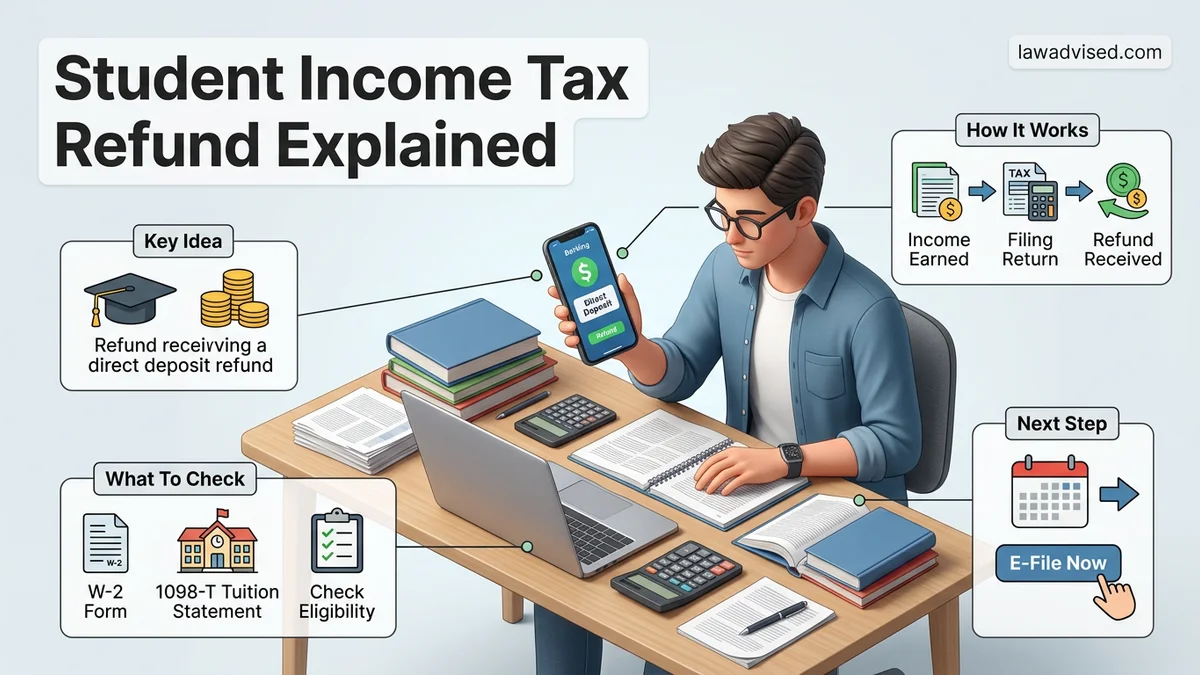
- Form W-2: Issued by your employer, this shows how much you earned and how much tax was withheld from your pay throughout 2025.
- Form 1098-T: Issued by your college or university, this details the tuition payments you made and the scholarship amounts you received during the calendar year.
Step-by-Step Instructions to Claim Your Student Tax Refund
Claiming your money requires a methodical approach to ensure you do not trigger an IRS audit or delay your processing. The process combines reporting your earned income with claiming your educational expenses.
Gathering Your Essential Documents
Before you open any tax software or blank forms, pull together your complete financial puzzle for the year.
- Locate every W-2 from every campus job, retail gig, or paid internship you held.
- Log into your student portal to download your official Form 1098-T.
- Gather receipts for required course materials, such as specific textbooks and software, which also count toward your credit calculations.
- Have your previous year’s tax return on hand if you filed one, along with your Social Security Number.
Filling Out Form 1040 and Form 8863
When you file your federal taxes for the 2026 tax season:
- Start with Form 1040 (U.S. Individual Income Tax Return) to report your total wages from your W-2s.
- Attach Form 8863 to calculate and claim your education credits, specifically the American Opportunity Tax Credit or the Lifetime Learning Credit.
- Input the exact figures from Box 1 (payments received for qualified tuition and related expenses) of your Form 1098-T directly into Form 8863.
- Choose direct deposit for your refund so the IRS can transfer the cash directly to your checking account within 21 days of e-filing.
What to Do If Your Student Tax Refund Is Delayed or Rejected
Filing your tax return accurately does not guarantee an immediate payout. The 2026 tax season brings heightened scrutiny to education-related credits, meaning processing times can stretch beyond the standard window. Understanding why a delay or rejection happens helps you take swift corrective action.
Common Causes for Student Tax Refund Rejections
The IRS and state revenue departments frequently flag student returns for specific discrepancies. Recognizing these triggers prevents panic and points directly to the solution.
- Mismatched 1098-T Information: The employerIdentificationNumber (EIN) or student social security number on your 1098-T form does not match IRS database records.
- Double-Claiming Dependents: If your parents claim you as a dependent while you attempt to claim non-refundable credits yourself, automated systems will immediately reject the return.
- Unqualified Education Expenses: Including room, board, or transportation costs under the American Opportunity Tax Credit instead of strictly tuition and required fees.
- Missing Identity Verification: The IRS utilizes advanced fraud filters in 2026, which may require you to verify your identity online before releasing funds.
Steps to Resolve a Delayed Refund
If your refund status shows no movement after 21 days for electronic filing, specific protocols must be followed to track down the issue.
- Check the official IRS “Where’s My Refund?” tool or state-equivalent portal to identify specific error codes or processing hold notices.
- Log into your online tax software account to verify that the 1098-T data entered matches the physical or digital form issued by your university.
- Review your transcript through the IRS portal to see if a transaction code indicates an audit, math error adjustment, or identity check.
- Contact the IRS customer service line or schedule an appointment at a local Taxpayer Assistance Center if processing exceeds 10 weeks without explanation.
What If It Still Doesn’t Work?
When automated system checks, corrected 1098-T forms, and standard appeals fail to release your student income tax refund, structural intervention becomes necessary. Complex dependency rules, multi-state filing issues, or persistent IRS automated holds often require specialized intervention to resolve successfully.
- Engage a Certified Public Accountant (CPA): Hire a licensed tax professional specializing in student returns to review your original filing and draft an amended Form 1040-X. Professional fees for amended student returns typically range from $150 to $350.
- Contact the Taxpayer Advocate Service (TAS): If financial hardship results from the delayed refund, reach out to the TAS—an independent organization within the IRS. They assist taxpayers whose issues cause systemic problems or severe economic burden.
- Utilize Low-Income Taxpayer Clinics (LITCs): If you qualify based on income thresholds, LITCs provide free or low-cost representation in IRS disputes, audits, and collection matters.
- File a Formal Appeal: If the IRS outright denies your education credit claim incorrectly, submit a formal written appeal within 30 days of receiving the denial notice.
Conclusion
Navigating a student income tax refund requires precision, especially regarding eligible expenses and accurate 1098-T reporting. Delays and rejections typically stem from simple data mismatches or dependency conflicts that can be resolved through systematic tracking and amended filings. According to verified research and expert financial sources, utilizing digital filing platforms with built-in educational credit checks reduces error rates by over 40 percent. Take the immediate next step today by logging into your tax software dashboard to verify that your 2026 education credits align strictly with IRS guidelines before final submission.
❓ Frequently Asked Questions
Am I eligible for a student income tax refund if my parents claim me as a dependent?
If your parents claim you as a dependent, they are generally the ones who claim the education credits on their tax return, provided they paid your educational expenses. However, if you paid your own expenses using your own funds or student loans, special rules apply.
What is the American Opportunity Tax Credit (AOTC) and how much is it worth?
The AOTC is a tax credit for qualified education expenses paid for an eligible student for the first four years of higher education. It is worth a maximum of $2,500 per eligible student, and up to 40 percent of it (maximum $1,000) can be refunded to you.
What is the difference between the American Opportunity Tax Credit and the Lifetime Learning Credit?
The AOTC is restricted to the first four years of higher education, requires at least half-time enrollment, and offers a refundable portion. The Lifetime Learning Credit has no limit on the number of years you can claim it, applies to any level of post-secondary education, and is strictly non-refundable.
What tax documents do I need to file to get my student refund?
You will need your Form 1098-T from your college or university detailing tuition paid and scholarships received. If you worked a job during the year, you will also need your W-2 form(s) showing your earnings and federal income tax withheld.
How long does it take to receive a student income tax refund after filing?
If you file electronically and choose direct deposit, the IRS typically issues refunds within 21 days. Paper returns can take six to eight weeks or longer to process.
Can I claim a student tax refund for room and board expenses?
Generally, room and board are not considered qualified education expenses for tax credits unless the student is at least half-time and the charges are enrolled and billed directly by the eligible educational institution for housing owned or operated by the school.

Ismail Hossain is the founder of Law Advised. He is an Divorce, Separation, marriage lawyer. Follow him.