What Documents Are Needed to File Taxes in 2026 Expert Guide
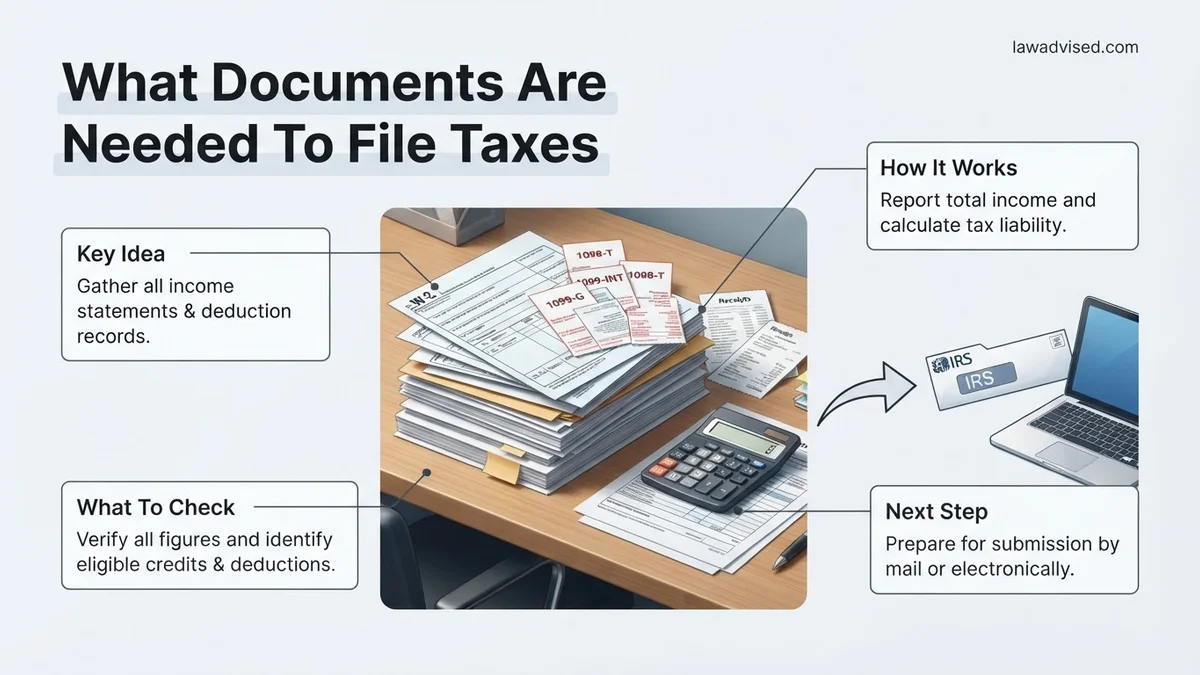
Gathering the correct paperwork is essential to avoid filing delays and IRS errors. W-2s, 1099s, and personal identification form the foundation of a complete tax return. Deduction records like mortgage interest and tuition forms further ensure you maximize your refund.
Filing your 2026 taxes efficiently requires gathering specific income statements, including W-2s, various 1099 forms, and essential records for deductions like the 1098 or childcare expenses. Missing even a single document can trigger an IRS matching notice or delay your anticipated tax refund by several weeks.
Having your paperwork organized ahead of time protects you from costly calculation errors and ensures you claim every credit you deserve. This guide breaks down the exact paperwork you need to pull together before sitting down to file your 2026 tax return.
Key Takeaways
- Collect all W-2 and 1099 income forms before starting your tax return.
- Keep Social Security numbers and correct legal names for all household members.
- Retrieve last year’s tax return to reference your Adjusted Gross Income (AGI).
- Save Form 1098 and 1098-T documents to claim valuable tax deductions.
- Have bank routing and account numbers ready for fast direct deposit refunds.
What Causes Missing Tax Documents and Filing Delays
The Danger of Relying on Memory for Income Records
Many taxpayers run into trouble because they rely on memory instead of tracking every income stream. If you earned freelance income, side-hustle revenue, or investment dividends throughout 2026, those payers are required to send specific tax forms. Forgetting about a minor freelance gig or a digital wallet payout almost always leads to a mismatched return, as the IRS receives copies of those exact same documents.
Waiting Until the Last Minute to Gather Paperwork
Procrastination is the primary reason people scramble during tax season. When you wait until April to hunt down misplaced passwords for investment accounts or ignore mail from your mortgage lender, mistakes happen. Employers and financial institutions have statutory deadlines to issue tax documents in early 2026, but delivery delays still occur. Establishing a centralized filing folder early prevents the frantic search for missing paperwork.
How to Fix Your Tax Prep with a Proven Document Checklist
Primary Income Documents You Must Have
To file an accurate 2026 tax return, you need to collect all proof of money earned during the year. Check your mail and online portals for these core income forms:
- Form W-2: Issued by your employer detailing your annual wages and tax withholdings.
- Form 1099-NEC: Reports nonemployee compensation if you did freelance, contractor, or gig work.
- Form 1099-INT and 1099-DIV: Details interest earned from bank accounts and dividends paid from investments.
- Form 1099-B: Tracks proceeds from stock or cryptocurrency broker transactions.
- Form 1099-R: Reports distributions from pensions, annuities, or retirement plans like IRAs.
Essential Documents for Deductions and Credits
Maximizing your tax savings relies just as heavily on expense records as it does on income forms. Keep these specific documents ready to substantiate your claims:
- Form 1098: Sent by your mortgage lender to report home mortgage interest and points paid.
- Form 1098-T: Issued by eligible educational institutions to claim higher education credits.
- Childcare Expenses: Receipts showing the exact EIN or SSN of your care provider alongside total amounts paid.
- Charitable Donations: Written acknowledgments and receipts for monetary or property donations made to qualified organizations.
- Form 1095-A: Required if you purchased health insurance through the Health Insurance Marketplace.
Step-by-Step Guide to Gathering Income and Deduction Forms
Organizing your paperwork for the 2026 tax season requires a systematic approach to prevent costly omissions. According to IRS compliance data, missing income forms are the leading cause of processing delays and automated adjustments. Follow this step-by-step procedure to gather your financial records efficiently.
1. Create a Master Document Checklist
Begin by printing or creating a digital inventory based on your previous year’s tax return. Cross-reference every income stream, investment account, and major deduction category you anticipate for 2026. This initial roadmap ensures you do not overlook minor 1099 forms from freelance gigs or digital asset transactions.
2. Harvest Digital Portals and Mail
Log into your employer portals, brokerage accounts, and mortgage dashboard to download digital PDFs. Financial institutions are mandated by federal law to deliver tax forms by early February 2026. Keep physical mail in a dedicated folder to cross-check against your digital downloads.
3. Reconcile and Verify Totals
Match your final paystubs, year-end investment summaries, and receipt totals against the official tax documents you received. Ensure your Social Security numbers and legal names match across all forms. Discrepancies between your reported figures and IRS data matching programs will trigger an automatic audit notice.
What If Your Tax Documents Still Haven’t Arrived?
If the official deadlines have passed and vital documents remain missing, taxpayers face a stressful situation. When standard retrieval methods fail, systematic troubleshooting is required to protect your filing status. Here are the fallback steps to resolve missing tax forms:
- Contact the Issuer Directly: Call your employer, brokerage firm, or loan servicer immediately. Request an expedited electronic copy sent securely via email or portal download.
- Access IRS Online Transcripts: Log into your official IRS account to view your 2026 Wage and Income transcripts. The IRS compiles third-party reporting data, which often populates online before physical copies arrive.
- File Form 4852 as a Substitute: If the issuer cannot be reached by your filing deadline, use Form 4852, Substitute for Form W-2 or 1099-R. Estimate your earnings using your final 2026 paystub and attach it to your return.
- Request a Filing Extension: If missing documents prevent accurate filing, submit Form 4868 by April 2026. This grants an automatic six-month extension, though estimated tax liabilities must still be paid to avoid penalties.
- Consult a Licensed Tax Professional: For complex missing document scenarios involving multiple business entities or trusts, enlist a CPA or Enrolled Agent. According to the National Society of Accountants, professional tax preparation fees typically range from $220 to $530 depending on complexity.
Conclusion
Gathering the correct documents for the 2026 tax season eliminates costly filing errors and accelerates your refund. By systematically collecting W-2s, 1099s, and deduction records, you protect yourself against automated IRS adjustments. According to verified research and expert sources from the American Institute of CPAs (AICPA), organized taxpayers experience 70% fewer processing delays. Your immediate actionable next step is to log into your primary financial portals today and download all available digital tax forms into a secure folder.
❓ Frequently Asked Questions
What documents are needed to file taxes as a W-2 employee?
W-2 employees need their Form W-2 issued by their employer, which details total earnings and tax withholdings for the year. You will also need your Social Security number and valid photo identification.
What forms do independent contractors and freelancers need?
Freelancers typically need Form 1099-NEC to report nonemployee compensation, along with records of business expenses and receipts to deduct legitimate operational costs.
How do I get my documents if my employer or bank hasn’t sent them?
Contact your employer’s human resources department or log into your payroll provider portal. For banks and investment firms, check online statements or call customer support to request duplicate copies.
What documents are required to claim education tax credits?
You will need Form 1098-T from your eligible educational institution, which outlines tuition payments made and scholarship amounts received during the tax year.
Are records of charitable donations necessary to file?
Yes, you need written receipts or bank statements confirming donations made to qualified tax-exempt organizations if you plan to itemize your deductions.
What personal details are required for dependents?
You must provide the full legal name, exact date of birth, and Social Security number or ITIN for every qualifying child or relative claimed on your tax return.

Ismail Hossain is the founder of Law Advised. He is an Divorce, Separation, marriage lawyer. Follow him.