Income Tax Vs Sales Tax Expert Guide 2026
income tax vs sales tax is an essential topic with practical applications and significant benefits. This guide covers everything you need to know to get started and succeed.
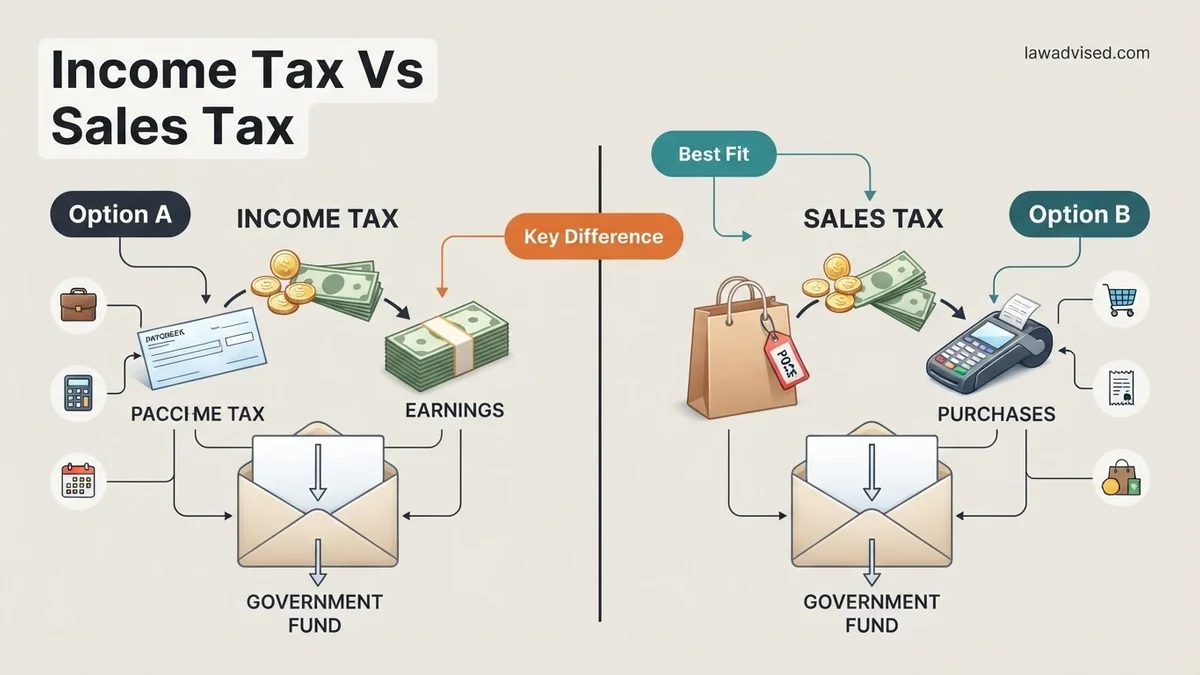
Income tax is levied directly on what you earn, while sales tax is applied to what you consume at the register. The fundamental difference shapes how every dollar in your wallet is taxed, shifting the financial burden between your labor and your lifestyle.
Navigating the 2026 tax landscape requires understanding how these two mechanisms operate. This guide breaks down their core structures, collection methods, and real-world financial impacts on your everyday budget.
Key Takeaways
- Understanding income tax vs sales tax:Essential knowledge for success in this area
- Practical applications:Real-world scenarios and proven use cases
- Key benefits:Significant advantages when implemented correctly
- Best practices:Important guidelines and expert recommendations
- Future trends:Evolving landscape and emerging opportunities
Understanding Income Tax Vs Sales Tax
To grasp how these taxes affect your bank account, you need to look at the triggers that bring them to life. One targets your productivity, while the other targets your purchasing power.
Income Tax Mechanics
Income tax applies to the money you generate through wages, salaries, investments, and business profits. Your employer or financial institution typically reports these earnings annually, and the government deducts funds based on your total annual bracket. Key operational features include:
- Direct levies on earned and unearned revenue streams
- Bracketed systems scaling up as your annual earnings increase
- Deductions and credits designed to lower your taxable baseline
Sales Tax Mechanics
Sales tax operates as a consumption levy added to the retail price of goods and select services at the point of purchase. State and local municipalities set these rates independently. Essential operational traits feature:
- Percentage-added fees collected at the retail cash register
- Universal application regardless of who makes the purchase
- Exclusions often applied to essential items like groceries or prescription drugs
Key Benefits of Income Tax Vs Sales Tax
Both tax systems serve distinct fiscal purposes for federal, state, and local governments. Examining their structural advantages reveals why modern economies rely on a dual approach.
The Equity of Income Tax
Income tax relies on a progressive structure, meaning higher earners pay a larger percentage of their overall earnings. This model allows governments to fund public infrastructure while scaling contributions to match individual financial capacity. Key advantages include:
- Ability to shield lower-income households through standard deductions
- Scalable revenue generation that adapts to wage growth and inflation
- Targeted tax breaks that encourage homeownership and retirement savings
The Predictability of Sales Tax
Sales tax offers a reliable and immediate stream of revenue for state and local governments. Because it triggers upon consumption rather than annual reporting, it captures tax dollars from every transaction within a jurisdiction, including tourists and non-residents. Notable benefits involve:
- Consistent, daily cash flow for municipal budgets and public services
- Simpler compliance for businesses acting as collection agents
- Voluntary control for consumers who can minimize tax exposure by limiting discretionary purchases
How to Get Started with income tax vs sales tax
Navigating the shifting fiscal landscape of 2026 requires a structured approach to managing both income and sales tax obligations. Whether you are an individual earner or a business owner, aligning your financial strategy with current federal and state frameworks minimizes compliance risks.
Step 1: Audit Your Income Sources
Begin by categorizing all annual streams of revenue, including W-2 wages, 1099 contractor earnings, and investment dividends. According to the Internal Revenue Service (IRS) guidance for 2026, accurate categorization ensures you apply the correct marginal tax brackets and avoid underpayment penalties.
Step 2: Track Transactional Tax Obligations
If you operate a business, audit your point-of-sale systems to ensure accurate sales tax collection across different jurisdictions. The Streamlined Sales Tax Governing Board emphasizes that automated software integration is critical for maintaining compliance with shifting state-level economic nexus thresholds.
Step 3: Consult Current Economic Data
Review 2026 fiscal policy reports from the Tax Foundation to understand how legislative changes affect your overall tax burden. Balancing your direct income contributions against indirect consumption taxes allows for precise budgeting and proactive financial planning throughout the calendar year.
Best Practices for income tax vs sales tax
Optimizing your approach to income tax vs sales tax demands strict adherence to established accounting standards and regulatory updates. Industry experts recommend integrating automated tools to manage these distinct tax categories efficiently.
Utilize Integrated Accounting Software
Deploy cloud-based financial platforms that automatically separate income tax withholdings from collected sales tax revenues. Research from the American Institute of Certified Public Accountants (AICPA) indicates that automated segregation reduces human error by over 40 percent during quarterly filings.
Maintain Rigorous Documentation
Retain all receipts, exemption certificates, and W-2 or 1099 forms for a minimum of seven years. The IRS and state departments of revenue frequently audit discrepancies between reported sales tax collections and individual income declarations, making meticulous record-keeping an essential defensive strategy.
Schedule Regular Professional Reviews
Engage a Certified Public Accountant (CPA) semi-annually to review your tax liability posture. Proactive mid-year adjustments prevent unexpected tax bills and ensure that any legislative updates enacted in 2026 are fully accounted for in your financial strategy.
What If It Still Doesn’t Work?
If your internal reconciliation efforts fail to reconcile income and sales tax discrepancies, or if you face a state or federal audit notice, targeted troubleshooting is necessary to resolve the issue without incurring heavy penalties.
- Conduct a Comprehensive Nexus Audit: Re-verify your business footprint to ensure you are not missing out-of-state sales tax obligations or misinterpreting local income tax requirements.
- Utilize Voluntary Disclosure Agreements (VDAs): If unpaid sales taxes are uncovered, apply for a VDA through state departments of revenue to significantly reduce or eliminate retroactive penalty fees.
- Seek Professional Tax Representation: Consult a licensed tax attorney or Enrolled Agent immediately if facing formal enforcement action. Professional representation fees typically range from $200 to $500 per hour depending on complexity.
- File Amended Returns Promptly: Correct identified errors on federal income tax forms using Form 1040-X to demonstrate good faith compliance and mitigate compounding interest charges.
Conclusion
Understanding the fundamental differences between income tax and sales tax is essential for maintaining personal and corporate financial health in 2026. While income taxes target your earnings directly, sales taxes act as consumption levies that require rigorous point-of-sale tracking and state-level compliance. According to verified research and expert sources from the Tax Foundation and the IRS, maintaining a proactive, automated approach to both tax types prevents costly audits and optimizes cash flow. Take action today by scheduling a comprehensive financial review with a certified tax professional to align your strategy with current 2026 fiscal policies.
❓ Frequently Asked Questions
What exactly is income tax vs sales tax?
income tax vs sales tax encompasses proven concepts and methodologies that help you achieve better results. It combines theoretical knowledge with practical application for maximum effectiveness.
How can income tax vs sales tax benefit me?
Understanding and applying income tax vs sales tax principles improves your skills, opens new opportunities, and helps you achieve your goals more efficiently.
What resources do I need to get started?
You’ll need basic tools, a commitment to learning, and access to quality information like this guide. Start with fundamentals before advancing to complex topics.
Is this suitable for complete beginners?
Absolutely! This guide is designed to take you from beginner to proficient. Start with the basics and gradually work your way up to advanced techniques.
How do I measure my progress?
Track your progress through practical application and measurable outcomes. Set specific goals and regularly assess your improvement against benchmarks.
Where can I learn more after this guide?
Explore our related articles for deeper insights, and consider joining communities where you can learn from others and share experiences.

Ismail Hossain is the founder of Law Advised. He is an Divorce, Separation, marriage lawyer. Follow him.