Interest Income Tax Explained Step-by-Step Guide 2026
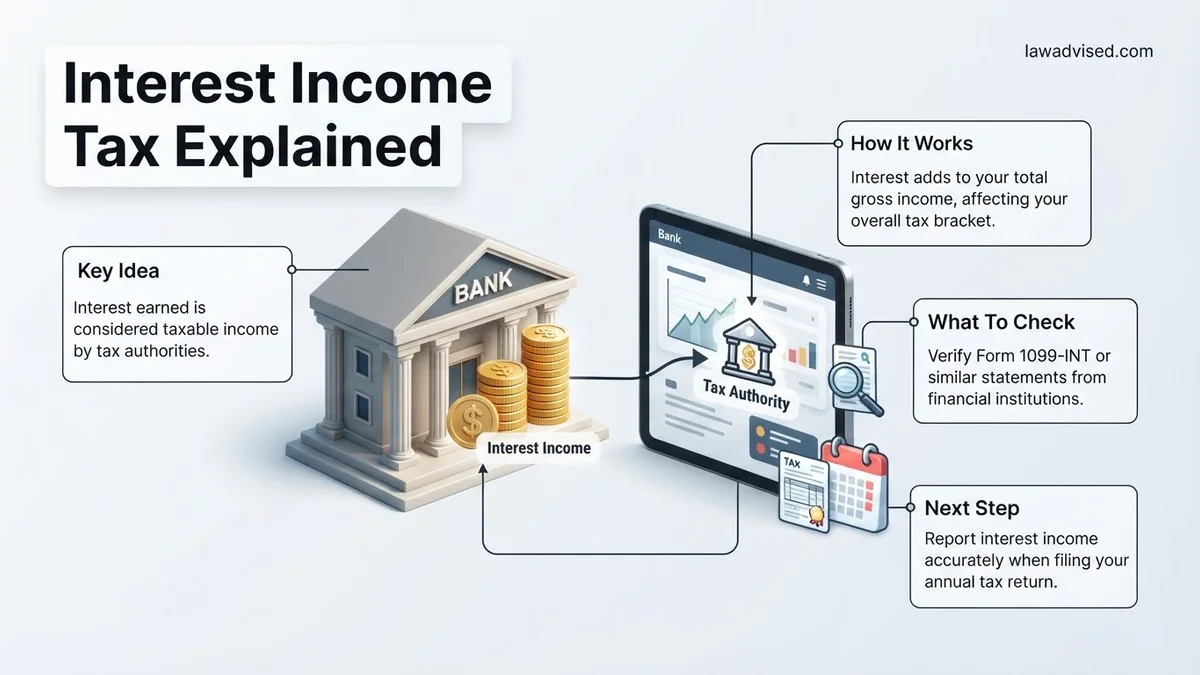
Most interest earned from bank accounts, bonds, and loans is considered taxable income by the IRS and must be reported on your annual tax return. Knowing the difference between taxable and tax-exempt interest helps you avoid costly reporting errors and penalties.
Yes, you must report interest earned from bank accounts, bonds, and loans on your federal tax return. The IRS treats almost all interest income as ordinary income, meaning it is taxed at your standard marginal income tax bracket for the 2026 tax year.
Failing to report this income or misclassifying it triggers automated IRS matching notices. This guide breaks down exactly what types of interest you must report, how the tax brackets apply in 2026, and how to file your Form 1099-INT correctly.
Key Takeaways
- All interest income is taxable unless specifically exempted by federal law.
- Financial institutions issue Form 1099-INT if you earn $10 or more in interest.
- Municipal bond interest is generally exempt from federal income taxes.
- Report all taxable interest income on IRS Form 1040 Schedule B.
- Early withdrawal penalties can be deducted even if you do not itemize.
What Causes Taxable Interest Income to Be Reported Incorrectly
Taxpayers frequently misreport interest income because they misunderstand which financial accounts trigger reporting requirements. The IRS receives copies of every tax document issued by your financial institutions. Any discrepancy between your records and the IRS database triggers a review.
Common Taxable Interest Sources
- Traditional savings accounts and high-yield money market accounts
- Certificates of Deposit (CDs) that matured or accrued interest in 2026
- Corporate bonds and taxable municipal bonds
- Peer-to-peer lending returns and private loans you issued
Tax-Exempt Interest Exceptions
Not all interest is taxable at the federal level. Knowing the difference prevents you from overpaying taxes.
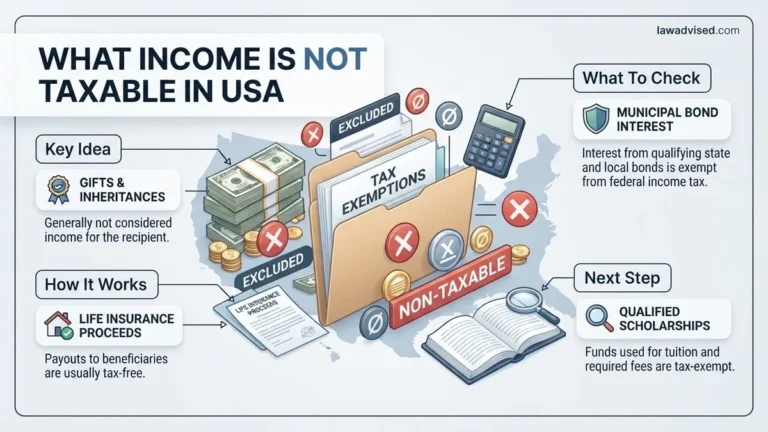
- Interest from municipal bonds issued by your home state or local government is generally federal tax-exempt.
- Certain municipal bond interest may also be exempt from state and local taxes if you reside in the issuing municipality.
- Even tax-exempt interest must be reported on your Form 1040 for informational purposes, even though it is not taxed.
How to Report Interest Income and File Form 1099-INT Step-by-Step
Reporting your interest income requires gathering specific tax documents and transferring the data to the correct lines on your federal tax return. Financial institutions must issue Form 1099-INT if you earned $10 or more in interest during the 2026 tax year.
Gathering Your Tax Documents
- Collect all Form 1099-INT statements from your banks, credit unions, and brokerage firms by mid-February 2026.
- Check your year-end bank statements if you earned less than $10 total from a specific account. You still legally must report this income even if you did not receive a 1099-INT.
- Calculate any accrued interest from bonds purchased at a discount or sold before maturity.
Entering Data on Form 1040
- Take the total taxable interest from Box 1 of all your Form 1099-INT statements.
- Report this combined figure on Form 1040, Schedule B, Part I if your total taxable interest exceeds $1,500 for the 2026 tax year.
- If your total taxable interest is $1,500 or less, skip Schedule B and enter the total directly onto Form 1040, Line 2b.
- Add this amount to your wages, retirement distributions, and other ordinary income to determine your total taxable income for your 2026 marginal tax bracket.
What If Your Interest Income Is Exempt or Missing from Documents
Taxpayers frequently encounter scenarios where expected Form 1099-INT documents never arrive, or where certain types of earnings qualify for federal or state tax exemption. According to IRS compliance guidelines, you are still legally obligated to report all taxable interest earnings even if a payer fails to issue an official tax form. Missing paperwork does not excuse omissions on your 2026 tax return.
Handling Missing 1099-INT Forms
- Calculate the exact interest earned for the tax year by reviewing year-end bank statements, online portals, or brokerage account summaries.
- Enter the calculated amount directly onto your tax software or Form 1040, Schedule B, exactly as you would with a received document.
- Contact the financial institution immediately to request a duplicate copy for your permanent tax records.
Navigating Tax-Exempt Interest Income
Certain financial instruments generate interest that is exempt from federal income tax, state income tax, or both. Municipal bonds issued by state and local governments typically feature interest payments exempt from federal taxes, and often state taxes if you reside within the issuing jurisdiction. However, tax experts emphasize that exempt interest must still be reported on line 2a of Form 1040 for informational purposes. According to the Tax Policy Center, failing to report exempt interest can sometimes trigger automated IRS matching notices if calculations interact with taxable Social Security benefits.
Best Practices to Fix Reporting Errors and Avoid IRS Penalties
Discovering an error after filing your 2026 return requires immediate action to mitigate potential interest charges and accuracy-related penalties from the IRS. Financial compliance authorities recommend a structured approach to correct reporting mistakes before formal notices arrive.
Steps to Amend an Incorrect Interest Income Return
- Wait until the IRS processes your original tax return and you receive your initial refund or balance settlement.
- Obtain and complete Form 1040-X, Amended U.S. Individual Income Tax Return, detailing the specific line item changes for interest income.
- Attach any corrected or newly received Form 1099-INT documents that substantiate the adjustments made to your taxable income.
- Submit the amended return electronically using modern tax software or mail a physical copy to the designated regional IRS processing center.
According to Treasury Inspector General for Tax Administration (TIGTA) reports, proactive amendments made before receiving an IRS audit notice frequently eliminate the standard 20% accuracy-related penalty.
What If It Still Doesn’t Work?
If automated tax software rejects your adjustments or complex multi-state municipal bond interest creates reporting conflicts, standard DIY methods may fall short. When discrepancies persist, utilize these fallback steps to ensure compliance:
- Schedule a formal consultation with a Certified Public Accountant (CPA) or Enrolled Agent (EA) who specializes in individual investment taxation.
- Request a formal IRS tax transcript for the 2026 tax year to verify exactly what income data financial institutions have reported to the federal government under your Social Security Number.
- Utilize IRS Free File or Volunteer Income Tax Assistance (VITA) programs if you meet income eligibility thresholds for professional guidance.
Professional tax representation for complex interest discrepancy audits typically ranges from $300 to $1,000 depending on the volume of unrecorded brokerage transactions.
Conclusion
Navigating interest income tax requirements in 2026 demands meticulous record-keeping and precise reporting across all taxable accounts. Failing to account for minor yields or misclassifying tax-exempt municipal bonds can trigger automated IRS discrepancy notices and unnecessary financial penalties. According to verified research and expert tax compliance sources, proactive verification of year-end financial statements remains the single most effective defense against costly filing errors. Take your actionable next step today by logging into your financial portals to download all pending 2026 tax documents before you begin filing.
❓ Frequently Asked Questions
What is the difference between taxable and non-taxable interest income?
Taxable interest includes earnings from standard savings accounts, certificates of deposit (CDs), Treasury bonds, and corporate notes. Non-taxable interest typically includes municipal bond interest issued by state and local governments to fund public projects.
What should I do if my Form 1099-INT lists the wrong amount?
Contact the issuing bank or financial institution immediately to request a corrected Form 1099-INT. If they cannot correct it before you file, report the actual correct amount on your tax return and attach an explanation.
How are interest rates from high-yield savings accounts taxed?
High-yield savings account interest is taxed at your ordinary federal and state income tax rates. The bank will issue a Form 1099-INT showing the exact dollar amount earned throughout the year.
Do minors have to pay taxes on interest earned from a custodial account?
Yes, children and minors may owe taxes on interest income if it exceeds IRS filing thresholds. Depending on the amount, the income may be reported on the child’s return or subject to the Kiddie Tax rules on the parents’ return.
How does early withdrawal of a CD affect my taxes?
If you withdraw funds from a certificate of deposit early and pay a penalty, you still report the gross interest earned on your 1099-INT, but you can deduct the penalty amount as an adjustment to income.
Is foreign bank account interest taxable for US residents?
Yes, U.S. citizens and resident aliens must report worldwide interest income, including interest earned from foreign bank accounts and international investments, on their U.S. tax returns.

Ismail Hossain is the founder of Law Advised. He is an Divorce, Separation, marriage lawyer. Follow him.