Knife Carry Laws in California 2027 Expert Legal Guide
Navigating knife carry laws in California requires understanding strict penal codes that dictate how and where different blades can be transported. Concealed versus open carry rules differ drastically depending on whether a knife is a folding pocketknife, a fixed blade, or a prohibited type like a dirk or dagger. Knowing these legal boundaries prevents accidental felony arrests.
California knife carry laws in 2027 center on a strict legal distinction between open carry and concealed carry, dictated heavily by how a blade is designed and transported. While the state imposes no maximum blade length limits for standard folding or pocket knives, it strictly prohibits the concealed carry of any fixed-blade knife that qualifies as a dirk or dagger. Knowing these boundaries keeps you compliant with California Penal Code and prevents accidental felony arrests.
Navigating these statutes requires absolute precision because a millimeter of steel or the click of a locking mechanism changes a tool into a prohibited weapon. Whether you are a tradesperson carrying a utility blade or an outdoor enthusiast packing a fixed-blade survival tool, understanding the exact mechanics of concealment versus open transport is your primary defense against legal trouble.
Key Takeaways
- All fixed blades, dirks, and daggers must be openly carried in a sheath hanging from the waist.
- Folding knives can be legally concealed as long as they are fully folded and closed.
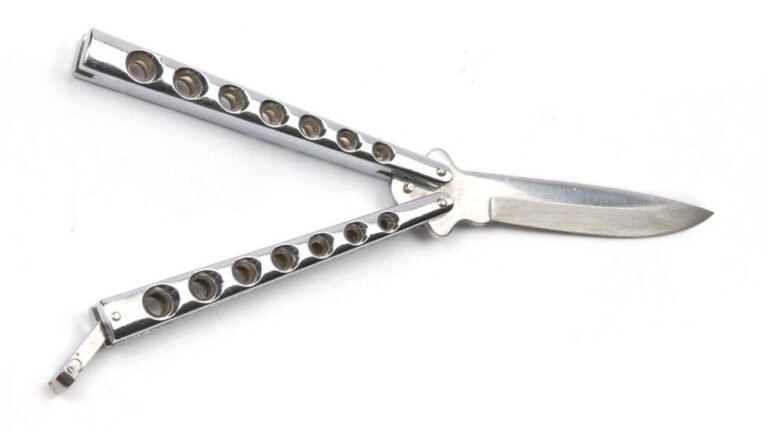
- Switchblades with blades over two inches long are strictly illegal to possess or carry.
- Carrying any knife on school grounds, universities, or government buildings is a serious crime.
- Any knife becomes illegal if carried with the explicit intent to commit a crime.

What Causes Confusion in California Knife Laws and Legal Definitions
Most legal trouble in 2027 stems from vague terminology in the California Penal Code, particularly regarding what constitutes a dangerous weapon. Law enforcement officers often exercise discretion based on how a knife is accessed, mounted, or carried on your person.
The Problem with Dirk and Dagger Definitions
Under California law, a dirk or dagger is legally defined as a knife or other instrument with or without a guard that is capable of being used as a stabbing weapon that may inflict great bodily injury or death. This includes:
- Traditional daggers with double-edged blades
- Stilettos and boot knives
- Fixed-blade hunting knives
- Some non-traditional tools that law enforcement deems easily adaptable for stabbing
Folding Knives Versus Fixed Blades
Folding knives occupy a more lenient category under state statute, provided they are not switchblades. A folding knife is generally legal to carry as long as it is folded completely shut while concealed. However, if a folding knife locks into place and is carried in a concealed pocket while open, it can be reclassified by a prosecutor as a concealed dirk or dagger, instantly creating a severe legal violation.
How to Fix Your Carry Method: Step-by-Step Rules for Legal Transport
To stay entirely legal under 2027 standards, you must match your knife type to the correct carry method. California law divides transport requirements strictly between open visibility and total concealment rules.
Mastering the Sheath Rule for Fixed Blades
If you carry a fixed-blade knife, such as a utility or survival knife, you cannot hide it under a jacket, drop it into a pocket, or pack it inside a concealed backpack while walking down a public street. You must follow these mandatory steps for open carry:
- Keep the fixed blade in a proper sheath designed for that specific knife.
- Wear the sheath openly suspended from your waist, ensuring it is fully visible to anyone observing you.
- Never tuck the handle inside your waistband or cover the entire assembly with a long shirt or coat.
Concealing Folding Knives Safely
Pocket knives and folding utility blades offer more flexibility for everyday carry, but they still demand caution. To carry a folder legally in California:
- Ensure the blade is completely folded and closed while resting inside your pocket or clipped to your pocket seam.
- Verify that the blade length of a switchblade or automatic knife remains under two inches, as longer automatic blades are entirely illegal to carry or possess in public.
- Avoid modifying pocket clips in ways that obscure the nature of the tool or cause law enforcement to misidentify it as a prohibited weapon during a routine encounter.
What If It Still Doesn’t Work: Handling Prohibited Blades and Exceptions
Navigating California knife statutes can sometimes lead to confusion, especially when dealing with ambiguous blade designs or accidental possession of restricted items. If standard compliance checks fail or legal gray areas arise regarding your carry method as of 2027, structured corrective action is necessary to avoid criminal liability under Penal Code Section 21510.
Recognizing Compliance Failure
When a knife design crosses the legal threshold into prohibited territory—such as unexpected spring mechanisms in folding blades or misinterpreting local municipal ordinances—immediate remediation prevents misdemeanor or felony charges. Relying on casual assumptions about pocket knives often results in costly legal complications.
- Cease Public Carry Immediately: Safely secure the questionable blade in a locked container at your residence, removing it from daily transport until its legal status is verified.
- Consult Legal Counsel: Contact a criminal defense attorney specializing in California weapons laws to review the specific blade length, opening mechanism, and carry intent. Professional consultations typically range from $250 to $500 for an initial review.
- Utilize Law Enforcement Surrender Programs: If a blade is definitively prohibited (such as a ballistic knife or undetectable knife), contact local law enforcement non-emergency lines to arrange a safe, legal surrender and disposal.
- Investage Certified Alternatives: Replace non-compliant gear with explicitly legal options, such as standard non-locking folding knives with blades under designated city limits, ensuring absolute adherence to current 2027 standards.
Conclusion
Comprehending California knife carry laws requires constant vigilance regarding concealed versus open carry mandates and strict prohibitions on specific blade types. Failing to properly identify restricted mechanisms can lead to severe legal penalties. According to verified research and expert legal sources, consulting state penal codes and verifying local municipal ordinances remains the single most effective safeguard. Review your current EDC gear today to ensure absolute compliance with all updated 2027 regulations.
❓ Frequently Asked Questions
What is the difference between open carry and concealed carry for knives in California?
California distinguishes heavily based on knife type. Folding knives can be concealed if completely folded, but fixed blades, dirks, and daggers must never be concealed on your person and must be worn openly in a waist sheath.
Are there statewide length limits for folding pocketknives?
No, California state law does not impose a maximum blade length limit for folding pocketknives carried by adults, though specific local cities may have tighter restrictions.
Where is it completely illegal to carry a knife in California?
Carrying any knife is strictly prohibited on all K-12 school grounds, university campuses, state or federal government buildings, and secure areas of airports.
Are ballistic knives or lip-stick knives legal to own?
No, ballistic knives, cane swords, lipstick knives, and air gauge knives are classified as strictly prohibited weapons throughout California.
Do minors face different knife carry restrictions?
Yes, minors under the age of 18 are prohibited from carrying certain types of knives, including switchblades of any length and most fixed blades, in public spaces.
Can local counties or cities enforce stricter knife laws than the state?
Yes, local municipalities can pass ordinances that restrict blade lengths or specific carry behaviors beyond what California Penal Code mandates.

Ismail Hossain is the founder of Law Advised. He is an Divorce, Separation, marriage lawyer. Follow him.