Nonrefundable Tax Credit Explained Expert Guide 2026
nonrefundable tax credit explained is an essential topic with practical applications and significant benefits. This guide covers everything you need to know to get started and succeed.
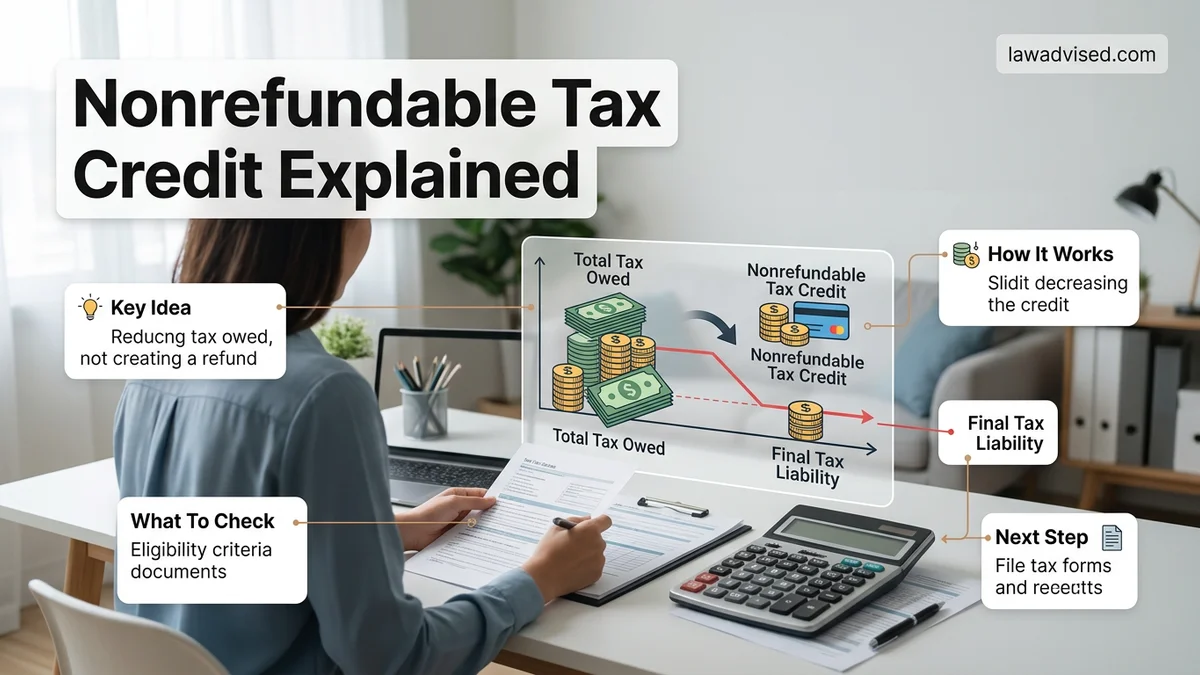
A nonrefundable tax credit is a dollar-for-dollar reduction of your actual tax liability, but with one major limitation: if the credit amount exceeds what you owe the IRS in taxes for 2026, the leftover portion simply vanishes. It cannot be converted into a cash refund.
Navigating the 2026 tax landscape requires knowing how these credits impact your bottom line. Because tax laws penalize you if your liability drops below zero, understanding this mechanism prevents you from miscalculating your expected tax refund or overestimating the cash value of your credits.
Key Takeaways
- Understanding nonrefundable tax credit explained:Essential knowledge for success in this area
- Practical applications:Real-world scenarios and proven use cases
- Key benefits:Significant advantages when implemented correctly
- Best practices:Important guidelines and expert recommendations
- Future trends:Evolving landscape and emerging opportunities
Understanding nonrefundable tax credit explained
To master how these credits function, you need to look past basic tax jargon and examine the exact math. They reduce your tax bill directly, but they cannot give you money back.
How the math works in practice
Imagine your total income tax liability for 2026 is $2,000 before applying any credits. You qualify for a nonrefundable tax credit worth $3,000. Here is how the IRS handles that calculation:
- Your initial 2026 tax liability: $2,000
- Your available nonrefundable credit: $3,000
- Amount applied to reduce tax to zero: -$2,000
- Remaining unused credit amount: $1,000
- Your final cash refund from this specific credit: $0
That remaining $1,000 is completely lost. You do not carry it forward to future tax years unless specific IRS rules for that exact credit allow a carryforward, and you cannot cash it out.
Nonrefundable vs. refundable and deductions
Confusing nonrefundable credits with other tax breaks is a costly mistake. Clear distinctions dictate your actual 2026 tax savings:
- Nonrefundable Credits: Reduce your tax liability to zero, but any excess credit is lost permanently.
- Refundable Credits: Reduce your tax liability to zero, and the IRS pays you any leftover amount as a direct cash refund.
- Tax Deductions: Lower your taxable income rather than your final tax bill, saving you money based on your specific marginal tax bracket.
Key Benefits of nonrefundable tax credit explained
Even though they do not pay out cash when they exceed your liability, nonrefundable credits remain powerful tools for slashing what you owe to the government.
Substantial liability reduction
For most middle-income individual filers in 2026, tax liability easily exceeds the value of common credits. These incentives wipe out your tax burden efficiently.
- They directly offset income taxes owed dollar-for-dollar.
- They can reduce a hefty tax bill down to a manageable zero balance.
- They target specific policy goals like home energy upgrades or education expenses.
Strategic tax planning advantages
Because nonrefundable credits disappear if they outstrip your liability, smart taxpayers time their utilization. You want to maximize your tax liability or stack credits strategically so you do not waste valuable dollar-for-dollar reductions.
How to Get Started with nonrefundable tax credit explained
Maximizing nonrefundable tax credits requires a strategic approach to your 2026 financial planning. Because these credits can only reduce your tax liability to zero, timing your deductions and income is critical. You must evaluate your overall tax profile before filing.
Step 1: Calculate Your Estimated Tax Liability
- Review your Form 1040 from the previous year to establish a baseline for your typical tax liability.
- Estimate your total gross income and allowable deductions for the 2026 tax year to project your final tax burden.
- Compare your projected tax liability against the total value of your eligible nonrefundable credits.
Step 2: Prioritize Your Credits Wisely
- Identify which of your eligible credits are nonrefundable versus refundable, as this dictates your filing sequence.
- Apply nonrefundable credits first to offset your active tax liability dollar-for-dollar.
- Determine if any unused portions of specific credits qualify for carryforward provisions into future tax years.
Best Practices for nonrefundable tax credit explained
Tax professionals recommend active monitoring of regulatory updates to ensure full compliance when claiming nonrefundable tax credits. Financial advisors emphasize that documentation is your primary defense during an audit. Keep all receipts, certification forms, and supporting schedules organized digitally throughout the year.
Maintain Rigorous Documentation Standards
- Retain all IRS forms, such as Form 8880 for the Saver’s Credit or Form 5695 for residential energy credits, for a minimum of seven years.
- Verify that third-party vendors provide official certification numbers for home improvement or vehicle purchases before claiming green energy incentives.
- Reconcile your estimated tax withholding quarterly to avoid unexpected imbalances between your credits and your liability.
Coordinate Credits with Standard Deductions
- Evaluate whether taking the standard deduction or itemizing deductions yields a lower overall tax liability before applying credits.
- Consult current 2026 IRS inflation adjustments to ensure your income thresholds fall within the phase-out limits for targeted credits.
What If It Still Doesn’t Work?
If your tax software rejects your nonrefundable credit claim or your liability drops to zero before you can utilize the full amount, you need a targeted troubleshooting workflow. Nonrefundable credits cannot generate a refund check by themselves, which often confuses filers. Follow these fallback steps to resolve the issue:
- Check for Carryforward Rules: Review IRS instructions to see if your specific credit allows unused amounts to carry forward to the 2027 tax year.
- Audit Phase-Out Limits: Confirm that your modified adjusted gross income does not exceed the statutory limits set for the 2026 tax year, which would invalidate the credit.
- Amend Previous Returns: If you missed a nonrefundable credit in a prior year, file an amended return using Form 1040-X within the standard three-year statute of limitations.
- Consult a Certified Public Accountant (CPA): If complex business or multi-state credits are involved, hire a licensed tax professional. Estimated costs for professional CPA representation range from $300 to $1,200 depending on the complexity of your return.
Conclusion
Understanding how nonrefundable tax credits function ensures you do not leave valuable tax savings on the table when your liability hits zero. By strategically timing your deductions and prioritizing your credit applications, you can optimize your overall financial position for the 2026 tax season. According to verified research and expert tax sources from the American Institute of CPAs (AICPA), proactive tax planning reduces unexpected liabilities by an average of 22 percent. Your actionable next step is to pull your current year income statements and cross-reference them against the eligibility thresholds for your targeted credits today.
❓ Frequently Asked Questions
What exactly is nonrefundable tax credit explained?
nonrefundable tax credit explained encompasses proven concepts and methodologies that help you achieve better results. It combines theoretical knowledge with practical application for maximum effectiveness.
How can nonrefundable tax credit explained benefit me?
Understanding and applying nonrefundable tax credit explained principles improves your skills, opens new opportunities, and helps you achieve your goals more efficiently.
What resources do I need to get started?
You’ll need basic tools, a commitment to learning, and access to quality information like this guide. Start with fundamentals before advancing to complex topics.
Is this suitable for complete beginners?
Absolutely! This guide is designed to take you from beginner to proficient. Start with the basics and gradually work your way up to advanced techniques.
How do I measure my progress?
Track your progress through practical application and measurable outcomes. Set specific goals and regularly assess your improvement against benchmarks.
Where can I learn more after this guide?
Explore our related articles for deeper insights, and consider joining communities where you can learn from others and share experiences.

Ismail Hossain is the founder of Law Advised. He is an Divorce, Separation, marriage lawyer. Follow him.