Taxes for International Students in USA Step-by-Step 2026
All international students on F-1 or J-1 visas must file tax paperwork with the IRS every year, even if they earned zero income. Failing to file Form 8843 can negatively impact future visa applications and green card processing.
Yes, you must file a US tax return every year as an international student in 2026, even if you earned zero income while studying. If you were in the US on an F-1 or J-1 visa during any part of 2025, federal law requires you to submit at least one specific form to the IRS before the April deadline.
Failing to file your international student taxes creates major risks for your visa status, your future green card applications, or your ability to legally work on-campus or through OPT. The process differs entirely from standard US tax filing, which is why specialized knowledge and correct form selection matter so much.
Key Takeaways
- F-1 and J-1 students are generally classified as nonresident aliens for tax purposes during their first five calendar years.
- Every international student must file Form 8843 annually, even with zero US income.
- Nonresident aliens cannot use standard tax software like TurboTax and must use specialized platforms like Sprintax or Glacier.
- Students on F-1 and J-1 visas are exempt from FICA (Social Security and Medicare) taxes for their first five years.
- Income from campus jobs or CPT/OPT requires filing federal and state tax returns using Form 1040-NR and Form 1042-S.
What Causes Confusion With Taxes for International Students in USA
International students face a massive wall of confusing tax advice because standard online tools like TurboTax or H&R Block cater exclusively to US citizens and permanent residents. Using mainstream software as an international student often leads to costly filing errors.
The Trap of Mainstream Tax Software
Standard tax software assumes you are a resident alien for tax purposes. If you input your F-1 or J-1 visa details into consumer platforms, the software will misclassify you, apply incorrect deductions, and generate completely wrong forms. You cannot use standard consumer software for nonresident tax returns.
The Myth of Making Zero Money
Many students assume that if they earned no US income, they do not need to deal with taxes at all. In reality, the IRS mandates that every international student on an F-1 or J-1 visa file Form 8843 annually, regardless of whether you earned a single dollar.
-
Key filing realities for 2026:
- Zero-income students must still file Form 8843.
- State taxes may have different rules than federal requirements.
- Ignoring the tax requirement violates the terms of your visa.
How to Determine Your Tax Residency Status as an International Student
Your tax residency status dictates every form you file and every tax treaty benefit you can claim. The IRS splits international filers into two distinct categories: Nonresident Aliens (NRA) and Resident Aliens for tax purposes.
The Substantial Presence Test Exception
Normally, the IRS uses the Substantial Presence Test to determine if you are a resident based on how many days you spent in the US. However, international students on F-1, J-1, M-1, or Q-1 visas receive an exempt individual status.
-
Important counting rules for students:
- F-1 and J-1 student visa holders are generally exempt from counting days for their first 5 calendar years in the US.
- J-1 non-students (scholars, researchers, professors) have a 2-year exemption rule instead of 5 years.
- Once your exempt years expire, you transition to a resident alien for tax purposes and file using standard Form 1040.
Practical Example of the 5-Year Rule
If you arrived in the US to start your degree in August 2022, your exempt calendar years are 2022, 2023, 2024, 2025, and 2026. For the upcoming 2026 tax filing season, you are still classified as a Nonresident Alien because you are within your 5-year window. This status means you file specialized nonresident tax forms rather than standard resident returns.
Step-by-Step Guide to Filing Form 8843 and Tax Returns
Filing your taxes as an international student in 2026 requires meticulous attention to detail. Whether you had zero income or earned wages through an on-campus job or Curricular Practical Training (CPT), you must complete the compliance process correctly.
Submitting Form 8843 (Zero Income)
Every non-resident alien on an F-1 or J-1 visa must file Form 8843, regardless of whether they earned money. If you had no U.S. income during the 2026 tax year, follow these procedural steps:
- Download the current 2026 version of Form 8843 directly from the official Internal Revenue Service (IRS) website.
- Complete Part I (General Information) and Part III (for students) with your passport details, visa dates, and school information.
- Leave the income sections blank, sign, and date the document manually or with an approved electronic signature.
- Mail the completed form to the Department of the Treasury, Internal Revenue Service Center, Austin, TX 73301-0215 by the June 15, 2027 deadline.
Filing Form 1040-NR (With Income)
If you earned taxable income in 2026, you must file both Form 8843 and Form 1040-NR (Nonresident Alien Income Tax Return). Because standard commercial software like TurboTax typically only supports resident returns, non-residents must use specialized providers such as Sprintax or Glacier Tax Prep, which generally cost between $40 and $60 for federal filing.
What If Your Employer Incorrectly Withheld FICA Taxes?
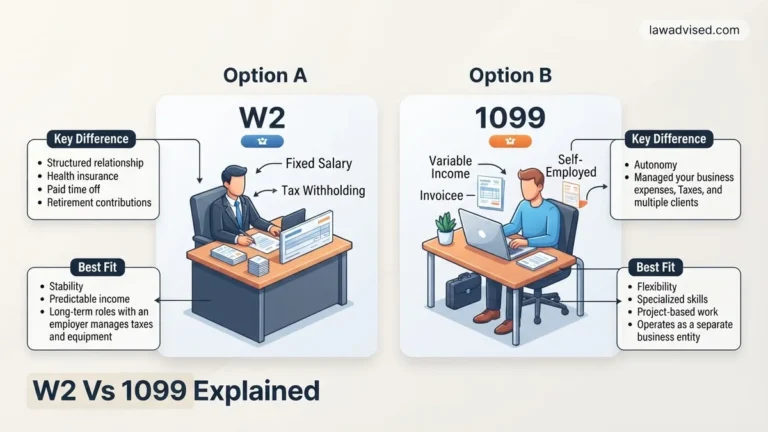
FICA taxes include Social Security and Medicare contributions. According to IRS regulations, international students in the U.S. on F-1 or J-1 visas are exempt from FICA taxes during their first five calendar years (for F-1 students) or two calendar years (for J-1 scholars). Unfortunately, employers frequently misclassify students and deduct these taxes automatically.
Steps to Recover Misheld FICA Taxes
If your 2026 pay stub shows deductions for Social Security or Medicare while you are still a non-resident alien for tax purposes, follow this remediation sequence:
- Contact your university or company payroll department immediately to request a direct refund of the incorrectly withheld amounts.
- Provide the payroll office with copies of your Form I-20 or DS-2019, your I-94 arrival record, and a written statement confirming your non-resident alien tax status.
- If the employer refuses or is unable to issue a refund, file a formal claim using IRS Form 843 (Claim for Refund and Request for Abatement) alongside Form 8316.
- Attach copies of your W-2 form, visa documents, and proof that the employer attempted or denied the refund directly. Mail the complete packet to the address specified in the IRS instructions for Form 843.
What If It Still Doesn’t Work?
Tax compliance can quickly become overwhelming when dealing with complex treaty benefits or unexpected IRS notices. If standard filing methods fail or your return is rejected, try these fallback steps:
- Double-check your Substantial Presence Test calculation to verify that your non-resident status for 2026 is correct.
- Utilize your university’s International Student Services (ISS) office resources, as many institutions provide complimentary access to specialized international tax software licenses.
- Consult a certified CPA or Enrolled Agent who explicitly specializes in non-resident alien taxation to prevent costly filing errors. Professional consultation fees typically range from $150 to $350.
- Respond to any IRS CP notices by certified mail within the stated deadline, including copies of all previously filed tax documents and visa status verifications.
Conclusion
Navigating U.S. tax obligations as an international student in 2026 requires understanding your non-resident status and separating federal, state, and FICA requirements. By filing Form 8843 annually and using specialized software for earned income, you maintain legal visa compliance. According to verified research and expert sources from the Internal Revenue Service and international education associations, proactive filing prevents costly penalties and protects your future immigration standing. The next actionable step is to gather your 2026 W-2 or 1042-S forms and log into your university’s approved international tax preparation portal today.
❓ Frequently Asked Questions
What is Form 8843 and who needs to submit it?
Form 8843 (Statement for Exempt Individuals and Individuals with a Medical Condition) is an informational IRS form required for all nonresident alien students and scholars on F, J, M, or Q visas. It must be filed every year regardless of whether you earned any income in the United States.
How do I know if I am a nonresident alien or resident alien for tax purposes?
Generally, international students on F-1 or J-1 visas are considered nonresident aliens for their first 5 calendar years in the US. After 5 years, you must evaluate your status using the Substantial Presence Test to determine if you have transitioned to a resident alien.
Am I required to pay Social Security and Medicare taxes on my student paycheck?
No. As long as you are classified as a nonresident alien for tax purposes and are working on-campus or authorized CPT/OPT, you are exempt from FICA (Social Security and Medicare) taxes under Internal Revenue Code Section 3121(b)(19).
What should I do if FICA taxes were mistakenly withheld from my paycheck?
First, contact your university’s payroll or HR department to request a refund directly. If they cannot or will not issue a refund, you can file a formal claim with the IRS using Form 843 and Form 8316.
What is Form 1042-S and how is it different from a W-2?
Form W-2 reports standard wages earned from employment. Form 1042-S reports scholarship, fellowship, or grant income, or wages that are exempt from federal tax under an existing tax treaty between the US and your home country.
Can failing to file my international student taxes affect my immigration status?
Yes. Failure to comply with US tax laws is a violation of federal law and can negatively impact your visa status, future visa renewals, applications for OPT or STEM extension, and future green card or citizenship applications.

Ismail Hossain is the founder of Law Advised. He is an Divorce, Separation, marriage lawyer. Follow him.