Who Is Exempt From Federal Income Tax in 2026 Expert Guide
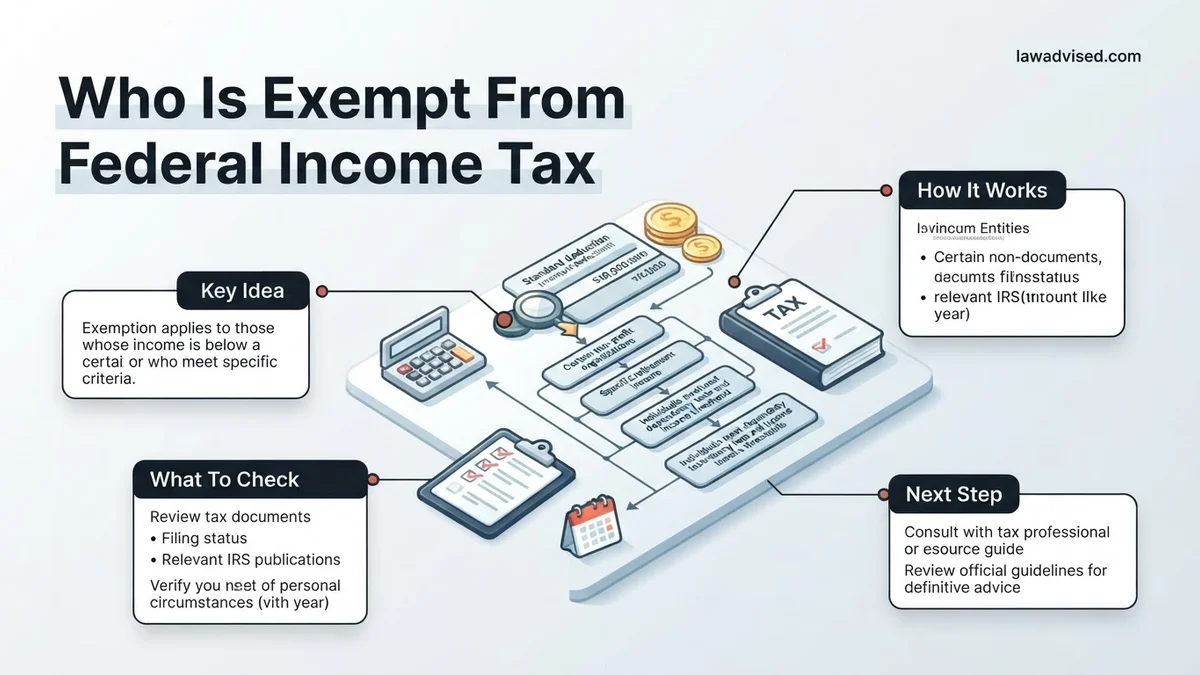
Not everyone is required to file a tax return with the IRS. Income thresholds, filing status, and age determine who is legally exempt from filing or paying federal income taxes, though filing may still be necessary to claim refunds.
You do not automatically owe federal income tax just because you earned money during the year. The IRS establishes specific gross income thresholds every year based on your filing status and age. If your total gross income falls below these limits, you are exempt from filing a federal income tax return and paying federal income tax for 2026.
Knowing these exact rules keeps you from wasting time and money on unnecessary tax preparation. However, falling below the threshold does not mean you should ignore the IRS entirely. If your employer withheld federal income taxes from your paychecks, you must file a tax return to claim your refund.
Key Takeaways
- Filing requirements depend primarily on your gross income, filing status, and age.
- Dependents face much lower income thresholds before a tax return becomes mandatory.
- Self-employed individuals must file if net earnings reach $400 or more.
- Exemptions from filing do not automatically mean you shouldn’t file to get refunds.
- Specific groups like certain nonresident aliens qualify for distinct federal exemptions.
What Causes Confusion Around Who Is Exempt From Federal Income Tax
The Dangerous Myth of Total Tax Exemption
Many people confuse being exempt from filing a tax return with being completely immune to payroll taxes. Even if your income sits below the 2026 federal income tax filing threshold, you still pay Federal Insurance Contributions Act (FICA) taxes. Your employer automatically deducts Social Security and Medicare taxes from every paycheck. True exemption from federal income tax simply means your earnings are too low to trigger the income tax calculation.
Filing Status Determines Your Exemption Line
Taxpayers often assume there is a single flat income limit for everyone. In reality, the IRS changes your exemption threshold entirely based on how you file. A single filer faces a different baseline than a married couple filing jointly. Furthermore, turning 65 years old alters the math by adding an extra standard deduction amount, raising your personal income ceiling before taxes apply.
- Single filers deal with one specific baseline limit
- Married couples filing jointly combine their thresholds for a higher limit
- Heads of household receive a moderate middle-ground threshold
- Qualifying surviving spouses share similar high thresholds with joint filers
How to Determine Your IRS Filing Status and Income Thresholds
Standard Deduction Limits for 2026
Your gross income threshold for 2026 directly ties to the standard deduction for your specific filing status. If your total gross income is less than your standard deduction, you generally do not need to file a federal income tax return. Keep in mind that gross income includes all taxable income you received in the form of money, goods, property, and services that are not exempt from tax.
- Single filers under 65 are exempt if gross income is under the standard deduction limit
- Married couples filing jointly are exempt if their combined gross income falls below the joint standard deduction
- Heads of household enjoy a higher threshold than single filers to account for dependents
- Senior citizens aged 65 or older receive an increased standard deduction, raising their exemption threshold
Evaluating Earned Versus Unearned Income
Your exemption status depends heavily on the source of your money. Earned income includes wages, salaries, tips, and professional fees. Unearned income includes things like unemployment compensation, taxable social security benefits, pensions, interest, and dividends. If you have unearned income, the rules shift dramatically, and you may be forced to file even if your total earnings appear very low.
Step-by-Step Guide to Checking Special Exemptions and Dependent Rules
Determining whether you qualify for federal income tax exemption in 2026 requires a systematic review of your financial standing. Navigating complex IRS guidelines can be challenging without a clear methodology. The Internal Revenue Service outlines strict criteria regarding gross income thresholds, filing statuses, and dependent qualifications. Following a structured verification process ensures you do not inadvertently trigger an audit or miss out on rightful exemptions.
Step 1: Calculate Your Total Gross Income
Begin by gathering all documentation related to your income for the 2026 tax year. This includes W-2s, 1099s, and investment statements. Compare your total gross income against the mandatory IRS filing thresholds based on your specific filing status.
Step 2: Review Dependency Status
Determine if someone else can claim you as a dependent on their 2026 federal tax return. According to IRS rules, if you can be claimed as a dependent, your standard deduction and filing requirements change drastically. You lose your personal exemption status and must evaluate your unearned and earned income separately.
Step 3: Evaluate Special Statuses
Assess whether you qualify for permanent special exemptions, such as certain Native American tribal member exemptions or specific combat zone tax exclusions. Cross-reference your findings with updated IRS Publication 501 guidelines for the 2026 tax year.
What If It Still Doesn’t Work and You Need to File Anyway?
If your preliminary calculations remain unclear or you discover you do not meet the strict criteria for a full federal tax exemption, you must proceed with filing. Failing to file a required return can result in severe IRS penalties and interest charges. When standard exemptions do not apply to your unique financial situation, consider these fallback steps:
- File a Zero-Liability Return: If your income sits just above the threshold, complete your 2026 tax return accurately to document that you owe zero tax liability, preventing automated collection notices.
- Utilize Free IRS Filing Software: Take advantage of IRS Free File programs if your adjusted gross income falls below the annual limit to minimize preparation expenses.
- Consult a Licensed Tax Professional: If complex self-employment or investment income complicates your exemption status, hire a Certified Public Accountant (CPA) or Enrolled Agent (EA). Professional tax preparation fees typically range from $220 to $500 depending on the complexity of your return.
- Apply for an Extension: If you need additional time to verify special exemption statuses with employer HR departments or legal counsel, submit Form 4868 to request an automatic extension.
Conclusion
Navigating federal income tax exemptions for 2026 demands careful attention to shifting income thresholds and dependency rules. Miscalculating your status can lead to unexpected tax liabilities and compliance penalties. According to verified research and expert sources from the IRS, confirming your exact gross income and filing category remains the most reliable defense against errors. Your actionable next step is to log into your official tax portal or review your latest pay stubs against the updated 2026 thresholds to verify your exact filing obligations today.
❓ Frequently Asked Questions
What is the difference between being exempt from filing and exempt from paying?
Being exempt from filing means your income is low enough that the IRS does not require you to submit a tax return. Being exempt from paying means you might still need to file a return to claim certain credits, even if your tax liability is zero.
What are the income thresholds for seniors regarding federal income tax?
Taxpayers aged 65 and older receive an additional standard deduction, which raises the gross income threshold required before a federal tax return must be filed.
Are members of federally recognized Indian tribes exempt from federal income tax?
Certain income derived directly from exercising fishing, hunting, or treaty-guaranteed rights, or specific federal trust land arrangements, may be exempt, though general income remains taxable.
Do nonresident aliens have to pay federal income tax on foreign income?
Nonresident aliens are generally only taxed on U.S.-source income. Income earned completely outside the United States is typically exempt from federal income tax.
What happens if I don’t file because I’m below the threshold, but I had taxes withheld?
If your employer withheld federal income tax from your paycheck but your income is below the filing threshold, you must file a tax return to receive that money back as a refund.
Are religious objectors exempt from federal income tax?
Certain members of recognized religious sects, such as the Old Order Amish, who are conscientiously opposed to accepting benefits of any public insurance, may apply for specific exemptions from Self-Employment Contributions Act (SECA) taxes.

Ismail Hossain is the founder of Law Advised. He is an Divorce, Separation, marriage lawyer. Follow him.