Window Tinting Laws in Oklahoma: What You Need to Know Today
Are you thinking about tinting your car windows in Oklahoma? Before you get started, it’s important to know the rules that protect you and keep you safe on the road.
Window tinting laws in Oklahoma can be tricky, and if you don’t follow them, you could face fines or even have to remove your tint. This guide will help you understand exactly what’s allowed, what’s not, and how to make sure your tinting stays legal.
Keep reading to avoid costly mistakes and enjoy the benefits of tinted windows without any trouble.
Credit: www.tinting-laws.com
Oklahoma Window Tinting Limits
Oklahoma has clear rules for window tinting. These rules help keep drivers safe and make sure police can see inside vehicles. Understanding these limits is important for anyone who wants to tint their car windows.
Each type of window has different rules. These rules tell how dark or reflective the tint can be. Following these rules avoids fines and problems with law enforcement.
Front Windshield Tint Rules
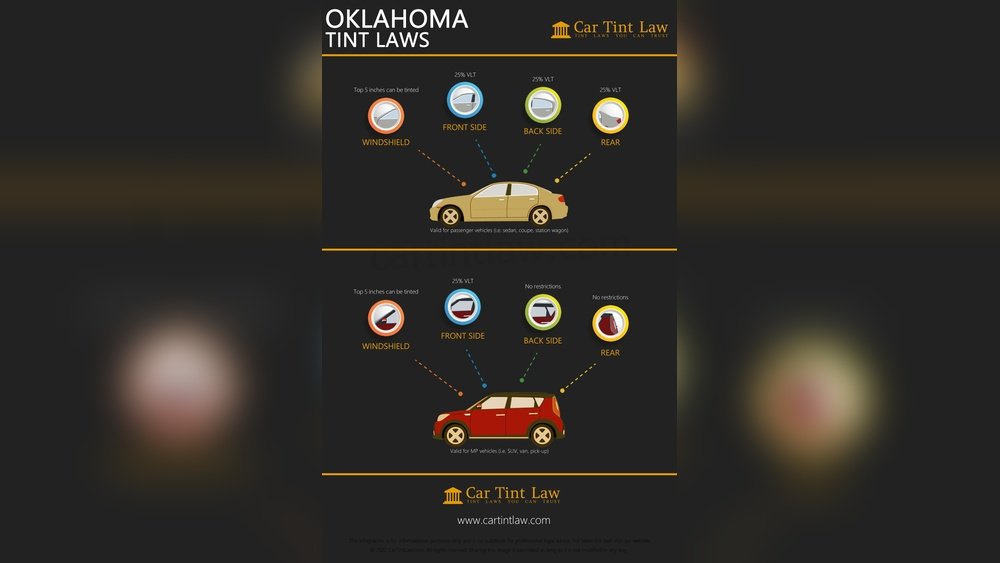
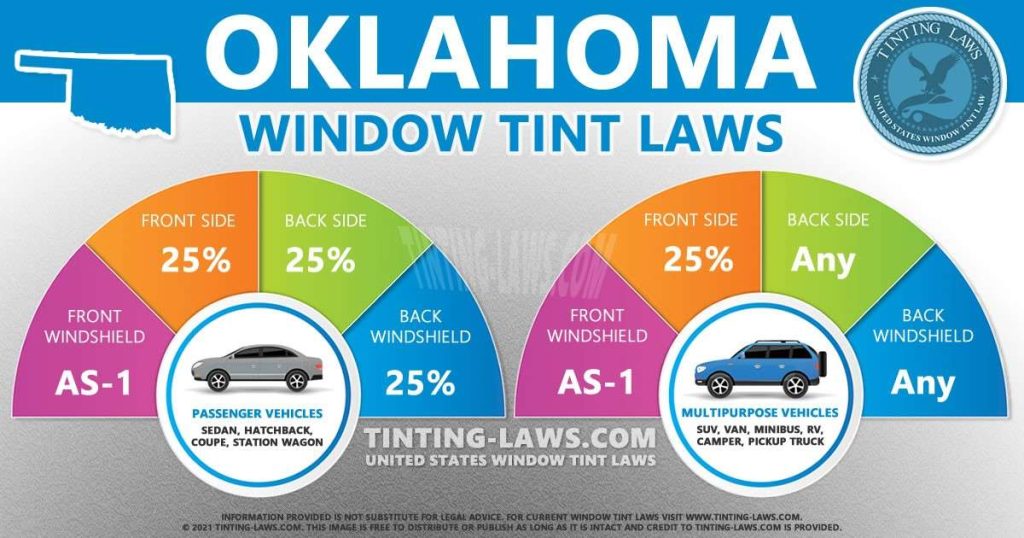
Only the top few inches of the front windshield can have tint. This area is called the “AS-1 line.” The tint must be clear and not block vision. Dark tint on the entire windshield is not allowed.
Light tint is allowed above the AS-1 line. This helps reduce glare from the sun. Drivers still need a clear view for safety.
Side And Rear Window Regulations
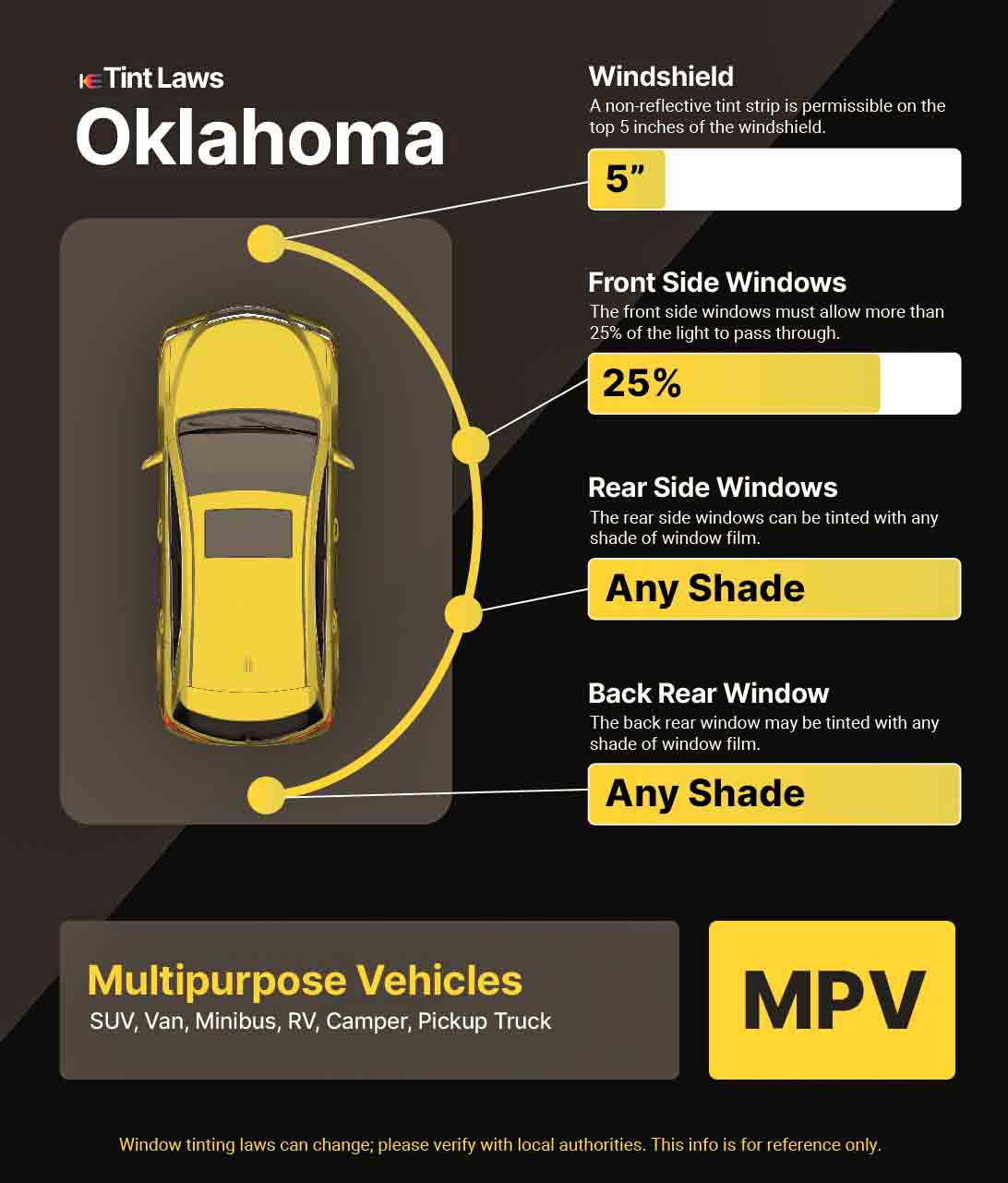
For side windows in the front, the tint must allow at least 25% of light through. This means the tint can be dark but not too dark. Rear side windows and back windows can have darker tint.
Rear windows can have any darkness level if the vehicle has outside mirrors on both sides. This helps drivers see behind the car safely.
Visible Light Transmission Requirements
Visible Light Transmission (VLT) means how much light passes through the window. Oklahoma law sets minimum VLT levels for different windows.
Front side windows must have a VLT of 25% or more. Rear side and back windows can have lower VLT values. The goal is to keep visibility good for safety.
Always check your tint’s VLT rating before installation. This prevents breaking the law and paying fines.
Credit: kepler-dealer.com
Medical Exemptions And Special Permits
Oklahoma allows medical exemptions for window tinting laws. These exemptions help people with health issues that require extra protection from sunlight. Special permits can be issued for vehicles with such needs.
Understanding these rules helps drivers avoid fines. It also ensures safety and comfort for those with medical conditions.
Qualifying Medical Conditions
Certain health problems qualify for tinting exemptions. Skin conditions like lupus or melanoma are common examples. Eye disorders such as photophobia or cataracts also qualify. Doctors must confirm the condition in writing.
The medical issue must need protection from sunlight. This protection can reduce pain or prevent harm. Only valid medical reasons qualify for special permits.
Application Process For Exemptions
Start by getting a written note from your doctor. The note must explain the medical need for tinting. Submit this document to the Oklahoma Department of Public Safety. Include a completed application form for the permit.
Pay the required fee for processing the permit. The department reviews the request carefully. Approval leads to a special permit for window tinting. Keep the permit in your vehicle to show law enforcement if needed.
Enforcement And Penalties
Oklahoma enforces strict rules on window tinting to ensure driver safety. Police officers regularly check vehicles for tint compliance. Violations can lead to penalties and fines. Understanding enforcement helps drivers avoid trouble on the road.
Common Violations
Many drivers break tint laws without knowing it. Common issues include tint that is too dark on front windows. Rear windows with illegal tint levels also cause problems. Reflective or mirrored tints are often against the rules. Not displaying required medical exemption papers can lead to penalties. Police use tint meters to measure light transmission. If tint blocks too much light, it is a violation.
Fines And Legal Consequences
Oklahoma imposes fines for illegal window tinting. First-time offenders usually face moderate fines. Repeat violations can lead to higher fines and court appearances. Police may require removing illegal tint at the owner’s expense. In some cases, officers can issue a citation or warning. Failure to comply with tint laws might affect insurance claims. Keeping tint within legal limits avoids costly penalties.
Tips For Choosing Legal Window Tint
Choosing the right window tint for your vehicle in Oklahoma requires careful attention to the law. Selecting a tint that meets state rules helps you avoid fines and keeps your car safe. It also ensures clear vision while driving, especially at night. Follow these tips to pick a legal and effective window tint.
Selecting The Right Tint Percentage
Oklahoma law sets limits on how dark your window tint can be. The front side windows must allow more light through than the back windows. Usually, a tint that lets in at least 25% of light is legal for front windows. Rear windows can be darker. Check the exact light transmission numbers before buying tint. Avoid very dark films that block too much light. A legal tint helps you stay safe and avoid tickets.
Working With Certified Installers
Professional installers know Oklahoma’s window tint laws well. They can help you choose the right tint for your car. Certified installers have the right tools and experience for a smooth, bubble-free tint job. They also provide warranties for their work. A proper installation lasts longer and looks better. Trust only certified installers to avoid problems with your tint.
Credit: kepler-dealer.com
Frequently Asked Questions
What Are Oklahoma’s Legal Limits For Window Tint Darkness?
Oklahoma law allows 25% light transmission on front side windows. Rear side and back windows can be darker with no specific limit. Windshield tinting is allowed only on the top 5 inches.
Which Windows Can Be Tinted The Darkest In Oklahoma?
Rear side and back windows can have the darkest tint in Oklahoma. These windows can be tinted without a specific light transmission percentage. Front side windows must follow stricter light transmission rules.
Are Medical Exemptions Allowed For Darker Window Tints?
Yes, Oklahoma allows medical exemptions for darker window tints. Drivers need a certificate from a doctor to show law enforcement. This exemption permits tint darker than standard legal limits.
What Are The Penalties For Illegal Window Tint In Oklahoma?
Illegal window tint can lead to fines and citations in Oklahoma. Police may require you to remove non-compliant tint. Repeat offenses can result in higher fines or other penalties.
Can I Tint My Windshield In Oklahoma?
Only the top 5 inches of the windshield can be tinted in Oklahoma. The tint there must allow a high level of light through. Tinting the rest of the windshield is illegal.
Conclusion
Knowing Oklahoma’s window tinting laws keeps you safe and legal. Dark tints might look cool but can cause trouble. Follow the rules on tint darkness and reflectiveness. Check your tint before driving to avoid fines. Stay informed about any law changes in your state.
Clear and light tints usually work best for compliance. Keep your windows legal to protect yourself on the road. Simple steps prevent tickets and keep you worry-free. Stay safe, drive smart, and enjoy your ride.

Ismail Hossain is the founder of Law Advised. He is an Divorce, Separation, marriage lawyer. Follow him.