Brokerage Account Taxes Explained 2026 A Proven Guide
Navigating taxes in a taxable brokerage account depends entirely on your realized taxable events like selling assets or earning dividends. Simply buying or holding investments triggers no tax liability until a transaction occurs.
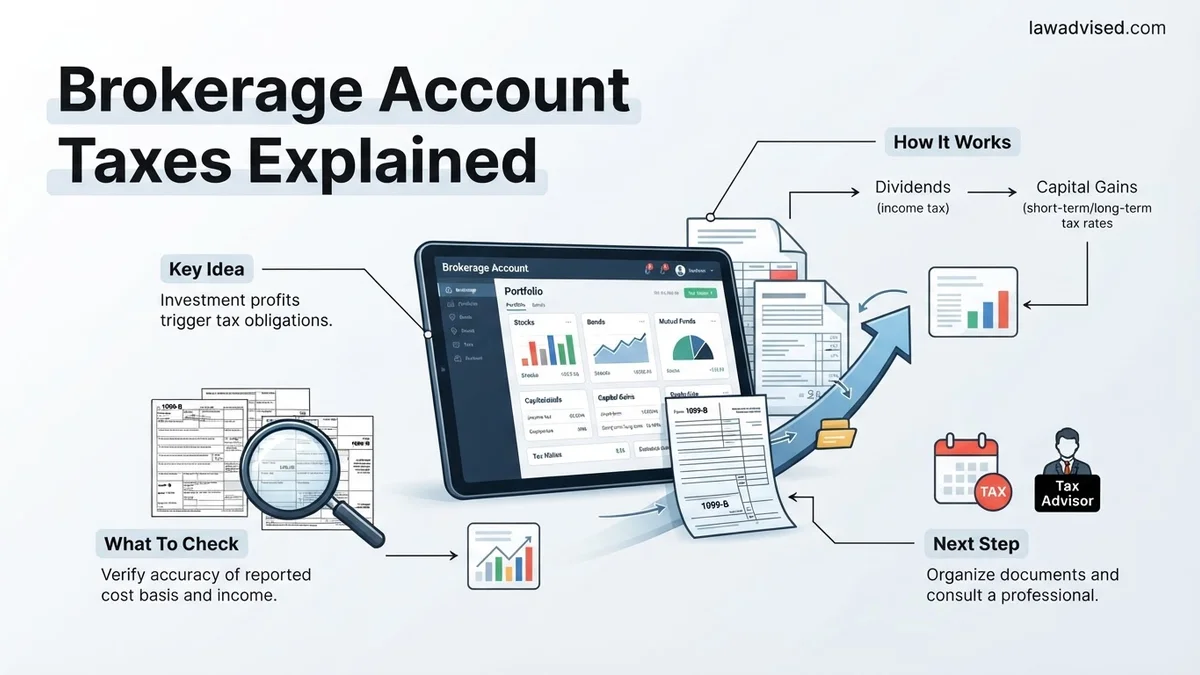
Taxes in a taxable brokerage account are triggered only when a specific financial event happens, such as selling an asset for a profit, receiving a cash dividend, or earning interest on cash holdings. Unlike tax-advantaged retirement accounts where your investments grow shielded from annual taxation, a standard brokerage account exposes you to taxes in the exact year these realization events occur.
Managing your 2026 tax liability requires knowing the exact boundary between transactions that trigger a bill and those that do not. Failing to track these events can lead to unexpected tax bills and penalties from the IRS when you file your return.
Key Takeaways
- Selling an asset for a profit triggers a capital gains tax liability.
- Holding investments with unrealized gains creates zero immediate tax obligations.
- Long-term capital gains receive preferential tax rates compared to short-term gains.
- Dividends and interest income are taxable in the year they are received.
- Tax-loss harvesting allows investors to offset capital gains and lower overall tax bills.
What Causes Brokerage Account Tax Liabilities
You need to understand the exact mechanics of what creates a tax bill in your portfolio. The IRS only taxes realized financial activity within a standard brokerage account.
Taxable Events That Trigger a Bill
- Selling assets for a gain: When you sell a stock, bond, or fund for more than you bought it for, you realize a capital gain.
- Receiving dividends: Cash payouts distributed to shareholders by companies are taxable in the year they are paid out.
- Interest earnings: Cash sweeps, money market funds, and bond coupons generate interest income that you must report annually.
- Capital gains distributions: Mutual funds often sell underlying assets internally, passing those capital gains tax burdens directly to fund shareholders.
Non-Taxable Events That Do Not Trigger a Bill
- Buying assets: Transferring fresh cash into your account and purchasing investments creates zero tax liability.
- Holding assets: Watching your portfolio grow creates unrealized paper gains, which are completely tax-free until you sell.
- Transferring money: Moving cash between your bank and your brokerage account is a tax-free movement of personal funds.
- Portfolio rebalancing via fresh cash: Directing new deposits into underweighted assets avoids selling your winning positions.
How to Calculate and File Capital Gains and Dividends
Calculating your tax liability in 2026 depends on how long you held an asset before selling it. The tax code heavily rewards long-term investing over short-term trading through vastly different tax brackets.
Short-Term Versus Long-Term Capital Gains
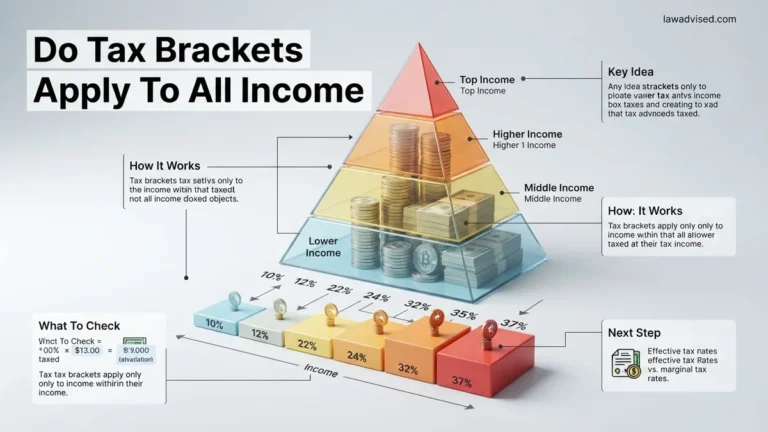
- Short-term capital gains: Assets held for one year or less are taxed at your ordinary income tax bracket, which can reach up to 37 percent for high earners in 2026.
- Long-term capital gains: Assets held for longer than one year qualify for preferential rates of 0 percent, 15 percent, or 20 percent based on your total taxable income.
- Cost basis tracking: Your brokerage automatically tracks your cost basis, which is the original purchase price plus any reinvested dividends or fees.
Qualified Versus Ordinary Dividends
- Qualified dividends: These payouts meet specific holding period requirements and are taxed at the same low rates as long-term capital gains.
- Ordinary dividends: These fail the holding period test and are taxed as ordinary income at your higher marginal tax rate.
- Form 1099-B and 1099-DIV: Your brokerage will issue these tax documents in early 2027 to summarize all your taxable activity for the 2026 tax year.
How to Fix High Investment Taxes Using Tax-Loss Harvesting
Tax-loss harvesting is a proven strategy to offset capital gains and lower your overall tax liability in 2026. According to financial research from Vanguard, strategic loss harvesting can add up to 0.75% in net after-tax alpha annually. When your investments decline in value, you can sell those losing assets to offset realized capital gains dollar-for-dollar. If your losses exceed your gains, current IRS tax rules allow you to deduct up to $3,000 of ordinary income per year.
Executing a Loss Harvest
To implement this strategy effectively without triggering regulatory penalties, follow these procedural steps:
- Review your taxable brokerage account in 2026 to identify positions trading below your original purchase price.
- Sell the underperforming asset to realize the capital loss for the current tax year.
- Immediately reinvest the proceeds into a similar, but not substantially identical, replacement asset to maintain market exposure.
- Adhere strictly to the IRS wash-sale rule by waiting at least 30 days before or after the sale to repurchase the exact same security.
What If Your Form 1099 Disagrees with Your Records
Tax season discrepancies between your personal trade logs and the official Form 1099 issued by your brokerage are common. Brokerages track cost basis using specific accounting methods, such as First-In, First-Out (FIFO) by default. If your records conflict with the official tax document, you must address the mismatch before filing your 2026 return to avoid automated IRS mismatch notices.
Resolving Reporting Discrepancies
Take the following steps to reconcile conflicting tax data:
- Pull your detailed transaction history and trade confirmations from your brokerage portal for the entire tax year.
- Identify whether the discrepancy stems from wash sales, corporate actions, or differing cost basis calculation methods.
- Contact your brokerage support desk immediately to request a corrected Form 1099-B if the institution made a reporting error.
- If the brokerage refuses to issue a correction, report the correct figures on Form 8949 and attach an explanatory statement explaining the basis adjustment.
What If It Still Doesn’t Work?
Complex brokerage taxation issues occasionally persist despite your best reconciliation efforts. If automated platforms fail or discrepancies remain unresolved, consider these fallback steps:
- Export all historical trade logs into a dedicated tax software suite designed specifically for advanced capital gains tracking.
- Consult a Certified Public Accountant (CPA) or Enrolled Agent who specializes in high-net-worth investment taxation. Professional tax advisory fees typically range from $300 to $1,000+ depending on the volume of trades and portfolio complexity.
- File for an automatic tax extension if waiting on corrected brokerage documentation will cause you to miss the primary filing deadline.
Conclusion
Navigating brokerage account taxes in 2026 requires a firm understanding of capital gains thresholds, dividend classifications, and proactive strategies like tax-loss harvesting. Left unchecked, avoidable tax liabilities can significantly erode your long-term investment returns. According to verified research and tax experts, implementing a systematic year-round tax management plan is essential for maximizing net wealth. Your immediate next step is to log into your brokerage portal, download your preliminary tax documents, and evaluate your portfolio for potential loss harvesting opportunities today.
❓ Frequently Asked Questions
How are reinvested dividends taxed in a taxable brokerage account?
Even if you automatically reinvest your dividends to buy more shares, the IRS considers them taxable income in the year they are paid out. You must report them on your tax return based on whether they are classified as qualified or ordinary.
What is the wash-sale rule and how does it affect tax-loss harvesting?
The wash-sale rule prevents you from claiming a tax loss if you buy a ‘substantially identical’ security within 30 days before or after the sale. If violated, the disallowed loss is added to the cost basis of the new investment.
How do mutual fund distributions create unexpected tax bills?
Mutual funds often sell underlying securities inside the fund throughout the year, passing those capital gains distributions on to shareholders. This means you can owe taxes even if you didn’t sell any of your fund shares.
What tax bracket applies to long-term capital gains?
Long-term capital gains are taxed at 0%, 15%, or 20% depending on your taxable income and filing status. Higher-income earners may also be subject to the 3.8% Net Investment Income Tax (NIIT).
Are transfers of cash or securities between brokerage accounts taxable?
Transferring cash or moving assets via an ACATS transfer between two accounts in your name is a non-taxable event. You only trigger a taxable event if you liquidate the securities into cash before transferring.
How can I minimize taxes in a standard taxable brokerage account?
You can minimize taxes by holding tax-efficient investments like broad-market index funds, utilizing tax-loss harvesting, and holding assets for more than one year to qualify for long-term capital gains rates.

Ismail Hossain is the founder of Law Advised. He is an Divorce, Separation, marriage lawyer. Follow him.