Scholarship Income Tax Explained 2026 A Step-by-Step Guide
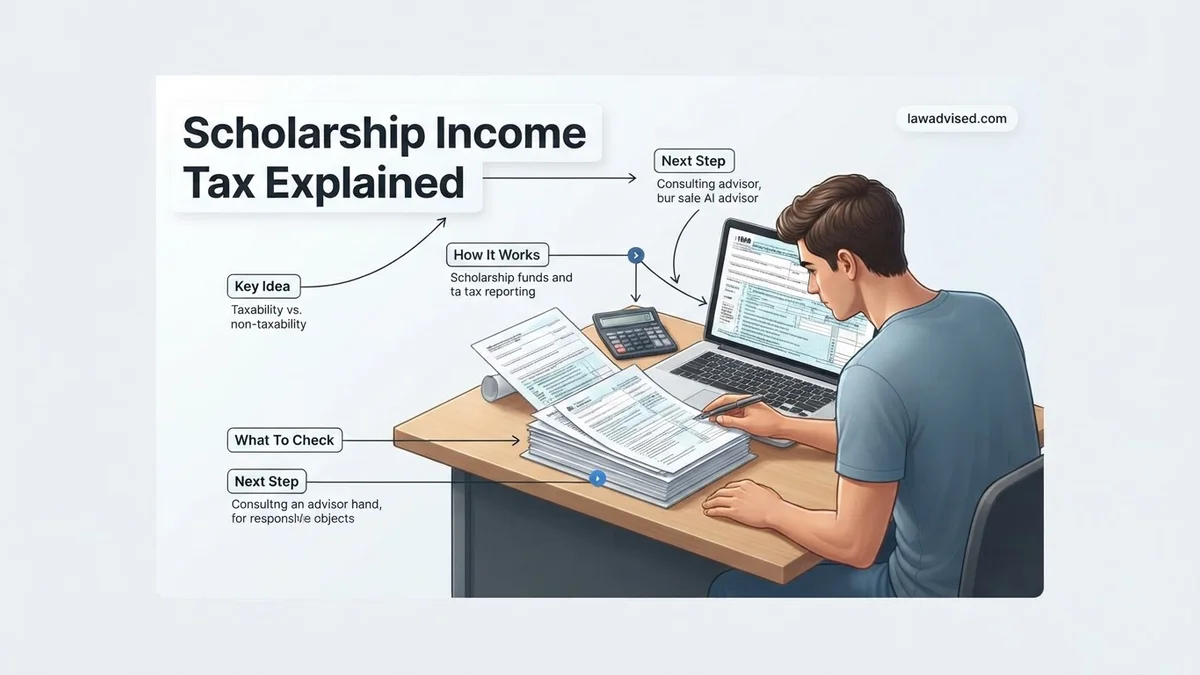
Scholarships and grants are generally tax-free only if used for qualified education expenses like tuition and required course materials. Any funds spent on room, board, or living stipends are considered taxable income that you must report to the IRS.
Scholarship and grant funds are generally tax-free by the IRS, but only if you use them strictly for qualified education expenses like tuition and required course materials. If you spend any portion of your award on room, board, travel, or optional equipment, that specific amount immediately crosses the line into taxable income for the 2026 tax year.
Navigating these rules correctly prevents unexpected tax bills and IRS penalties when April arrives. Understanding how the government categorizes your educational funding ensures you report your financial aid accurately and keep every legally permissible dollar in your pocket.
Key Takeaways
- Qualified expenses include tuition, mandatory fees, and required books or course equipment.
- Money spent on room, board, travel, and personal living expenses is fully taxable.
- Stipends received in exchange for teaching or research services are treated as taxable wages.
- Form 1098-T from your institution helps reconcile your educational payments and aid.
- Taxable scholarship amounts without a W-2 must still be reported on your Form 1040.
What Causes Scholarship Income to Become Taxable Under IRS Rules
The IRS draws a strict boundary between money that directly pays for your education and money that supports your general living expenses. Knowing this distinction is the core of managing your student tax obligations for 2026.
Qualified Expenses Versus Non-Qualified Expenses
To keep your scholarship entirely tax-free, your funds must go toward specific, mandatory educational costs. The IRS defines these qualified expenses narrowly to include:
- Tuition and fees required for enrollment or attendance at an eligible educational institution
- Course-specific books, supplies, and equipment that the syllabus explicitly demands
Conversely, non-qualified expenses trigger taxable income. If your scholarship covers room, board, travel, research, clerical help, or optional equipment, that portion counts as taxable income on your 2026 return.
Services Required for Payment and Stipends
Tax rules also change based on why you received the money. If your scholarship or fellowship requires you to perform teaching, research, or other services as a condition for receiving the funds, that portion is taxable.
- W-2 taxable wages apply even if you immediately turn around and pay the university with those funds
- Living stipends paid to graduate assistants or fellowship recipients are fully taxable compensation
- Service-requirement exceptions exist for programs like the National Health Service Corps Scholarship, but standard academic awards follow strict rules
How to Calculate Your Taxable Scholarship Amount Step-by-Step
Calculating your taxable scholarship requires matching your total financial aid against your actual out-of-pocket qualified expenses. You must track every dollar to ensure accurate reporting on your 2026 tax forms.
Gathering Your Forms and Financial Records
Your first step is collecting the documentation issued by your school and tracking your personal educational spending. You cannot calculate your tax liability accurately without these official records.
- Locate your Form 1098-T, Tuition Statement, which your college issues to report payments received and scholarships administered
- Pull your own bank statements, student account ledger, and receipts for book purchases
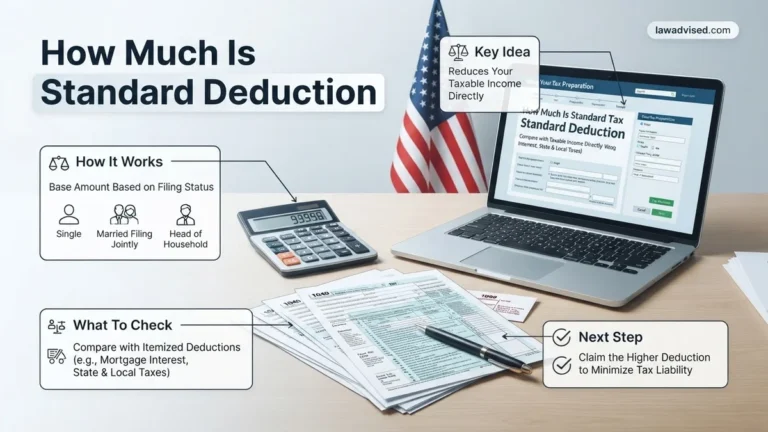
- Separate all scholarship and grant disbursements from student loans, which are never taxable
Performing the Calculation
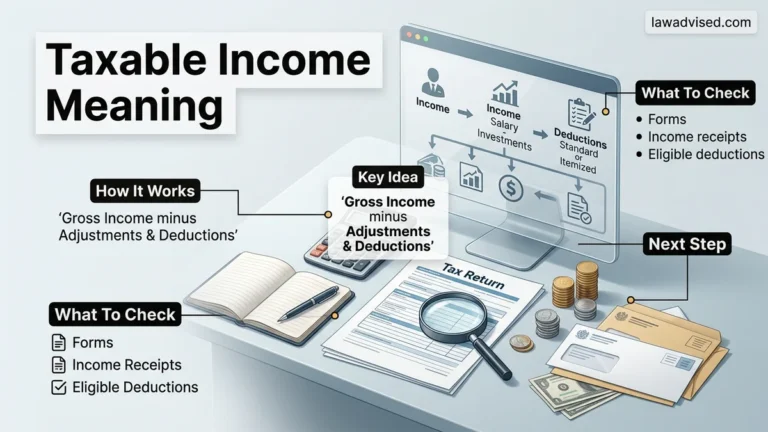
Once you have your totals, run through a simple mathematical formula to find your taxable exposure. Take your total scholarships and grants received for the 2026 calendar year, then subtract your total qualified education expenses.
For example, if you received a $15,000 scholarship, but your actual tuition and required books totaled $11,000, you have a $4,000 taxable scholarship. That remaining $4,000 must be reported as earned income, even if the university applied it directly to your housing bill.
How to Report Scholarship Income Tax on Your Federal Tax Return
Filing taxes as a student requires precise documentation to avoid IRS scrutiny or missed education credits. Even if your scholarship income is entirely tax-free, reporting errors can delay processing times for refunds or trigger automated matching notices.
Step-by-Step Reporting Procedures
- Gather Form 1098-T: Review the Statement of Account sent by your institution by January 31, 2026. Box 5 shows total scholarships or grants administered, while Box 1 shows payments received for qualified tuition and related expenses.
- Calculate the Taxable Portion: Subtract your qualified educational expenses from the total scholarship amount received. If the result is greater than zero, that specific dollar amount is considered taxable income.
- Enter Qualified Amounts on Form 1040: Report any taxable scholarship or fellowship grants that were not reported on a W-2 on Schedule 1 (Form 1040), Part I, line 8r. You must write “SCH” and the taxable amount on the dotted line if filing by paper, or follow the electronic tax software prompt.
- Attach Detailed Records: Keep a personal folder containing itemized receipts for books, equipment, and fee statements for at least three years from your filing date in case of an IRS audit.
What If Your Scholarship Involves Service Requirements or International Status
Special tax rules apply when scholarships are tied to work obligations or when recipients hold non-resident alien status in the United States. Misunderstanding these rules can result in unexpected tax liabilities or improper withholding rates.
Handling Service-Conditional Awards and Non-Residents
- Identify Service-Required Grants: According to Internal Revenue Service guidelines, any portion of a scholarship representing payment for past, present, or future teaching, research, or other services is fully taxable compensation, regardless of whether the service is a degree requirement for all candidates.
- Review Form W-2 Issuance: If your university requires teaching or research assistantship services in exchange for a tuition waiver, expect the institution to treat that portion as wages reported on Form W-2, subject to standard income tax withholding.
- Assess International Tax Treaties: Non-resident alien students receiving U.S.-source scholarships generally face a flat 14% withholding tax rate on the taxable portion, unless a specific bilateral income tax treaty between the United States and their home country reduces or eliminates the requirement.
- File Form 8833 and Form 1040-NR: International scholarship recipients must file non-resident returns and attach Form 8833 if claiming treaty-based exemptions for fellowships or grants.
What If It Still Doesn’t Work?
Tax situations involving fellowship stipends, W-2 wage hybrids, and international statuses frequently generate complex reporting challenges that standard software cannot resolve. If your electronic filing is rejected or your calculations remain ambiguous, apply these troubleshooting steps:
- Contact your university financial aid or bursar office to request a corrected Form 1098-T if Box 1 and Box 5 figures appear transposed or inaccurate.
- Utilize IRS Free File or VITA (Volunteer Income Tax Assistance) programs on campus for certified, in-person student tax guidance at zero cost.
- Consult a certified public accountant (CPA) specializing in student tax law or international taxation if you earned mixed income types across multiple states or countries. Professional consulting fees typically range from $200 to $500 depending on complexity.
Conclusion
Navigating scholarship income tax requires a clear understanding of what qualifies as tax-free education funding versus taxable compensation for living expenses or services. By accurately calculating your taxable portion and reporting it correctly on your 2026 federal return, you ensure full compliance while maximizing available financial aid benefits. According to verified research and expert tax sources, proactive record-keeping is the most effective defense against unexpected IRS adjustments. Your immediate actionable next step is to log into your student portal, download your official 1098-T tax form, and cross-reference every dollar received against your qualified educational expenses today.
❓ Frequently Asked Questions
How do I report taxable scholarship income on Form 1040?
Taxable scholarship amounts not reported on a W-2 must be included on the line for wages, salaries, and tips on Form 1040, writing ‘SCH’ and the taxable amount on the dotted line.
Are living stipends from fellowships taxable?
Yes, fellowships and living stipends used for living expenses, travel, or optional costs are considered taxable income and may require estimated quarterly tax payments.
What happens if a scholarship requires me to work as a TA?
Grants or tuition waivers given in exchange for teaching, research, or other services are treated as taxable wages, and the school will typically issue a W-2.
Do international students pay taxes on US scholarships?
International students are subject to specific IRS withholding rules, often facing a 14% tax rate on non-qualified scholarship portions unless exempted by a tax treaty.
Can I use education tax credits with tax-free scholarships?
You cannot double-dip; expenses paid with tax-free scholarship funds cannot be used to claim the American Opportunity Tax Credit or Lifetime Learning Credit.
What role does Form 1098-T play in scholarship taxes?
Form 1098-T reports payments received for qualified tuition and related expenses, alongside scholarships or grants administered by the institution, helping you reconcile your tax liability.

Ismail Hossain is the founder of Law Advised. He is an Divorce, Separation, marriage lawyer. Follow him.