College Student Tax Filing Requirements Guide 2026
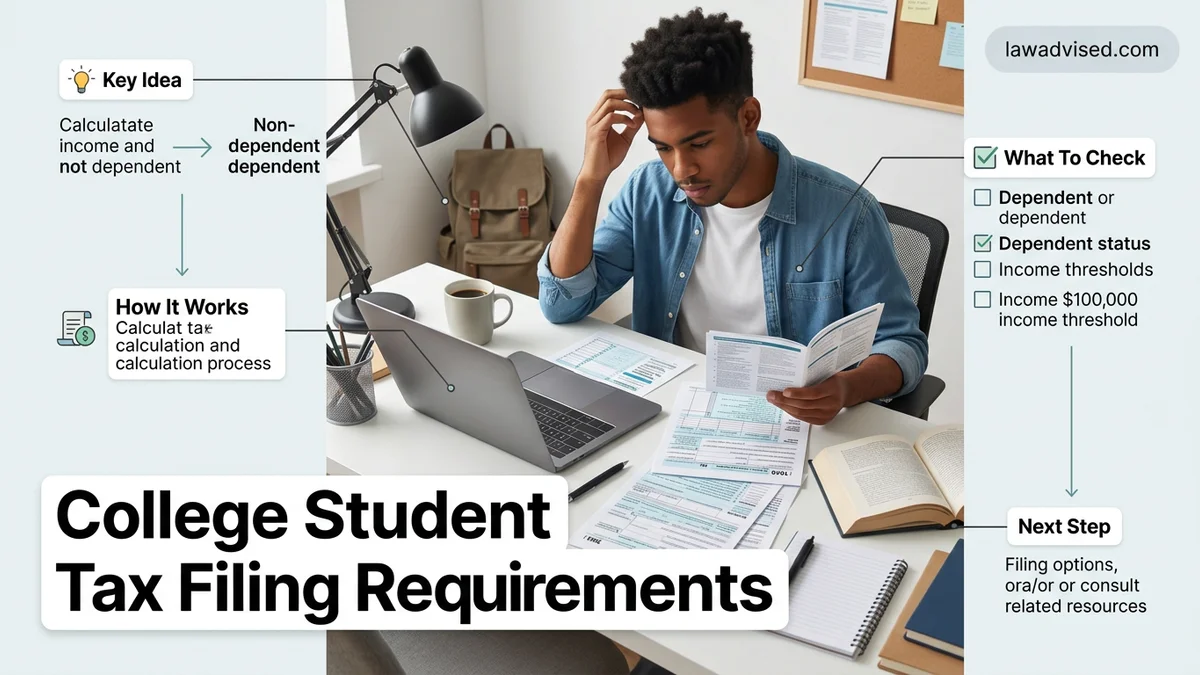
Navigating college student tax filing requirements can be confusing, especially regarding dependency status and income thresholds. Knowing whether you must file depends on your total earned and unearned income, as well as whether your parents claim you as a dependent.
As a college student navigating the 2026 tax season, your requirement to file a federal income tax return depends entirely on two factors: whether you are claimed as a dependent and the exact dollar amount of your earned and unearned income. If you earned wages from a campus job or a retail gig, you do not automatically have to file unless your income crosses specific IRS thresholds, though filing is often required if you want to claim a refund for withheld taxes.
Failing to understand these rules can lead to missed refund money or IRS compliance notices. Knowing your status protects your financial standing and ensures you maximize any available education tax credits or deductions as you build your financial independence.
Key Takeaways
- Check if your parents claim you as a qualifying child dependent.
- Compare your earned and unearned income against IRS filing thresholds.
- File a tax return even if not required to claim withheld income taxes.
- Understand that dependents still need to file if they exceed income limits.
- Keep track of W-2 forms from part-time jobs and 1098-T tuition statements.
What Causes Confusion About College Student Tax Filing Requirements
The Myth of Automatic Filing for All Working Students
Many students assume that receiving a W-2 form means filing a tax return is mandatory. In reality, the IRS sets specific minimum income thresholds for single dependents and independent filers. If your total income stays below that statutory limit, you generally do not have to file a federal return. However, confusion arises because employers still withhold federal income tax from your paycheck. If taxes were withheld from your wages, the only way to get that money back is to file a 2026 tax return, even if your earnings fell below the mandatory filing threshold.
Mixing Up Earned and Unearned Income
Another major source of confusion is the strict distinction the IRS draws between money you work for and money you receive passively. Earned income includes wages, tips, salaries, and taxable scholarship amounts you received for services. Unearned income covers investment interest, dividends, capital gains, and certain trust distributions. The IRS applies much lower filing thresholds to unearned income. A student with just a few hundred dollars in investment dividends might be forced to file a 2026 return, whereas a peer making several thousand dollars solely from a campus job might not cross the filing line.
How to Determine Dependent Status and IRS Filing Thresholds
The Qualifying Child Dependent Rules
Your dependent status is the primary gateway to your tax filing requirements. For the 2026 tax year, you are generally considered a dependent qualifying child if you meet specific IRS criteria:
- Age Test: You were under age 19 at the end of 2026, or under age 24 and a full-time student for at least five months of the year.
- Support Test: You did not provide more than half of your own total financial support for the year. Scholarships do not count as self-support.
- Residency Test: You lived with the person claiming you for more than half of 2026, excluding temporary absences for college housing.
2026 IRS Filing Thresholds for Dependents
If your parents or guardians claim you as a dependent on their 2026 tax return, your personal filing requirement depends on the type of income you earned. For the 2026 tax year, a single dependent must file a federal income tax return if they meet any of the following conditions:
- Your unearned income is more than $1,300.
- Your earned income is more than the standard deduction amount for dependents (projected at $15,000 for 2026, or your earned income plus $450, whichever is smaller).
- Your gross total income is more than the larger of $1,300 or your earned income (up to the standard deduction limit) plus $450.
If you are an independent student—meaning no one can claim you as a dependent—the 2026 filing threshold jumps up to match the standard single filer threshold, meaning you generally must file if your gross income equals or exceeds the standard deduction for independent single taxpayers.
Step-by-Step Guide to Filing Your Student Tax Return in 2026
Filing your taxes as a college student in 2026 does not have to be an overwhelming process. By following a structured approach, you can complete your return accurately and maximize your financial return. According to the Internal Revenue Service (IRS), electronic filing combined with direct deposit remains the fastest method to receive your money.
1. Gather Your Tax Documents
Before you begin, collect all necessary paperwork. You will typically need your Form W-2 from any campus or off-campus jobs, Form 1098-T from your university detailing tuition payments, and Form 1098-E if you made student loan interest payments.
2. Choose a Filing Software
Select an IRS Free File partner if your adjusted gross income falls below the annual threshold, which is typically set at $79,000 for 2026. Commercial software options like TurboTax or H&R Block also offer specialized student tiers that automatically scan for education credits.
3. Complete and Review Your Forms
Input your personal information carefully, ensuring your Social Security Number matches your official records. Double-check that you have answered whether someone else can claim you as a dependent, as this directly impacts your eligibility for education tax credits.
4. Submit and Track Your Return
Transmit your tax return electronically and retain a digital copy for your records. You can track the status of your federal refund using the official IRS Where’s My Refund tool within 24 hours of e-filing.
What If Your Withheld Taxes Need to Be Claimed as a Refund
Many college students working part-time jobs notice federal or state income taxes withheld from their paychecks, even when their total annual earnings fall below the standard deduction threshold. If your employer withheld taxes, you must file a return to claim that money back.
Determine Your Filing Necessity
If you earned less than the standard deduction for 2026 and have no other income, the IRS does not legally require you to file. However, filing is the only mechanism to recover the income tax withheld by your employer.
File to Claim Zero Tax Liability
Complete Form 1040 and report your total earned wages on the appropriate line. If your total tax liability calculates to zero, the entire amount of federal income tax withheld will be issued to you as a direct refund.
Adjust Future Withholdings
To prevent having money withheld from future paychecks when you expect to owe zero tax liability, submit a new Form W-4 to your employer. Claim exempt status if you meet the strict IRS criteria of having had no tax liability in the prior year and expecting none for 2026.
What If It Still Doesn’t Work?
If you encounter rejected e-file submissions, missing Form 1098-T data, or complex dependency status conflicts, standard software tools may fall short. Consider these fallback steps to resolve your filing roadblocks:
- Double-Check Reject Codes: Review the specific IRS reject code provided by your filing software, which typically points to a mismatched Social Security Number or a dependent status conflict with a parent’s return.
- Contact Your University Bursar: Reach out to your financial aid or bursar office if your Form 1098-T is missing box amounts or contains inaccurate institutional taxpayer identification numbers.
- Utilize VITA Programs: Seek free tax preparation assistance through the IRS Volunteer Income Tax Assistance (VITA) program, which operates on many college campuses and offers certified guidance for students.
- Consult a Tax Professional: Hire a Certified Public Accountant (CPA) or Enrolled Agent (EA) if your tax situation involves complex scholarship allocations, nonresident alien status, or self-employment income. Professional tax preparation fees typically range from $150 to $400 for standard student returns.
Conclusion
Navigating college student tax filing requirements in 2026 requires understanding your dependent status, utilizing valuable education credits, and filing a return to claim withheld wages. Taking prompt action prevents missed deadlines and secures your hard-earned money. According to verified research and expert sources from the IRS and financial literacy authorities, students who file electronically with direct deposit receive their refunds within 21 days on average. Your actionable next step is to log into your university student portal today, download your Form 1098-T, and select an approved IRS Free File provider to begin your return.
❓ Frequently Asked Questions
What is the earned income threshold for a dependent college student?
For tax year 2026, a dependent single student generally must file a federal income tax return if their earned income exceeds the standard deduction for dependents. Review current IRS guidelines to match your specific wage levels.
What counts as unearned income for a student?
Unearned income includes taxable interest, ordinary dividends, and capital gains from investments. Dependents face much stricter filing limits on unearned income compared to wages from a part-time job.
Should I file a tax return if my employer withheld federal income tax?
Even if you are not legally required to file based on your income, you should always file if your employer withheld federal or state income taxes from your paycheck. Filing is the only way to get that money refunded to you.
Can I claim the American Opportunity Tax Credit if my parents claim me as a dependent?
No, if your parents claim you as a dependent on their tax return, they are the ones eligible to claim education tax credits like the American Opportunity Tax Credit.
What forms do I need to gather before filing my taxes as a student?
You will need Form W-2 from any employers you worked for during the year, and Form 1098-T from your college detailing tuition payments and scholarships received.
Does a student scholarship count as taxable income?
Scholarships and grants are tax-free if used for qualified education expenses like tuition and required fees. However, portions used for living expenses like room and board are considered taxable income.

Ismail Hossain is the founder of Law Advised. He is an Divorce, Separation, marriage lawyer. Follow him.