Statute of Limitations on Tax Debt Expert 2026 Guide
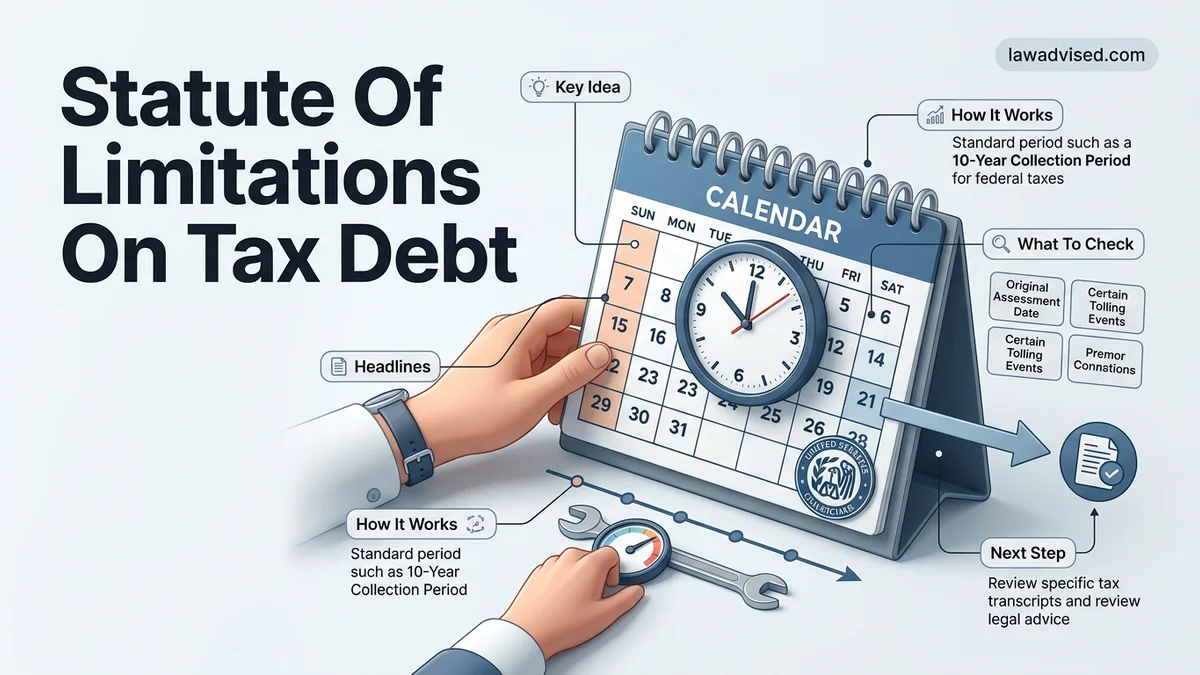
The IRS generally has 10 years to collect back taxes from the date they are assessed, known as the Collection Statute Expiration Date (CSED). After this window closes, the legally enforceable debt is wiped out. However, certain actions like filing for bankruptcy or submitting an offer in compromise can pause this 10-year clock.
The IRS generally has 10 years to collect back taxes from you before the debt legally expires, known as the Collection Statute Expiration Date (CSED). This 10-year clock starts ticking on the exact date your tax is officially assessed, which is usually shortly after you file your return or when the IRS completes an audit.
Knowing this exact timeline matters practically because paying off expired tax debt is legally voluntary. In 2026, navigating collections requires knowing how the IRS calculates this timeframe, especially since certain life events and legal actions can freeze the 10-year countdown and extend your liability far beyond the initial decade.
Key Takeaways
- The standard IRS collection window lasts for exactly 10 years from the assessment date.
- Bankruptcy filings temporarily pause the CSED collection clock.
- Submitting an Offer in Compromise extends the 10-year limitations period.
- Requesting a collection due process hearing pauses the expiration timeline.
- Agreeing to an installment agreement does not automatically stop the 10-year countdown.
What Causes the Statute of Limitations on Tax Debt to Shift
Events That Pause the 10-Year Clock
The standard 10-year collection period is rarely a straight line. Certain actions you take or situations you encounter will pause, or toll, the statute of limitations. When the clock pauses, the remaining days on your 10-year timeline freeze and start again only when the suspension lifts, effectively extending the IRS collection window past 2026.
- Filing for bankruptcy, which pauses the clock for the duration of the bankruptcy proceeding plus an additional six months.
- Submitting an Offer in Compromise (OIC), which pauses collections while the IRS reviews your proposal.
- Requesting a Collection Due Process (CDP) hearing.
- Living outside the United States continuously for at least six months.
Actions That Reset the Collection Period
While pausing merely adds time to your expiration date, other actions can entirely reset the 10-year clock back to day one. A reset is much more dangerous for your finances because a brand-new 10-year collection period begins. Signing certain installment agreements or formally acknowledging the debt in specific legal documents can trigger this reset, giving the IRS a fresh decade to pursue you.
How to Calculate Your Exact Tax Debt Expiration Date
Locating Your Assessment Date
You cannot determine your expiration date simply by looking at the year you missed filing taxes. The 10-year clock begins on the Assessment Date, which is recorded in official IRS transcripts. If you filed your 2018 tax return on April 15, 2019, and the IRS processed and assessed the tax on May 10, 2019, your initial collection statute expiration date falls on May 10, 2029.
- Request your Account Transcripts directly from the IRS online portal.
- Look for the specific Transaction Code 150, which indicates the tax return processing and assessment.
- Identify the date listed next to Transaction Code 150 as your baseline starting point.
Accounting for Suspended Days
Once you find your baseline assessment date, you must add any suspended days accumulated over the years. If you submitted an Offer in Compromise that took 300 days to review, the IRS adds those 300 days to the end of your original 10-year timeline. Checking your Integrated Collection System (ICS) transcript through a tax professional will reveal the precise CSED calculated by the IRS, ensuring you do not guess your expiration date incorrectly.
Step-by-Step Guide to Verifying Your CSED with the IRS
Calculating your Collection Statute Expiration Date accurately prevents you from making unnecessary payments. Because the IRS tracks multiple tax years concurrently, you must isolate the CSED for each specific assessment period.
How to Request Your Official IRS Records
You should never rely on memory or estimates when dealing with federal tax thresholds. Official documentation guarantees absolute clarity regarding your active statutory limits.
- Submit Form 4506-T to the IRS to request your official Account Transcripts for every relevant tax year.
- Locate the “Transaction Code 150” on your transcript, which represents the exact date the IRS formally assessed your tax liability.
- Add exactly 3,650 days (plus any documented tolling periods) to that assessment date to determine your baseline CSED.
Interpreting Account Transcript Codes
Tax experts emphasize that understanding transcript codes is vital for spotting extension events. Look for Transaction Code 480 or 520, which indicate periods where collection activity was legally suspended.
- Code 480: Indicates an offer in compromise is pending, which freezes the 10-year countdown.
- Code 520: Signals a bankruptcy filing, halting the collection clock until the case is resolved plus 6 months.
- Code 608: Represents a formal tax adjustment that may alter your total balance due and reset specific calculation timelines.
What If the 10-Year Collection Period Has Not Expired Yet
If your CSED is still active, the IRS retains full legal authority to enforce collection actions. Taxpayers facing this reality must proactively manage their accounts to avoid severe financial disruption.
Immediate Actions for Active Debts
When the 10-year limit has not been reached, ignoring the debt will only trigger aggressive collection mechanisms. Financial analysts recommend addressing the balance through structured compliance options.
- Apply for a streamlined installment agreement if you owe less than $50,000 to secure manageable monthly payments.
- Submit an Offer in Compromise if your financial situation demonstrates that you cannot pay the full liability before the CSED arrives.
- Request Currently Not Collectible status if paying your tax debt would prevent you from covering basic living expenses.
Monitoring Toll Extensions
Always verify whether your prior legal actions inadvertently prolonged the collection window. According to federal compliance data, filing certain administrative appeals or moving outside the United States automatically extends the statutory expiration date.
What If It Still Doesn’t Work?
If calculating your CSED yields ambiguous results or the IRS disputes your expiration date, standard self-help measures may no longer suffice. When administrative hurdles stall your progress, consider these advanced fallback strategies:
- Contact the Taxpayer Advocate Service (TAS) to request independent assistance if IRS collection errors threaten your financial stability.
- File Form 911 (Request for Taxpayer Advocate Directive) to pause active collection enforcement while your case is reviewed.
- Consult a certified tax resolution specialist, Enrolled Agent, or tax attorney to formally audit your IRS account history. Professional fees for formal CSED disputes typically range from $1,500 to $4,000 depending on case complexity.
- Request a formal audit reconsideration if you believe the underlying tax assessment itself was calculated in error before the collection clock started.
Conclusion
Navigating the complex 10-year statute of limitations on tax debt requires precise transcript analysis and careful monitoring of suspension triggers. Failing to verify your collection dates can lead to unnecessary payments on expired liabilities. According to verified research and tax compliance experts, securing your official IRS Account Transcripts is the definitive first step toward permanent debt resolution. Take action today by requesting your Form 4506-T records to confirm your exact CSED status.
❓ Frequently Asked Questions
What happens to my tax debt after the 10-year statute of limitations expires?
Once the CSED passes, the IRS can no longer legally force you to pay the back taxes, levies and wage garnishments must stop, and any federal tax liens related to that specific assessment become unenforceable.
Does moving out of the country pause the statute of limitations on tax debt?
Yes, if you reside outside the United States continuously for six months or more, the collection period is generally suspended for the duration of your absence abroad.
Do state tax debts have the same 10-year statute of limitations?
No, state tax authorities operate under their own state laws. While some states match the federal 10-year window, others have shorter or longer collection statutes.
What is tax fraud and how does it affect the statute of limitations?
If you commit tax fraud or deliberately evade taxes, there is no statute of limitations at all. The IRS can pursue the unpaid taxes, penalties, and interest indefinitely.
Can I voluntarily pay tax debt after the statute of limitations has expired?
Yes, any payments you make voluntarily after the CSED has passed will not be refunded, but the IRS cannot legally force payment or take enforcement actions.
Does a partial payment restart the 10-year collection clock?
Making a partial payment does not restart the original 10-year clock, but formal collection alternatives like entering certain agreements can toll the running time.

Ismail Hossain is the founder of Law Advised. He is an Divorce, Separation, marriage lawyer. Follow him.