Labor Laws in Wisconsin for Minors: Essential Rules You Must Know
Are you a young worker in Wisconsin or a parent helping your teen navigate their first job? Understanding the labor laws that protect minors is essential to make sure your work experience is safe, legal, and fair.
Wisconsin has specific rules about when and how many hours minors can work, what jobs are off-limits, and the permits required to get started. Knowing these details not only keeps you compliant but also empowers you to confidently manage your work schedule and rights.
Keep reading to uncover everything you need to know about labor laws in Wisconsin for minors—so you can work smart and stay protected.
Age Restrictions
Age restrictions set clear rules for minors working in Wisconsin. These rules protect young workers and ensure their safety. The law defines who can work and under what conditions. Understanding these limits helps employers and minors follow the law correctly.
Minimum Working Age
In Wisconsin, the minimum age to work is 14 years old. Minors younger than 14 cannot work in most jobs. Some exceptions apply for jobs like babysitting or delivering newspapers. A work permit is required for all minors under 18. This permit confirms the minor’s age and allows legal employment.
Age Categories And Limits
Wisconsin divides minors into age groups to set work limits. These groups include 14-15, 16-17, and 18 and older. Each group has specific rules on hours and types of work allowed. For example, 14- and 15-year-olds have more restrictions than older teens. They can work fewer hours and cannot work in hazardous jobs. Teens 16 and 17 may work longer hours but still face some limits. These rules help balance work and school responsibilities for minors.
Credit: dwd.wisconsin.gov
Work Hours Limits
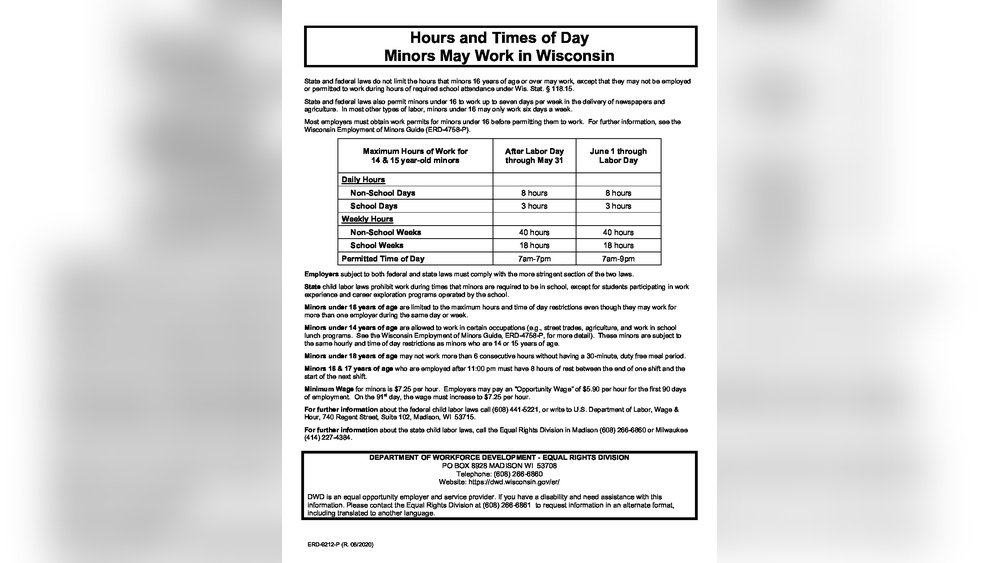
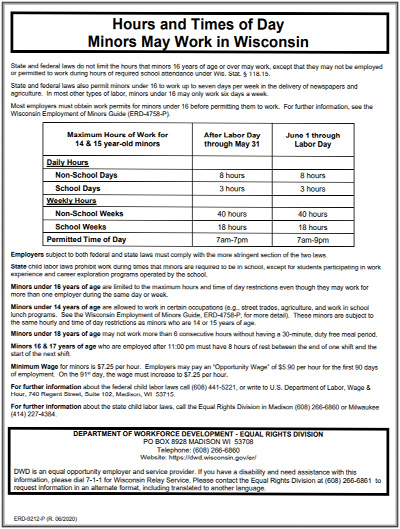
Wisconsin sets clear limits on work hours for minors to protect their health and education. These limits differ between school weeks and non-school weeks. Understanding these rules helps minors, parents, and employers stay compliant. The law aims to balance work experience with schooling and rest.
School Weeks Restrictions
During weeks when school is in session, minors under 18 can work up to 18 hours. The law restricts the number of hours to prevent interference with education. Minors should not work late or long shifts on school days. The focus remains on keeping minors rested and ready for school.
Non-school Weeks Restrictions
When school is not in session, minors may work up to 40 hours per week. This includes summer breaks and holidays. The law allows more flexibility but still limits total work hours. Employers must ensure minors do not exceed these weekly limits.
Permitted Work Times
Work hours for minors are restricted to certain times of day. On school days, minors cannot work before 7 a.m. or after 7 p.m. During summer or non-school weeks, work can extend until 9 p.m. These time limits ensure minors get enough rest and time for family and studies.
Break And Rest Periods
Break and rest periods are important for minors working in Wisconsin. These laws help protect young workers from overexertion. They also ensure minors have time to recover during their shifts. Understanding these rules helps employers comply with the law and keeps minors safe.
Mandatory Break Rules
Minors in Wisconsin must receive breaks during work hours. If a minor works more than five hours, they are entitled to a 30-minute break. This break must be uninterrupted and free from work duties. Employers cannot force minors to skip these breaks. These rules apply to all minors under 18 years old.
Rest Time Requirements
Rest periods allow minors to relax and regain energy. Besides the 30-minute break, minors should have time between shifts to rest. Wisconsin law does not specify exact rest time between shifts but recommends reasonable time off. Employers should avoid scheduling minors for back-to-back shifts without enough rest. Proper rest helps prevent fatigue and improves safety.
Credit: www.workwisecompliance.com
Prohibited Jobs
In Wisconsin, certain jobs are off-limits to minors to protect their safety and health. These prohibited jobs involve risks that young workers may not be prepared to handle. The law sets clear boundaries to prevent minors from working in dangerous environments.
The following sections explain the types of jobs minors cannot do in Wisconsin. Understanding these restrictions helps employers and young workers stay compliant with the law.
Hazardous Occupations
Minors cannot work in jobs classified as hazardous by Wisconsin law. These include tasks with high risks of injury or exposure to harmful substances. Examples are operating heavy machinery, working with explosives, and handling toxic chemicals. The law bans minors from jobs that involve driving large vehicles or using power-driven tools. These rules aim to reduce accidents and protect young workers’ well-being.
Industry-specific Restrictions
Some industries have extra rules for minors in Wisconsin. For example, minors cannot work in meatpacking plants where they might use dangerous equipment. In construction, minors are restricted from tasks like roofing or demolition. Certain manufacturing jobs that involve heavy lifting or exposure to hazardous materials are also off-limits. These industry-specific restrictions ensure minors avoid the most risky work environments.
Work Permits
In Wisconsin, minors must have a work permit before starting any job. This permit ensures employers follow state labor laws for young workers. It protects minors by setting rules on the types of jobs and working hours allowed. The permit is a legal document showing the minor is authorized to work. It helps keep workplaces safe and fair for young employees.
How To Obtain A Permit
To get a work permit in Wisconsin, minors need to fill out an application form. This form is available at schools or the Department of Workforce Development website. A parent or guardian must sign the application. The minor also needs a job offer from an employer. The school issues the permit after checking all information is correct. Some jobs may require additional approvals depending on the type of work.
Permit Validity And Renewal
Work permits in Wisconsin are usually valid for one year. Minors must renew the permit if they continue working past the expiration date. Renewal requires submitting a new application and a recent job offer. Schools handle the renewal process similar to the initial permit. Minors should keep their permits updated to avoid any work interruptions. Employers must verify the permit is current before the minor starts working.
Wage Rules
Wage rules for minors in Wisconsin set clear standards for fair pay. These rules protect young workers from unfair wages. Employers must follow these laws strictly to ensure minors earn the right amount. Understanding these wage rules helps minors and employers stay compliant and avoid legal issues.
Minimum Wage For Minors
Minors in Wisconsin must be paid at least the state minimum wage. The current minimum wage applies to workers under 18 years old as well. Employers cannot pay less than this rate for regular hours worked. Some exceptions exist for training wages, but those must follow state guidelines. Always check the latest rates to be sure.
Overtime And Pay Regulations
Minors in Wisconsin earn overtime pay after working more than 40 hours per week. Overtime pay must be at least one and a half times their regular wage. Employers cannot require minors to work overtime without proper pay. These rules ensure minors are fairly compensated for extra hours worked. Keeping track of hours helps avoid wage disputes.
Employer Responsibilities
Employers in Wisconsin have clear duties when hiring minors. These responsibilities ensure minors work in a safe and fair environment. Employers must follow specific rules to protect young workers and comply with state laws.
Understanding these duties helps prevent legal issues and supports minors’ well-being at work. Employers must be aware of the laws about work hours, permits, and job types for minors. Proper management helps create a positive workplace for young employees.
Record-keeping Requirements
Employers must keep accurate records for each minor employee. These include work permits, hours worked, and job assignments. Records must show that minors do not work beyond allowed hours. Employers should keep these documents for at least three years. Proper records help prove compliance during inspections.
Compliance And Penalties
Employers must follow all labor laws for minors strictly. Violations can lead to fines or legal action. Penalties vary based on the type and severity of the violation. Repeated offenses may result in higher fines or business restrictions. Staying compliant protects both the employer and minor workers.

Credit: www.laborposters.org
Resources And Support
Resources and support play a key role in understanding labor laws for minors in Wisconsin. These tools help minors, parents, and employers follow the rules correctly. Access to clear information ensures safer and lawful work experiences for young workers.
Wisconsin Department Of Workforce Development
The Wisconsin Department of Workforce Development (DWD) offers detailed guides on youth employment rules. Their site explains work permits, allowed working hours, and prohibited jobs for minors. Employers can find checklists and forms to ensure compliance with state laws.
DWD updates its resources regularly to reflect current regulations. Minors and guardians can also learn about wage laws and safety standards. This department serves as the main contact for reporting violations and seeking help.
Legal References And Libraries
The Wisconsin State Law Library provides access to full legal texts related to minor labor laws. This resource helps users read official statutes and executive orders. It is useful for those who want to understand the precise legal language behind the rules.
Local libraries and online databases may also hold relevant legal documents. They support research and education about youth employment rights. These references ensure that users have trustworthy and up-to-date legal information.
Frequently Asked Questions
Can A 15 Year Old Work 40 Hours A Week?
A 15-year-old in Wisconsin can work up to 40 hours per week during non-school weeks. During school weeks, they are limited to 18 hours. They must have a valid work permit and follow state labor laws regarding hours and breaks.
What’s The Maximum Hours A 16 Year Old Can Work?
A 16-year-old in Wisconsin can work up to 40 hours per week during non-school weeks. During school weeks, they may work 18 hours weekly.
What Is The Minimum Wage For A 14-year-old In Wisconsin?
The minimum wage for a 14-year-old in Wisconsin is $7. 25 per hour, matching the federal minimum wage.
How Late Can You Work As A 15 Year Old In Wisconsin?
A 15-year-old in Wisconsin can work until 7 p. m. on school nights and 9 p. m. on non-school nights.
Conclusion
Understanding Wisconsin labor laws helps minors work safely and fairly. These rules protect young workers’ time and health. Minors must follow hour limits and get work permits. Employers must respect breaks and avoid unsafe jobs for youth. Knowing these laws avoids trouble and ensures a good work experience.
Stay informed through official Wisconsin resources for updates. Working within the law builds a strong foundation for the future. Safe and legal work benefits both minors and employers alike.

Ismail Hossain is the founder of Law Advised. He is an Divorce, Separation, marriage lawyer. Follow him.