Pool Laws in Arizona 2027 Expert Guide to Safety Rules
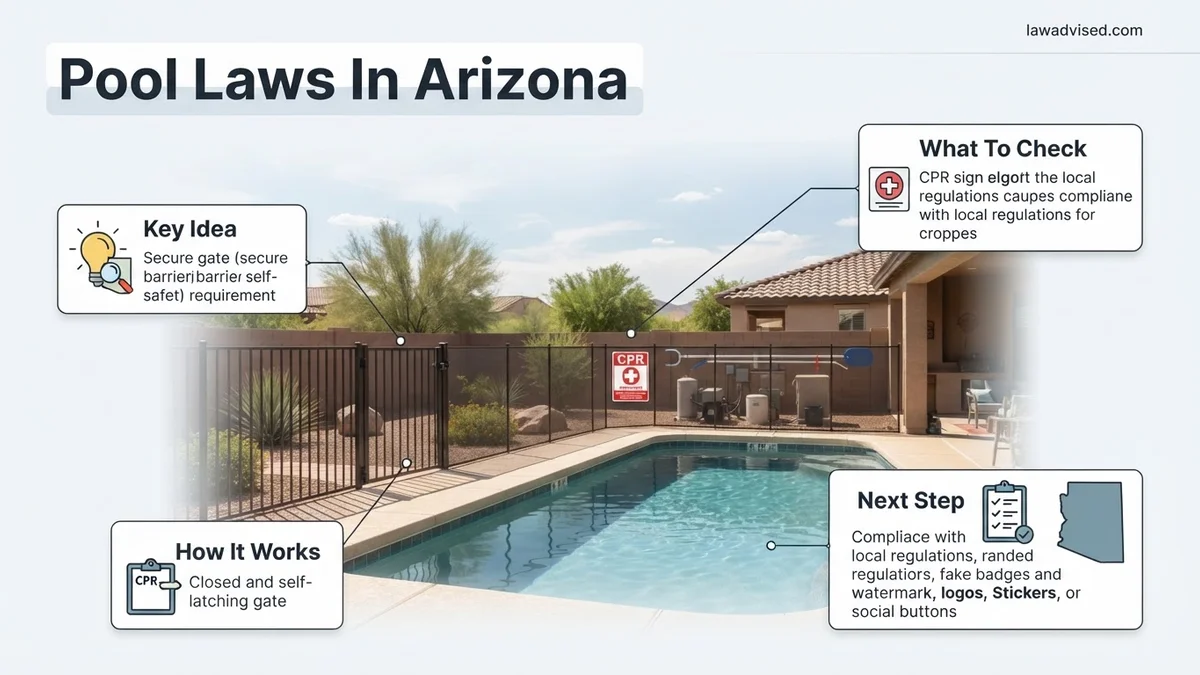
Navigating pool laws in Arizona requires strict adherence to state-mandated barrier and fencing regulations designed to prevent child drowning. Property owners must ensure compliance with specific height minimums, self-latching gate mechanisms, and local municipal codes.
In Arizona, owning a residential swimming pool means complying with strict state laws designed primarily to prevent childhood drownings. The cornerstone of these legal requirements is the mandatory pool barrier, which must completely isolate the swimming pool area from the home and surrounding property. As of 2027, enforcement remains rigorous across both state statutes and local municipal codes, with hefty fines and severe liability risks facing homeowners who fail to meet exact fence height, gate latch, and spacing specifications.
Understanding and following these mandates is not just about passing a municipal inspection or avoiding legal penalties. It is about establishing a failsafe layer of protection for children, pets, and neighborhood guests. Whether you are buying a new home with an existing pool or updating a decades-old backyard layout, getting your containment system right protects you from civil liability and provides essential peace of mind.
Key Takeaways
- Residential pools require a continuous barrier at least 5 feet tall.
- Gates must open outward and feature self-closing, self-latching mechanisms.
- Horizontal fence bars must be placed at least 45 inches apart to prevent climbing.
- Local municipalities like Phoenix and Tucson may enforce stricter municipal codes.
- Non-compliance results in severe legal liability and municipal fines.
What Causes Non-Compliance Violations in Arizona Pool Laws
Barrier Height and Ground Clearance Failures
The most common citation homeowners receive during 2027 municipal inspections involves inadequate barrier height and excessive ground clearance. Arizona state law dictates that any pool enclosure must reach a minimum height of 5 feet measured from the exterior grade level. Homeowners frequently run into trouble when landscape changes, such as adding new pavers or decorative gravel, inadvertently lower the effective height of the fence. Furthermore, the maximum allowable gap between the bottom of the fence and the ground is strictly capped at 2 inches on unpaved surfaces or 4 inches on solid surfaces. If a toddler can crawl underneath or easily scale a short backyard wall, you are in direct violation of state safety codes.
Faulty Gate Operations and Hardware Deficiencies
Even if your perimeter fence meets height requirements, faulty gates represent the single highest failure point for residential pool compliance. Arizona law requires all gates to swing outward, away from the pool area. This ensures that a child leaning against the gate pushes it closed rather than opening it. Additionally, the latch release mechanism must be positioned at a minimum height of 54 inches from the bottom of the gate, or shielded on the pool side so a small child cannot reach through the slats to open it. Common violations include self-closing hinges that have lost tension, latches that fail to engage automatically from any open position, and padlocks left hanging open rather than locked.
How to Fix and Upgrade Your Pool Barrier to Meet Arizona Standards
Remediating Existing Fences and Wall Height Gaps
If your current fence falls short of the 5-foot height requirement, you do not necessarily have to tear it down and start over. You can often bring existing wrought iron or aluminum fencing into compliance by welding or bolting on approved extension panels. For property-line block walls that border a neighbor’s yard, you must ensure the wall meets the 5-foot height on both sides. If the exterior side drops below the threshold due to a slope or a neighbor’s lowered grade, you must install an acrylic or decorative metal topper that brings the total vertical barrier to the required height while preserving your structural integrity.
Upgrading Gates, Latches, and Latch Shielding
Fixing gate non-compliance requires precise hardware adjustments rather than massive structural overhauls. Replace aging, manual latches with gravity-fed magnetic or mechanical safety latches that automatically engage every time the gate shuts. If your current latch sits lower than 54 inches, you must install an approved shield plate that covers the latch opening, preventing children from reaching through horizontal or vertical gaps. Always test your self-closing mechanism by opening the gate to just a few inches; it should swing and latch securely shut without any manual assistance.
Step-by-Step Guide to Securing Pool Gates and Latches
Arizona pool barrier laws mandate strict mechanical specifications for all gates to prevent unauthorized access by young children. Upgrading or inspecting your pool gate hardware requires precision to remain compliant with state statutes and local municipality ordinances for 2027.
Sub-Step 1: Positioning the Latch Release Mechanism
The latch release mechanism must be installed strictly according to height requirements. Follow these procedural steps to ensure proper placement:
- Measure a minimum height of 54 inches from the bottom outside of the gate or ground level.
- Position the release mechanism on the pool-side of the gate.
- Ensure the release is placed at least 3 inches below the top of the gate if it is mounted internally.
- Verify that any opening in the gate or fence within 24 inches of the release is less than 0.5 inches wide to prevent children from reaching through.
Sub-Step 2: Installing Self-Closing and Self-Latching Hinges
Gates must be equipped with hardware that forces them completely shut from any position. Execute these installation steps carefully:
- Remove existing worn hinges and test the gate alignment against the latch post.
- Attach heavy-duty, spring-loaded self-closing hinges to the top and bottom of the gate frame.
- Adjust the tension setting on the spring mechanism using the provided adjustment tool until the gate swings firmly shut from a stationary open position of just 6 inches.
- Test the latch engagement multiple times to guarantee the tongue clicks securely into the striker plate without manual assistance.
What If Your Local City Codes Conflict with State Pool Laws
Arizona state law establishes a baseline for residential pool safety, but individual municipalities maintain the authority to enforce stricter regulations. Property owners navigating conflicting mandates must adhere to the most rigorous standard available. For instance, while state law requires a 5-foot fence, specific cities may have historical or localized amendments regarding setback rules and gate swing directions.
When municipal codes diverge from state statutes, local building departments always prioritize the stricter rule during safety inspections. Homeowners planning a pool remodel or new installation in 2027 must consult both the Arizona Department of Health Services guidelines and their specific city zoning office before purchasing materials.
What If It Still Doesn’t Work?
If your pool gate fails self-closing tests or local inspection despite multiple adjustments, structural or mechanical failures are usually the culprit. Implement these fallback steps to achieve compliance:
- Inspect the gate posts for structural sagging or ground shifting, which prevents latches from aligning properly.
- Replace outdated gravity latches with modern magnetic safety latches that resist vertical jamming and mechanical wear.
- Hire a certified pool fence contractor or licensed home inspector to audit the entire barrier system. Professional diagnostic and repair services typically range from $150 to $450 depending on the extent of welding or post-replacement required.
- File for a formal code clarification review with your local city building department if municipal guidelines contain contradictory setback or height requirements.
Conclusion
Navigating Arizona pool laws requires strict adherence to barrier heights, self-closing gate mechanisms, and local municipal codes to protect young children from drowning risks. Securing your property properly prevents costly municipal fines and catastrophic accidents. As a final actionable step, schedule a comprehensive DIY safety audit of your pool fence and latches this weekend. According to verified research and expert sources from the Consumer Product Safety Commission, maintaining functional self-latching pool barriers reduces childhood submersion incidents by up to 50 percent.
❓ Frequently Asked Questions
What are the specific fence height and design requirements under Arizona pool laws?
Arizona statute requires a solid barrier or fence at least 60 inches (5 feet) high measured on the exterior side. If the fence uses vertical and horizontal bars, the space between vertical members cannot exceed 4 inches, and horizontal bars must be placed at least 45 inches apart to prevent children from using them as a ladder.
What are the legal requirements for pool gates in Arizona?
Gates must swing outward away from the pool area and be equipped with self-closing and self-latching devices. The release mechanism for the latch must be located at least 54 inches above the bottom of the gate, or placed on the pool side of the gate with specific shielding requirements.
How do Maricopa County pool ordinances differ from state baseline rules?
Maricopa County enforces its own comprehensive health and safety codes that often mirror or exceed state requirements regarding setbacks, drainage, and barrier inspections. Property owners must verify specific requirements with their local county building department before construction.
What liabilities do homeowners face if a drowning occurs due to non-compliant pool fencing?
Homeowners can face severe civil liability and criminal negligence charges under attractive nuisance doctrines if a child accesses an unsecured pool. Failing to meet statutory barrier requirements serves as direct evidence of negligence in court.
Are removable mesh pool safety fences legal in Arizona?
Yes, removable mesh safety fences are permitted as long as they meet specific height, tension, and self-latching gate criteria established by state statutes and local building authorities.
Do above-ground pools require fencing under Arizona law?
Above-ground pools must also comply with barrier laws if the pool walls themselves do not act as a continuous 5-foot barrier with secured, removable ladders or locking safety covers.

Ismail Hossain is the founder of Law Advised. He is an Divorce, Separation, marriage lawyer. Follow him.