Crabbing Laws in California 2027 Expert Guide to Limits
Navigating crabbing laws in california requires strict adherence to seasonal closures, size limits, and bag restrictions to avoid heavy fines. CDFW regulations mandate a valid sport fishing license with a second-rod or trap endorsement depending on your gear. Always check for active domoic acid health advisories before heading out to harvest.
California enforces strict crabbing regulations, bag limits, and gear requirements to protect local marine ecosystems and prevent overfishing. Whether you are targeting Dungeness or Rock crab along the 2027 coastline, knowing the exact legal parameters prevents steep fines and protects the fishery.
Navigating the California Department of Fish and Wildlife code requires attention to seasonal closures, minimum size limits, and gear restrictions. This guide breaks down the exact rules you must follow for a legal, successful crabbing trip this season.
Key Takeaways
- A valid California sport fishing license is strictly required for all harvesters aged 16 and older.
- Dungeness crab has a strict minimum size limit of 5 3/4 inches across the calipers.
- Daily bag limits restrict anglers to 10 Dungeness crabs per person in most regions.
- Rock crab species carry a general daily bag limit of 35 individuals per day.
- Emergency domoic acid health closures can shut down regions instantly, so check updates before fishing.
What Causes Strict Crabbing Regulations and Violations in California
Ecological Preservation and Domoic Acid Closures
California wildlife officials tightly regulate crabbing primarily to protect vulnerable breeding populations and public health. Domoic acid outbreaks, a neurotoxin produced by marine algae, frequently delay the opening of the recreational Dungeness crab season. Exceeding bag limits or keeping undersized crabs disrupts the reproductive cycle, leading to long-term population declines.
Common Legal Pitfalls and Penalties
Most recreational citations occur due to simple measurement errors or illegal gear configurations. Wardens actively patrol piers, jetties, and private vessels to inspect catches. Violating 2027 regulations regarding closed seasons, undersized catches, or unmarked gear can result in misdemeanor charges, confiscation of your catch and gear, and hefty financial penalties.
- Failing to use a valid Sport Fishing License with a Crab Trap Validation.
- Possessing female Dungeness crabs, which are strictly protected.
- Fishing with more than the legal limit of traps per person.
- Leaving hoop nets or traps unattended without proper surface buoys displaying your ID.
How to Comply with California Crabbing Laws Step-by-Step
Verify Licensing and Current 2027 Season Dates
Before touching the water, you must secure a California Sport Fishing License. If you are using traps, a Ocean Enhancement Validation is also mandatory. Season dates shift annually based on domoic acid testing and whale migration patterns. Always check the official CDFW emergency closures hotline right before your trip.
- Purchase your license online or at certified retail agents before heading out.
- Confirm the Dungeness season opening date, typically slated for November in Northern California.
- Note that Rock crab fishing remains open year-round in most districts, subject to localized closures.
Measure and Sort Your Catch Accurately
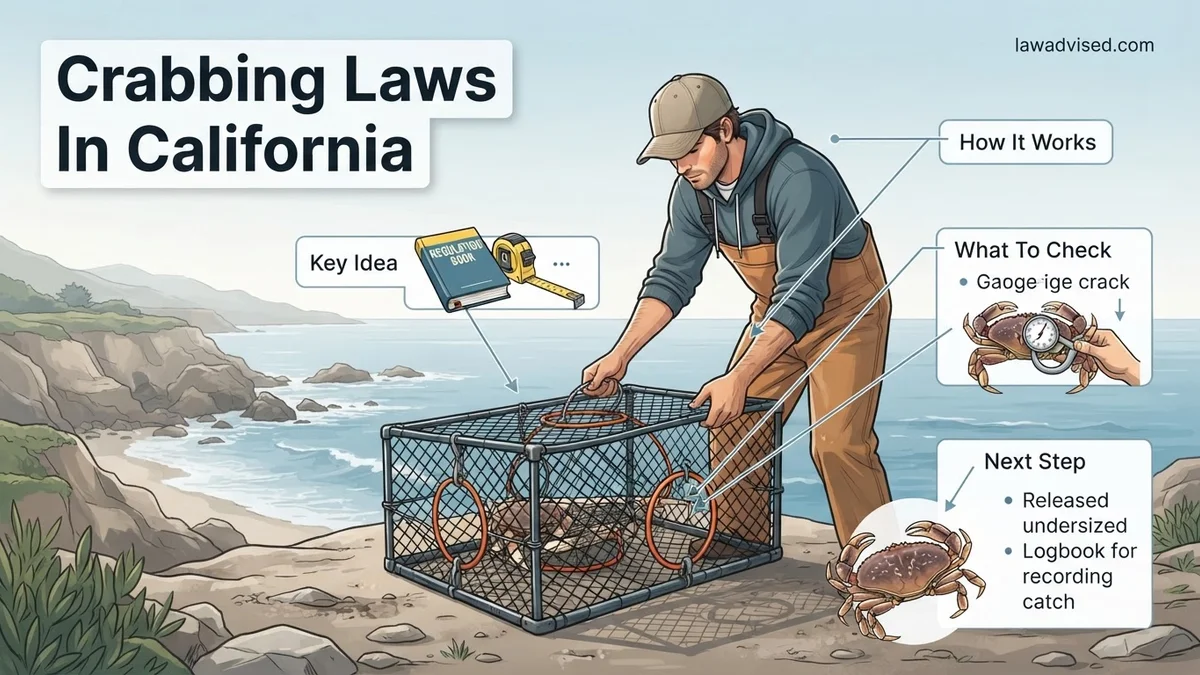
Bag limits and size restrictions vary drastically by species. You need an accurate crab gauge to measure the carapace immediately upon pulling your gear. Any crab that does not meet the legal threshold must be returned to the water immediately.
- Dungeness Crab: Minimum size is 5 and 3/4 inches across the widest part of the shell, excluding spines. Daily bag limit is 10.
- Rock Crab: Minimum size is 4 inches across the widest part for Red, Yellow, and Brown Rock crabs. Daily bag limit is 35 in aggregate.
- Keep a rigid measuring gauge attached to your gear to avoid guesswork.
What If Health Advisories or Emergency Closures Alter Your Plans
California crabbing regulations frequently shift due to domoic acid outbreaks and whale migration patterns. In 2027, the California Department of Fish and Wildlife (CDFW) and the Department of Public Health maintain strict protocols to protect consumers. If an emergency closure strikes your preferred coastal zone, you must adapt immediately to avoid heavy penalties.
Monitoring Official CDFW Status Updates
Fishermen must check for biotoxin advisories before dropping any gear into the water. Domoic acid spikes can render crab meat toxic, prompting sudden closures of recreational fisheries. Always verify the current status through the CDFW website or the dedicated recreational groundfish and crab hotline.
Adapting to Gear Restrictions and Trap Limits
When whale entanglement risks peak, officials often mandate the use of pop-up buoy systems or vertical line restrictions. If traditional hoop nets or traps are banned in your district, you must pivot to alternative legally permitted gear. Failing to remove prohibited equipment during emergency closures results in gear confiscation and severe citation fees.
Proven Strategies to Avoid Fines and Protect Local Crab Populations
Complying with California crabbing laws requires meticulous preparation and proper measuring tools. Wildlife officers patrol piers, jetties, and private vessels actively to ensure legal compliance. Employing systematic measurement and release practices guarantees sustainable fisheries while keeping your record clean.
Using Certified Measuring Gauges
Never estimate the carapace width of a Dungeness or rock crab visually. Always carry a rigid, CDFW-approved plastic or metal gauge to measure the shortest distance straight across the back immediately behind the tips. Undersized crabs must be returned to the water instantly, regardless of injury or mortality risk.
Maintaining Accurate Catch Logs and Vessel Inspections
Keep your daily bag limits separated from other anglers on board to prevent joint-bagging violations. Wardens inspect cooler contents rigorously, and mixed catches without clear ownership lead to immediate fines. Cooperate fully with enforcement officers during routine safety and catch checks.
What If Your Crabbing Trip Still Faces Regulatory Roadblocks?
If sudden closures, gear restrictions, or unexpected biotoxin warnings disrupt your planned crabbing excursion, specific fallback steps ensure you remain compliant and productive:
- Shift your target species to rock crabs or red rock crabs if Dungeness closures affect your specific district, provided regional rock crab fisheries remain open.
- Transition from boat-based trapping to pier fishing where hoop net regulations and seasonal closures sometimes differ under emergency orders.
- Consult local bait and tackle shops for real-time intel on open zones, as shop owners receive direct updates from regional CDFW wardens.
- Hire a licensed commercial charter service if complex gear restrictions make private deployment unfeasible; guided trips generally cost between $150 to $300 per passenger and include compliant gear.
- Contact the local CDFW regional office directly for clarification if ambiguous emergency press releases leave your specific coastal coordinates in question.
Conclusion
Navigating California crabbing laws demands strict adherence to dynamic limits, seasonal closures, and precise measuring standards. According to verified research and expert wildlife management sources, proactive compliance protects fragile marine populations and prevents costly legal penalties. Your next actionable step is to check the official 2027 CDFW advisories and calibrate your measuring gauge before heading to the coast.
❓ Frequently Asked Questions
What are the standard season dates for Dungeness crab in California?
The Dungeness crab season typically opens in November and runs through June, though northern and southern zones often experience delayed openings due to domoic acid testing or whale migration protections.
What gear and traps are legally permitted for recreational crabbing?
Recreational fishers can use hoop nets, crab traps, or take crabs by hand while diving. All traps must include escape rings and untreated cotton biodegradable twine so lost traps do not ghost-fish indefinitely.
Are there specific marking requirements for recreational crab traps?
Yes, every crab trap deployed in California waters must be marked with a surface buoy that clearly displays the operator’s sport fishing license number.
How do you correctly measure a Dungeness crab?
You must measure the shortest distance across the back immediately in front of the posterior tips, using a caliper to ensure accuracy before keeping the catch.
What happens if a domoic acid advisory is issued mid-season?
When domoic acid levels exceed safe thresholds, the CDFW and Department of Public Health will immediately close the recreational fishery in the affected zone to prevent neurotoxic poisoning.
Can I fillet or clean my crabs while still out on the ocean water?
No, regulations require that crabs remain in whole, measurable condition until you reach your permanent residence or a permanent cooking facility on shore.

Ismail Hossain is the founder of Law Advised. He is an Divorce, Separation, marriage lawyer. Follow him.