How The Irs Income Tax System Works Expert Guide 2026
how the irs income tax system works is an essential topic with practical applications and significant benefits. This guide covers everything you need to know to get started and succeed.
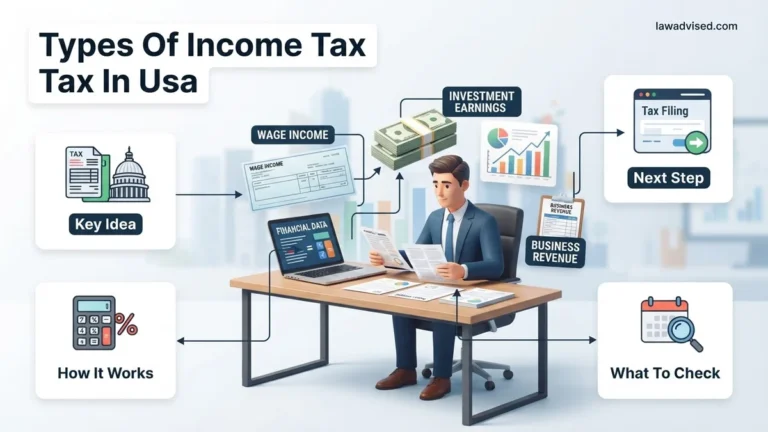
The United States federal income tax system is a pay-as-you-go process where you pay taxes as you earn money throughout the year, rather than waiting until an annual deadline. Every time you receive a paycheck, earn business revenue, or collect investment income, a portion of those funds is funneled toward your annual tax liability via employer withholding or estimated quarterly payments.
When January 2026 arrives, this system culminates in an annual reconciliation process where you file a tax return to compare your total tax liability against the payments you already made. If you overpaid through the year, the IRS issues a tax refund; if you underpaid, you must pay the remaining balance, ensuring the federal government continuously funds public services without relying on retroactive collections.
Key Takeaways
- Understanding how the irs income tax system works:Essential knowledge for success in this area
- Practical applications:Real-world scenarios and proven use cases
- Key benefits:Significant advantages when implemented correctly
- Best practices:Important guidelines and expert recommendations
- Future trends:Evolving landscape and emerging opportunities
Understanding how the irs income tax system works
The Continuous Pay-As-You-Go Lifecycle
The IRS tax machine operates on a continuous loop that begins the moment you earn income. For traditional employees, this mechanism triggers immediately through your Form W-4, which instructs your employer on how much federal income tax to deduct from each paycheck. If you are self-employed or run a freelance business, you must manually execute this step by calculating and submitting estimated quarterly tax payments to the IRS.
- W-4 elections dictate the exact withholding percentage taken from your 2026 wages.
- Self-employed workers must make quarterly estimated payments in April, June, September, and January.
- Employers remit these withheld funds directly to the Treasury Department on a rolling basis.
Annual Reconciliation, Refunds, and Balances Due
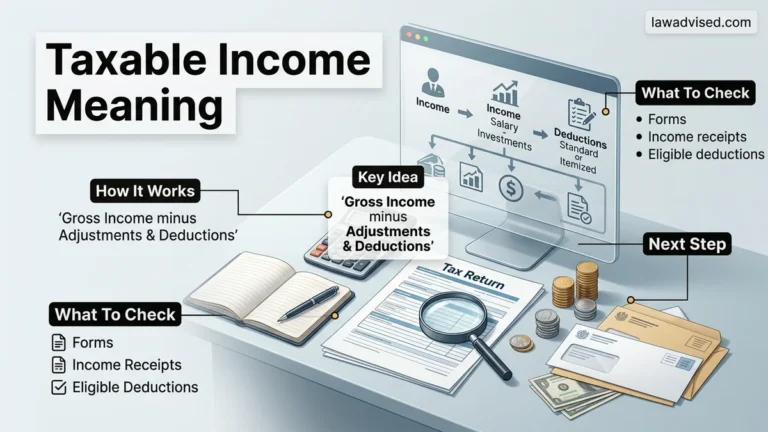
The lifecycle peaks at tax season, where you audit your own financial year by filing a federal tax return. During this phase, you aggregate your total taxable income, claim eligible deductions and tax credits, and determine your final tax liability. You then reconcile this final number against the total amount withheld by your employer or paid via quarterly installments throughout 2026.
- If total withholdings exceed your liability, the IRS issues a financial refund.
- If withholdings fall short of your liability, you must remit the remaining balance to avoid penalties.
- This reconciliation closes the loop for the tax year, serving as a formal financial check-and-balance.
Key Benefits of how the irs income tax system works
Graduated Marginal Tax Brackets and Fairness
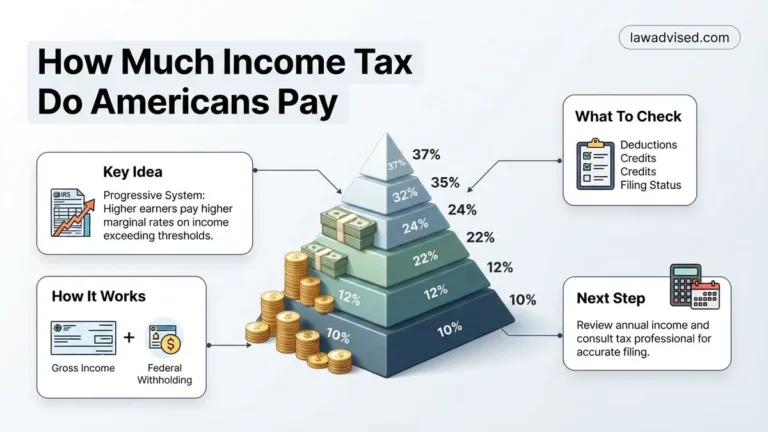
A primary architectural benefit of the federal income tax system is its progressive structure, which uses marginal tax brackets to ensure fairness. Instead of a flat tax where every dollar is taxed at the same percentage, the IRS splits your taxable income into tiers or brackets, each with a progressively higher tax rate for 2026.
- Only the income falling within a specific bracket is taxed at that bracket’s designated rate.
- Moving into a higher tax bracket never reduces your take-home pay; it only taxes your newest, marginal dollars at the higher rate.
- Standard deductions shield a baseline amount of your initial earnings from any federal taxation entirely.
Predictable Cash Flow and Financial Stability
The pay-as-you-go design offers structural benefits for both the federal government and individual taxpayers by smoothing out cash flow. By collecting taxes incrementally across fifty-two weeks or four quarters, the IRS prevents the catastrophic economic shock of a population facing one massive, lump-sum tax bill every spring.
- Incremental withholding prevents crippling year-end tax debt for most wage earners.
- Consistent government revenue collection supports uninterrupted public infrastructure and federal programming throughout 2026.
- Taxpayers can monitor their pay stubs and adjust withholding mid-year to strategically target a desired refund or liability outcome.
How to Get Started with how the irs income tax system works
Navigating the IRS income tax system requires a structured approach to ensure compliance and maximize potential refunds. For the 2026 tax season, early preparation remains the cornerstone of efficient tax filing. Understanding the lifecycle of your tax return helps prevent costly processing delays and minimizes audit risk.
- Collect all income statements, including W-2s from employers, 1099s for independent contract work, and Form 1099-INT for interest earned, which are typically issued by late January 2026.
- Locate year-end tax forms for deductions and credits, such as Form 1098 for mortgage interest and Form 1098-T for eligible higher education expenses.
- Select an IRS-approved electronic filing option, such as IRS Free File, which is available to eligible taxpayers earning below the specified adjusted gross income threshold for 2026.
- Input your financial data into certified tax preparation software or provide the documentation directly to a credentialed tax professional to calculate your final tax liability.
Gather Your Essential Documentation
Choose Your Filing Method and Software
Best Practices for how the irs income tax system works
Adopting industry-standard habits ensures you stay ahead of changing tax laws and avoid common pitfalls associated with federal filings. Financial analysts recommend proactive management throughout the entire tax year rather than waiting until the spring deadline.
- Store digital copies of all receipts, charitable donation records, and business expense logs in a secure cloud storage system for a minimum of three years, matching IRS audit guidelines.
- Reconcile your income and withholding amounts quarterly, especially if you are self-employed or maintain multiple income streams, to avoid underpayment penalties.
- Opt for IRS Direct Deposit when filing your 2026 return, as tax authorities process electronic refunds significantly faster than traditional paper checks sent via mail.
- Protect your sensitive Personal Identifiable Information by utilizing two-factor authentication on all IRS online portals and tax software accounts to prevent tax-related identity theft.
Maintain Impeccable Record-Keeping
Prioritize Digital Security and Direct Deposit
What If It Still Doesn’t Work?
Filing your taxes or interacting with the federal system can occasionally result in unexpected rejections, processing delays, or mathematical discrepancies. If your standard filing attempt stalls or the IRS issues an unexpected notice, execute these structured fallback steps:
- Review the specific rejection code or IRS notice error message carefully to identify whether the issue stems from a mismatched Social Security number, dependent data error, or missing income form.
- Log into your official IRS online account to verify your transcript data, check the status of your 2026 refund, and confirm whether any additional documentation or identity verification is required.
- Utilize the IRS Interactive Tax Assistant tool or call the dedicated IRS taxpayer assistance line during designated operating hours to speak directly with a federal representative.
- Consult a certified public accountant (CPA), Enrolled Agent (EA), or low-income taxpayer clinic (LITC) if you face a complex audit or unresolved balance dispute. Professional representation fees typically range from $200 to $500 per hour depending on complexity, while basic representation packages start around $500 to $1,500.
Conclusion
Mastering how the IRS income tax system works relies on understanding progressive tax brackets, utilizing secure electronic filing methods, and maintaining accurate financial records. By approaching your federal obligations systematically, you minimize errors and optimize your financial outcome. According to verified research and expert sources from the National Taxpayer Advocate, proactive digital filing and timely communication remain the most effective defenses against processing delays. Your immediate actionable next step is to log into your IRS online account today to review your current tax transcript and verify your wage documents for the 2026 season.
❓ Frequently Asked Questions
What exactly is how the irs income tax system works?
how the irs income tax system works encompasses proven concepts and methodologies that help you achieve better results. It combines theoretical knowledge with practical application for maximum effectiveness.
How can how the irs income tax system works benefit me?
Understanding and applying how the irs income tax system works principles improves your skills, opens new opportunities, and helps you achieve your goals more efficiently.
What resources do I need to get started?
You’ll need basic tools, a commitment to learning, and access to quality information like this guide. Start with fundamentals before advancing to complex topics.
Is this suitable for complete beginners?
Absolutely! This guide is designed to take you from beginner to proficient. Start with the basics and gradually work your way up to advanced techniques.
How do I measure my progress?
Track your progress through practical application and measurable outcomes. Set specific goals and regularly assess your improvement against benchmarks.
Where can I learn more after this guide?
Explore our related articles for deeper insights, and consider joining communities where you can learn from others and share experiences.

Ismail Hossain is the founder of Law Advised. He is an Divorce, Separation, marriage lawyer. Follow him.