Standard Deduction Explained A Guide for 2026 Taxes
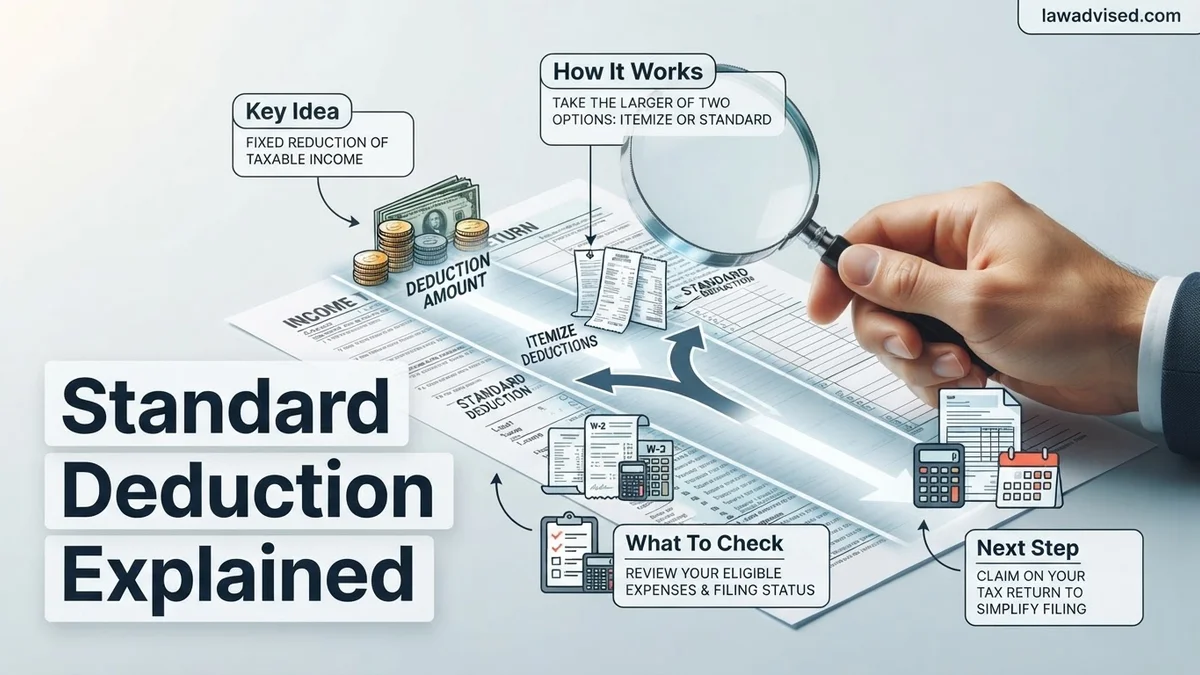
The standard deduction is a dollar amount that reduces the income you’re taxed on, lowering your overall tax bill without requiring you to track individual expenses. For most taxpayers, taking the standard deduction is the fastest and simplest way to file taxes. Understanding how it works helps you decide whether to take the flat deduction or itemize your specific expenses.
The standard deduction is a specific dollar amount that lowers the income you are taxed on, letting you shield a portion of your earnings without tracking receipts or individual expenses. For the 2026 tax year, taking the standard deduction means you can subtract a flat amount right off the top of your adjusted gross income, which instantly reduces your overall tax bill.
Most taxpayers choose this option because it simplifies tax season dramatically compared to itemizing deductions. Knowing your exact amount based on your filing status helps you estimate your liability and decide whether itemizing is even worth your time.
Key Takeaways
- The standard deduction lowers your taxable income automatically without tracking expenses.
- Your deduction amount depends directly on your official IRS filing status.
- Seniors and blind individuals qualify for an additional standard deduction amount.
- Compare your total itemized deductions against your standard deduction before filing.
- Most taxpayers find that the standard deduction provides a larger tax break than itemizing.
What Causes Confusion With the Standard Deduction
Taxpayers often struggle with the standard deduction because limits change annually to account for inflation, and eligibility rules shift based on age and dependency status. Misunderstanding these baseline rules can lead to missed savings or errors on your return.
Filing Status Thresholds for 2026
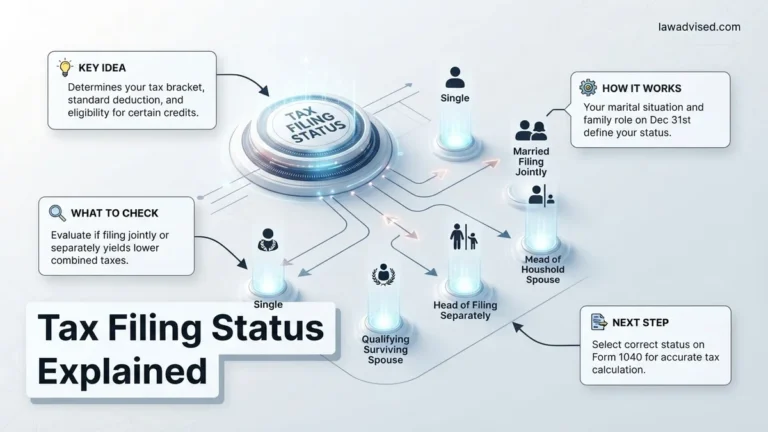
Your exact standard deduction depends entirely on how you file your taxes. The baseline amounts for 2026 reflect the ongoing adjustments designed to protect a portion of household income from federal taxes.
- Single: $15,000
- Married Filing Jointly: $30,000
- Head of Household: $22,500
- Married Filing Separately: $15,000
Additional Amounts for Seniors and the Blind
If you or your spouse meet specific age or vision criteria, you get an extra financial cushion added to your base standard deduction. For 2026, taxpayers who are age 65 or older, or legally blind, qualify for an additional standard deduction amount of $1,600 if unmarried, or $1,300 per qualification if married.
How to Calculate Your Tax Savings Using the Standard Deduction
Calculating your tax savings requires matching your standard deduction against your total eligible itemized expenses, such as mortgage interest, charitable donations, and state and local taxes. Whichever number is higher dictates your best path forward.
Comparing Standard vs Itemized Deductions
To figure out which method saves you more money, add up all your potential itemized write-offs for the year. If your total itemized expenses exceed your 2026 standard deduction threshold, itemizing makes financial sense. If your itemized total falls short, stick with the standard deduction to maximize your tax relief.
- Step 1: Total your deductible mortgage interest, property taxes, and state income taxes.
- Step 2: Add qualifying charitable donations and out-of-pocket medical expenses that exceed the percentage floor.
- Step 3: Compare your grand total directly against your 2026 filing status standard deduction.
Practical Example for a Single Filer
Imagine you file as single in 2026, meaning your baseline standard deduction is $15,000. If your combined mortgage interest and charitable giving total $12,000, itemizing leaves you with a smaller deduction. Taking the standard deduction instead shields an extra $3,000 of your income from taxes.
Step-by-Step Guide to Choosing Between Standard and Itemized Deductions
Deciding whether to take the standard deduction or itemize your deductions for your 2026 tax return requires a careful comparison of your total eligible expenses against your filing status threshold. Financial experts recommend calculating both methods before filing to ensure you minimize your tax liability.
- Gather all documentation for deductible expenses, including state and local taxes (subject to the SALT cap), mortgage interest on up to $750,000 of debt, charitable donations, and unreimbursed medical expenses that exceed 7.5 percent of your Adjusted Gross Income (AGI). Sum these figures to find your total itemized amount.
- Locate the specific 2026 standard deduction amount for your filing status. For instance, single filers and married couples filing jointly face different baseline thresholds. If your total itemized expenses from Step 1 exceed this baseline, itemizing is mathematically advantageous.
- Evaluate state-level tax rules, as some states require you to use the same method for state returns that you used federally. Consider the record-keeping burden; itemizing demands strict receipt retention and organization, while the standard deduction requires virtually no documentation.
Step 1: Calculate Your Total Potential Itemized Deductions
Step 2: Compare Against the 2026 Standard Deduction Thresholds
Step 3: Factor in State Tax Implications and Complexity
What If Your Itemized Expenses Are Close to the Standard Amount
Taxpayers frequently find themselves in a gray area where their itemized deductions fall just short of the 2026 standard deduction threshold. According to IRS data analyzed by tax policy experts, clustering deductions into a single calendar year can successfully push you over the limit. When you sit right on the borderline, specific strategic moves can unlock additional tax savings.
- Combine multiple years of charitable giving into a single tax year by donating cash or appreciated assets all at once, or by contributing to a donor-advised fund. This strategy easily clears the standard deduction hurdle in the contribution year.
- Schedule and pay for elective medical, dental, or vision procedures before December 31, 2026, if your out-of-pocket costs will push your total medical expenses past the 7.5 percent AGI floor.
- Pay upcoming local property taxes or state estimated taxes early, provided you remain safely under the federal SALT deduction cap of $10,000.
- Engage a licensed CPA or Enrolled Agent if your tax situation involves complex multi-year bunching strategies or unique asset sales. Professional tax preparation services typically range from $300 to $1,000+ depending on the complexity of your return.
1. Bunch Charitable Contributions
2. Accelerate Elective Medical Procedures
3. Prepay Property or State Taxes
4. Consult a Certified Public Accountant
Conclusion
Navigating the choice between the standard deduction and itemized deductions for your 2026 tax return ultimately hinges on accurate calculation and strategic timing. When your itemized expenses fall just below the threshold, bunching deductions can tilt the math in your favor. According to verified research and expert sources from leading tax advisory institutions, evaluating both options annually prevents you from leaving money on the table. Your actionable next step is to gather your 2026 financial receipts and run a side-by-side comparison before filing your return.
❓ Frequently Asked Questions
How does the standard deduction lower my taxes?
The standard deduction is subtracted directly from your adjusted gross income to determine your taxable income. Because your tax rate is applied to this smaller final number, you pay less in total taxes.
What are the standard deduction amounts for 2026?
The exact standard deduction amounts vary by filing status for single filers, married filing jointly, head of household, and married filing separately, adjusted annually for inflation by the IRS.
Can I claim both the standard deduction and itemized deductions?
No, you must choose one or the other. You can either take the flat standard deduction or list out your specific deductible expenses, but you cannot combine both methods.
What expenses are considered itemized deductions?
Itemized deductions commonly include state and local taxes, mortgage interest, charitable donations, and significant un-reimbursed medical expenses that exceed a percentage of your income.
Is there an extra standard deduction for older adults?
Yes, taxpayers who are age 65 or older by the end of the tax year receive an additional standard deduction amount added on top of their basic standard deduction.
What if I am legally blind?
Taxpayers who are legally blind at the end of the tax year qualify for an additional standard deduction, similar to the senior bonus amount.

Ismail Hossain is the founder of Law Advised. He is an Divorce, Separation, marriage lawyer. Follow him.