Tax Withholding on 1099 Income A Step-by-Step 2026 Guide
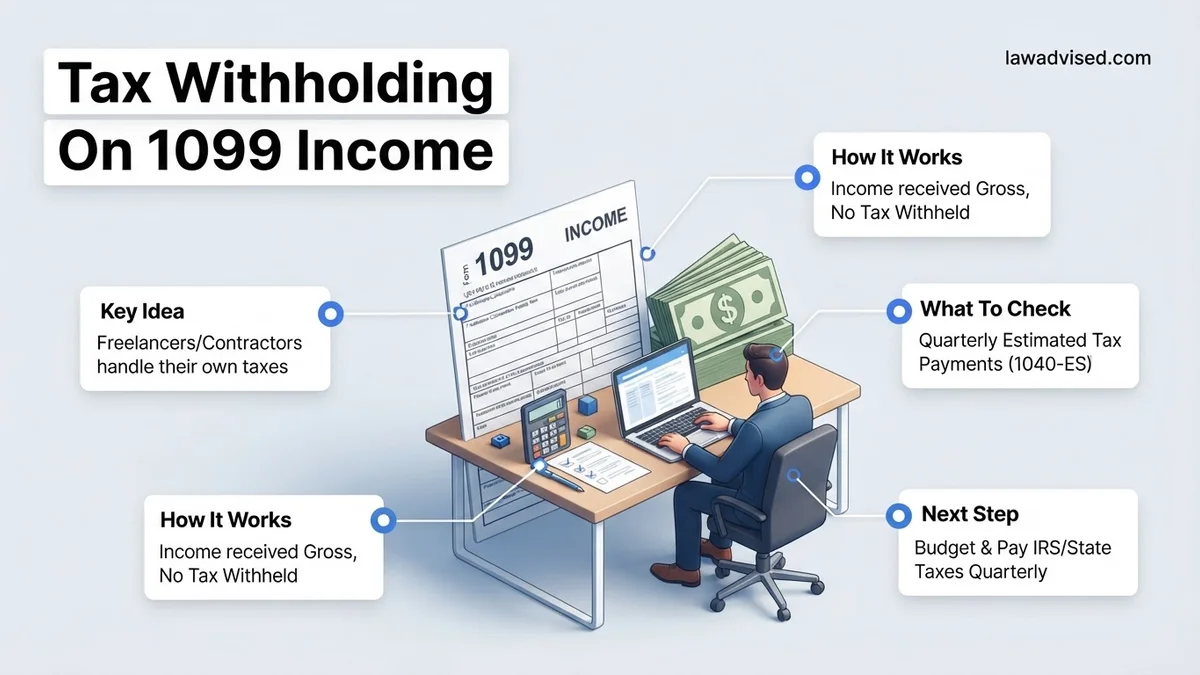
Clients and companies do not automatically withhold federal, state, or FICA taxes from 1099 independent contractor payments. Instead, 1099 workers must proactively calculate and pay their own taxes using quarterly estimated tax payments via IRS Form 1040-ES to avoid year-end penalties.
When you work as a 1099 independent contractor, your clients do not withhold federal income tax, state tax, or FICA taxes from your paychecks. You receive the gross amount of your earnings, meaning the full tax burden shifts entirely to you.
To avoid severe underpayment penalties and a massive surprise bill next April, you must calculate and submit your own tax payments four times a year using the IRS estimated tax system.
Key Takeaways
- Clients never withhold taxes from 1099 contractor payouts automatically.
- You must pay federal and state income taxes plus the 15.3% self-employment tax.
- File IRS Form 1040-ES to make quarterly estimated tax payments four times a year.
- Missed quarterly deadlines trigger underpayment penalties and interest charges at year-end.
- Deduct eligible business expenses on Schedule C to lower your overall taxable income.
What Causes 1099 Tax Surprises: Understanding Why No Taxes Are Withheld
The W-2 vs. 1099 Tax Structure Difference
As a W-2 employee, your employer acts as a middleman between your paycheck and the IRS. They automatically deduct income tax and split your Social Security and Medicare taxes, sending those funds to the government on your behalf.
As a 1099 contractor, you operate as a business. Because you are self-employed, the IRS views you as both the employer and the employee. This status completely eliminates automatic payroll deductions.
If you fail to set aside money from every single client payment you receive throughout 2026, you will likely face a cash flow crisis when tax deadlines arrive.
The Hidden Trap of Self-Employment Tax
Many first-time 1099 workers forget that income tax is only part of the equation. You also owe federal self-employment tax to cover Social Security and Medicare.
- W-2 employees pay a 7.65% FICA tax rate, while their employer matches that exact same 7.65% amount.
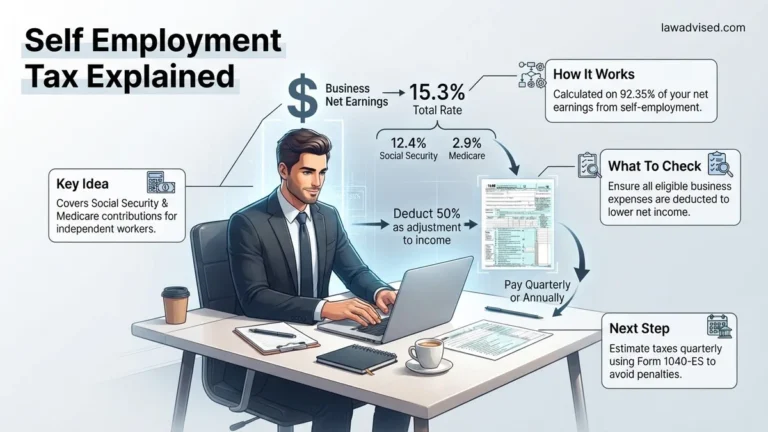
- 1099 contractors must pay the full 15.3% self-employment tax rate on net earnings up to the 2026 Social Security wage base limit.
- You also owe federal, and potentially state, income taxes on top of this 15.3% self-employment tax.
How to Calculate and Pay Quarterly Estimated Taxes for 1099 Income
Step-by-Step Calculation Formula for 2026
To keep the IRS happy, you must pay your income and self-employment taxes quarterly using IRS Form 1040-ES. Start by projecting your total gross 1099 revenue for the 2026 tax year.
- Subtract your ordinary and necessary business expenses from your gross revenue to find your estimated net profit.
- Multiply your net profit by 92.35% to find the baseline amount subject to self-employment tax.
- Multiply that figure by 15.3% to calculate your estimated annual self-employment tax.
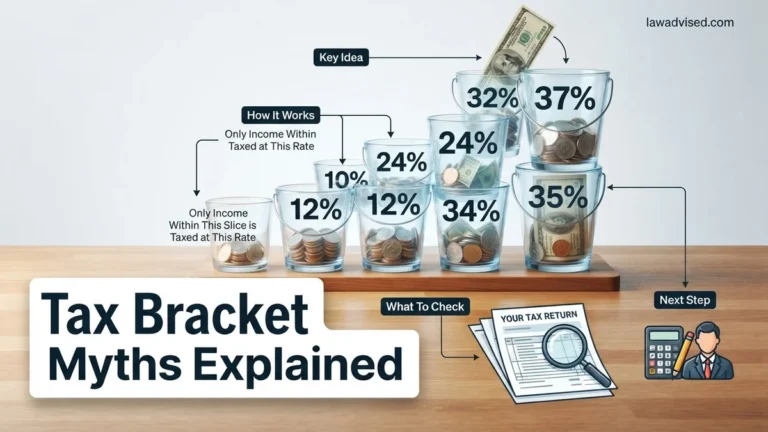
- Estimate your adjusted gross income and apply standard deductions to calculate your federal income tax bracket liability.
- Add your estimated self-employment tax and income tax together, then divide that total sum by four.
2026 Quarterly Payment Deadlines and Methods
The IRS does not collect these taxes at the end of the year in one lump sum. You must make equal quarterly installment payments to avoid underpayment penalties for the 2026 tax year.
- Q1 Payment (January 1 to March 31): Due April 15, 2026.
- Q2 Payment (April 1 to May 31): Due June 15, 2026.
- Q3 Payment (June 1 to August 31): Due September 15, 2026.
- Q4 Payment (September 1 to December 31): Due January 15, 2027.
You can pay these amounts securely online using the official IRS Direct Pay system or by mailing a physical Form 1040-ES voucher with a check.
Step-by-Step Guide to Filing Schedule C and Schedule SE at Year-End
When tax season arrives in 2026, managing your 1099 income requires filing specific forms alongside your standard Form 1040. Because federal income tax was not automatically withheld from your client payouts throughout the year, year-end reporting reconciles your quarterly estimated payments with your actual annual net earnings. According to Internal Revenue Service guidelines, self-employed taxpayers must use Schedule C to calculate net profit or loss and Schedule SE to determine self-employment tax liabilities.
Filing Schedule C for Business Profit and Loss
- Gather all Form 1099-NEC and 1099-K documents issued to you by clients for the 2026 tax year, alongside your own independent income records.
- List your total gross receipts or sales on Part I of Schedule C to establish your baseline independent contractor revenue.
- Compile and categorize all ordinary and necessary business expenses, such as home office deductions, software subscriptions, and equipment purchases, entering them in Part II.
- Subtract your total business expenses from your gross receipts to determine your net profit or net loss.
- Transfer your final net profit figure directly onto Schedule 1 of your Form 1040 to integrate it into your adjusted gross income calculation.
Filing Schedule SE for Self-Employment Tax
- Take your net profit figure from your completed Schedule C and enter it into Section A or Section B of Schedule SE.
- Multiply your net earnings by the statutory self-employment tax rate of 15.3 percent, which covers both Social Security and Medicare obligations.
- Apply the official IRS deduction equal to one-half of your self-employment tax liability, which you can claim as an adjustment to income on your Form 1040.
- Transfer the final calculated self-employment tax amount onto Schedule 2 of your Form 1040 to finalize your total annual tax burden.
What If It Still Doesn’t Work?
If you missed quarterly estimated tax payments or discovered a shortfall during your 2026 filing preparation, proactive measures prevent severe financial penalties. Ignoring the discrepancy will trigger IRS underpayment assessments. Implement these fallback steps to resolve the issue:
- Calculate your exact tax shortfall using tax software or IRS Form 2210 to determine potential underpayment penalties before filing your return.
- File your annual tax return on time even if you cannot pay the full balance, as the failure-to-file penalty is significantly higher than the failure-to-pay penalty.
- Apply for an IRS Online Payment Agreement or a short-term payment plan, which allows up to 180 days to resolve your remaining tax liability.
- Consult a Certified Public Accountant or Enrolled Agent for complex multi-state 1099 situations, keeping in mind that professional tax resolution services typically range from $300 to $1,500 depending on the complexity of back taxes.
Conclusion
Navigating tax withholding on 1099 income requires diligent quarterly estimated payments and accurate year-end reporting via Schedules C and SE. By proactively setting aside 25 to 30 percent of your gross independent earnings, you eliminate surprise tax bills and costly IRS penalties. According to verified research and expert tax sources, establishing a dedicated business bank account is the single most effective operational step to automate your self-employed tax strategy for 2026.
❓ Frequently Asked Questions
Why don’t clients withhold taxes from my 1099 payments?
Under IRS rules, 1099 independent contractors are classified as self-employed business owners rather than employees. Because of this autonomous status, clients have no legal requirement or mechanism to deduct income or FICA taxes from your compensation.
How do I calculate how much tax I need to pay on 1099 earnings?
You must account for both your income tax bracket and the 15.3% self-employment tax. A safe rule of thumb is to set aside 25% to 30% of every 1099 check into a separate savings account to cover these liabilities.
Can I voluntarily choose to have taxes withheld from my 1099 income?
Most standard 1099 clients will not set up withholding because it creates complex payroll reporting obligations usually reserved for W-2 employees. Instead, you must manage your own payments via the estimated tax system.
What forms do I need to file my taxes as a 1099 contractor?
You will file your personal tax return using Form 1040, attach Schedule C to report your business income and expenses, and attach Schedule SE to calculate your self-employment tax.
Are business expenses deductible against 1099 income?
Yes, ordinary and necessary business expenses—such as home office use, software subscriptions, equipment, and mileage—can be written off on Schedule C, which directly reduces your net taxable self-employment income.
How can I avoid IRS underpayment penalties if my income fluctuates?
You can use the annualized income installment method or ensure your total estimated payments equal at least 100% of your prior year’s total tax liability (110% if your adjusted gross income exceeds $150,000).

Ismail Hossain is the founder of Law Advised. He is an Divorce, Separation, marriage lawyer. Follow him.