Self Employment Tax vs Income Tax Step-by-Step Guide 2026
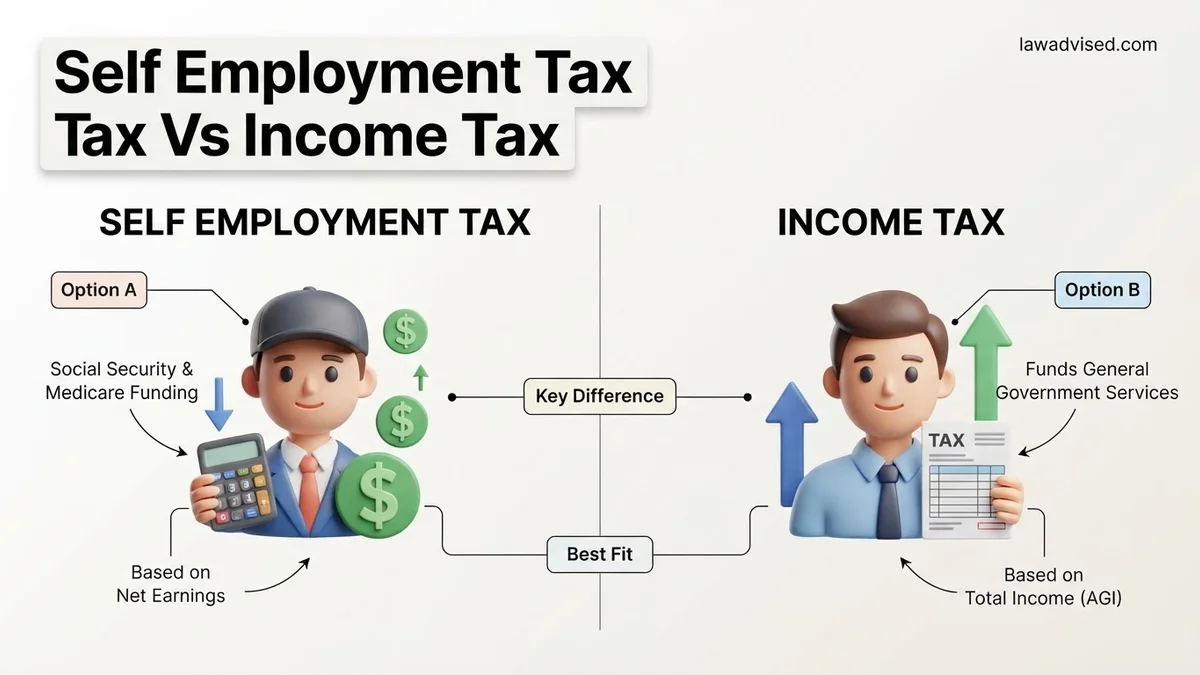
Freelancers and independent contractors must pay both self-employment tax and federal income tax on their business earnings. While self-employment tax funds Social Security and Medicare at a flat 15.3% rate, income tax operates on progressive tax brackets determined by your overall taxable income.
If you are working for yourself in 2026, you will pay two distinct federal taxes on your business earnings: self-employment tax and income tax. The core difference is that self-employment tax covers your contribution to Social Security and Medicare, while income tax funds general government operations.
Many new freelancers and independent contractors experience sticker shock during their first tax season because they forget they owe both. When you combine them, your total tax burden can easily consume 25 to 40 percent of your net earnings if you do not plan ahead and utilize available deductions.
Key Takeaways
- Self-employment tax covers Social Security and Medicare at a flat rate of 15.3%.
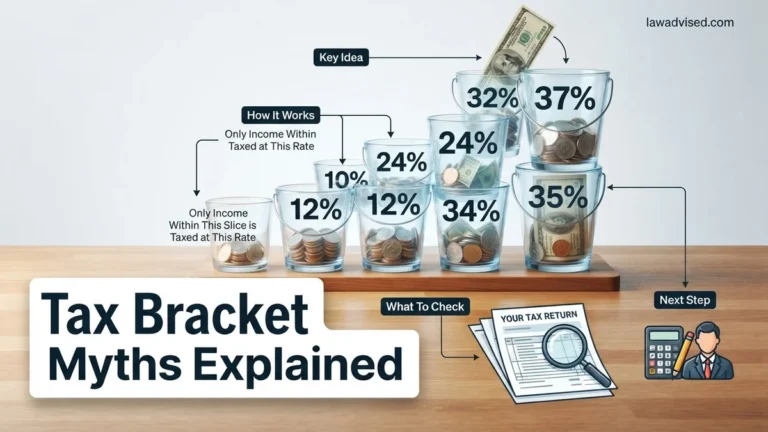
- Federal income tax applies progressive rates ranging from 10% to 37% based on total income.
- You can deduct half of your self-employment tax from your adjusted gross income.
- Net earnings from self-employment over $400 trigger the requirement to file Schedule SE.
- Quarterly estimated tax payments prevent underpayment penalties for independent workers.
What Causes High Tax Bills: Understanding Self-Employment Tax vs Income Tax
Self-Employment Tax Breakdown
When you hold a traditional W-2 job, your employer pays half of your FICA taxes (Social Security and Medicare), and the other half is automatically withheld from your paycheck. As a self-employed individual in 2026, you are both the employee and the employer.
That means you must pay the entire 15.3 percent yourself. This flat rate breaks down into two specific components:
- Social Security tax: 12.4 percent applied to net earnings up to the 2026 wage base limit.
- Medicare tax: 2.9 percent applied to all net earnings without a cap, plus an additional 0.9 percent for high earners.
Income Tax Fundamentals
Income tax is completely separate from self-employment tax, though both are calculated using your Schedule C net profit. Federal income tax uses progressive tax brackets ranging from 10 percent up to 37 percent for 2026, depending on your total taxable income and filing status.
Unlike the flat self-employment tax rate, your income tax rate depends on your total financial picture. This includes other household income, standard deductions, and tax credits. State and local income taxes may also apply depending on where you live and operate your business.
Self Employment Tax vs Income Tax: What Causes It and How to Fix It
Navigating the world of taxes as a freelancer, independent contractor, or small business owner can feel like walking through a minefield. Many newly self-employed individuals are shocked to discover they owe two distinct types of taxes: self-employment tax and income tax. This comprehensive walkthrough is designed to demystify these obligations, clear up the confusion between the two, and give you a precise action plan to calculate, file, and pay what you owe without incurring IRS penalties.
Step 1: Define Your Tax Obligations
What you need: Your estimated annual business revenue, a notebook, and a calculator.
Instructions: The very first step to mastering your taxes is understanding the fundamental difference between self-employment tax and federal income tax. Self-employment tax specifically covers your contributions to Social Security and Medicare—totaling 15.3% on your net earnings up to the annual wage cap. Think of this as replacing the FICA taxes that a traditional employer normally splits with you. On the other hand, federal income tax is the standard tax everyone pays on their overall taxable income, calculated using your personal tax bracket. You must account for both of these distinct obligations every single quarter.
Pro Tip: Never confuse gross revenue with net earnings; self-employment and income taxes are calculated using your net profit after write-offs, not your total earnings.
Step 2: Calculate Your Net Self-Employment Earnings
What you need: Profit and loss statements, Schedule C forms, and bookkeeping software.
Instructions: Before you can apply any tax rates, you need to determine your exact net earnings from self-employment. Total up all your gross business income received for the year and subtract all ordinary and necessary business expenses, such as software subscriptions, home office deductions, and equipment purchases. Next, multiply your net profit by 92.35% (0.9235). The IRS allows you to exclude half of your self-employment tax when calculating this base, which is why you apply this specific multiplier. This resulting figure is the official amount subject to your self-employment tax calculation.
Pro Tip: Keep meticulous digital receipts for every single business expense to maximize your deductions and lower your net earnings base.
Step 3: Compute Your Exact Self-Employment Tax Liability
What you need: IRS Schedule SE, your adjusted net earnings figure from Step 2, and a pen.
Instructions: Now that you have your adjusted net earnings, it is time to compute the self-employment tax itself. Apply the 15.3% rate to your adjusted net earnings. This rate is broken down into two components: 12.4% for Social Security (which applies up to an annual wage limit set by the Social Security Administration) and 2.9% for Medicare (which applies to all earnings with no upper limit). If your net earnings exceed certain high thresholds, an additional 0.9% Medicare tax may apply. Once you multiply your adjusted net earnings by these respective percentages, you will have your total self-employment tax liability for the year.
Pro Tip: Remember that you can deduct half of your self-employment tax payment as an adjustment to income on your federal income tax return, effectively lowering your overall income tax burden.
Step 4: Determine Your Federal Income Tax Bracket
What you need: Your filing status (single, married filing jointly, etc.) and current IRS tax bracket tables.
Instructions: Running parallel to your self-employment tax is your federal income tax obligation. To calculate this, take your total adjusted gross income—which includes your net business earnings minus the deductible half of your self-employment tax and any personal deductions—and locate your corresponding tax bracket. Federal income tax uses a progressive tax system, meaning different portions of your income are taxed at different rates ranging from 10% to 37%. Apply the respective marginal rates to each income bracket chunk to find your total preliminary federal income tax liability before tax credits are applied.
Pro Tip: State and local income taxes also apply in most jurisdictions, so remember to calculate those alongside your federal income tax estimates.
Step 5: Master Quarterly Estimated Tax Payments
What you need: IRS Form 1040-ES, bank routing information, and calendar alerts.
Instructions: Because self-employed individuals do not have taxes automatically withheld from a paycheck by an employer, the IRS requires you to pay your self-employment tax and income tax via quarterly estimated payments. Divide your total estimated annual tax liability (combined self-employment and income tax) into four equal installments. The payment deadlines typically fall on April 15, June 15, September 15, and January 15 of the following year. Submit these payments electronically using the official IRS Direct Pay system or by mailing Form 1040-ES with a check to avoid costly underpayment penalties at the end of the year.
Pro Tip: Set aside 25% to 30% of every client payment into a separate, dedicated business savings account the moment you receive it so you are never caught short on tax day.
Step 6: File Your Annual Tax Return Accurately
What you need: Form 1040, Schedule C, Schedule SE, and all 1099-NEC or 1099-K forms received from clients.
Instructions: When tax season officially arrives, you must reconcile your quarterly estimates with your actual annual earnings by filing your comprehensive tax return. Fill out Schedule C to report your business income and expenses, transfer your net profit calculation over to Schedule SE to determine your final self-employment tax, and incorporate those figures into your main Form 1040 for income tax calculation. Subtract the quarterly estimated payments you already made throughout the year from your total combined tax liability. If you paid too much, you will receive a refund; if you underpaid, you will need to pay the remaining balance immediately to stop the accrual of interest.
Pro Tip: Double-check all Social Security numbers and business codes on your forms to prevent processing delays by the IRS.
✅ Final Checklist
- Separated gross business income from net earnings using proper deductions
- Calculated the 15.3% self-employment tax using the 92.35% multiplier
- Determined personal federal income tax liability based on progressive tax brackets
- Scheduled and submitted all four quarterly estimated tax payments on time
- Completed Schedules C and SE accurately alongside Form 1040
Important Notes:
- Failure to pay estimated taxes can result in IRS underpayment penalties and accumulating interest charges.
- Seek help from a Certified Public Accountant (CPA) or enrolled agent if your business structure changes (e.g., electing S-Corporation status) or if your income scales significantly.
- Estimated time: 2-4 hours per quarter for recordkeeping and payments; Cost range: Free if filing yourself using IRS Free File, or $200-$600 annually for professional tax software and CPA assistance.
How to Calculate Your Total Tax Liability: A Step-by-Step Guide
Calculating Self-Employment Tax
To figure out your self-employment tax for 2026, you first need to calculate your net self-employment earnings, which is your gross business income minus your ordinary and necessary business expenses.
The IRS allows you to multiply your net earnings by 92.35 percent before applying the tax rate. This adjustment accounts for the fact that traditional employees do not pay FICA tax on the employer portion.
- Multiply your net business profit by 0.9235 to find your taxable self-employment earnings.
- Multiply that resulting figure by 15.3 percent to determine your total self-employment tax liability.
- If your net earnings cross the 2026 Social Security threshold, the 12.4 percent portion stops applying to income above that limit.
Calculating Income Tax and Combining Liabilities
Once you have your self-employment tax, you calculate your income tax using your adjusted gross income. Fortunately, the tax code provides a vital cushion: you can deduct half of your self-employment tax as an above-the-line deduction when calculating your adjusted gross income.
For example, if your net business profit is 100,000 dollars, your self-employment tax will be roughly 14,130 dollars. You can deduct half of that amount (about 7,065 dollars) from your income calculations, which lowers your overall federal income tax bracket before you apply the progressive income tax rates.
How to Fix Your Tax Burden Using Deductions and Quarterly Payments
Managing the dual hit of self-employment tax and income tax requires proactive planning. According to IRS compliance data, failing to pay estimated taxes throughout the year triggers predictable underpayment penalties. Freelancers and independent contractors must leverage business deductions and schedule quarterly payments to protect their cash flow in 2026.
1. Maximize Above-the-Line and Business Deductions
Deductions reduce both your income tax and your self-employment tax burden by lowering your net taxable earnings. You can write off ordinary and necessary business expenses like home office space, software subscriptions, equipment, and vehicle mileage. Furthermore, IRS guidelines allow self-employed taxpayers to deduct 50 percent of their self-employment tax directly from their gross income as an above-the-line adjustment.
2. Submit Estimated Quarterly Payments on Time
To avoid year-end penalties, the IRS requires you to make quarterly estimated tax payments if you expect to owe $1,000 or more in taxes. Follow these procedural steps to stay compliant:
- Calculate your projected annual net earnings and total tax liability using IRS Form 1040-ES.
- Divide your total estimated tax liability into four equal installments.
- Submit payments by the official 2026 deadlines: April 15, June 15, September 15, and January 15, 2027.
- Pay online securely through the official IRS Direct Pay portal to ensure instant crediting to your account.
What If It Still Doesn’t Work?
If your 2026 self-employment and income tax liabilities exceed your available cash, specialized recovery strategies can prevent severe financial distress. Ignoring notices from the IRS compounds penalties rapidly, so immediate intervention is necessary when payments fail.
Consider these fallback steps if your tax bill still hurts:
- Apply for an IRS Online Payment Agreement to set up a monthly installment plan for liabilities up to $50,000, typically carrying setup fees ranging from $31 to $130 depending on the payment method.
- Submit an Offer in Compromise (OIC) if you can prove severe financial hardship, noting that professional representation for an OIC generally costs between $1,500 and $4,000.
- Consult a Certified Public Accountant (CPA) or Enrolled Agent immediately if you owe more than $10,000 or face impending wage garnishments; expert hourly rates typically range from $200 to $400.
- Request a temporary “Currently Not Collectible” status from the IRS if your business revenue has completely stalled, which temporarily pauses active collection efforts.
Conclusion
Navigating self-employment tax versus income tax demands a dual approach to deductions and timely quarterly payments to prevent crippling year-end bills. According to verified research and tax compliance experts, disciplined cash-flow tracking remains the single most effective defense against unexpected liabilities. Your actionable next step for 2026 is to calculate your anticipated quarterly earnings today and set aside 30 percent of every client payment into a dedicated business tax savings account.
❓ Frequently Asked Questions
How do I calculate self-employment tax on Schedule SE?
You multiply your net self-employment earnings by 92.35%, then apply the 15.3% tax rate to that subtotal up to the annual Social Security wage base limit.
Is self-employment tax tax-deductible?
Yes, you can claim an above-the-line deduction for half of your self-employment tax liability on your Form 1040, which lowers your overall taxable income for income tax purposes.
How do W-2 payroll taxes compare to self-employment taxes?
Traditional W-2 employees split their 7.65% FICA taxes with their employer, whereas self-employed individuals pay the full 15.3% themselves as both employee and employer.
When are self-employment and income taxes due for freelancers?
Independent workers generally must pay quarterly estimated taxes four times a year using IRS Form 1040-ES, alongside filing an annual tax return by April.
Does state income tax apply to self-employment income?
In addition to federal self-employment and income taxes, most states require you to pay state income tax on your net business earnings, depending on where you reside.
Can forming an S-Corp reduce self-employment tax?
Yes, S-Corporation owners can pay themselves a reasonable salary subject to payroll taxes and take the remaining business income as distributions exempt from self-employment tax.

Ismail Hossain is the founder of Law Advised. He is an Divorce, Separation, marriage lawyer. Follow him.