Bed Bug Laws in California 2027 Expert Legal Guide to Rights
Navigating bed bug laws in California requires understanding strict legal boundaries set by Civil Code Sections 1954.600-1954.609. Landlords bear primary responsibility for providing pest-free housing and funding professional eradication, while tenants must promptly report infestations and cooperate with treatments.
California law strictly requires residential landlords to deliver rental properties free of bed bug infestations and to handle professional eradication whenever they appear. Under Civil Code Sections 1954.600 through 1954.609, landlords must investigate reported outbreaks quickly, provide formal written notices, and hire licensed pest control operators to resolve the issue without shifting improper costs to residents.
Navigating these regulations in 2027 means understanding your exact rights and responsibilities from day one of your lease. When landlords fail to meet their statutory timelines or tenants neglect prompt notification duties, expensive legal disputes arise over habitability, repair costs, and constructive eviction.
Key Takeaways
- Landlords cannot legally rent a unit known to have a current bed bug infestation.
- California law requires landlords to inspect or hire pest control within 2 days of a tenant’s notice.
- Tenants must provide written notice of suspected bed bugs and fully cooperate with preparation protocols.
- Landlords are generally responsible for paying all professional extermination and treatment costs.
- Retaliation against tenants who report bed bug infestations is strictly prohibited by state law.
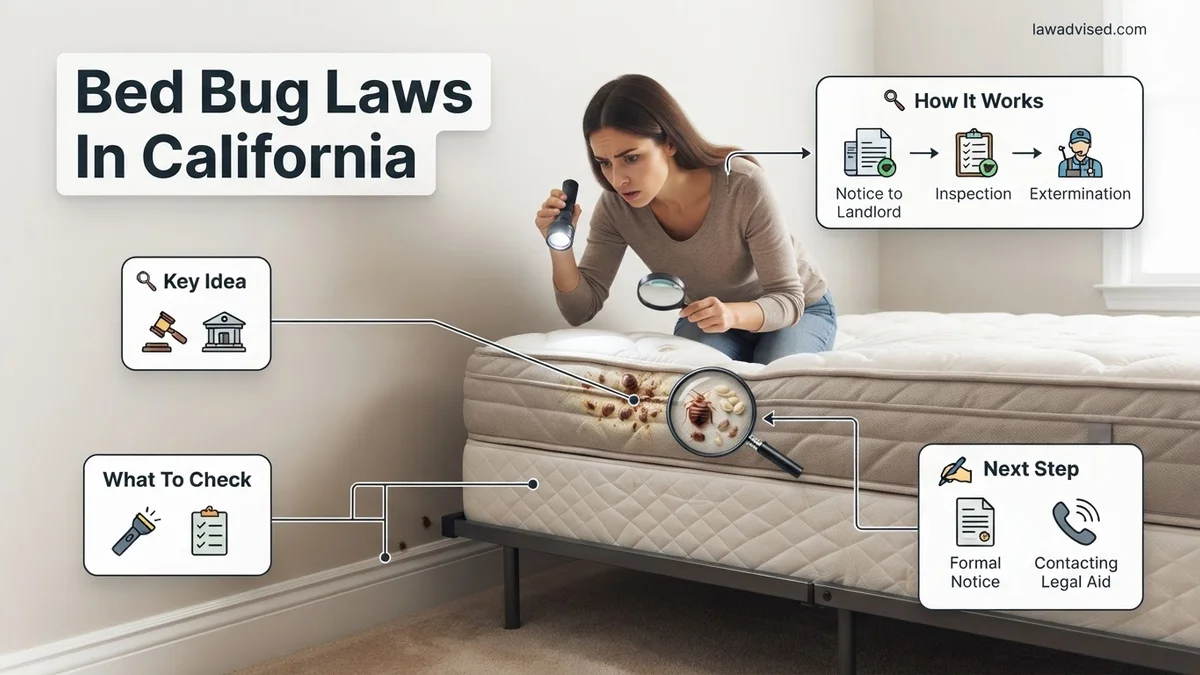
What Causes Legal Disputes Over Bed Bug Infestations in California
Landlord Premise Violations and Pre-Existing Pests
Disputes frequently start when a tenant discovers bed bugs immediately after moving into a new apartment. California law prohibits landlords from leasing a property that they know or should know has an active infestation. Landlords must provide a written bed bug disclosure before signing any lease. This disclosure details the pest’s history and general behavior. When a landlord conceals a prior infestation or fails to inspect the unit properly before move-in, they breach the implied warranty of habitability. You have the legal right to demand immediate professional treatment, withhold rent under specific legal advice, or break the lease without financial penalty if the unit remains uninhabitable.
Unclear Timelines and Delayed Professional Inspections
Another major source of friction involves how fast a landlord must act after receiving a complaint. By law, landlords cannot inspect a unit for bed bugs themselves unless they hold a valid pest control license. They must hire a licensed pest control operator to conduct an inspection. Common disputes occur when landlords ignore written notices for weeks or attempt cheap, ineffective DIY spraying instead of hiring professional exterminators. In 2027, housing courts strictly enforce these rules. Delays past a reasonable window—usually within 48 to 72 hours for initial contact and rapid scheduling—expose landlords to severe municipal code violations and tenant lawsuits for damages.
How to Fix Bed Bug Liability Issues Under California Civil Code
Enforcing Landlord Treatment Mandates and Legal Timelines
Fixing liability requires strictly following the procedures outlined in California Civil Code 1954.600-1954.609. Landlords must act on tenant reports within specific legal boundaries:
- Professional Inspection: Landlords must inspect or have a licensed pest control operator inspect the unit within a reasonable timeframe after receiving notice.
- Treatment Scheduling: Eradication protocols must begin promptly following a confirmed inspection.
- Tenant Notification: Landlords must provide tenants with written notice of pest control recommendations at least 24 hours before entering the unit for treatment.
- Prohibited Retaliation: Landlords cannot retaliate, raise rent, or serve eviction notices simply because a tenant reported bed bugs or exercised their habitability rights.
Managing Tenant Responsibilities and Cooperation Requirements
Tenants share legal duties that directly impact liability and financial responsibility under California law. If you fail to cooperate, you may be held liable for the cost of the failed treatment cycle.
- Immediate Written Notice: You must notify your landlord in writing as soon as you suspect or discover bed bugs in your living space.
- Full Cooperation: You are legally required to cooperate with the pest control operator, which includes laundering clothing, clearing baseboards, and granting entry for required treatments.
- Financial Liability Limits: While landlords generally pay for pest control, a tenant can be held financially liable if they refuse to cooperate with treatment protocols or notoriously obstruct the eradication process.
Step-by-Step Guide to Enforcing Treatment Timelines and Tenant Rights
When a California tenant discovers an infestation, navigating the legal timelines requires strict adherence to state notice requirements. Landlords cannot ignore these reports under current 2027 housing regulations. Tenants must act deliberately to ensure compliance and legally protect their tenancy.
1. Document the Infestation Immediately
Tenants must capture clear, dated photographs and videos of live bugs, eggs, and bites. According to pest control industry standards, visual proof prevents landlords from claiming the issue does not exist. Written notification via certified mail creates an undeniable legal paper trail.
2. Review the Landlord Response Window
California Civil Code mandates that landlords inspect and initiate professional eradication procedures within a reasonable timeframe, typically within 7 to 14 days of receiving written notice. Failure to act within this window breaches the implied warranty of habitability. Tenants should keep copies of all communication and receipts related to the initial report.
What If It Still Doesn’t Work?
When initial extermination efforts fail to eliminate the infestation, tenants must escalate their actions to protect their living conditions and financial investment. Stubborn populations often require advanced, multi-stage remediation protocols overseen by state-certified entomologists.
- Request a structural reinspection: Demand a second evaluation by a licensed third-party pest control operator to document persistent activity. Professional inspection fees generally range from $150 to $300, which the landlord is typically obligated to cover if negligence is established.
- Invoke “Repair and Deduct” remedies: Under California Civil Code Section 1942, if a landlord fails to remedy the violation within a reasonable time after notice, tenants can hire independent professionals and deduct the cost from their rent. This amount is legally capped at one month’s rent, applicable up to twice in any 12-month period.
- File a local code enforcement complaint: Contact the local department of health or housing code enforcement for an official citation. City inspectors can issue formal notices of violation carrying daily monetary fines for uncooperative property owners.
- Withhold rent through legal escrow: Consult a legal aid organization regarding rent withholding or placing funds into an escrow account until the habitability breach is fully resolved.
Conclusion
Bed bug infestations present severe health risks and legal challenges for California renters, but strict statutory frameworks protect tenant rights throughout the remediation process. Prompt written notification, diligent documentation, and strategic use of repair-and-deduct remedies ensure properties remain habitable under state law. According to verified research and expert housing sources, maintaining strict adherence to 2027 legal timelines remains the most effective defense against landlord non-compliance. Take the next step today by downloading a standardized California tenant notice template to formally report any unresolved pest issues.
❓ Frequently Asked Questions
What specific California Civil Code sections govern bed bug infestations?
California Civil Code Sections 1954.600 through 1954.609 outline the legal duties, disclosure requirements, and inspection timelines for both landlords and residential tenants regarding bed bugs.
Can a landlord enter a rental unit to inspect for bed bugs without 24 hours’ notice?
Under California bed bug laws, a landlord or pest control professional may enter the unit to inspect or treat bed bugs by providing verbal or written notice, provided the entry is strictly for pest management purposes outlined in the code.
What must a tenant include in a bed bug report to make it legally binding?
The tenant must provide written notice to the landlord detailing the suspected infestation so there is an official paper trail establishing the exact start of the legal timeline for inspection.
What happens if a tenant refuses to cooperate with bed bug preparation instructions?
Failing to follow required preparation protocols, such as laundering clothing or clearing furniture, can make the tenant liable for the cost of failed treatments and potential lease termination.
Can my landlord raise my rent or evict me for reporting bed bugs?
No. California law strictly prohibits landlords from retaliating against tenants who exercise their legal rights to report habitability issues like bed bug infestations.
Do California bed bug laws apply to single-family homes as well as apartments?
Yes, the statutes governing bed bugs apply to nearly all residential rental properties across the state, including single-family dwellings, duplexes, and multi-unit apartment complexes.

Ismail Hossain is the founder of Law Advised. He is an Divorce, Separation, marriage lawyer. Follow him.