Bike Lane Laws in California 2027 A Step-by-Step Guide
Navigating bike lane laws in California requires understanding specific California Vehicle Code (CVC) statutes regarding mandatory usage and motorist rights. Cyclists must generally use established bike lanes unless specific legal exceptions apply, while motorists face strict rules on merging and parking.
California law treats bicycles as vehicles, granting cyclists nearly all the same rights and responsibilities as motorists while on the road. Under the California Vehicle Code (CVC), navigating bike lanes requires a strict understanding of mandatory usage rules, driver yielding requirements, and specific legal exceptions.
By 2027, urban areas across California continue to expand protected cycling infrastructure, making compliance even more critical for avoiding collisions and legal liability. Knowing the exact statutes keeps you safe and ensures you stay on the right side of the law during your commute.
Key Takeaways
- Cyclists must ride in bike lanes unless specific safety or operational exceptions apply.
- CVC 21208 mandates bike lane usage when traveling slower than traffic.
- Drivers must merge into bike lanes before making a right turn under CVC 21717.
- Motorists are legally prohibited from driving or parking in designated bike lanes.
- Cyclists may legally exit bike lanes to avoid hazards, debris, or pedestrians.
What Causes Confusion With Bike Lane Laws in California
The Myth of Absolute Cyclist Confinement
Many drivers and cyclists mistakenly believe that a person on a bicycle must remain inside a bike lane under every circumstance. This misconception leads to aggressive driving behavior and illegal passes.
In reality, the law recognizes that debris, parked cars, and turning movements require cyclists to leave the lane safely. You are not legally trapped in the bike stripe from origin to destination.
Motorist Blind Spots and Right-of-Turn Conflicts
Another major source of confusion involves who has the right-of-way when a motor vehicle needs to make a right turn across a bike lane. Drivers frequently fail to merge properly.
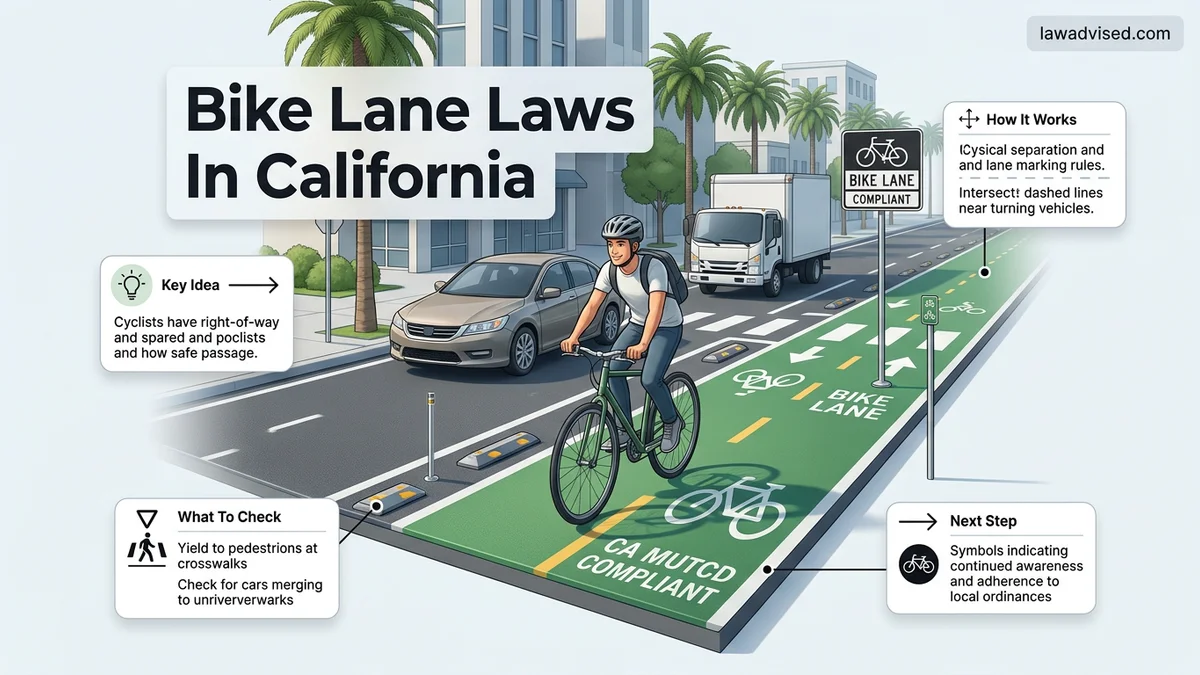
- Drivers must merge into the bike lane before turning.
- You cannot turn right directly across the path of a moving cyclist.
- Cyclists often misjudge whether a turning driver has seen them in the merge zone.
How to Follow California Vehicle Code Statutes for Bike Lanes
Mandatory Bike Lane Usage Under CVC 21208
California Vehicle Code Section 21208 dictates when you must ride inside a striped bike lane. If you are traveling slower than the normal speed of traffic, you are legally required to use a bike lane whenever one is present on your route.
However, this statute comes with critical conditions. You do not have to use the bike lane if any of the following conditions apply to your immediate situation:
- You are overtaking and passing another bicycle or vehicle going in the same direction.
- You are preparing for a left turn at an intersection or into a driveway.
- You need to avoid hazardous conditions, such as fixed objects, pedestrians, animals, broken glass, or drainage grates.
- You are approaching a place where a right turn is authorized by official traffic control devices.
Motorist Merging and Passing Rules Under CVC 21717
Drivers must also follow strict protocols regarding how they interact with bike lanes. Under California Vehicle Code Section 21717, a motorist intending to turn right must merge into the bike lane before executing the turn.
A driver cannot simply swing wide across an active bike lane from a general traffic lane. They must enter the bike lane no more than 200 feet before the turn, provided the lane line is dashed rather than solid.
Furthermore, under California’s Three Feet for Safety Act, motorists must maintain a minimum of three feet of clearance when passing a cyclist. If traffic lanes are too narrow to provide three feet while staying in the lane, the driver must shift into the adjacent lane—including the bike lane—when safe to do so.
How to Safely Exit and Navigate Around Bike Lane Hazards
Navigating California bike lanes often requires leaving the designated path to avoid obstacles like double-parked delivery vehicles, debris, or construction zones. California Vehicle Code Section 21208 permits cyclists to move out of a bike lane when necessary for safety. However, this maneuver requires strict adherence to standard road rules to prevent collisions with motor vehicles.
Step-by-Step Procedure for Merging Out of a Bike Lane
- Scan behind you by looking over your shoulder or utilizing a securely mounted rearview mirror to assess traffic conditions.
- Signal your intention to merge by extending your left arm straight out horizontally, indicating a left turn or lane change.
- Yield the right-of-way to all motor vehicles traveling in the adjacent traffic lane before executing the merge.
- Position your bicycle safely within the standard traffic lane until you have completely bypassed the obstruction.
- Signal right and safely return to the bike lane as soon as it is clear of hazards and legal to do so.
What If Motorists Violate Bike Lane Right-of-Way Rules
Despite strict statutory protections enacted through 2027, motorists frequently violate bicycle right-of-way by parking in lanes, making improper right turns across paths, or failing to maintain the mandatory three-foot passing distance. According to transportation safety data from the California Office of Traffic Safety, driver non-compliance remains a leading factor in urban cycling incidents.
Protocol When Drivers Infringe on Protected or Buffered Bike Lanes
- Prioritize your immediate physical safety by reducing speed, stopping if necessary, and avoiding verbal altercations that escalate tension.
- Record relevant details of the incident, including the vehicle license plate number, exact location, timestamp, and a description of the driver.
- Capture photographic or video evidence of the infraction using a helmet camera or smartphone if you can do so without compromising your safety.
- Report commercial vehicles illegally parked in bike lanes directly to the local municipal transportation authority or parking enforcement department.
- File a formal incident report with the local police department if the violation involved a dangerous close pass or resulted in a collision.
What If It Still Doesn’t Work?
When municipal reporting systems, informal driver education, or local advocacy efforts fail to resolve persistent infrastructure hazards or chronic illegal parking in your daily commuter corridor, escalation is necessary. If standard reporting channels do not prompt local authorities to clear debris, fix damaged pavement, or enforce parking restrictions, take the following steps:
- Submit a formal service request directly through your city’s official 311 mobile application or website portal to create a legally tracked public record of the hazard.
- Contact your city council representative or local transportation commissioner in writing to demand targeted enforcement and infrastructure improvements.
- Engage regional bicycle advocacy coalitions, such as the California Bicycle Coalition, to leverage collective pressure on municipal public works departments.
- Consult a specialized personal injury attorney if you have sustained property damage or physical injury due to unaddressed municipal road defects or driver negligence; initial legal consultations typically range from $0 to $300 depending on the firm.
Conclusion
Mastering California bike lane laws ensures your daily commute remains secure, compliant, and predictable in 2027. By understanding your right-of-way privileges, knowing when merging is legally permitted, and utilizing proper reporting protocols for driver violations, you actively protect your safety on the road. According to verified research and expert sources from the California Department of Transportation, informed cyclists experience significantly fewer traffic conflicts. Take the next step today by reviewing your local municipality’s specific 311 reporting tools to log any recurring hazards along your primary route.
❓ Frequently Asked Questions
What does California Vehicle Code 21208 state about bike lanes?
CVC 21208 requires any person operating a bicycle upon a roadway at a speed less than the normal speed of traffic to ride in a qualified bike lane, subject to specific safety exceptions.
What are the legal exceptions for not riding in a California bike lane?
Cyclists do not have to use a bike lane when overtaking another bicycle, preparing for a left turn, avoiding hazards or pedestrians, or when the lane is too narrow.
How do motorists legally interact with bike lanes when turning right?
Under CVC 21717, drivers must signal and merge into the designated bike lane before executing a right turn, ensuring they do not cut off any approaching cyclists.
Is it illegal to park or stop a car in a bike lane in California?
Yes, parking, stopping, or leaving a vehicle standing in a marked bicycle lane is a traffic violation under California law, risking fines and towing.
What is the penalty for motorists who endanger cyclists in bike lanes?
Motorists who violate bicycle right-of-way laws face substantial fines, and reckless or dangerous driving resulting in injury carries severe legal penalties.
How are e-bikes regulated within California bike lanes?
Class 1 and 2 e-bikes are permitted in standard bike lanes statewide. Class 3 e-bikes are permitted unless local authorities or path operators explicitly prohibit them.

Ismail Hossain is the founder of Law Advised. He is an Divorce, Separation, marriage lawyer. Follow him.