Carry Gun Laws in California Step-by-Step Guide for 2027
Navigating carry gun laws in California requires understanding strict statewide bans on open carry alongside evolving CCW permit requirements. This guide breaks down the legal framework, application steps, and prohibited sensitive locations under current legislation.
Carrying a firearm in California in 2027 requires navigating a complex framework governed strictly by state statutes and local county issuance policies. If you want to carry a concealed weapon (CCW), you must obtain a valid permit issued by your local sheriff or police chief, as open carry of both loaded and unloaded handguns remains strictly illegal statewide for ordinary civilians.
The legal landscape demands strict adherence to updated issuance criteria, mandatory training hours, and an expanding list of sensitive locations where carrying is prohibited. Understanding these rules protects you from severe felony charges and ensures you remain compliant with current California Department of Justice (DOJ) mandates.
Key Takeaways
- Open carry of loaded or unloaded firearms is strictly illegal statewide for most citizens.
- CCW applications require a thorough background check, live scan fingerprints, and psychological screening.
- Applicants must complete an approved 16-hour firearms training course with live-fire qualification.
- Senate Bill 2 prohibits carrying concealed firearms in designated sensitive places like schools and government buildings.
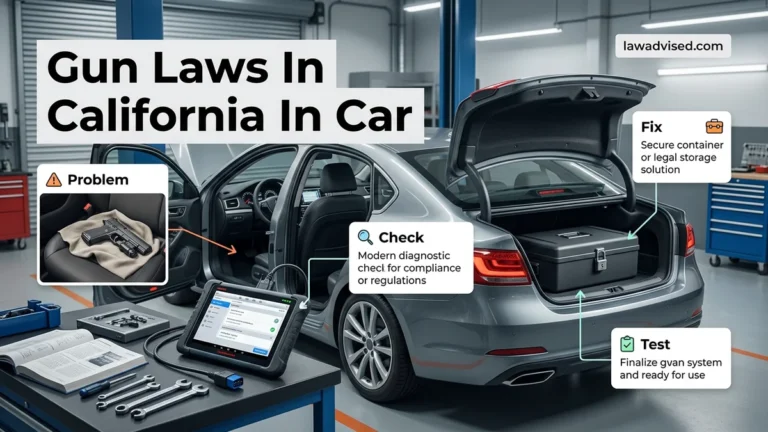
- Transporting firearms without a CCW requires them to be unloaded and locked in a secure container.

What Causes Strict Restrictions Under Carry Gun Laws in California
California operates under a shall-issue framework for CCW permits, following major federal and state court rulings. However, the state legislature has systematically enacted tight controls to limit where and how you can carry your firearm. These legislative measures aim to balance individual self-defense rights with public safety concerns in densely populated areas.
The Evolution of Good Moral Character and Training Standards
To qualify for a CCW permit in 2027, you must satisfy rigorous background checks and psychological evaluations established by your issuing agency. The standard requires proof of good moral character, which involves deep scrutiny of your personal history, driving record, social media profiles, and character references. Additionally, you must complete an initial training course ranging from 16 to 24 hours, depending on your county, followed by mandatory live-fire proficiency testing.
-
Core background checks include:
- Fingerprint-based Live Scan submission to the California DOJ and FBI.
- Mental health status checks through the California Mental Health Firearms System.
- Review of any restraining orders, domestic violence history, or recent traffic infractions.
- Interviews with neighbors, coworkers, or personal references listed on your application.
Impact of Recent Legislation on Carrying Rights
Legislative actions like Senate Bill 2 have fundamentally reshaped where you can legally carry your firearm. While you may hold a valid CCW permit, the state has designated a sweeping array of sensitive places where firearms are banned, effectively shrinking the zones where you can legally exercise your carry rights. Violating these location restrictions can result in immediate permit revocation and felony prosecution.
How to Navigate the CCW Permit Application Process Step-by-Step
Securing a CCW permit in California requires patience and meticulous attention to detail. Because processing is decentralized, your experience will vary significantly depending on whether you apply through a city police department or a county sheriff’s office. Following the correct sequence prevents costly delays and application rejections.
Initiating Your Application and Completing Background Checks
Your journey starts online through your local issuing agency’s portal. You must submit comprehensive personal history information, proof of residency, and identification. Once the initial paperwork is accepted, you will schedule a Live Scan appointment to capture your fingerprints for criminal history background checks.
- Submit the standardized California CCW application form via your local sheriff or police department website.
- Provide required residency documents, such as a valid California driver license and utility bills matching your home address.
- Complete the Live Scan fingerprinting process and pay the initial state and local processing fees.
- Wait for the agency to contact you for an in-person interview once your background check clears.
Completing Required Training and Final Issuance
After passing your background check and interview, the issuing agency will instruct you to complete your certified firearms training course. You cannot take this course independently before receiving agency approval in most jurisdictions. Upon submitting your training certificate and qualifying with the specific handguns listed on your permit, you will pay the final issuance fee and receive your physical CCW card.
-
Key training requirements:
- Complete classroom instruction covering California use-of-force laws and firearm safety.
- Pass a practical shooting qualification test for every specific firearm serial number you want on your permit.
- Submit your training certificate within the strict deadline set by your issuing agency, typically 30 to 90 days.
How to Identify Prohibited Sensitive Places and Open Carry Bans
Navigating California carry gun laws in 2027 requires strict adherence to statewide location restrictions. Following major legislative updates stemming from Senate Bill 2, concealed carry license holders face broad prohibitions regarding where they can legally carry a firearm. Understanding these boundaries prevents accidental felony charges.
Statutory Sensitive Locations
State law designates dozens of specific environments as gun-free zones, regardless of your CCW permit status. Carrying a concealed weapon in these locations violates Penal Code 26230. Legal experts and state safety bulletins highlight the following restricted areas:
- Government buildings, courthouses, and local or state administrative offices.
- Public schools, colleges, universities, and childcare facilities.
- Medical facilities, mental health institutions, and emergency rooms.
- Public transit systems, buses, trains, and passenger terminals.
- Establishments that legally sell alcohol for on-site consumption.
Private Property and Open Carry Prohibitions
Carrying a firearm on private property requires explicit consent from the owner, manager, or lessee. Under 2027 standards, private businesses must post conspicuous signage permitting firearms if an exemption to the default ban applies. Furthermore, open carry of both loaded and unloaded firearms remains strictly illegal in all public spaces throughout California. Violating open carry statutes can lead to immediate misdemeanor charges, vehicle impoundment, and permanent revocation of any existing CCW privileges.
What If Your CCW Application Is Delayed or Denied
Issuing authorities in California face strict statutory timelines to process concealed carry applications, but backlogs frequently occur. If your local police department or sheriff exceeds the mandated investigation window, specific administrative remedies exist. Legal counsel specializing in Second Amendment rights recommends a structured approach to resolve processing bottlenecks or formal denials.
Steps for Addressing Delays and Denials
When an application stalls or receives an official notice of denial, applicants must act within narrow legal windows. Verified administrative tracking indicates that systematic follow-up yields the highest rate of resolution for delayed files. Execute these steps to protect your rights:
- Submit a formal written inquiry via certified mail to the issuing agency’s CCW unit referencing your application tracking number.
- Review the specific statutory justification provided in any written denial notice issued under Penal Code 26185.
- File an internal administrative appeal or petition for review with the issuing agency within the designated 10-day limit.
- Consult with a qualified civil rights attorney if the denial appears arbitrary, discriminatory, or unsupported by objective evidence.
What If It Still Doesn’t Work?
If administrative appeals fail or your local issuing authority refuses to process your application within statutory timeframes, independent remedies are required. Persistent systemic delays or unjustified denials often demand specialized intervention. Implement these fallback measures to resolve intractable legal hurdles:
- Retain a licensed firearms attorney to file a formal Writ of Mandate in the local superior court compelling the agency to act.
- Request a comprehensive audit of your Department of Justice firearms background file to correct any erroneous disqualifying records.
- Prepare for estimated legal representation costs ranging from $2,500 to $7,500 for court-level civil enforcement actions.
- Submit a formal complaint to state oversight bodies documenting procedural violations by the issuing department.
Conclusion
Mastering California carry gun laws in 2027 demands constant vigilance regarding updated sensitive-place statutes, strict permit requirements, and rigorous administrative compliance. According to verified research and expert sources from state legal analysts, proactive adherence to statutory guidelines significantly reduces the risk of costly legal infractions. Your immediate actionable next step is to review your local sheriff or police department’s current 2027 application portal to verify updated training provider requirements and fee schedules before submitting your paperwork.
❓ Frequently Asked Questions
What are the current requirements for obtaining a CCW permit in California?
Applicants must be at least 21 years old, pass a background check and live scan fingerprinting, provide proof of residency, and complete a 16-hour training course. Issuing agencies also evaluate good moral character criteria.
Where is it illegal to carry a concealed firearm even with a valid CCW?
Under SB 2, concealed firearms are banned in sensitive places including schools, government buildings, healthcare facilities, public transit, and private businesses unless the owner explicitly posts signs welcoming firearms.
What constitutes a legal locked container for transporting a firearm?
A legal container must be fully enclosed, securely locked with a key, combination, or padlock, and cannot include the glove compartment or center console of a vehicle.
How long does the California CCW background check and approval process take?
The timeline varies significantly by county sheriff department, often taking anywhere from 90 days to several months due to local application backlogs and processing requirements.
Does California recognize CCW permits issued by other states?
No, California does not have reciprocity with any other states. Non-residents cannot legally carry a concealed firearm within California based on an out-of-state permit.
What happens if you are caught carrying a firearm illegally in California?
Carrying a concealed weapon without a permit or violating open carry laws can result in misdemeanor or felony charges, potentially leading to heavy fines and jail time depending on the specific circumstances.

Ismail Hossain is the founder of Law Advised. He is an Divorce, Separation, marriage lawyer. Follow him.