Balisong Laws in California 2027 Expert Legal Guide
Under California Penal Code 21510, owning, carrying, or selling a balisong (butterfly knife) with a blade length of 2 inches or more is generally illegal in public spaces. While possession inside a private residence is a gray area or technically permitted depending on interpretation, carrying one openly or concealed is heavily restricted and can result in misdemeanor or felony charges. Always verify local municipal ordinances, as many cities enforce stricter knife laws than the state baseline.
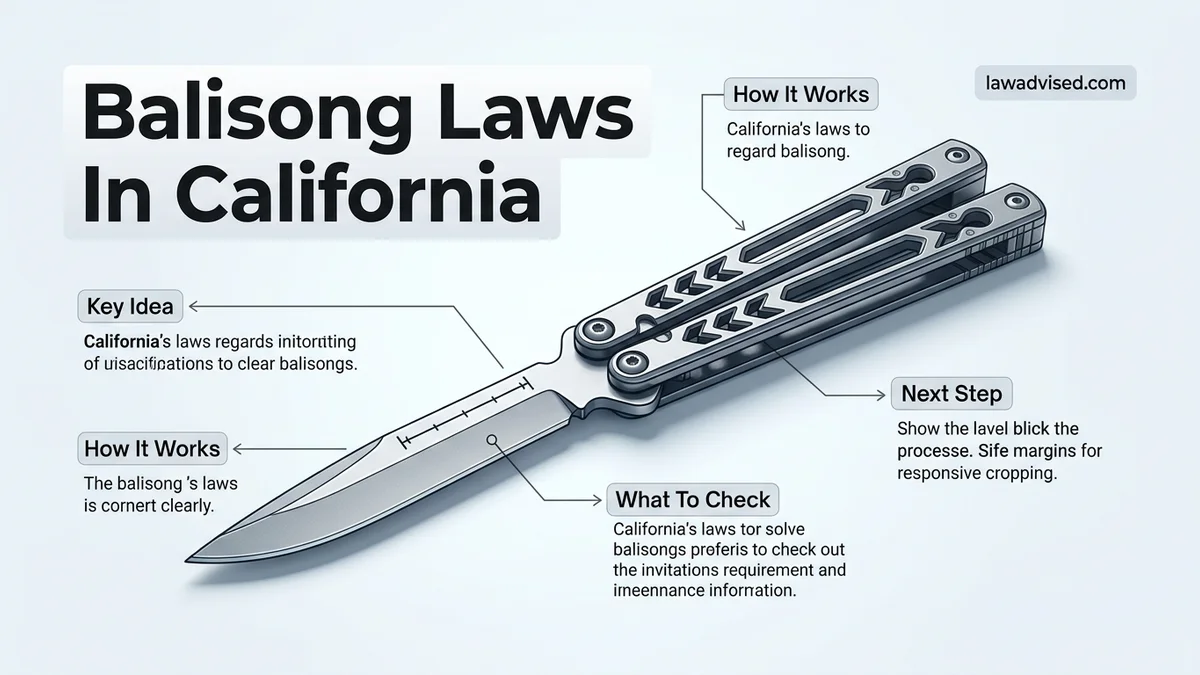
Balisong knives, commonly known as butterfly knives, are completely illegal to carry concealed in public in California, and any folding blade with a locking mechanism that opens via gravity or centrifugal force with a blade length of 2 inches or more violates California Penal Code 21510. While you can technically own a balisong as a curiosity inside your private residence, stepping outside with one on your person crosses a severe legal line that can result in misdemeanor or felony charges depending on how it is carried.
As we navigate 2027, law enforcement agencies maintain zero tolerance for prohibited blade types during standard pedestrian and vehicle stops. Understanding the exact statutory thresholds prevents you from facing unintended criminal prosecution, heavy fines, or jail time.
Key Takeaways
- Balisong knives with blades 2 inches or longer are illegal to carry in public under California law.
- Possessing a switchblade or butterfly knife at school, government buildings, or on public transit is strictly prohibited.
- Penal Code 21510 criminalizes the manufacture, sale, and public possession of prohibited blade types.
- Local city and county ordinances in California can impose harsher restrictions than state-level statutes.
- Consult a legal expert before purchasing or attempting to transport any tactical folding knife in California.
What Causes Legal Restrictions on Balisong Knives in California
The Legislative History of Switchblade and Balisong Bans
California lawmakers historically targeted switchblades, gravity knives, and balisongs due to their association with 1950s youth gang culture and rapid deployment capabilities. The legislature grouped butterfly knives into this prohibited category because the handles swing apart to expose the blade dynamically. The core legal fear centers on the perception that these tools serve no utility purpose outside of combat or intimidation, driving strict legislative prohibitions.
Specific Statutory Definitions Under California Penal Code
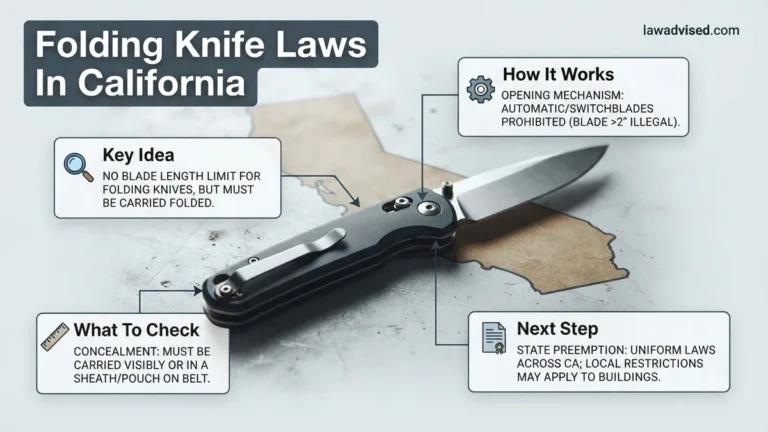
State law penalizes the manufacture, sale, offer for sale, transfer, or possession of any switchblade knife with a blade length of 2 inches or more. Courts have repeatedly ruled that balisongs function identically to gravity or centrifugal knives because momentum or gravity unlocks the blade during the manipulation of the handles. Key restrictions to note include:
- The 2-Inch Threshold: Any folding knife utilizing centrifugal force or gravity with a blade measuring 2 inches or longer triggers illegal switchblade classification.
- Concealed Carry Ban: Carrying any locking folding knife concealed on your body in public violates strict concealed weapon statutes.
- School and Government Grounds: Possessing any knife with a locking mechanism or fixed blade on school grounds, university campuses, or government buildings carries severe felony enhancements.
How to Comply with California Knife Laws and Prevent Violations
Safe Storage and Transport Methods
If you collect balisongs or purchase them as display pieces, you must adhere to strict transport rules to avoid felony concealed weapon charges. Keeping a butterfly knife unsecured in your glove box, center console, or pocket constitutes illegal concealed carry in California. To remain compliant with 2027 legal standards:
- Secure Containers: Store your balisong inside a locked container, such as a dedicated firearm case or heavy-duty lockbox, separate from the passenger compartment.
- Trunk Storage: Transport knives exclusively in the trunk of your vehicle when traveling to a private residence, authorized blade exhibition, or legal training facility.
- Home Display: Keep your collection strictly within your private home or property where public access is restricted.
Alternative EDC Options and Safe Legal Practices
To avoid the legal grey areas and harsh penalties surrounding balisongs, you should opt for standard pocket knives with manual thumb studs or manual opening mechanisms. Standard pocket knives that require manual force to push the blade out of the handle—and do not lock automatically via gravity or centrifugal swing—generally avoid the strict 2-inch switchblade ban if they comply with local city ordinances. Always research specific municipal codes in major California cities like Los Angeles or San Francisco, as local ordinances frequently impose stricter blade length limits than state law.
What If It Still Doesn’t Work and You Face Weapon Charges
Navigating California’s complex penal code regarding folding knives can result in unexpected legal jeopardy. If you find yourself facing criminal accusations under California Penal Code Section 21510 despite your understanding of the law, immediate action is required. Legal definitions surrounding prohibited blades frequently create confusion for law enforcement officers and citizens alike.
Recommended Fallback Steps for Legal Defense
- Refuse voluntary searches: Politely exercise your Fourth Amendment rights if law enforcement requests to inspect your pockets or vehicle without a warrant or probable cause.
- Secure legal representation immediately: Retain a criminal defense attorney who specializes in California weapons charges and knife law violations. According to data from the California Appellate Project, specialized counsel significantly improves case outcomes.
- Document the knife specifications: Photograph the unassisted deployment mechanism and measure the blade length precisely. Expert forensic knife evaluations typically cost between $1,500 and $3,500 to establish whether a specific folding knife meets statutory prohibitions.
- Avoid making statements: Do not answer questions about where you purchased the item or your intent without your defense attorney present.
Best Practices for Safely Storing and Transporting Folding Knives
Compliance with California statutes requires strict adherence to storage and transportation protocols. Even when a knife is legal to own within a private residence, public transit or vehicle transport introduces distinct legal exposures. Law enforcement agencies evaluate accessibility and concealment during traffic stops.
Safe Transport and Storage Guidelines
- Utilize locked containers: Store any legal folding knife inside a locked toolbox, hard-shell case, or the trunk of a motor vehicle during transit. This prevents immediate accessibility, aligning with general transport standards for edged tools.
- Keep items out of plain view: Never leave a folding knife resting on a car seat, dashboard, or center console where it could be construed as a concealed dirk or dagger under California Penal Code Section 21310.
- Maintain home security: Keep collection pieces in a dedicated lockbox or secure display case within your residence, away from common areas where unauthorized guests or minors might access them.
- Verify current statutes annually: Legislative updates in California frequently modify weapon classifications. According to verified legal research from knife rights advocacy groups, consulting state legislative trackers in 2027 ensures continuous compliance.
Conclusion
Mastering California balisong and folding knife laws requires constant vigilance regarding blade measurements, locking mechanisms, and strict transport rules. Navigating these statutes incorrectly can lead to severe misdemeanor or felony charges. According to verified research and expert legal sources, consulting a qualified attorney before carrying unfamiliar blades is the most reliable way to protect your rights. Take action today by auditing your current collection against 2027 statutory standards and securing any questionable items in locked home storage.
❓ Frequently Asked Questions
What specific California Penal Code applies to balisong knives?
California Penal Code Section 21510 prohibits the commercial sale, offering for sale, loan, transfer, or public possession of switchblades, butterfly knives, and similar weapons with blades 2 inches or longer.
How do California laws distinguish between a pocket knife and a balisong?
Standard pocket knives that require manual unfolding without centrifugal or gravity-assisted locking mechanisms are generally legal to carry openly, whereas balisongs utilize momentum and handles that swing around the blade.
Are trainer butterfly knives with unsharpened blades legal in California?
Trainer balisongs without a functional or sharpened edge occupy a legal gray area, but law enforcement may still confiscate them if they meet the structural definition of a prohibited knife.
Can I transport a balisong in my vehicle in California?
Transporting any prohibited knife in a vehicle requires it to be securely stored in a locked container, though carrying one accessible to the driver or passengers remains illegal.
Do local California cities have stricter laws than the state?
Yes, many municipalities across California enact independent ordinances that completely ban certain types of knives or impose stricter blade length caps than state statutes.
What should I do if law enforcement stops me with a folding knife?
Remain calm, cooperate with officers, avoid consenting to searches without cause, and consult a qualified defense attorney immediately if you are cited or arrested.

Ismail Hossain is the founder of Law Advised. He is an Divorce, Separation, marriage lawyer. Follow him.